A buyer-focused examination of the financial documents needed to evaluate reserve liquidity, investment controls, and potential capital obligations at The Perigon Miami Beach, without confusing disclosure gaps with financial weakness.

At The Perigon Miami Beach, marketed at 5333 Collins Avenue in Mid-Beach, the financial questions deserve the same scrutiny as the residence itself. For a buyer considering a substantial commitment, the essential distinction is between what the marketing describes and what the governing and financial documents establish.
The project’s legal disclaimer makes improvements, designs, and construction subject to applicable federal, state, and local permits and approvals. Specifications, pricing, and amenities are also identified as preliminary and subject to change, with purchasers directed to official offering documents. Neither statement establishes reserve adequacy, investment practices, or the timing of future owner contributions.
The available information does not verify an actual reserve balance, reserve-study projections, or a capital-call calendar. Nor does it establish whether any current, proposed, or anticipated special assessment exists. These remain open diligence questions, not evidence of financial distress.
A snapshot of four residences shows a median monthly association fee of $11,588 and an approximate monthly figure of $2.21 per square foot. These figures do not constitute an approved association budget. Their effective date and applicability to every residence are not established, so buyers should not treat them as definitive ownership-cost assumptions.
The more revealing question is what the assessment funds. The available information does not establish how regular assessments are divided between operating expenses and replacement reserves. Without that allocation, a monthly fee cannot show how much is being set aside for future capital needs.
Request the applicable budget, supporting schedules, and written confirmation of the assessment for the specific residence. Then separate the operating contribution from the reserve contribution. A cost comparison is incomplete if it treats two monthly payments as equivalent without examining what each supports.
A reserve total is a starting figure, not a complete liquidity analysis. Buyers should distinguish restricted reserves, unrestricted operating cash, and invested reserve assets rather than treating every dollar on a balance sheet as immediately available for every purpose.
The core document request should include the balance sheet, financial statements, bank and investment statements, and reserve schedule. Read together, these documents should allow the buyer’s advisers to reconcile the stated balance with the accounts holding the money and the purposes assigned to it.
For each reserve category, ask how much is held, which expenditure it supports, and when the funds can be accessed. If assets are invested, request the terms governing access rather than assuming they function like cash. If funds are restricted, establish those restrictions before counting them toward a particular project.
The objective is not simply a reassuring total. It is a dated picture of funds available for identified obligations, with restrictions and access terms clearly explained.
The available information for The Perigon does not confirm an adopted reserve investment policy, permitted investments, account custodians, liquidity terms, or withdrawal controls. Buyers should request the policy and supporting account documentation rather than infer a strategy from a reserve figure.
The questions should be specific: Which investments are permitted? Who holds the accounts? What access terms apply? Who can authorize withdrawals, and what approval process governs them? Request written answers that can be checked against account statements and the governing policy.
The investment review should also connect to anticipated spending. Ask whether access to invested assets aligns with the dates when funds may be needed. This is a diligence test, not a suggestion that the association holds unsuitable investments or faces a liquidity problem.
The timing of a capital obligation matters as much as its amount. A useful inquiry follows each identified project from engineering recommendation through approval, contracting, funding, and any owner payment schedule. Amenity descriptions cannot establish those obligations.
Request complete, dated inspection and reserve-study reports, engineering recommendations, recent meeting minutes, contracts, funding plans, and any assessment notices. Establish which inspections and studies apply to the building before drawing conclusions from their findings. Marketing disclaimers do not establish inspection deadlines, delivery timing, turnover, or the division of responsibility between developer and association.
For each planned project, seek a written connection among scope, expected timing, funding source, reserve allocation, and owner payments. Distinguish a recommendation from an approved contract, and a funding discussion from an adopted assessment. These distinctions help prevent a preliminary conversation from being mistaken for a fixed obligation.
The same discipline applies in reverse: the absence of an assessment notice in marketing material does not confirm that no assessment exists. Request an explicit written response addressing approved and proposed assessments, along with supporting records.
A buyer considering 57 Ocean Miami Beach alongside The Perigon should apply the same financial questions to each residence. Compare the applicable budget, reserve contributions, available balances, investment access, and documented capital plans rather than relying on headline fees alone.
Likewise, including Shore Club Private Collections Miami Beach in a search does not justify assuming comparable reserve arrangements or future obligations. Each property’s documents must establish its own position. These comparisons provide a framework for inquiry, not a claim about either project’s finances.
A consistent document request makes the comparison more useful. It keeps the buyer focused on what is funded, what remains uncertain, and when any documented payment could become due.
For a second-home purchaser, the practical goal is to understand both recurring carrying costs and any documented nonrecurring commitments. Before signing, seek written answers on the reserve balance, annual reserve contribution, applicable reserve study, known capital projects, and approved or proposed special assessments.
Keep those answers with dated supporting documents. Ask advisers to distinguish verified figures from estimates, and approved obligations from matters still under discussion. Where a question remains unresolved, retain it as an open issue rather than substituting an optimistic or adverse assumption.
At The Perigon, the appropriate conclusion is neither that reserves are sufficient nor that a capital call is imminent. Reserve liquidity, investment controls, and payment timing require documentary confirmation. For a luxury buyer, that clarity belongs beside design, location, and the experience of ownership.
For a considered approach to South Florida ownership, connect with MILLION.
If branded residences are on your mind — as a home or as an allocation — we would be glad to share what we are seeing, privately.
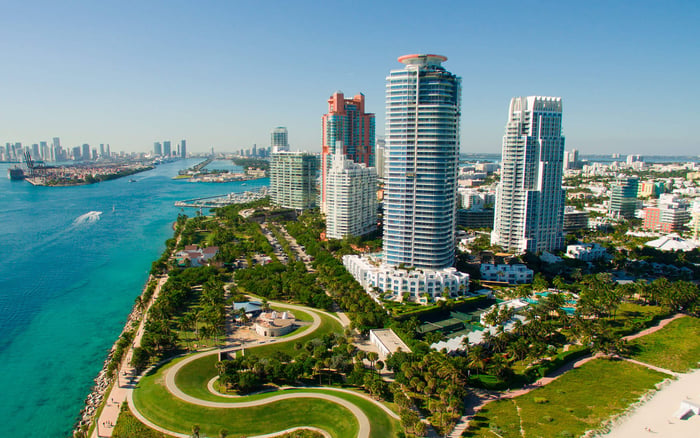
Begin a quiet conversationThe Perigon is marketed at 5333 Collins Avenue in Miami Beach’s Mid-Beach neighborhood.
The available information does not verify the actual reserve balance. Buyers should request dated financial statements, account statements, and the reserve schedule.
A four-listing snapshot shows a median monthly fee of $11,588 and an approximate figure of $2.21 per square foot monthly. These are listing-derived figures, not an approved budget or a confirmed assessment for every residence.
Not without the supporting budget and allocation schedules. The available information does not establish the division between operating expenses and replacement reserves.
Restricted reserves, unrestricted operating cash, and invested reserve assets should be evaluated separately. A headline balance does not establish immediate availability for a particular expenditure.
An adopted policy, permitted investments, custodians, liquidity terms, and withdrawal controls are not confirmed. Buyers should request the policy and supporting account documentation.
The available information does not establish whether a current, proposed, or anticipated special assessment exists. That uncertainty should not be treated as evidence either of an assessment or its absence.
Request complete dated inspection and reserve-study reports, engineering recommendations, meeting minutes, contracts, funding plans, and assessment notices. Connect each identified project to its funding source and expected payment schedule.
No such dates or developer-versus-association responsibilities can be inferred from the supplied disclaimers. Applicable obligations require separate documentary review.
Seek confirmation of the reserve balance, annual reserve contribution, applicable reserve study, known capital projects, and any approved or proposed special assessment. Ask for dated records supporting the answers.