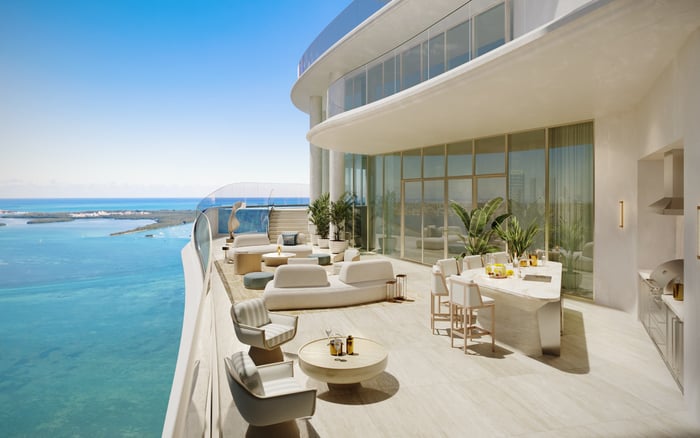
Miami and Miami Beach have become a benchmark for condo-hotel living, where buyers own deeded residences inside five-star hotels and tap into short-term rental demand when they are away. This 2025 guide explains how branded rental programs work, from owner usage rules and revenue splits to furnishing standards and financing. It also outlines typical net yields, key risk factors in a fast-growing short-term rental pipeline, and a curated look at leading condo-hotel towers across the city for sophisticated capital.
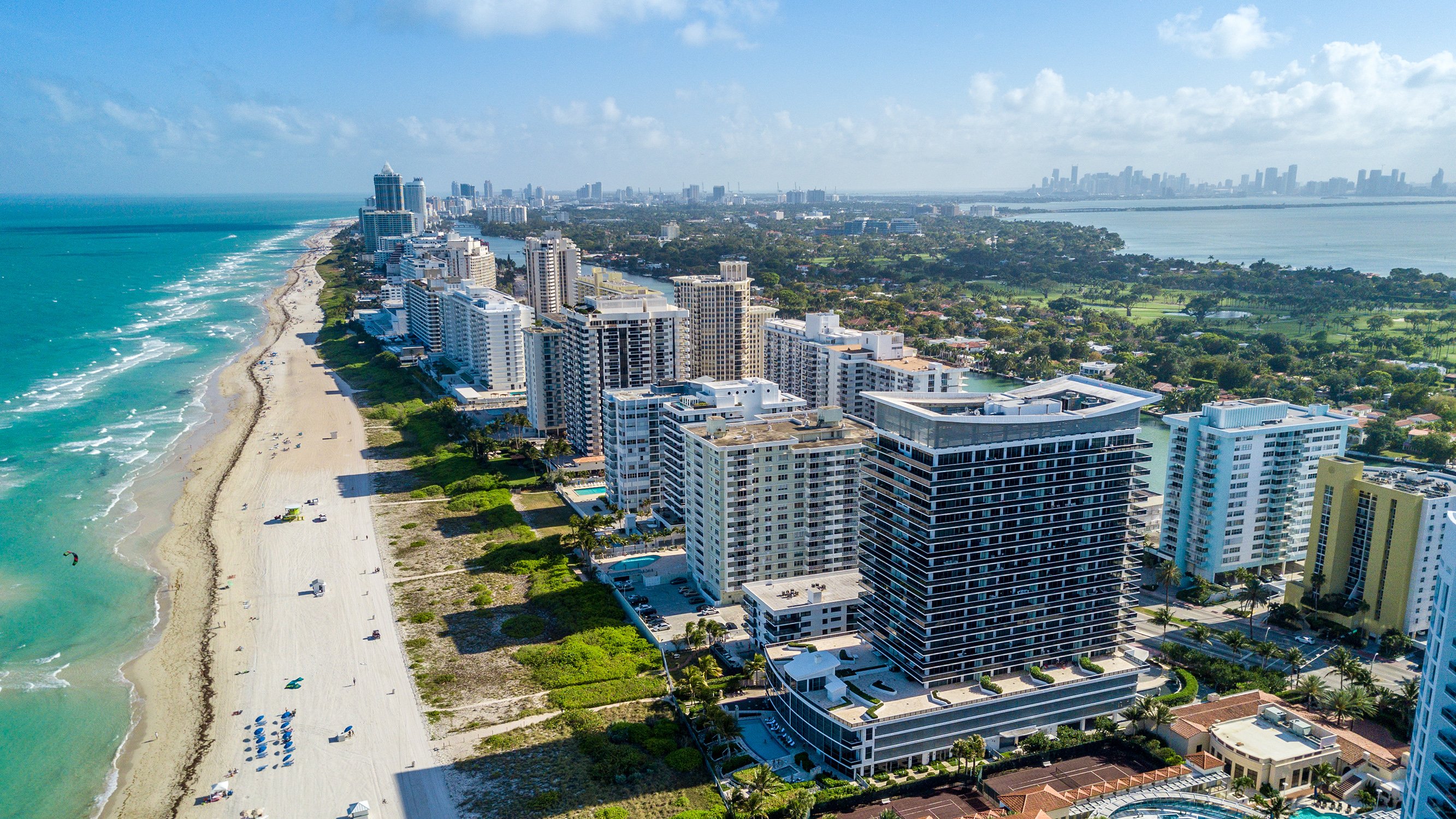
Miami and Miami Beach sit at the crossroads of global wealth, year round sunshine and a tourism engine that now welcomes well over twenty six million visitors a year. For buyers who split their time across cities, the idea of a residence that behaves like a five star hotel suite when they are away is compelling. Instead of a dark second home, a condo-hotel residence can generate income from short stays while remaining a private retreat for the owner.
In a condo-hotel you purchase a deeded condominium inside a building that is operated as a full service hotel. You reserve your own time in the residence, and when you are not in town the hotel can place your unit into its nightly inventory alongside traditional rooms and suites. Guests check in at the same front desk, use the same pool decks, restaurants and spa, but behind the scenes the suite they occupy belongs to an individual owner.
What makes Miami particularly attractive is the combination of lifestyle and demand. Oceanfront addresses on Miami Beach and South Beach, bayfront views across Biscayne Bay and the energy of Brickell and Downtown Miami draw both leisure and business travelers in every season. For owners the result is a rare blend of personal enjoyment and dollar based yield in one of the most recognisable resort markets in the world.
Most of the leading condo-hotel properties in the city are branded by blue chip hospitality or lifestyle names. The Setai, W South Beach and 1 Hotel & Homes South Beach helped define the model on Miami Beach, pairing generous condominium layouts with five star service. Newer towers align with equally powerful brands, from legacy hoteliers such as Ritz-Carlton and Waldorf Astoria to fashion and automotive labels that see real estate as an extension of their world.
For owners the brand does more than add cachet. The hotel operator runs marketing, reservations, check in, housekeeping and maintenance, relying on its global website, loyalty program and distribution partners to keep units occupied. In practical terms you can arrive to a perfectly prepared apartment, enjoy your stay, then hand the keys back to the front desk and let the property team take over. There is no need to photograph the residence, manage online listings or coordinate cleaners, which is why many investors treat condo-hotel ownership as close to hands free.
That convenience is paid for through a revenue split. In Miami it is common to see the hotel and the owner divide gross room revenue anywhere from roughly forty sixty through to a structure where the owner retains a little more than half. The precise split, and whether costs such as credit card fees and marketing are charged before or after the calculation, will vary by building. The crucial point is that a smaller share of a strong brand's higher nightly rates and high occupancy can be more profitable than a larger share in an unbranded building with weaker demand.
Behind the glossy marketing there are several program terms that materially affect your lifestyle and returns. Most hotel operators impose some form of usage and blackout framework. You will usually be free to book your residence throughout the year, but popular weeks such as Art Basel, New Year, major events and peak festive holidays may be reserved for paying guests or require advance notice. Some developments cap the total number of owner nights in the rental program, others allow unlimited use but reduce your share of income if you occupy the residence heavily.
Another key distinction is whether participation in the hotel rental program is mandatory. Certain condo-hotel projects require every owner to place their unit into the pool whenever it is not occupied, ensuring that every suite in the key count meets brand standards at all times. Others allow owners to opt out and either keep the residence vacant or rent on their own, whether through a local agent or a platform style strategy. Opting out can preserve a larger share of income but turns you into an active host rather than a passive investor.
Furnishing requirements are also part of the equation. Many Miami condo-hotels are delivered fully furnished, with design packages curated by the brand's interior design team so that every suite presents a consistent look and feel. Where furniture is not included, the management agreement will often set out a minimum specification for finishes, linens, technology and even kitchen inventory before the unit is allowed into the rental pool. The upside is that, once the package is installed, the residence is genuinely turnkey from day one.
From an operational perspective buyers should pay attention to details that are easy to gloss over in a sales gallery. Typical questions include how far in advance you must reserve your own stays, whether owner visits are booked through the same reservation system as guests, how housekeeping is billed, how often common area and in room refurbishments are scheduled and how rental proceeds are reported and paid. Thoughtful buyers will review the management agreement with a specialist attorney before signing.
It is also important to understand what a condo-hotel is not. A Miami condo-hotel is not a timeshare. You own a specific residence with a fee simple title, you are not purchasing a fixed week that is shared with other owners, and you are free to sell the property on the open market like any other condominium. The trade off is that you carry the usual responsibilities of ownership, including property taxes, association dues and potential variations in annual rental performance.
The natural next question for many buyers is what level of income a condo-hotel in Miami or Miami Beach can realistically generate. For well located, professionally managed units under a recognised brand, local specialists currently underwrite net returns in the region of about five to seven percent per year after typical expenses and the hotel share. That is not a guarantee, but it is a useful planning range for a largely hands off asset in a prime coastal market that you also use personally.
Multiple factors drive whether a given residence achieves that level. Location is still the biggest determinant. Beachfront and direct ocean view inventory on Miami Beach and South Beach, or bayfront suites with sweeping Biscayne Bay views, will usually command the highest nightly rates. In the urban core, Brickell and Downtown Miami are anchored by finance, tech and cultural demand, which can keep weekday occupancy strong even outside peak tourist season.
Brand and building quality sit close behind location. A globally recognised luxury flag can often command a meaningful premium over a generic or local name. That premium shows up both in average daily rate and in the ability to attract guests year after year. Unit type also matters. In some buildings efficient studios and one bedroom layouts generate the strongest yield because they align with how couples and solo travelers use the city. In others, a rare three bedroom or penthouse residence with a signature view can achieve very high nightly rates that compensate for lighter occupancy.
Seasonality is another critical input. Miami's high season typically runs from late autumn through spring, with pronounced peaks for Art Basel, festive holidays and spring events. Many condo-hotels can achieve hotel style occupancy levels over the full year, but underwriting should still allow for softer summer months and the possibility that projections prove optimistic. Regulators prohibit developers and brokers from promising specific returns, so any brochure pro forma is simply a scenario, not a guarantee. It is wise to sense check those numbers against current hotel rates and occupancy in the immediate micro market and to run more conservative cases for your own planning.
Investors should also be aware of the building pipeline. The 2024 and 2025 delivery calendar includes a large wave of short term rental friendly towers, both condo-hotels and free market condominium buildings that allow nightly rentals. In some pockets of Downtown Miami and Brickell this will translate into thousands of new keys competing for the same guests. The properties most likely to hold rates in that environment will be those with true differentiators, such as iconic branding, irreplaceable waterfront land or highly curated amenities that create strong repeat demand.
Financing and tax considerations sit alongside yield. Many lenders treat condo-hotel units as investment property or second homes rather than primary residences, which can mean higher down payments and interest rates. Foreign buyers, who make up a meaningful share of the Miami and Miami Beach condo-hotel market, should plan for United States income tax on net rental profits and consider the impact of rules such as FIRPTA on eventual resale. Many structure their ownership through an entity and work with cross border tax and legal advisors to align estate planning, privacy and liability objectives. Any decision on structure should be taken with personalised professional advice.
The city offers a broad menu of condo-hotel options, ranging from established oceanfront icons to glass towers currently under construction. On the sand in Miami Beach, properties such as The Setai, W South Beach and 1 Hotel & Homes South Beach show how generous residences can coexist with resort style amenities and five star service. Owners enjoy the intimacy of a condominium building while guests experience a seamless hotel stay.
Looking ahead, Rosewood Residences at The Raleigh is set to bring a new level of design focus to Collins Avenue. The project pairs a meticulous restoration of the historic Raleigh Hotel with a contemporary tower designed by celebrated architects, with Rosewood managing both the hotel and the branded residences. For design minded investors the combination of heritage, beachfront land and a tightly controlled number of homes is likely to be compelling.
An equally strong story is unfolding on the mainland. In Brickell, 888 Brickell will introduce a Dolce and Gabbana interpretation of condo-hotel living, with dramatic interiors, lock off options that allow parts of a residence to be rented as suites and a service profile calibrated to international fashion clients. Elsewhere in the district, a Mercedes-Benz branded tower is planned to extend the marque's design language into hospitality grade residences, underscoring how lifestyle brands view Miami real estate as a global showcase.
Downtown Miami has become a laboratory for more experimental concepts. E11even Hotel & Residences, together with its companion tower E11even Residences Beyond, brings the energy of a nightlife brand into a high rise environment near Miami Worldcenter. Legacy Hotel & Residences, also at Miami Worldcenter, focuses on medical wellness and performance, combining a condotel model with a major health and spa component. Waldorf Astoria Hotel & Residences Miami, rising in a stack of offset cubes, is on track to become one of the tallest towers in the city and will extend Hilton's ultra luxury service profile into Miami's skyline.
There are also buildings that sit on the boundary between pure condo-hotel and flexible short stay product. ORA by Casa Tua in Brickell is designed around food, culture and an owners club, with usage allowed on a nightly basis. ICON Brickell W Miami gives condominium owners access to W branding and the ability to rent suites without heavy restrictions. For buyers seeking a quieter coastal feel, Ritz-Carlton Bal Harbour wraps hotel services around a residential tower at the northern tip of Miami Beach. In the arts and entertainment district, The Elser Hotel & Residences offers furnished residences overlooking Biscayne Bay that were conceived from the outset with short term rental demand in mind.
For readers interested in how boutique scale plays out in practice, our own research piece on Coconut Grove boutique condos under 40 residences explores how scarcity, design and location combine to support pricing power in smaller buildings. The same principles often apply when comparing Miami's condo-hotel inventory, where a limited residence count under a powerful brand can be a meaningful advantage.
Q: What is the main difference between a Miami condo-hotel and a standard condominium? A: A traditional condominium is usually either a primary home or a second home that you may or may not choose to rent long term. A condo-hotel residence sits inside a hotel operation that is specifically designed and staffed for nightly stays. You can still use it as a personal retreat, but you also have the option to participate in a structured rental program supported by professional management.
Q: How many days can I use my Miami condo-hotel each year? A: Usage rules depend entirely on the specific building and management agreement. Some properties allow unlimited owner use but may adjust your revenue share if you occupy the residence heavily, while others cap the number of nights or set blackout dates around holidays and major events. Before purchasing you should confirm, in writing, how owner stays are handled and model your plans around the most restrictive scenario you would accept.
Q: Which neighborhoods work best for condo-hotel investments in this market? A: Miami Beach and South Beach remain the classic choices for pure vacation demand, especially on premier stretches of sand and along Collins Avenue and Bal Harbour. Brickell and Downtown Miami add a strong layer of corporate, finance and tech demand, which can help smooth occupancy outside holiday periods. The best fit for you will depend on whether you prioritise ocean views, walkable nightlife, proximity to offices or a quieter resort tone.
Q: What net return should I underwrite for a Miami or Miami Beach condo-hotel in 2025? A: Every property is different, but a working range of roughly five to seven percent net yield after typical expenses is a reasonable starting benchmark for well positioned, branded inventory. Sophisticated buyers tend to run several models, including scenarios with lower average daily rates, slightly lower occupancy and higher association fees, to understand how resilient their investment would be in a softer year.
Q: How should I think about financing and tax planning for a condo-hotel purchase? A: Many buyers arrange financing through lenders that are comfortable with condo-hotel collateral, accepting that terms may differ from a primary residence mortgage. Cross border and domestic investors alike typically consult both legal and tax advisors before choosing an ownership structure. For tailored advice on specific towers and strategies, and to connect with the right advisory team, speak with the specialists at MILLION Luxury about aligning a Miami or Miami Beach condo-hotel with your broader portfolio.
If branded residences are on your mind — as a home or as an allocation — we would be glad to share what we are seeing, privately.
Begin a quiet conversation