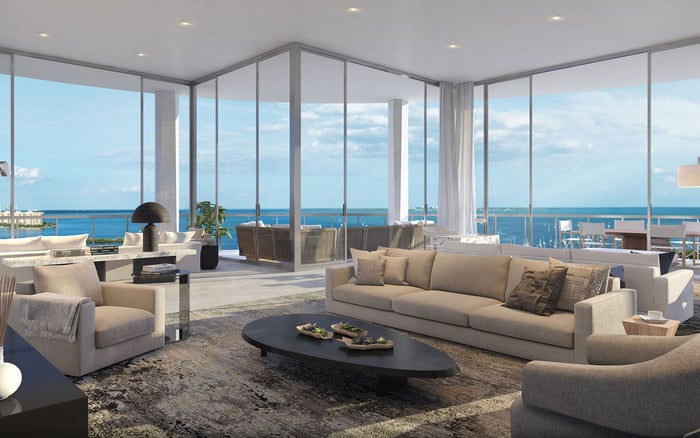
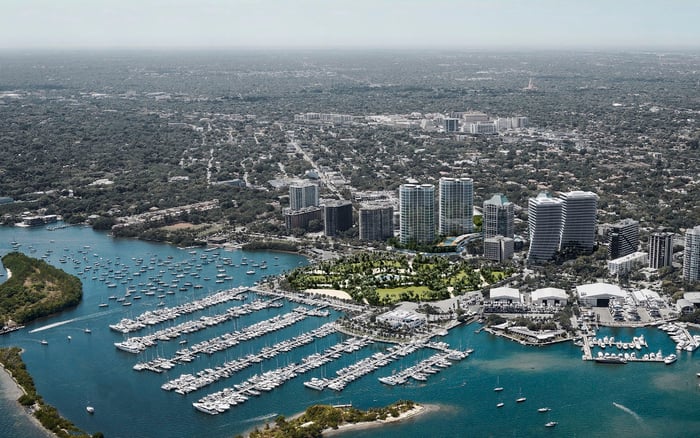
In Coconut Grove, two residential narratives appeal to the same buyer for different reasons: the romance of a walkable, village-like setting and the clarity of a newer, amenity-forward waterfront lifestyle. The Lincoln Coconut Grove reads as classic Grove: intimate scale, neighborhood texture, and an ease that feels collected over time. Vita at Grove Isle expresses a modern counterpoint: privacy, water on all sides, and a contemporary approach to arrival, view corridors, and service. For buyers weighing these addresses, the decision rarely comes down to a single feature. It is an edit. Do you want your daily rhythm to be defined by streets and storefronts, or by a causeway and a gatehouse? Is your version of luxury the patina of place, or the precision of newness? MILLION Luxury frames the comparison through the lenses that matter most at the ultra-premium level: setting, architecture, lifestyle, ownership profile, and long-term usability.
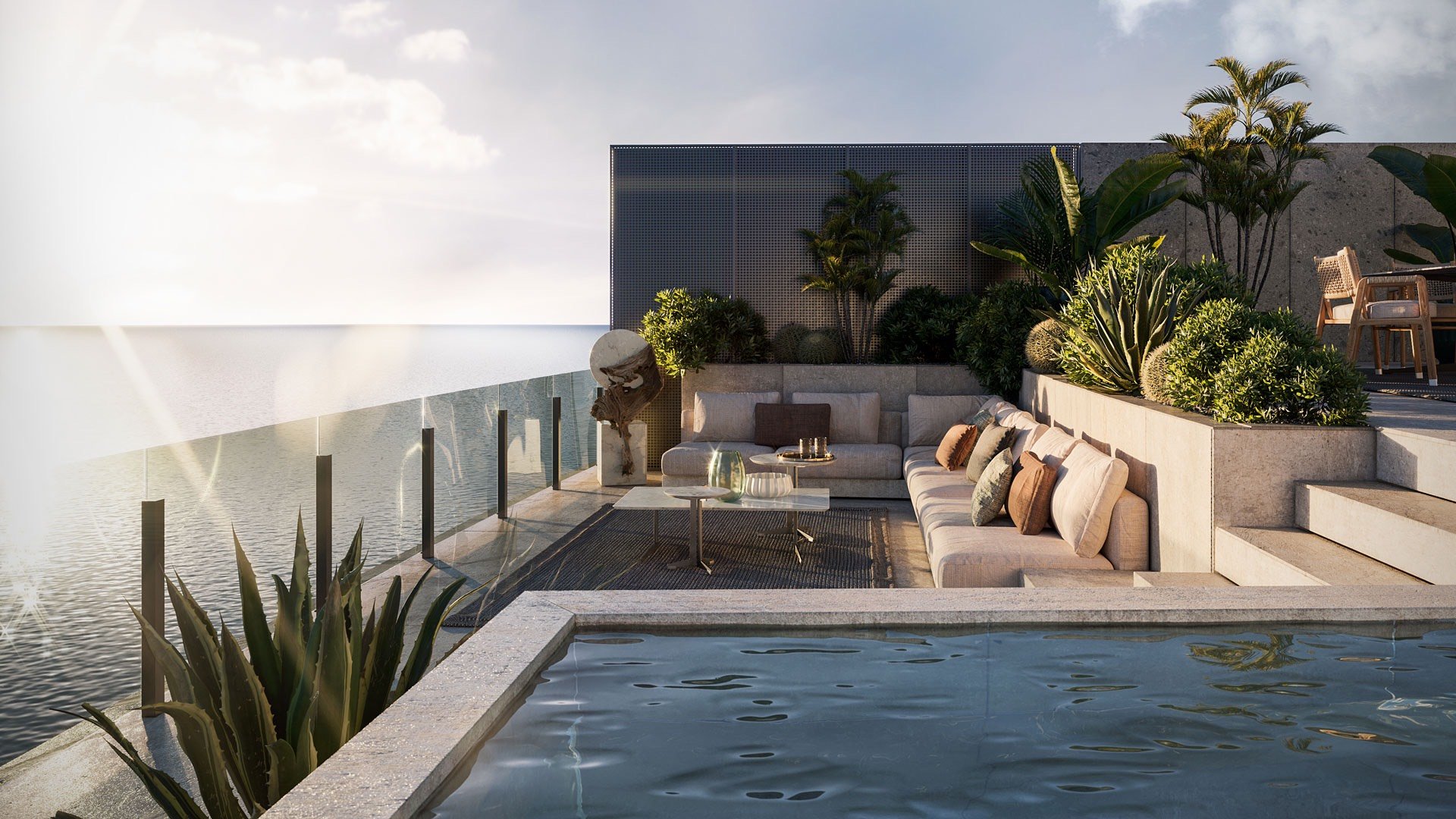
Coconut-grove buyers tend to be unusually specific. They are not simply choosing a home; they are choosing a tempo. The Grove’s best residences trade on two competing ideals that both qualify as luxury: the layered, village-like intimacy of the neighborhood core, and the rare calm of waterfront seclusion.
That is why the conversation between The Lincoln Coconut Grove and Vita at Grove Isle resonates. The Lincoln, by virtue of its Coconut-grove address, signals a life anchored in streetscapes, café culture, and the gentle unpredictability of a historic neighborhood. Vita, on Grove Isle, presents a more modern thesis: access shaped by design, horizon lines defined by water, and the sense that the day begins the moment you cross the threshold.
Neither is objectively “better.” Each is a complete point of view.
The Lincoln’s Old World appeal is, at its core, urban in the best sense of the word. Not dense-textured. The reward is proximity: the ability to step outside and be in the Grove’s social ecosystem without planning a drive or thinking about valet. That walkable ease is difficult to replicate in newer enclaves, and it tends to compound in value the longer you live with it.
Vita, by contrast, is defined by deliberate separation. Grove Isle functions as a calm buffer from the mainland. The island setting creates a psychological shift: fewer casual passersby, more controlled arrivals, and a lifestyle oriented toward water, light, and quiet. For many second-home buyers, that is the point. It is not about being close to everything. It is about being removed from enough.
In practice, your preference shows up in small decisions. If your ideal morning is a walk to a favorite coffee spot and an unplanned lunch close to home, the Lincoln’s posture is compelling. If your ideal morning begins with a view and ends with a sunset that feels insulated from the city’s motion, Vita’s logic tends to win.
“The Old World Charm” buyers mention is not nostalgia for its own sake. It is a preference for residences that feel edited rather than engineered. The Lincoln’s appeal, as a concept, is the sense of a building that belongs to the neighborhood’s story. Charm reads in scale and proportion, in an arrival that feels human, and in an interior mood that favors warmth over spectacle.
Modernity, in Vita’s case, is not just newness. It is an architectural insistence on clean lines, open view corridors, and a more contemporary understanding of privacy. Modern buildings often deliver clarity: lobbies that read like galleries, materials that feel intentional, and amenities arranged to reduce friction between home, wellness, and outdoor living.
If your taste leans toward architectural minimalism and you value the simplicity of a newer building’s systems and planning, Vita will feel aligned. If you value character and a residential experience that feels boutique and rooted, the Lincoln’s tone may feel more natural.
Luxury, at this tier, is optionality. The Grove’s advantage is that it supports a refined life without over-scheduling it. The buyer who thrives here often wants to move between private and social with minimal effort.
In the neighborhood context, The Lincoln can feel like a gateway to the best part of Coconut-grove: the ability to spend an afternoon without a car, to run one errand and end up lingering somewhere else, to keep a routine that stays flexible. It is the kind of lifestyle that becomes more valuable with time, particularly for owners who are in residence for longer stretches.
For buyers who want a similarly elevated Grove experience but with a different contemporary lens, it is worth understanding how other nearby luxury options approach wellness and design. The Well Coconut Grove, for instance, reflects the area’s evolution into a more globally legible luxury market, where lifestyle programming and design intent are part of the purchase.
Vita’s daily life is more resort-like, but in a discreet way. The island dynamic encourages quieter routines: time at home, time on the water, time in amenity spaces designed to feel private rather than public. Many owners will still go into Coconut-grove for dining and culture, but at home the default setting remains calm.
Discretion is often misunderstood. It is not simply security; it is control over exposure.
With an address like Vita at Grove Isle, the privacy story is more explicit. An island setting typically implies fewer access points and more intentional arrivals. This tends to appeal to buyers who travel frequently, keep irregular schedules, or simply want the confidence that their home environment is buffered from the neighborhood’s flow.
The Lincoln’s discretion is a different expression. In the best boutique Coconut-grove buildings, privacy is achieved through scale and familiarity. It is the ease of a lower-profile experience, where your comings and goings do not feel like an event. For some end-user owners, that reads as a more authentic luxury than a grander arrival.
Modern luxury often treats amenities as a system: wellness, pool, outdoor lounges, possibly private dining or gathering spaces-all orchestrated to feel seamless. Vita’s modernity suggests amenities are not an afterthought but part of the building’s identity, shaped to complement waterfront living and a more curated, turnkey ownership profile.
The Lincoln’s charm suggests a different relationship to amenities: fewer, more intimate, and less performative. For many buyers, that is a positive-especially if they do not want their building to feel like a club. They prefer the Grove itself to be the amenity, using the neighborhood’s dining, parks, and waterfront culture as an extension of home.
A parallel can be seen in other Grove projects that emphasize design-forward living while staying connected to the neighborhood. Arbor Coconut Grove is another example of how Coconut-grove’s luxury inventory can feel modern without losing the area’s sense of place.
At the ultra-premium level, the right building is the one that matches how you actually live.
tends to suit the buyer who:
Wants daily walkability and neighborhood texture.
Prefers boutique scale and a residence that feels established.
Values warmth and character over maximal modern minimalism.
Sees Coconut-grove as a primary lifestyle, not a weekend setting.
Vita at Grove Isle tends to suit the buyer who:
Wants a clearer privacy perimeter and an island setting.
Prefers new construction sensibilities and contemporary planning.
Wants water-forward living with an emphasis on quiet.
Treats the home as a retreat that can still access the Grove’s culture.
If you are drawn to the idea of a fully realized, design-centric waterfront campus within Coconut-grove, it can also be useful to compare the island concept against the larger Grove waterfront lifestyle offered by Park Grove Coconut Grove, which has helped define the neighborhood’s newer residential era.
Even for buyers who claim they do not care about resale, the market cares on their behalf. Longevity is often tied to two things: scarcity and enduring desirability.
The Lincoln’s value proposition is anchored by the timelessness of location in Coconut-grove. Walkability, neighborhood identity, and a sense of established place tend to remain in demand across market cycles. Charm is not a line item, but it is a buyer behavior.
Vita’s value proposition may lean on the durability of modern waterfront luxury. For certain buyers, newer buildings offer confidence: contemporary layouts, a fresh amenity set, and the appeal of a more current architectural language. The island setting also reads as inherently scarce, which can matter to the next buyer who wants what feels difficult to replicate.
The practical advice is to underwrite your own usage first. If you will be in residence frequently, choose the lifestyle you will enjoy weekly, not the one you can justify on paper.
When the buildings are both compelling, use these questions to surface the truth:
Do you want your default day to begin on a street or on the water?
Does your style lean toward collected warmth or gallery-like minimalism?
Is the Grove your living room, or is your home the retreat from it?
How important is a controlled arrival experience to you?
Would you rather have fewer, more intimate building amenities, or a fuller amenity system designed into the property’s identity?
When you answer honestly, the choice between The Lincoln Coconut Grove and Vita at Grove Isle becomes less about comparing features and more about selecting a posture you will enjoy inhabiting.
Is The Lincoln Coconut Grove better for walkability? Generally yes, because a Coconut-grove address closer to the neighborhood core favors on-foot routines.
Does Vita at Grove Isle feel more private day to day? Typically yes, since an island setting tends to create a more controlled sense of arrival and separation.
Which option fits a primary residence lifestyle more naturally? Many full-time owners prefer the neighborhood fabric of Coconut-grove, but it depends on your routine.
Which feels more “resort-like” without being hotel-driven? Vita at Grove Isle often reads as more retreat-oriented due to its water-forward, modern framework.
Is “Old World charm” only about architecture? No, it is also about scale, atmosphere, and how naturally a building fits the surrounding streetscape.
Will modernity matter for long-term enjoyment? It can, especially if you prioritize contemporary layouts, newer systems, and a cleaner design language.
How should I compare amenities between the two? Focus on what you will use weekly: wellness, outdoor living, and convenience tend to matter most.
Are these homes better suited as second homes or end-user residences? Either can work, but The Lincoln often suits an integrated Grove life while Vita suits retreat living.
Does Coconut-grove offer other luxury options to benchmark? Yes, comparing nearby residences like The Well Coconut Grove or Arbor can clarify your preferences.
What is the simplest way to choose between them? Decide whether you want village texture or island calm as the defining feature of your daily life.
When you're ready to tour or underwrite the options, connect with MILLION Luxury.
If branded residences are on your mind — as a home or as an allocation — we would be glad to share what we are seeing, privately.
Begin a quiet conversation