A buyer-focused comparison of how private bowling is integrated at Estates at Acqualina versus the urban entertainment model surrounding Paramount Miami Worldcenter, with a focus on exclusivity, setting, pricing position, and lifestyle fit.
In South Florida luxury real estate, a private bowling alley is memorable precisely because it is so uncommon. Yet for discerning buyers, the more important question is not whether a building has lanes at all, but how that amenity is integrated into ownership. In this comparison, Estates at Acqualina and Paramount Miami Worldcenter offer two very different answers.
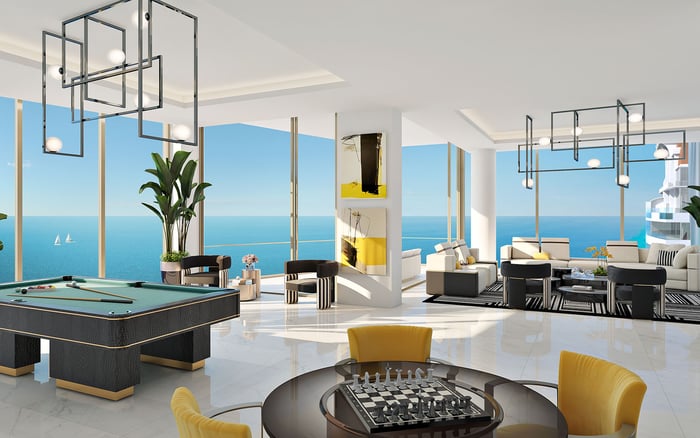
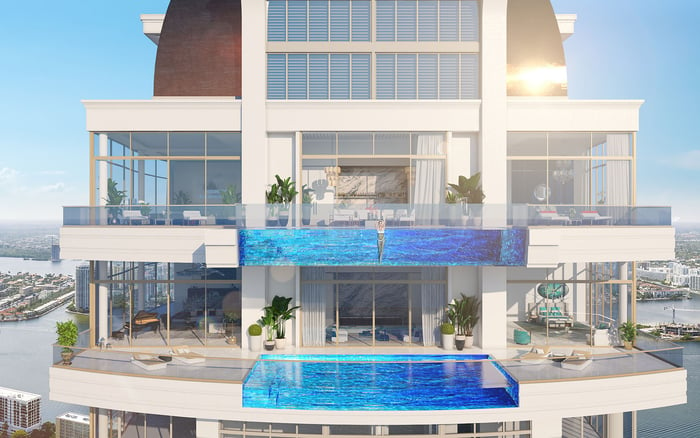
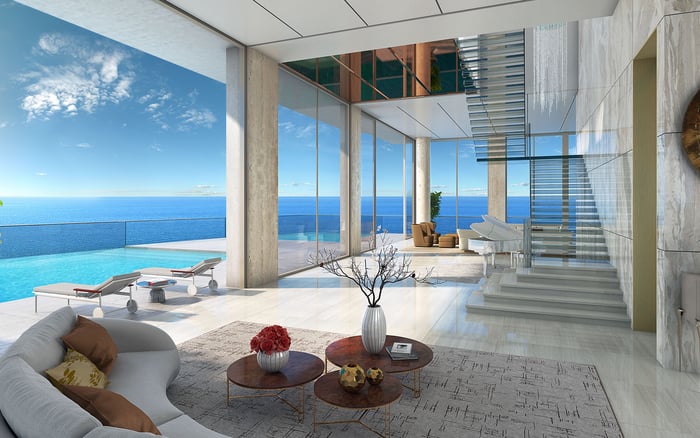
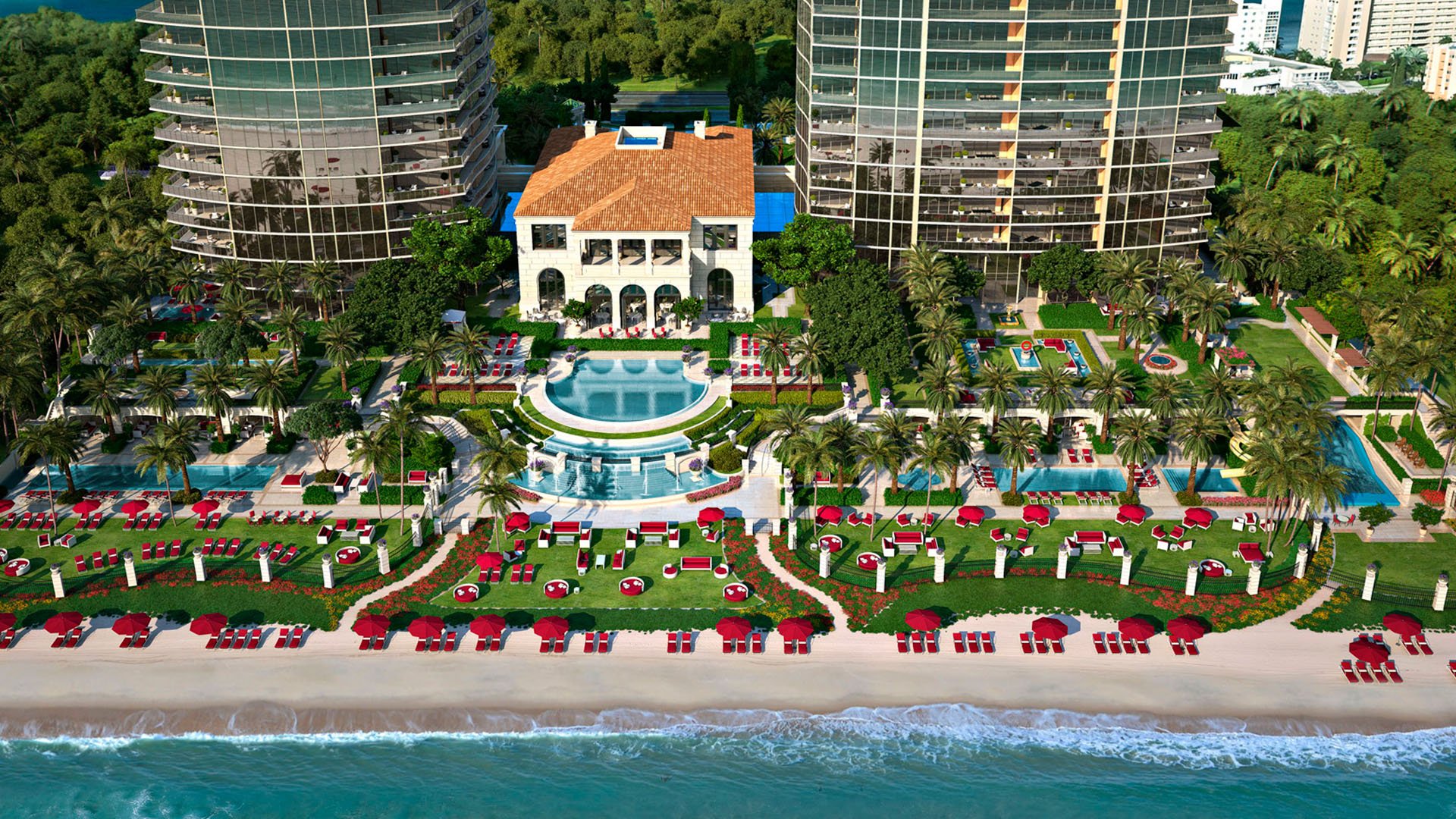
At Estates at Acqualina in Sunny Isles, bowling is set within a deliberately private, resort-style residential environment tied to the Acqualina brand. It forms part of an owner-exclusive amenity composition that also includes beach access, spa programming, dining, fitness, and concierge-style service. The effect is cohesive. Recreation is not an add-on; it is embedded in a highly controlled residential world designed to keep owners on property by choice.
Paramount Miami Worldcenter, by contrast, is best understood through its Downtown context. The tower is positioned within a larger mixed-use district defined by restaurants, retail, entertainment, and public energy. A private resident-only bowling alley is not publicly documented in the project and district materials. That matters because it reframes the comparison. Paramount is not competing as a secluded resort enclave. It is competing as an urban luxury address embedded in a broader entertainment ecosystem.
For readers of MILLION Luxury, that distinction is the story.
At Estates at Acqualina, the bowling alley carries meaning beyond novelty. It signals that leisure has been privatized and elevated within the ownership experience. In a market where many towers offer screening rooms, fitness centers, and lounges, a private bowling amenity suggests a deeper commitment to experiential luxury.
Just as importantly, the amenity is not presented as a commercial attraction. It is owner-exclusive. That exclusivity aligns with the broader Acqualina concept, which feels closer to a destination resort community than to a conventional condominium tower. Residents are not simply purchasing square footage. They are buying into a curated rhythm of service, privacy, and recreation.
That positioning helps explain why the project often resonates with second-home buyers and households seeking a turnkey coastal lifestyle. The private bowling alley makes sense because it sits alongside beach service, spa culture, dining access, and hospitality-minded management. In this context, it feels coherent rather than theatrical.
Within the broader Sunny Isles luxury conversation, that approach also helps Estates at Acqualina stand apart from neighboring trophy addresses such as Bentley Residences Sunny Isles, St. Regis® Residences Sunny Isles, and The Ritz-Carlton Residences® Sunny Isles. All speak to an elevated coastal buyer, but Acqualina’s private bowling component underscores how strongly the amenity program leans into fully internalized resort living.
Paramount Miami Worldcenter approaches luxury from nearly the opposite direction. Rather than centering its identity on a rare private recreational feature, it benefits from being part of a large-scale urban district in Downtown Miami. Here, the surrounding environment does a meaningful share of the lifestyle work.
That means walkability, immediate access to dining and entertainment, and proximity to business and cultural nodes become central to the value proposition. For many buyers, especially those who want Miami to feel active and connected, that may be more compelling than a deeply private amenity stack. The convenience is external as much as internal.
This model places Paramount in dialogue with other Downtown and Brickell luxury products such as Aston Martin Residences Downtown Miami and Waldorf Astoria Residences Downtown Miami, where buyers often prioritize skyline presence, connectivity, and proximity to the city’s core. In that setting, entertainment does not need to be fully contained behind private doors to feel luxurious.
Still, the absence of a documented private resident-only bowling alley remains the essential difference. Paramount’s entertainment identity is district-based and more public-facing. Acqualina’s is ownership-linked and intentionally secluded.
If a buyer is trying to decide which integration feels more luxurious, the answer depends on what luxury means in daily life.
At Estates at Acqualina, bowling is a controlled amenity within a private realm. Residents can move from residence to spa to beach to dining to recreation without leaving the property’s curated atmosphere. That continuity creates a distinctive emotional effect: life feels insulated, serviced, and quietly ceremonial.
At Paramount Miami Worldcenter, the reward is not insulation but access. The building participates in a district where activity, foot traffic, events, and public energy are part of the appeal. The lifestyle is more porous. Owners are connected to the city rather than buffered from it.
Neither model is inherently superior. But they serve different personalities. Buyers who equate luxury with discretion, owner exclusivity, and resort continuity will likely find Acqualina’s bowling amenity more meaningful. Buyers who value immediacy, walkability, and the momentum of Downtown may see little need for a private bowling room at all.
The market positioning of the two properties reinforces this divergence. Estates at Acqualina has been associated with asking prices roughly in the $3 million to $15 million-plus range, while Paramount Miami Worldcenter has been associated with a broader range beginning around $500,000 and extending beyond $5 million.
Those figures fluctuate, of course, but the gap is directionally revealing. Acqualina’s pricing supports an ultra-luxury ownership model in which unusual, private amenities help justify the sense of rarity. Paramount’s range aligns with a luxury tower that draws strength from its urban district, broader accessibility, and mixed-use context.
In practical terms, that means the bowling alley at Acqualina is not merely entertainment. It is part of the narrative owners are paying for: privacy, differentiation, and a resort-grade environment that feels uncommon in South Florida residential inventory. Paramount’s value, meanwhile, is anchored less in one unusual internal feature and more in the cumulative convenience of Downtown living.
The best way to compare these two properties is to imagine how an owner intends to use the residence.
For a family purchasing a coastal retreat, a second-home base, or a full-service oceanfront residence where leisure is meant to happen in-house, Estates at Acqualina presents the more integrated concept. The bowling alley belongs to a private ecosystem built around comfort, service, and time spent on property.
For a buyer who wants a luxury condominium that functions as a launch point into Miami, Paramount Miami Worldcenter offers a more urban proposition. Downtown access, mixed-use convenience, and nearby entertainment may matter more than whether bowling happens inside the tower or elsewhere within the larger city experience.
That is why this is less a contest of amenities than a comparison of luxury architectures. One internalizes lifestyle. The other urbanizes it.
When comparing the integration of private bowling alleys, Estates at Acqualina is the clearer and more complete expression of the idea. Its bowling amenity is private, owner-linked, and consistent with a broader resort-style framework in Sunny Isles. It feels deliberate, not decorative.
Paramount Miami Worldcenter is compelling for a different reason. It translates luxury through Downtown connectivity, mixed-use momentum, and access to public-facing entertainment. For buyers who want city energy over resort seclusion, that can be equally persuasive.
But if the standard is the integration of a private bowling alley into residential life, Acqualina leads because the amenity is fully embedded in the ownership experience rather than implied by the surrounding district.
Does Estates at Acqualina have a private bowling alley? Yes. The amenity is presented as part of its owner-exclusive residential offering.
Does Paramount Miami Worldcenter have a resident-only bowling alley? No. A private resident-only bowling alley is not publicly documented in the project and district materials provided.
Why does the bowling alley matter in this comparison? Because it highlights how each property defines luxury: private resort immersion versus urban access and entertainment nearby.
Is Estates at Acqualina more resort-oriented than Paramount Miami Worldcenter? Yes. Its concept is much closer to a destination resort community than a typical urban condominium tower.
Is Paramount Miami Worldcenter more connected to public entertainment? Yes. Its value proposition is tied to the larger Downtown mixed-use district and its restaurants, shops, and events.
Which property is better for a second-home buyer? Estates at Acqualina may be the stronger fit for buyers seeking a fully serviced coastal retreat with private recreation on-site.
Which property is better for walkability and city access? Paramount Miami Worldcenter is generally better suited to buyers prioritizing Downtown proximity and daily convenience.
How do their pricing positions differ? Estates at Acqualina occupies a higher ultra-luxury range, while Paramount Miami Worldcenter spans a generally lower luxury entry point.
Is a private bowling alley common in South Florida luxury towers? No. It remains an unusual amenity, which is part of why Acqualina’s offering stands out.
What is the simplest takeaway for buyers? Choose Acqualina for private resort living with owner-exclusive leisure, and Paramount for a luxury home integrated with Downtown energy.
For a confidential assessment and a building-by-building shortlist, connect with MILLION Luxury.
If branded residences are on your mind — as a home or as an allocation — we would be glad to share what we are seeing, privately.
Begin a quiet conversation