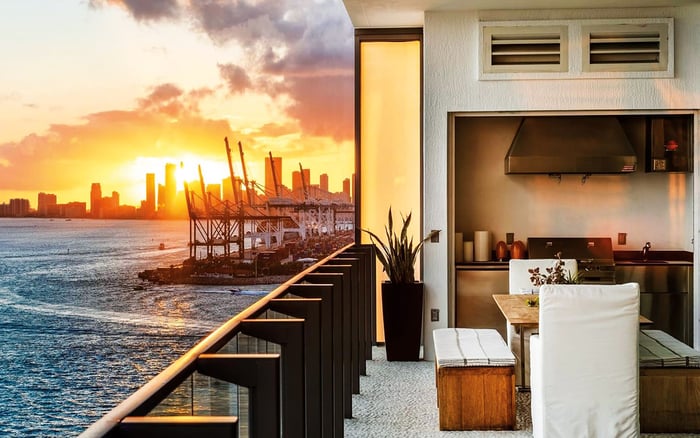
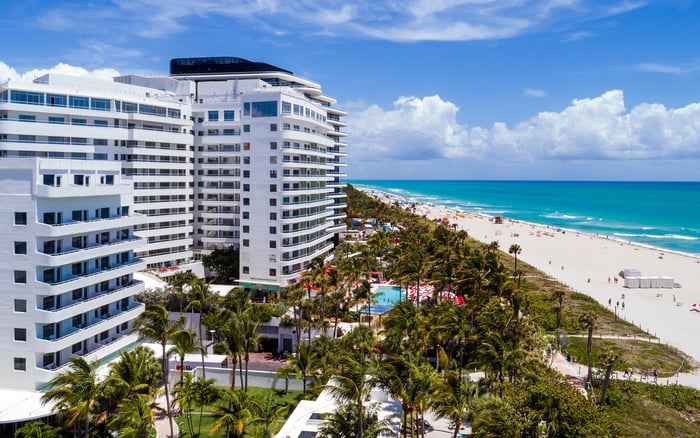
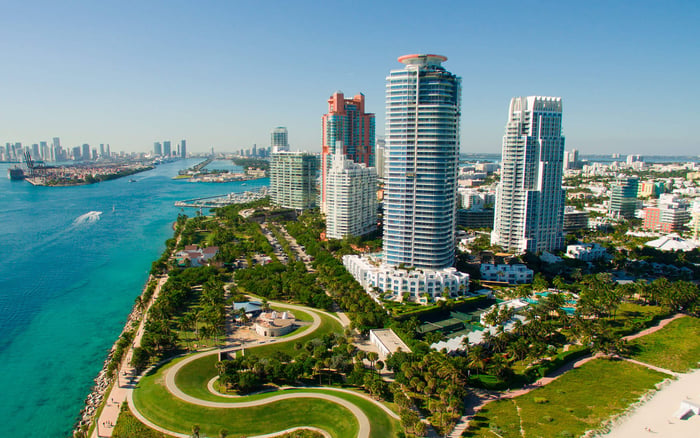
A buyer-oriented comparison of two South of Fifth icons: Apogee’s boutique privacy versus Continuum’s resort-scale legacy, with practical guidance for lifestyle fit and resale positioning.
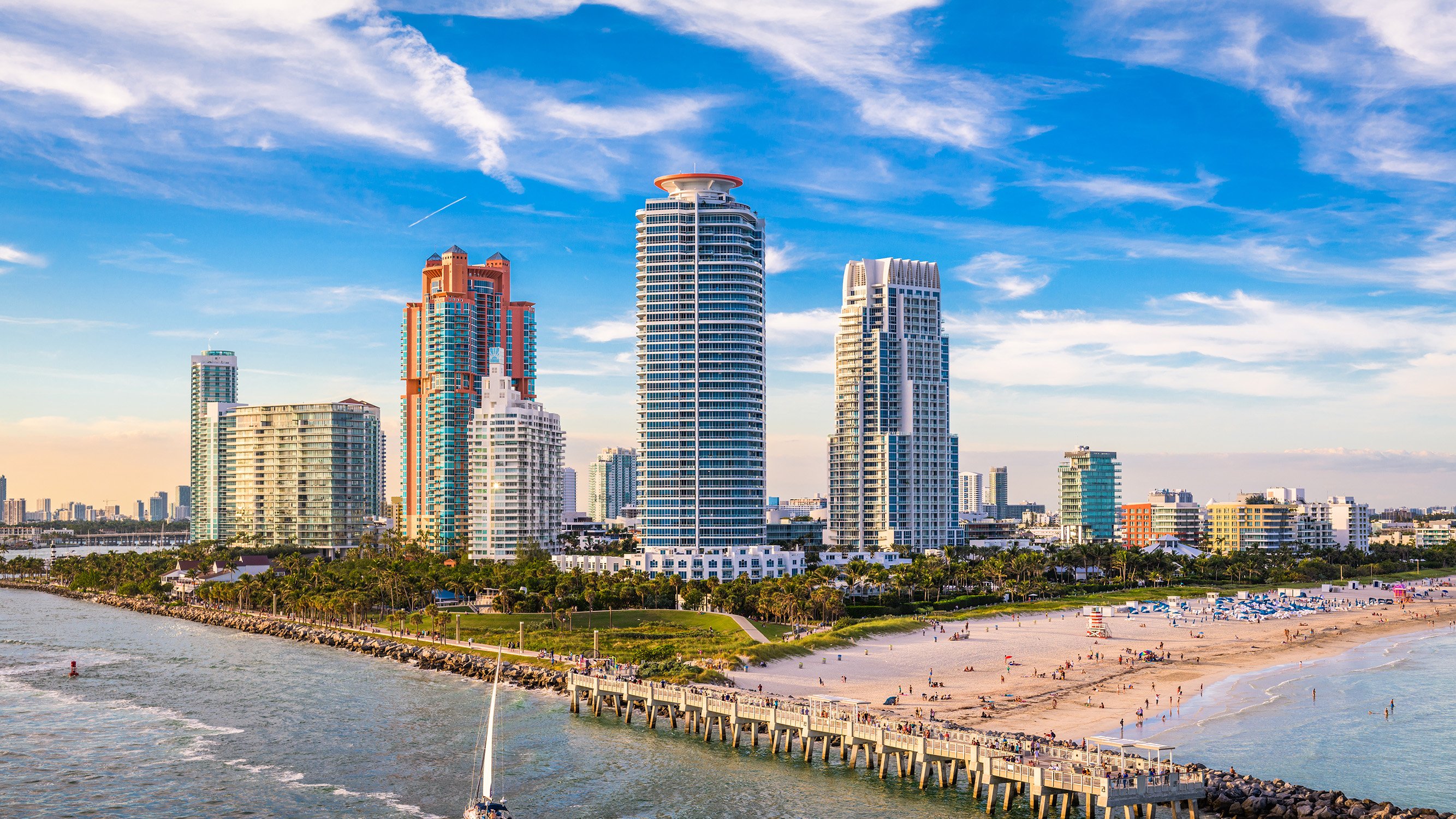
In South Florida luxury, “exclusive” is often treated as shorthand for price. In South of Fifth, it’s more precise. Exclusivity is a lived experience-defined by arrival choreography, density, sightlines, service culture, and how protected you feel moving from car to lobby to elevator to residence.
That’s why Apogee South Beach and Continuum on South Beach are so often discussed in the same breath. They occupy similarly rare Miami Beach territory, yet they deliver two distinct philosophies of ultra-premium living. One is oriented around a private, almost club-like hush within a small community. The other is a legacy campus that has long defined what “resort residential” can look like at the southern tip of Miami Beach.
For a buyer choosing between them, the best decision is rarely about which building is “better.” It’s about which expression of exclusivity matches your temperament, your schedule, and your expectations-both when you’re in residence and when you’re away.
At the top end, exclusivity typically falls into two broad categories.
Boutique scarcity
is the Apogee-style proposition: fewer neighbors, fewer moving parts, and a more controlled social environment. The appeal is a building that feels like an extension of your private home-not a destination for a constantly rotating cast.
Cultivated ecosystem
is the Continuum-style proposition: a larger, established residential world where the experience is defined by breadth. The appeal is convenience and continuity-daily life that can be fully contained within the property’s cadence.
Neither is inherently more elite. Scarcity can feel rarified, while scale can deliver service depth and amenity range that boutique buildings can’t always match. The real question is whether you want your building to disappear into the background-or to operate as an all-day, all-season framework for how you live.
The first test of exclusivity is how you enter-and how quickly you feel separated from the city.
At Apogee, the expectation is a low-friction arrival: direct, discreet, and predictable. It tends to suit owners who keep irregular hours, prefer quieter lobbies, and value a consistent, controlled environment. In a boutique setting, you’re more likely to recognize faces, and staff can calibrate service around a smaller set of preferences-often translating into the feeling of being “known” in the best way.
At Continuum, arrival more often reads as entering a self-contained world. With an established legacy typically comes a more layered operations and security structure, and the experience can feel grander and more resort-oriented. Some owners prefer that sense of amplitude-particularly those who split time among residences and want a place that functions smoothly at scale.
The practical takeaway: if privacy means minimizing incidental interaction, boutique scarcity usually wins. If privacy means living expansively inside a highly managed environment, the ecosystem model can feel just as protective.
Amenities are where the two philosophies separate most clearly.
Apogee’s appeal is often curation. Owners who already belong to clubs, travel frequently, or entertain in a more intimate style may prefer a tighter set of amenities executed at a high level rather than an extensive roster they won’t use. In that mindset, less can feel like more-because the building stays calm and operationally simple.
Continuum’s legacy points in the other direction: depth and variety. For many buyers, the value is the ability to build routine around the property itself. That can matter for seasonal residents, families, and anyone who wants a familiar, on-site cadence that doesn’t rely on planning reservations around town.
If you’re deciding between them, map your real week-not your aspirational one. If most of your day-to-day happens outside the building, boutique amenities can be ideal. If your happiest routine is contained and effortless, a resort-scale campus often reads as the ultimate luxury.
Luxury buyers often underestimate how much building scale shapes social and family dynamics.
Entertaining:
Boutique buildings typically support a more controlled style of hosting. Guests arrive into a quieter environment, privacy is easier to maintain, and the building itself doesn’t compete with the event you’re creating. Continuum’s ecosystem model can excel in a different way-especially when you want guests to have their own complete on-site experience without the host orchestrating every detail.
Family rhythm:
Families often value the predictability of a larger amenity ecosystem, where a full day can be structured without leaving the property. Boutique living can also work beautifully for families, particularly when calm, low-traffic common areas are the priority.
Time away:
If you’re frequently out of town, a legacy ecosystem can feel reassuring because operations are built for continuity. Boutique buildings can also be excellent for lock-and-leave ownership, with the added advantage that fewer residents can mean fewer variables.
For buyers also weighing newer oceanfront inventory north of South Beach, it can be helpful to view 57 Ocean Miami Beach as a modern counterpoint in the broader Miami Beach conversation: a different neighborhood cadence, with a similarly residential tone.
At this tier, resale performance is rarely about finishes alone. It’s about whether a building’s identity stays coherent as the market evolves.
Apogee’s boutique scarcity can support value through rarity and consistency. The buyer pool for ultra-private, low-density living is persistent, and the proposition is easy to articulate: fewer neighbors, more discretion.
Continuum’s legacy ecosystem can support value through enduring relevance. A property that functions as a destination within its own gates can stay in demand because it resolves convenience, security, and lifestyle in a single address.
A practical strategy is to decide which story you want your future buyer to tell. Is it: “I wanted the most discreet, boutique expression of South of Fifth”? Or: “I wanted the proven, full-service residential campus at the edge of the ocean”? Both narratives are compelling-but they pull different personalities and timelines.
South of Fifth remains a uniquely walkable, restaurant-forward pocket where the highest luxury is often the ability to move through your day with minimal friction. At the same time, South Florida’s ultra-premium map continues to expand.
If you’re comparing lifestyle platforms, it helps to consider how a resort-scale ecosystem in South Beach relates to ecosystem-style projects in other nodes. For example, Continuum Club & Residences North Bay Village signals how branded residential ecosystems are being reinterpreted beyond South Beach, with different waterfront geometry and commuting realities.
Likewise, buyers who prefer a more urban, finance-and-dining-forward routine sometimes look west to Brickell, where 2200 Brickell represents a different kind of exclusivity: less beach, more city, with privacy shaped by neighborhood energy rather than shoreline seclusion.
These comparisons clarify the original question. Apogee and Continuum aren’t simply buildings-they’re two mature answers to the same South Florida prompt: what does it mean to live at the highest level in a place where the outside world is always close?
If you’re torn between Apogee and Continuum, pressure-test the choice through five lenses:
Do you feel calmer with fewer neighbors, or energized by a larger community?
Do you want service to feel intimate and anticipatory-or robust and systematized?
Will you truly use a full spectrum of on-site experiences, or do you prefer the city to be your amenity?
Is privacy about invisibility, or about being comfortably managed within a larger environment?
Which story is easier for you to hold-and easier for the next buyer to desire?
In South of Fifth, exclusivity isn’t a trophy. It’s a daily condition. The right choice is the one that makes life feel simpler, quieter, and more intentional the moment you step inside.
Is Apogee South Beach considered more exclusive than Continuum on South Beach? Apogee can read as more exclusive in a boutique, low-neighbor way, while Continuum’s exclusivity is expressed through a larger, resort-style ecosystem.
Which building offers a more private day-to-day experience? Many buyers associate boutique buildings like Apogee with fewer chance encounters and a quieter common-area rhythm.
Which is better for buyers who want amenities to replace going out? Continuum’s legacy typically aligns with an on-property lifestyle where the grounds and amenities can structure your routine.
Do both properties fit the South of Fifth lifestyle? Yes. Both connect closely to South of Fifth walkability and the coastal setting, though the day-to-day internal vibe differs significantly.
Which is better for entertaining? Apogee can feel more controlled and discreet for intimate hosting, while Continuum can suit guests who want a broader on-site experience.
How should a buyer think about resale between the two? Frame it around identity: boutique scarcity tends to attract privacy-first buyers, while legacy ecosystems tend to attract lifestyle-and-convenience buyers.
Is one option more suitable for seasonal residents? Seasonal residents often appreciate a property that operates smoothly as a self-contained environment, though boutique ownership can also be ideal for lock-and-leave simplicity.
Do these buildings attract different buyer personalities? Generally, yes: Apogee skews toward buyers who value quiet and control, while Continuum tends to appeal to those who enjoy a more expansive residential world.
How do these compare to newer Miami Beach options? Newer oceanfront projects can bring a different design language and neighborhood cadence, so it helps to compare the lifestyle platform-not just the finishes.
What is the simplest way to choose between them? Decide whether your definition of rare is boutique silence or resort-scale ease, then choose the building that matches how you actually live.
To compare the best-fit options with clarity, connect with MILLION Luxury.
If branded residences are on your mind — as a home or as an allocation — we would be glad to share what we are seeing, privately.
Begin a quiet conversation