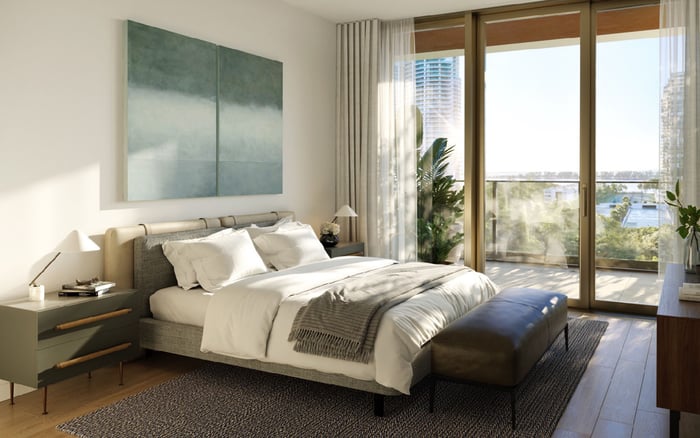
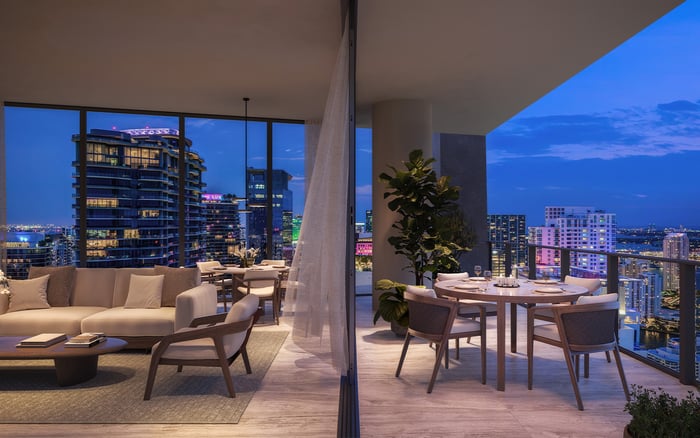
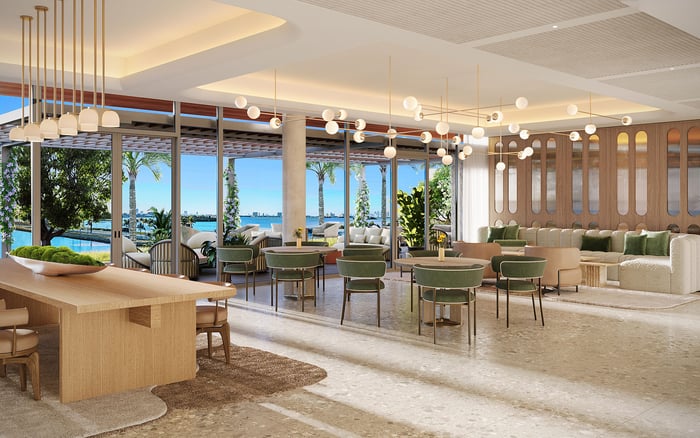
A buyer-oriented look at how two Brickell-adjacent luxury addresses approach arrivals, privacy, and day-to-night movement, with a focus on what discretion really means in practice.
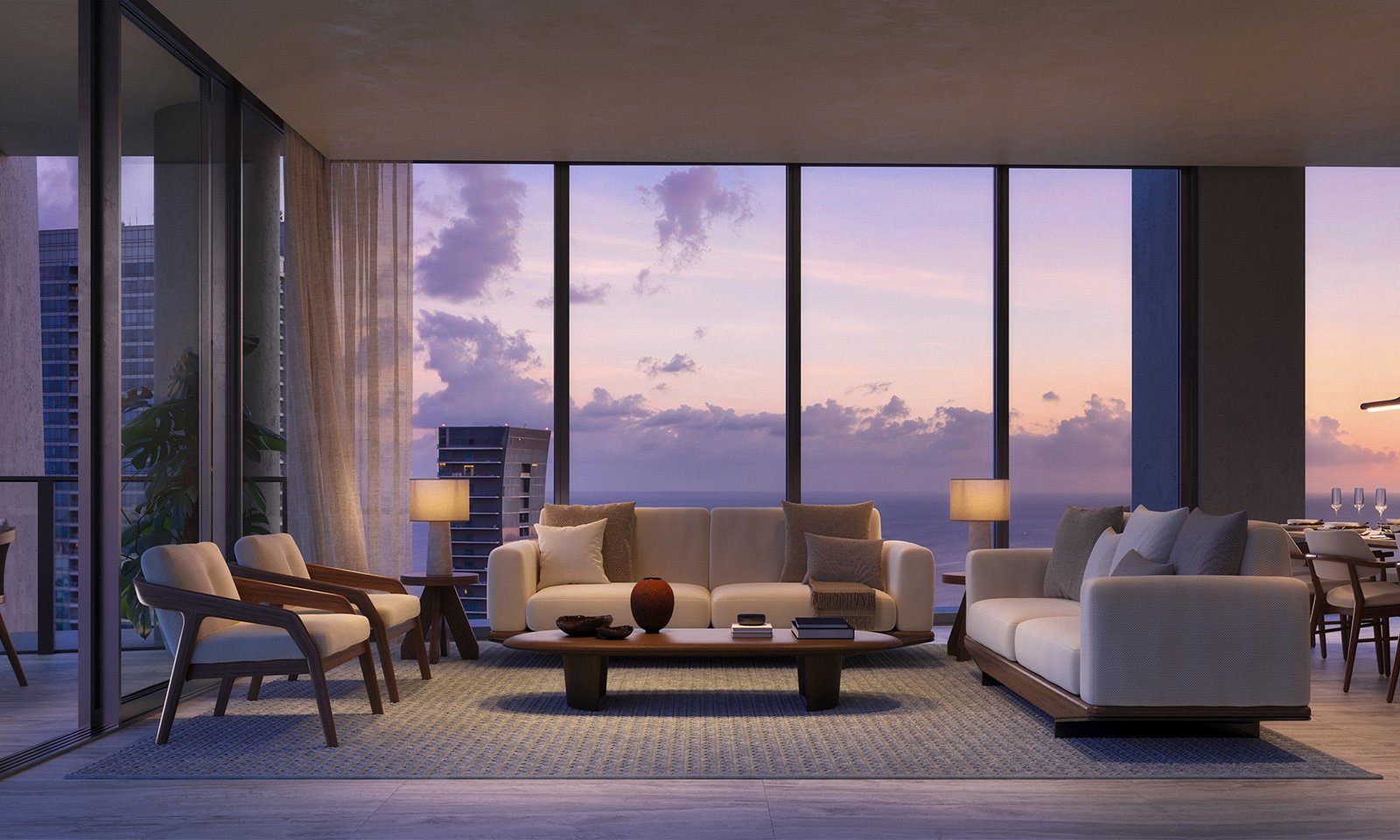
In South Florida’s upper tier, a “VIP entrance” isn’t so much a perk as an operating philosophy. Discretion is engineered through approach, timing, and separation-where a vehicle is seen, where a resident is recognized, and how efficiently a guest moves from curb to private interior without crossing the building’s social bloodstream.
For buyers comparing The Residences at Mandarin Oriental, Miami with ORA by Casa Tua in Brickell, the real question is less whether there’s a secondary door and more how arrivals are managed on an ordinary day. Think morning school drop-offs, afternoon deliveries, and late-night returns-all while keeping the resident experience calm and staff control clear.
This is discretion as lived experience: not secrecy for its own sake, but the confidence that your comings and goings are quietly protected.
Discretion tends to express itself in two distinct directions.
One is resort-style privacy: a quieter perimeter, a more secluded arrival, and a lobby sequence that reads as serene even when the city is busy. This is the emotional promise many buyers associate with The Residences at Mandarin Oriental, Miami, where the brand expectation is measured, composed hospitality.
The other is controlled social energy: a building can be vibrant, restaurant-forward, and culturally present, yet still deliver discretion by separating resident circulation from guest circulation and by controlling lines of sight. That’s the appeal many associate with ORA by Casa Tua Brickell, where lifestyle and membership-style rhythms tend to shape how arrivals feel.
Both approaches can qualify as “VIP.” The difference is what the building is optimizing for: quiet invisibility or confident selectivity.
A truly discreet entrance is rarely a single threshold. It’s a sequence.
Start outside the property line. Clarify where vehicles queue, how often idling occurs, and whether drop-off points are visible from neighboring sidewalks or adjacent towers. In Brickell, curbside moments can be surprisingly public; a well-considered approach shortens the time you’re on display.
Next, evaluate the handoff. The most effective VIP arrival minimizes friction: as soon as the car door opens, you should already be moving into controlled territory. Look for a protected porte-cochere, weather coverage, and a valet workflow that doesn’t force residents to share space with event traffic.
Then consider sightlines. Discretion is visual. A lobby can feel glamorous and still be discreet if it’s layered-angled walls, privacy screens, and separate corridors that pull residents off the room’s centerline.
Finally, ask about separation of systems. Elevators, loading, staff routes, and package rooms aren’t glamorous, but this is where privacy is won or lost. If staff must repeatedly cross the resident lobby, the building reads busier and feels less controlled.
Mandarin Oriental buyers often prioritize predictable quiet. The discreet-arrival ideal here is a hotel-grade sequence: the sense the building can absorb activity without broadcasting it.
In practice, that means an arrival experience buffered from the street. You’re looking for an entry that isn’t just “private,” but psychologically removed from traffic and casual footfall. The most successful luxury hospitality environments create a gentle decompression: covered arrival, immediate greeting, then a transition that reads as residential rather than transactional.
If discretion is your priority, focus on whether the lobby experience is designed to be legible without being exposed. A calm space can still run efficiently when staff positions are strategically placed and resident pathways don’t intersect with guest gathering zones.
For Brickell buyers also weighing other benchmark residential experiences, it can help to compare the “arrival mood” against developments with known attention to residential separation, such as 2200 Brickell. The goal isn’t sameness; it’s clarity. Does the building feel like it belongs to residents first, even when guests are present?
ORA by Casa Tua speaks to a different luxury buyer: someone who wants a building that feels alive, yet still expects the personal insulation of an elite address.
In this model, discretion is less about silence and more about management. The property can carry a stronger day-to-night rhythm while preserving resident privacy through controlled access points and circulation choices. On a tour, watch how the building handles “mixed intensity” moments: the elevator bank at peak hours, the transition between public-facing lifestyle zones and resident-only areas, and how staff guide guests without making residents feel processed.
A well-run social-forward property succeeds when it gives residents options. The most discreet VIP entrance is sometimes not the most hidden door, but the most flexible one: a way to enter without crossing a crowd, to reach your residence without stopping in a public lobby, and to host guests without giving them a map to your routine.
For additional Brickell context, note how other high-profile luxury towers think about separate arrivals and identity, including 888 Brickell by Dolce & Gabbana. Even when the aesthetic is bold, the best buildings still protect resident movement.
Many buyers over-index on the entrance itself and under-evaluate what comes next. If discretion is the priority, the post-arrival sequence is the real test.
Consider elevator privacy. Are there resident-only elevator cores? Are there destination controls that reduce waiting and mingling? Are there sightlines from lounge seating into elevator vestibules? Small design choices can create the feeling of being watched-or the opposite: being insulated.
Consider package and delivery flow. A discreet building has a service plan that keeps deliveries from becoming a lobby performance. Ask where packages are received, how they’re stored, and whether residents can retrieve items without moving through a front-desk crowd.
Consider staff circulation. True luxury is often invisible. When staff and maintenance teams have their own routes and staging areas, the building feels calmer and residents feel less observed.
If you want a reference point outside Brickell’s urban intensity, compare the psychological effect of arrival at a more leisure-oriented waterfront building, such as 57 Ocean Miami Beach. Even if the setting differs, the principle holds: controlled transitions create comfort.
VIP discretion isn’t anti-social; it’s pro-control.
If you entertain, you want guests to feel welcomed, not interrogated. You also want boundaries: guests should have a clear route to where you’re meeting them, and a clear limit to where they can roam. In the best buildings, guest flow is hospitality-driven, while resident flow is privacy-driven.
Ask specifically how guest arrivals are handled during peak periods. Where do ride-shares drop? Where do guests wait? Is there a way to keep that waiting behavior from becoming a lobby scene residents must cross? The answers reveal whether discretion is embedded in operations-not just design.
If your definition of discretion is minimal exposure and a tranquil cadence, the Mandarin Oriental approach will often feel aligned: quieter transitions, fewer sharp edges, and a sense of being “held” by the property the moment you arrive.
If your definition of discretion is being part of the city without being consumed by it, ORA’s approach can be compelling: lifestyle-forward energy paired with controlled access, multiple routes, and a more curated kind of visibility.
The most practical way to decide is to role-play your own week.
If you do early departures and late returns, prioritize lighting, covered drop-offs, and quick elevator access.
If you host often, prioritize guest management: where people wait, how they’re directed, and how your residence remains private.
If you travel frequently, prioritize staff continuity and operational maturity: a building that can handle your absence without creating exposure.
In Brickell, discretion isn’t about disappearing. It’s about choosing exactly when-and how-you appear.
What does “VIP entrance” typically mean in a luxury condo tower? It typically signals a resident-prioritized arrival route with more privacy, tighter security control, and smoother curb-to-elevator movement.
Is a separate entrance always more private than the main lobby? Not always. Privacy depends on sightlines, staffing, and whether the entrance reliably avoids guest traffic at peak times.
How can I assess discretion during a showing? Visit at different times of day and watch how valet, ride-shares, and guests move through the same spaces.
Do social, lifestyle-driven buildings sacrifice resident privacy? They don’t have to. The best properties separate circulation and manage access so residents can opt into-or out of-the scene.
What should I ask about deliveries and packages? Ask where items are received and stored, and whether retrieval routes keep residents out of the public lobby flow.
Which matters more for privacy: security desk or elevator design? Elevator design is often the bigger factor because it determines how much time you spend waiting-and being seen.
How do ride-share drop-offs affect discretion in Brickell? They can create congestion and visibility, so a protected, well-managed drop zone is a meaningful advantage.
Can valet operations impact day-to-day comfort? Yes. Efficient valet reduces curbside bottlenecks, noise, and the feeling of performing your arrival in public.
Is “discretion” mainly a design feature or an operations feature? Both, but operations is decisive: staffing patterns and daily protocols determine how spaces actually behave.
What is the simplest way to choose between two privacy philosophies? Choose the one that matches your routine: tranquil, hotel-grade calm versus controlled, lifestyle-forward access.
For a confidential assessment and a building-by-building shortlist, connect with MILLION Luxury.
If branded residences are on your mind — as a home or as an allocation — we would be glad to share what we are seeing, privately.
Begin a quiet conversation