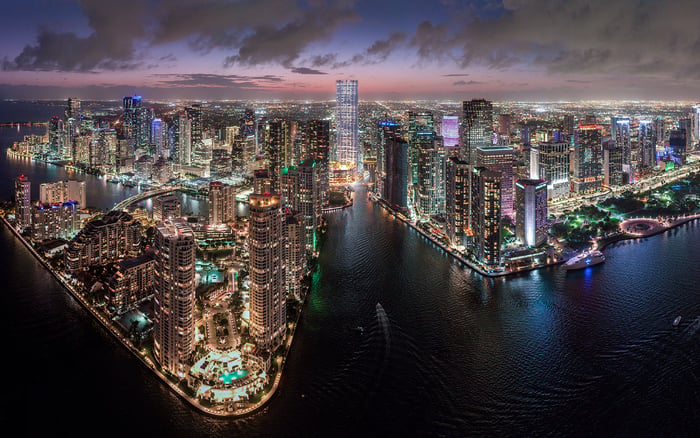
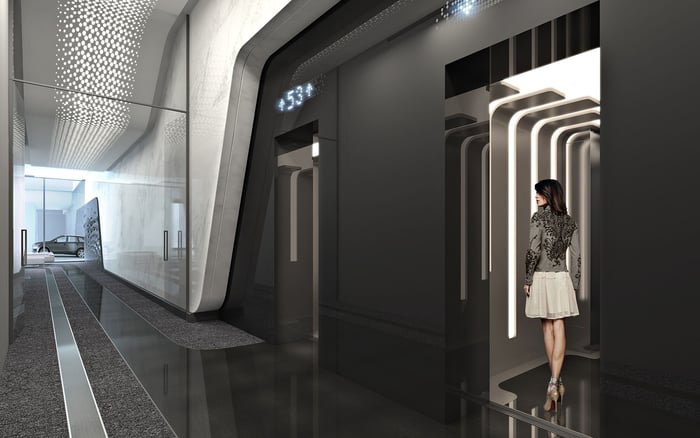
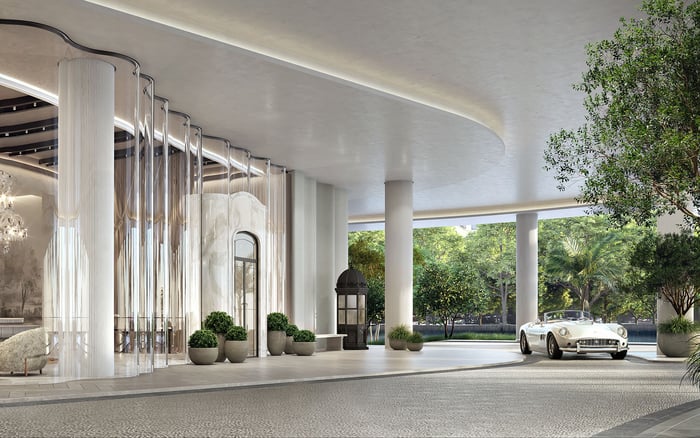
Two fashion-branded towers can promise the same word, luxury, yet feel entirely different the moment you enter. In South Florida, the lobby has become a signature room: a threshold that sets behavioral cues, calibrates privacy, and signals whether the building’s culture leans toward theatrical arrival or quiet composure. This editorial compares the aesthetic nuances buyers tend to notice first, and remember longest, at 888 Brickell by Dolce & Gabbana and Armani Casa Residences Pompano Beach.
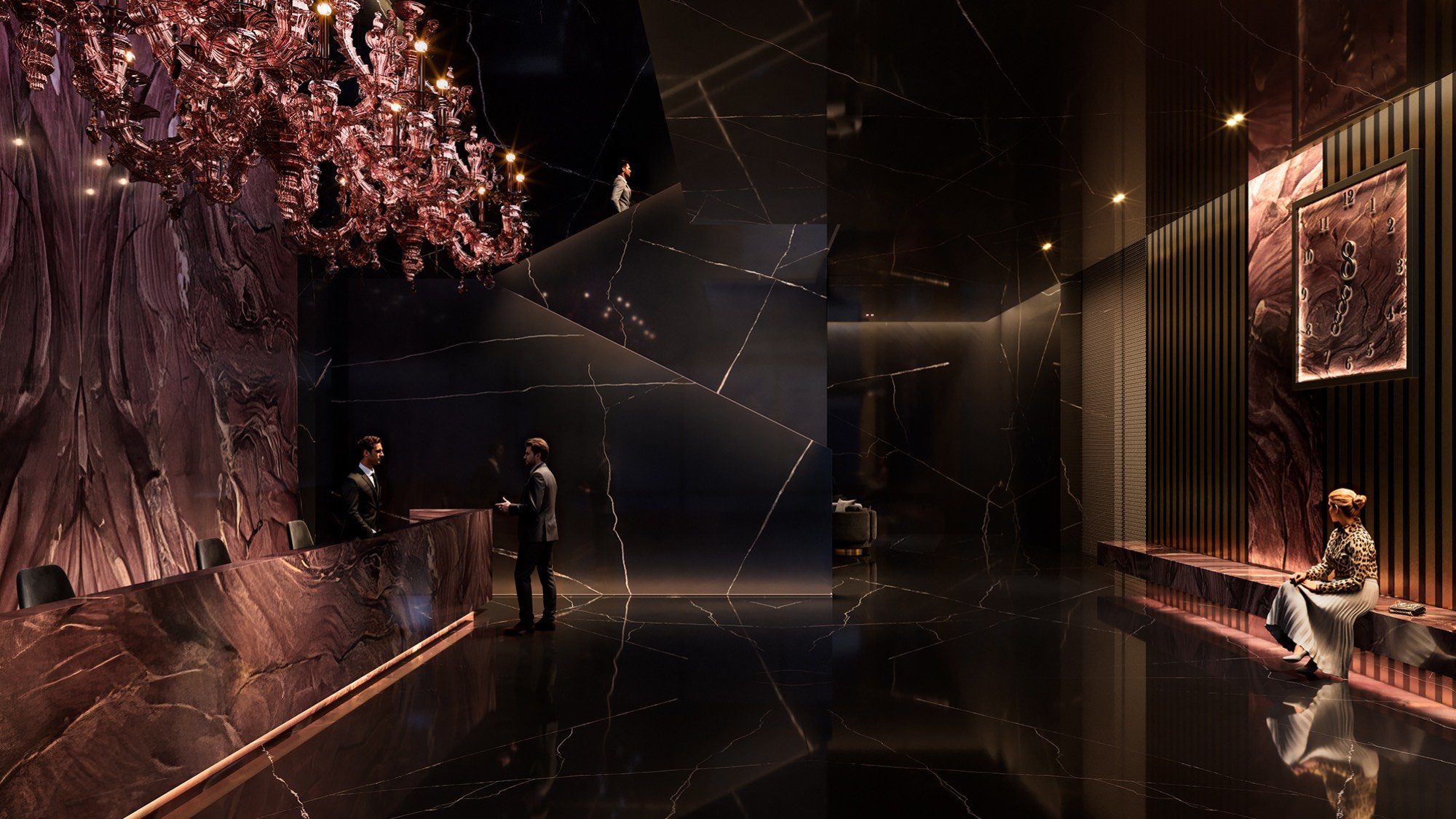
In a purely residential tower, the lobby is often treated as an elegant necessity: a staffed desk, a few seating moments, a predictable palette. In a fashion-branded building, the lobby is closer to a runway set. It’s the one space every resident and guest must pass through, the only room that cannot be personalized, and the place where brand codes are translated into architecture.
For buyers deciding between 888 Brickell by Dolce & Gabbana and Armani Casa Residences Pompano Beach, the lobby isn’t a minor amenity. It’s a daily ritual. It shapes how you arrive home, how you welcome guests, and how comfortable you feel lingering-without feeling observed.
Because the Research Pack and Fact Table do not specify detailed finish schedules here, the comparison below centers on design intent and the aesthetic vocabulary each brand is known to privilege, translated into practical, buyer-facing cues.
Brickell is a district built on momentum. Even at its most polished, it’s a place of movement: cars pulling up, doors opening, elevators in constant use, residents shifting between office, dinner, and waterfront.
In that context, a Dolce & Gabbana-branded lobby is typically read as an “arrival moment.” Expect a sensibility that prioritizes visual impact and narrative detail: strong contrasts, layered pattern, and an environment designed to be photographed as much as it is designed to be used. The overall effect is often more maximal than minimal-by intent. A lobby like this doesn’t recede; it announces itself.
From a lifestyle standpoint, the advantage is straightforward. If you prefer a building that feels socially charged and city-forward, a dramatic lobby reinforces that rhythm. It can make an ordinary return home feel like an event, which is precisely what fashion branding is meant to deliver.
This is also why Brickell’s broader new-construction scene can feel complementary. If you’re comparing multiple branded and design-centric towers nearby, it’s worth experiencing a few different interpretations of “luxury arrival,” including Baccarat Residences Brickell and Cipriani Residences Brickell, each with its own hospitality-coded approach to threshold and welcome.
Pompano Beach reads differently at street level. Even as it evolves, the ocean-adjacent lifestyle tends to favor breath, light, and a slower cadence. In that setting, Armani Casa generally communicates through restraint: calm geometry, carefully edited palettes, and quiet authority.
The lobby experience associated with an Armani Casa sensibility is less about being seen and more about being at ease. Rather than demanding attention, it typically rewards attention: measured proportions, surfaces that read tactile and refined, and lighting that prioritizes comfort over drama. When executed well, this aesthetic makes the lobby feel like an extension of the residence-not a stage set.
For buyers, the value is long-term livability. A restrained lobby can age gracefully because it relies on proportion and material discipline rather than trend. It can also feel more private. When the design doesn’t encourage spectacle, the behavior inside it often becomes more discreet.
If you’re exploring the area and want to calibrate how different brands interpret coastal luxury, viewing adjacent Pompano options such as Ocean 580 Pompano Beach can clarify whether you prefer an overt brand signature or a more architectural, beach-leaning threshold.
A useful way to compare fashion-branded lobbies is to ask a simple question: does the design communicate through ornament, or through refinement?
With Dolce & Gabbana, the instinct is often ornament as identity. The brand’s cultural DNA is expressive. In a lobby setting, that can translate into layered textures and strong decorative gestures. Even when the materials are classic, the composition is typically bold-you feel the hand of the brand.
Armani Casa, by contrast, tends to communicate through refinement: the discipline of a line, the softness of a finish, the accuracy of a junction. The signature is subtle, closer to tailoring than costume. It often feels less “styled” and more “designed,” which matters if you want the building to feel calm on your busiest days.
As a buyer, you’re not just selecting a look. You’re choosing how much visual information you want to process every time you walk in. If you crave stimulation, Dolce & Gabbana can feel energizing. If you crave decompression, Armani Casa can feel like an exhale.
Lighting is the quiet driver of a lobby’s emotional temperature. It determines whether a room feels intimate or exposed, cinematic or residential.
In a high-drama, city-forward lobby, lighting often emphasizes sparkle and depth. Reflective surfaces, highlights, and contrast can create a sense of nightlife polish-even at 9 a.m. This is frequently a deliberate choice in Brickell, where the lobby functions as a social threshold between private life and a public-facing city.
In a restraint-driven lobby, lighting is typically softer and more even. The goal is to flatter people and materials without “performing.” A calmer lighting strategy can make a concierge interaction feel less transactional and more like a private club: quiet, direct, efficient.
When touring, notice whether you feel compelled to keep moving, or whether you naturally slow down. That instinctive pacing is as much a lighting-and-scale story as it is a design story.
Luxury is multi-sensory, and the lobby is where that becomes tangible.
Hotel-coded lobbies often incorporate scenting, curated sound, and seating arranged for brief, elegant pauses. This supports a sense of “arrival,” and it can help a building feel perpetually polished. The tradeoff is that it may read less like a private home and more like a highly managed public room.
Residential-calm lobbies typically treat seating as part of an everyday routine: a place to wait comfortably, to speak quietly, to transition without pressure. The soundscape matters here. In a calmer lobby, you should be able to speak at a low volume and still feel heard.
If your lifestyle involves frequent guests, deliveries, or driver pickups, these nuances become decisive. They shape not only your experience, but also how your guests perceive your home.
A lobby’s real luxury is its control of sightlines. The best lobbies in South Florida, regardless of brand, tend to do three things exceptionally well:
First, they allow staff to see what they need to see without making residents feel monitored. Second, they provide multiple micro-zones: a direct path to elevators, a discreet seating area, and a moment for quick interactions. Third, they handle guest flow with grace.
In a more theatrical lobby, design may intentionally frame people as part of the scene. This can be thrilling, but it can also make privacy feel performative. In a more restrained lobby, design often protects residents by default: fewer direct sightlines, calmer surfaces, more controlled transitions.
Your preference is the point. Some buyers love the energy of being centered in a glamorous composition. Others want the building to disappear around them.
It’s tempting to reduce this comparison to style alone, but the setting matters.
Brickell is a global, high-density neighborhood where towers often trade in metropolitan confidence. A dramatic, fashion-forward lobby feels congruent with that context. It aligns with the cadence of the streets, the way residents move through their day, and the expectation that common areas can be part of one’s social identity.
Pompano Beach, while increasingly luxury-minded, tends to be chosen for a water-adjacent lifestyle and a less compressed daily rhythm. A calmer lobby supports that choice. It can feel less like a prelude to nightlife and more like a passageway to the ocean.
For buyers also considering a quieter, design-led experience outside the Brickell corridor, other neighborhoods offer additional reference points. The lifestyle contrast becomes especially clear when you step into a more residentially scaled environment such as 2200 Brickell, where the idea of “arrival” can lean more private and less theatrical.
Aesthetic nuance isn’t only visual. It often predicts operational decisions. When you tour either building, ask questions that connect design intent to lived experience:
How does the building manage guest arrivals and resident privacy at peak hours?
Where are deliveries handled, and do they interrupt the lobby atmosphere?
Is there a separate, quieter seating or waiting area for residents?
Do elevator lobbies continue the same design language, or does the experience stop at the front door?
How does the staff position interact with the room: does it feel like a hotel desk or a discreet concierge?
These aren’t operational details alone. They’re aesthetic outcomes. A lobby designed to feel like a composed living room will often be staffed and managed differently than a lobby designed to feel like a glamorous public salon.
Choosing between 888 Brickell by Dolce & Gabbana and Armani Casa Residences Pompano Beach is, in many ways, choosing your preferred emotional setting.
If you want your building’s entry to deliver a statement, feel cinematic, and align with Brickell’s cosmopolitan energy, the Dolce & Gabbana sensibility is naturally compelling. If you want an entry that feels quiet, tailored, and longevity-minded, Armani Casa’s restraint can be the more satisfying daily companion.
Neither is objectively “more luxurious.” The luxury is in fit: how the lobby aligns with your pace, your privacy threshold, and the way you want home to feel the moment the doors open.
Which lobby style tends to feel more private day to day? A more restrained, edited lobby often feels more private because it minimizes spectacle and tightens sightlines.
Is a dramatic lobby always less livable? Not necessarily; it can feel energizing if you enjoy an arrival ritual and a social, city-forward mood.
How can I evaluate “timelessness” in a lobby? Look for proportion, material discipline, and lighting comfort rather than novelty or heavy theming.
Do fashion-branded lobbies affect resale perception? Branding can strengthen identity, but the most durable value comes from execution and operational quality.
What should I notice first when I walk in? Your pace-if you instinctively slow down and breathe easier, the design is working for your lifestyle.
How important are acoustics in a luxury lobby? Extremely; quiet conversation and controlled reverberation are core signals of true comfort.
Do these aesthetics carry into elevators and corridors? Often they do, but it varies; ask whether the design language continues beyond the main lobby.
Which setting suits frequent entertaining and guests? A more theatrical lobby can elevate guest arrival, while a calmer lobby supports discreet hosting.
Is Brickell or Pompano Beach better for a second home? It depends on lifestyle: Brickell for urban proximity, Pompano-beach for coastal ease and decompression.
How should I decide if I’m torn between both? Choose the lobby that matches your default mood: stimulation and statement, or calm and composure.
For a discreet conversation and a curated building-by-building shortlist, connect with MILLION Luxury.
If branded residences are on your mind — as a home or as an allocation — we would be glad to share what we are seeing, privately.
Begin a quiet conversation