A practical underwriting guide for New York and California buyers evaluating South Florida luxury real estate through insurance exposure, HOA discipline, operating costs, and everyday livability.

For many New York and California buyers, South Florida is not simply a tax or climate decision. It is a lifestyle reallocation: more outdoor living, a different business rhythm, proximity to private schools or clubs, easier winter use, and the possibility of making a residence the center of family life. Yet the most sophisticated acquisition strategy is not built on migration momentum alone. It is built on underwriting.
A buyer who can comfortably acquire a luxury residence can still misread the asset if the analysis stops at purchase price, view, floor height, and finishes. In South Florida, the real underwriting conversation should include insurance, HOA fees, building governance, reserve posture, special assessment risk, rental flexibility, parking, service quality, commute patterns, and how often the home will truly be used.
The point is not to make the purchase feel clinical. It is to protect the pleasure of ownership. A residence that feels compelling during a showing can look very different once carrying costs, operational rules, and daily-use friction are measured against the buyer’s actual life.
New York and California buyers are often fluent in high-cost markets, but South Florida has its own ownership architecture. The cleanest first move is to build a monthly and annual ownership model before emotion takes over the negotiation. Include debt service if applicable, taxes, insurance, HOA or maintenance, utilities, parking, club or marina costs when relevant, housekeeping, management, and a prudent contingency for repairs or assessments.
This is especially important when comparing new-construction and resale opportunities. New residences can offer modern systems, amenities, and a sense of low immediate friction, but buyers still need to understand the operating budget after delivery and the likely evolution of association costs. Resale properties may offer established operating history, but the buyer should examine building condition, recent capital projects, and whether prior owners have deferred costs that may surface later.
For taxonomy-minded buyers, the same discipline applies across Brickell, Miami Beach, new-construction, resale, second-home, and investment decisions. The label is never the underwriting. The operating profile is.
Insurance deserves an early place in the conversation, not a late-stage scramble. A luxury buyer should distinguish between insuring the individual residence, the building or association coverage, and any additional protection needed for contents, wind, flood, excess liability, art, jewelry, or vehicles. The right question is not simply, “What is the premium?” It is, “What risk is retained, what risk is transferred, and what exclusions or deductibles could matter after a major event?”
In a condominium, the association’s master policy can shape the buyer’s exposure, but it does not replace careful personal review. In a single-family home, the roof, elevation, opening protection, building age, and replacement-cost assumptions can materially change the ownership experience. For waterfront property, the analysis becomes even more specific. The underwriting should consider not only the beauty of water access, but also the cost of protecting and maintaining that access.
The most elegant homes are not always the easiest to insure. Before a buyer falls in love with a terrace, dock, or glass-wrapped primary suite, the insurance conversation should be tested with the same seriousness as financing.
HOA fees are often discussed as a monthly expense, but in luxury real estate they are also a governance signal. A low fee is not automatically attractive if it masks underfunded reserves, limited staffing, or deferred maintenance. A high fee is not automatically inefficient if it supports exceptional service, strong reserves, disciplined maintenance, and amenities the owner will actually use.
The better question is value alignment. Does the association’s budget support the lifestyle the building promises? Are reserves being handled with seriousness? Are major systems being maintained proactively? Are amenities staffed and managed at the level the buyer expects? Is the board culture practical, transparent, and financially literate?
For buyers migrating from full-service buildings in Manhattan or highly managed communities in California, South Florida’s luxury condominium culture can feel familiar in some ways and distinct in others. The service can be exceptional, but the buyer should still examine rules, move-in logistics, guest policies, pet policies, rental restrictions, renovation protocols, and the approval process. Governance shapes daily life.
The most overlooked variable is often the simplest: how will the residence actually be used? A buyer may imagine long weekends, holidays, remote work, family gatherings, and eventual full-time occupancy. Those are different use cases, and each deserves its own test.
If the property is a second home, airport access, arrival routine, storage, housekeeping, climate control, and building staff become central. If it is a primary relocation, school runs, office proximity, grocery access, medical care, fitness routines, restaurants, and social orbit matter. If it is partly an investment, the rental rules, seasonality, wear-and-tear assumptions, and management burden must be understood before purchase.
Daily use also changes the meaning of amenities. A spectacular pool may be irrelevant to a buyer who spends every day at a club. A marina may be decisive for one family and meaningless for another. A large terrace may justify a premium if it becomes the home’s real living room, but not if wind, privacy, or exposure limit its use.
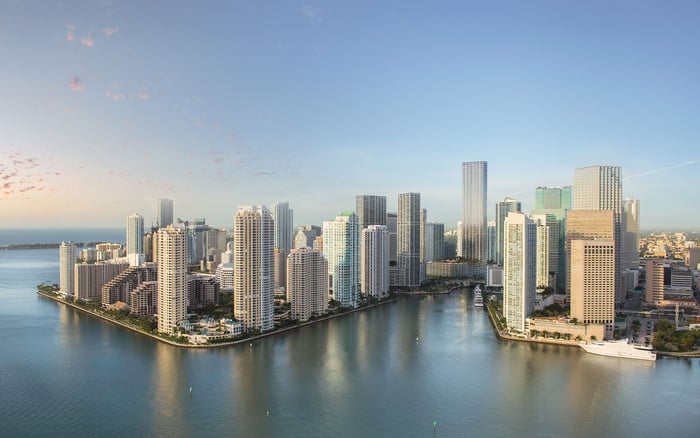
South Florida’s luxury map rewards nuance. A buyer should compare neighborhoods by lived behavior rather than reputation alone. Brickell may suit the buyer who wants financial-district energy, dining density, and a more urban cadence. Miami Beach may appeal to those prioritizing sand, design, hospitality, and cultural access. Coconut Grove, Coral Gables, Boca Raton, Palm Beach, Fort Lauderdale, Sunny Isles, Surfside, Bay Harbor Islands, and Fisher Island each ask a different lifestyle question.
The underwriting frame should be personal. How often will you drive? Where will guests stay? Do you want walkability or privacy? Is boating central or occasional? Do you prefer a resort atmosphere or residential quiet? Will the home host adult children, parents, staff, or business associates? The right answer is rarely universal.
This is where migration underwriting becomes more refined than simple relocation math. A buyer leaving New York or California may be optimizing for space and climate, but the ultimate success of the purchase depends on whether the location reduces friction in daily life.
Luxury buyers often purchase with conviction, but disciplined underwriting includes an exit scenario. The asset should be tested for a three-year, five-year, and ten-year hold, even if the intention is indefinite ownership. Consider who the next buyer might be, what features will remain timeless, and which costs could narrow the buyer pool.
Overly personalized improvements can be beautiful, but they should be balanced against resale logic. Similarly, a floor plan that works for one couple may be less liquid if it lacks flexible guest space, staff space, storage, or privacy separation. In South Florida, outdoor space, views, parking, building quality, and service culture can all influence durability, but the buyer should avoid assuming that any single feature guarantees liquidity.
The strongest underwriting blends romance with discipline. It allows a buyer to pursue beauty, privacy, and arrival experience while still knowing the carrying cost, governance structure, insurance profile, and likely use pattern.
For the ultra-premium buyer, the best South Florida purchase is not simply the residence that photographs beautifully. It is the one that can be owned gracefully. The numbers work, the insurance is understood, the HOA is credible, the building or property is maintained with seriousness, and daily life fits the owner’s real calendar.
Migration from New York and California will continue to shape the psychology of demand, but individual outcomes depend on precision. A well-underwritten purchase should feel effortless after closing because the difficult questions were addressed before contract.
Should insurance be reviewed before making an offer? Yes. Serious buyers should understand likely coverage, exclusions, deductibles, and association insurance before becoming emotionally committed.
Are high HOA fees always a negative? No. A higher fee can be rational if it supports strong service, reserves, maintenance, and amenities the owner will use.
How should a buyer compare new-construction and resale properties? Compare operating costs, governance, reserve posture, building systems, warranties, and the likely cost of ownership after closing.
What is the most common underwriting mistake for relocating buyers? Many buyers focus on acquisition price and views while underweighting insurance, HOA structure, and daily-use logistics.
Does a second home need a different analysis than a primary residence? Yes. A second home should be tested for arrival routine, maintenance, storage, staffing, and how often it will realistically be used.
How should investment potential be evaluated? Review rental rules, management burden, wear, seasonality, carrying costs, and whether the building culture supports that strategy.
Why does daily use matter so much in South Florida? Climate, driving patterns, amenities, outdoor space, and service quality can determine whether the residence feels effortless or inconvenient.
Is Brickell right for every New York or California buyer? No. Brickell can be compelling for urban convenience, but privacy, schools, boating, and beach access may point buyers elsewhere.
Should buyers prioritize the lowest carrying cost? Not necessarily. The better goal is a carrying cost that matches quality, governance, service level, and long-term asset care.
What makes a South Florida purchase feel successful after closing? A successful purchase aligns lifestyle, cost, insurance, governance, and exit logic before the buyer signs the contract.
When you're ready to tour or underwrite the options, connect with MILLION.
If branded residences are on your mind — as a home or as an allocation — we would be glad to share what we are seeing, privately.
Begin a quiet conversation