A document-first guide to comparing reserves, capital plans, and ownership costs at Six Fisher Island and Palazzo del Sol, with a focus on unit-specific charges rather than headline fees.
On Fisher Island, the financial questions behind a purchase deserve the same attention as the residence itself. For buyers considering The Residences at Six Fisher Island or Palazzo del Sol, the meaningful comparison is not simply which monthly maintenance figure appears lower. It is how clearly each association documents operating costs, future capital needs, and the obligations attached to the specific home.
Public pricing alone cannot establish that either property has stronger reserves, fewer upcoming projects, or more predictable fees. Predictability begins with an adopted budget and a unit-specific fee ledger, then extends to reserve funding, insurance, and separately billed obligations. A polished amenity offering is no substitute for that financial picture.
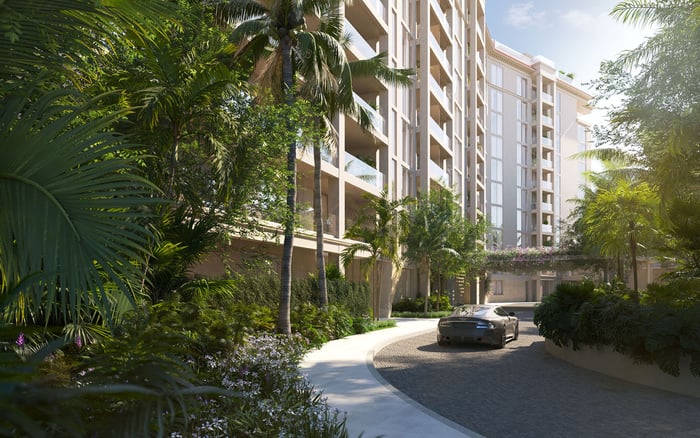
Six Fisher Island is marketed as an approximately 50-residence, 10-story condominium with private residential and lifestyle amenities. Its public fee information is less consistent: a monthly HOA figure of $9,138 appears at the building level, but the amount is not uniformly specified. That figure is not a verified assessment for every residence.
An indicative estimate places association charges at approximately $3.50 per square foot. Before using it in a purchase model, confirm the billing period, square-footage basis, included services, and whether it reflects an adopted budget. It should not be treated as a unit-specific commitment.
For Palazzo del Sol Fisher Island, publicly quoted charges include approximately $7,984 monthly, with amounts varying by residence size and line. A separate sample of six quoted charges has a monthly median of $12,062, equivalent to approximately $2.17 per square foot per month, excluding special assessments. A broader maintenance range of approximately $6,000 to $15,000 or more underscores the importance of identifying the actual residence.
These figures reflect different samples, not necessarily conflicting charges. Nor do they establish a like-for-like comparison with Six Fisher Island. Reconcile dates, measurement conventions, billing periods, and inclusions before drawing conclusions about relative cost.
The essential question is not simply how much money sits in reserves. It is whether the funding plan aligns with the building components, estimated replacement costs, and expected timing of work.
Request the latest reserve study, component balances, adopted reserve contributions, and audited financial statements. Read them together. A balance without its associated obligations says little about how much future work it can support. A contribution schedule likewise needs to be weighed against the assumptions behind it.
Ask management to explain any gap between the study's recommended funding and the adopted budget. Request documentation supporting changes in estimated costs or project timing. The objective is a clear connection between engineering assumptions, available funds, and planned contributions-not merely a reassuring headline balance.
Florida reserve requirements also warrant project-specific legal review. Buyers should have condominium counsel confirm applicable study and funding obligations rather than treating a general statutory summary as a complete account of deadlines or exceptions.
The available public fee figures establish neither property's complete capital schedule or whether pending assessments exist. A clean-looking fee presentation should prompt a document request, not an assumption that major expenditures are settled.
Request inspection findings, the capital-project schedule, relevant board minutes, and assessment history. For each identified project, ask whether the scope is preliminary or approved, whether pricing is estimated or contracted, and how the association intends to pay for it. These distinctions separate a planning allowance from a defined financial obligation.
Focus on three questions: what work is contemplated, when payment may be required, and which funds are intended to cover it. Ask separately about approved assessments and projects still under discussion. Assessment history provides useful context, but it cannot establish the cost of work that has not yet been priced or approved.
At Six Fisher Island, the distinction between an indicative operating estimate and an adopted association budget is especially important to the purchase review. Request the budget behind the quoted charge and identify its assumptions for services, insurance, maintenance, and reserve contributions.
If an assessment guarantee is presented, obtain its written terms. Florida law permits a developer assessment guarantee for a defined period, but that provision does not establish that Six Fisher Island offers one. Counsel should review the stated amount, duration, scope, and what happens after the guarantee expires.
The better question is not whether a first-year figure is attractive. It is whether the buyer understands its basis and the circumstances under which the obligation could change. No public estimate should be mistaken for a promise of permanently fixed carrying costs.
Six Fisher Island's stated maintenance inclusions encompass landscaping, security, building exterior, common areas, trash removal, amenities, elevators, parking, and sewer. Confirm those inclusions against the documents governing the residence under consideration.
At Palazzo del Sol, the maintenance inclusions identified for Unit 7085 encompass landscaping, building exterior, common areas, outside maintenance, pool service, trash removal, hot water, parking, and water. That is a useful checklist, not proof that service descriptions or charges are identical across all residences.
Fisher Island Club initiation fees and recurring dues are separate from Palazzo del Sol's condominium maintenance. Property taxes add another layer. Obtain current written confirmation of applicable Club and island obligations, keeping one-time payments distinct from recurring expenses. The advertised association charge is not an all-in ownership budget.
If the search expands to Palazzo della Luna or other Miami Beach residences, carry over the same budget categories, not the same fee assumptions. Each candidate requires its own documentary review.
Before committing, assemble one residence-specific file: the adopted budget, audited financials, reserve study and balances, inspection findings, capital schedule, board minutes, assessment history, insurance documents, and fee ledger or estoppel. Ask the appropriate advisers to reconcile unresolved differences before relying on a carrying-cost estimate.
Then distinguish documented obligations from potential future expenditure. Review insurance costs and deductibles alongside the operating budget, and keep separately billed services outside the condominium subtotal. This provides a clearer basis for comparing homes without implying that either association can guarantee future expenses.
The more compelling financial profile is the one whose obligations can be explained and supported-not necessarily the one with the lowest advertised monthly charge.
For a discreet conversation about Fisher Island residences and the questions that matter before purchase, connect with MILLION.
If branded residences are on your mind — as a home or as an allocation — we would be glad to share what we are seeing, privately.
Begin a quiet conversationNo. It is a public building-level listing figure, not a verified assessment for every residence; obtain the unit-specific fee ledger and applicable budget.
Not without reconciling the billing period, square-footage basis, included services, and budget status. The Six Fisher Island estimate and Palazzo del Sol listing median are not established as directly comparable.
Public figures reflect different residences and listing samples, with charges varying by unit size and line. The actual residence's documented charge is the relevant starting point.
No. That median comes from a six-listing sample and excludes special assessments.
The available information does not establish a reserve-strength ranking. Compare reserve studies, component balances, adopted contributions, and audited financial statements.
Request inspection findings, capital-project schedules, board minutes, and assessment history. Ask how each contemplated or approved project would be funded.
No. Club initiation fees and recurring dues are separate from condominium maintenance, and property taxes also add to ownership costs.
The available information does not establish that it does. If a guarantee is presented, obtain its written terms and have counsel review its amount, duration, and scope.
No. Public fee figures do not establish the absence of pending assessments at either property; review association documents and obtain current confirmation.
Begin with the adopted association budget and a unit-specific fee ledger or estoppel. Then review reserves, capital plans, insurance, taxes, and separately billed Club or island obligations.