A buyer-focused comparison of Six Fisher Island and Palazzo della Luna, distinguishing controlled island access from private elevator entry, guest separation, and the arrival services that warrant closer review.
For a Fisher Island buyer, privacy is not a single amenity. It is the sequence from reaching the island to entering the building, receiving a visitor, and closing the residence door. A gracious arrival should feel effortless, but evaluating it requires precise distinctions: who may enter, where they may go, and whether their route intersects with yours.
The Residences at Six Fisher Island and Palazzo della Luna warrant the same scrutiny. Six advertises several arrival and transportation features. Palazzo combines 50 large-format residences with attended arrival, private elevator entry, and round-the-clock reception and security. Neither description, on its own, establishes physically separate resident and guest circulation.
The useful comparison is not which property sounds more exclusive. It is which documented arrangements best support the way a household lives.
Fisher Island access is restricted to residents, their guests, and registered hotel guests. Arrivals by private yacht or auto-ferry are regulated and monitored, while the island’s Public Safety Department staffs strategic posts with trained security officers 24 hours a day, seven days a week.
That island-level control matters, but it answers a question of eligibility, not circulation. Permission to reach the island does not establish permission to enter a particular residential building. Nor does it explain whether visitors use the same lobby, elevator bank, or vestibule as owners.
Buyers should distinguish three layers: island admission, building admission, and access to the residence. Each deserves its own questions. If a broader island search includes The Links Estates at Fisher Island, apply the same distinction rather than assuming a shared address implies identical arrival procedures.
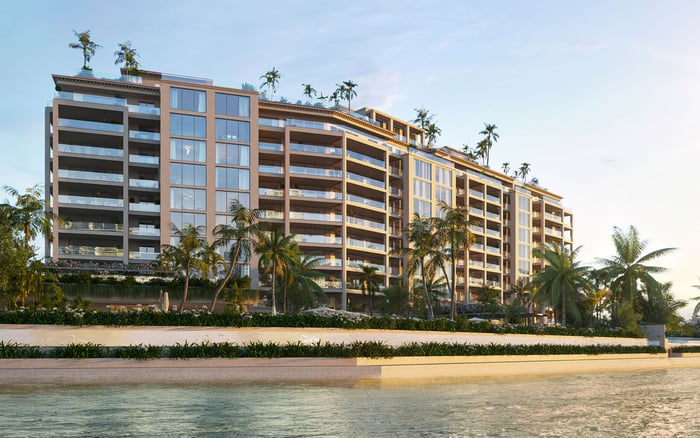
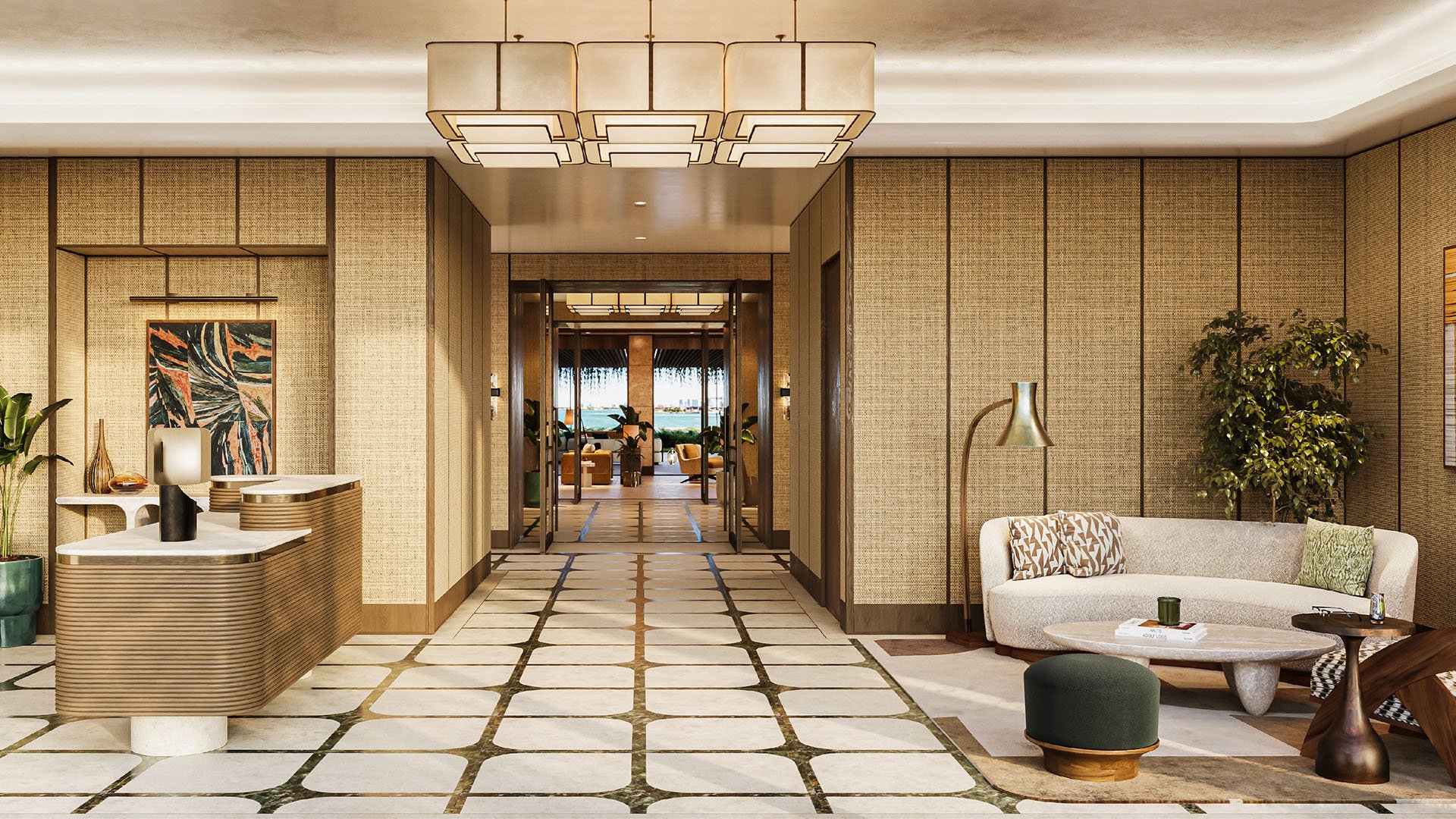
Six advertises three lobbies with security features described as state-of-the-art, full-time concierges across those lobbies, and a lounge welcoming arriving residents. Direct access to private elevators is also advertised. Together, these features suggest a potentially well-supported arrival sequence, but the lobby count does not establish how households or visitors are assigned among them.
The buyer’s task is to connect those elements on a plan. Determine which entrance serves the intended residence, where its concierge is positioned, and how one moves from parking or drop-off to the elevator. Full-time concierge coverage does not automatically mean a specified 24-hour schedule at every desk; request the actual staffing arrangements.
Six also advertises three dedicated parking spaces per residence: two for cars and one for a provided golf cart. This is a concrete allocation, not proof of a private garage-to-residence route. Ask whether the path from each space crosses shared waiting areas and how luggage is handled.
Treat these as advertised features until their delivery, availability, and operating terms are confirmed. An elegant plan and an operating service answer different parts of the purchase decision.
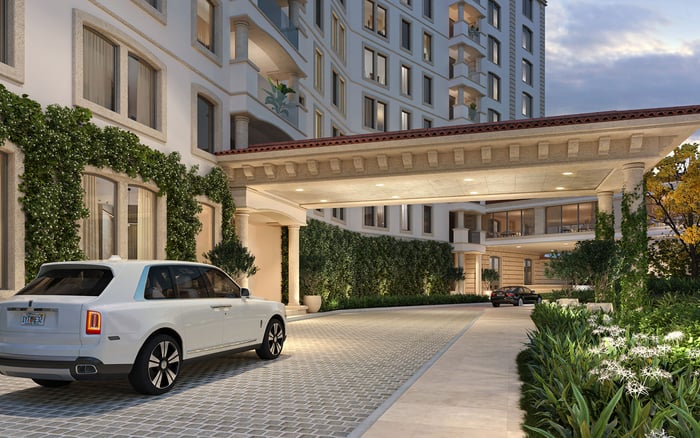
At Palazzo della Luna, the documented arrival offering includes controlled entry, attended arrival, valet service, and 24-hour front-desk reception and security. Private elevator entry is also listed among the building’s amenities.
Those details give buyers specific questions to pursue. Who authorizes a visitor after island admission? Where does that visitor wait? Does the resident meet guests downstairs, approve elevator access remotely, or follow another procedure? The answers should come from current building policies, not assumptions about what an attended entrance implies.
The building’s 50 residences establish its scale, not its traffic. Residence count alone cannot show how frequently owners encounter visitors, household staff, or vendors. Occupancy patterns and operating practices require separate assessment.
Private elevator entry likewise needs examination at the specific residence. Confirm whether the elevator and arrival vestibule are dedicated to one home or shared, and which credentials authorize each stop. The phrase is meaningful only when its physical and operational boundaries are clear.
Controlled access, private elevator entry, and resident-only circulation describe different conditions. A building may regulate every visitor without providing a separate guest route. Conversely, a dedicated route still needs rules governing authorization and access.
Request circulation plans that distinguish resident arrivals, invited guests, household staff, deliveries, and service vendors. The review should identify guest elevators and waiting areas, where provided, along with visitor screening, loading areas, delivery routes, and vendor access. Do not assume any of these spaces is separate until the plan establishes it.
Then test the plan against ordinary household situations: a dinner guest arriving while an owner returns, a grocery delivery during a family departure, or a contractor visiting while the residence is unoccupied. These are practical questions for management, not claims about existing arrangements.
Neither property should receive a privacy premium simply because its description contains more arrival features. Stronger evidence would be a clear route, explicit authorization rules, and confirmed staffing responsibilities. The documented features do not establish comparative visitor volumes, processing times, or security superiority.
Six advertises a house tender exclusive to its residents, with transportation to Miami Beach and the Watson Island Heliport. A private car is also advertised for transportation and connections, while a private dock with a houseboat appears among the listed amenities.
The resident-exclusive tender is a specific advertised benefit, not evidence that every part of the journey is residents-only. Confirm reservation procedures, operating hours, capacity, guest eligibility, luggage handling, and weather-related alternatives. Do not treat the tender and houseboat descriptions as interchangeable without clarification.
Ferry service for people and vehicles carries an additional cost not paid by the developer. Buyers should distinguish the transportation offering from what is included financially. For a second home, ask how late arrivals, visiting family, and departures with luggage would be accommodated.
A Palazzo-exclusive tender is not established here. That calls for a direct service inquiry, not a conclusion that no such arrangement exists.
Six’s advertised offering emphasizes multiple lobbies, concierge support, private elevators, and transportation connections. Palazzo’s documented offering combines a 50-residence building with private elevator entry, valet, and 24-hour reception and security. Both warrant residence-specific review rather than a verdict based on amenity language.
Before committing, obtain the relevant circulation plan, current visitor policy, staffing schedule, and transportation terms. The right fit is the home whose confirmed arrangements make your arrivals, guests, and household routines feel discreet and manageable.
For a discreet discussion of Fisher Island residences and buyer priorities, connect with MILLION.
If branded residences are on your mind — as a home or as an allocation — we would be glad to share what we are seeing, privately.
Begin a quiet conversationNo. Access eligibility extends to residents, their guests, and registered hotel guests under regulated and monitored access.
Fisher Island’s Public Safety Department staffs strategic posts with trained security officers 24 hours a day, seven days a week. This does not establish separate circulation inside individual buildings.
Six advertises three lobbies with security features, full-time concierge coverage across them, a resident arrival lounge, and direct access to private elevators. Current delivery and operating arrangements should be confirmed.
Six advertises a house tender exclusive to its residents for transportation to Miami Beach and the Watson Island Heliport. Scheduling, guest eligibility, and service terms require confirmation.
Six advertises three dedicated parking spaces per residence: two for cars and one for a provided golf cart. That allocation does not establish a separate private route to the residence.
Six’s disclosure specifies that ferry transportation for people and vehicles carries an additional cost not paid by the developer. Buyers should confirm applicable charges and arrangements.
Palazzo della Luna has documented controlled entry, attended arrival, valet service, and 24-hour front-desk reception and security. Private elevator entry is also listed.
Not on the available descriptions alone. Buyers should confirm whether the elevator and vestibule serving a specific residence are dedicated or shared, and how access is authorized.
No physically segregated guest circulation is established by the documented features. Request circulation plans and current policies covering visitors, deliveries, and service vendors.
The documented features do not establish a security or privacy winner. Compare residence-specific routes, visitor authorization, staffing, and transportation terms against your household’s needs.