A buyer-focused comparison of Colette Residences Brickell and Viceroy Brickell, examining privacy, scale, rental flexibility, amenities, pricing, and the distinct lifestyles each address represents in Brickell.
In Brickell, luxury is no longer a single category. Two buyers can spend within overlapping price ranges and still be buying entirely different experiences. That is precisely the case with Colette Residences Brickell and Viceroy Brickell.
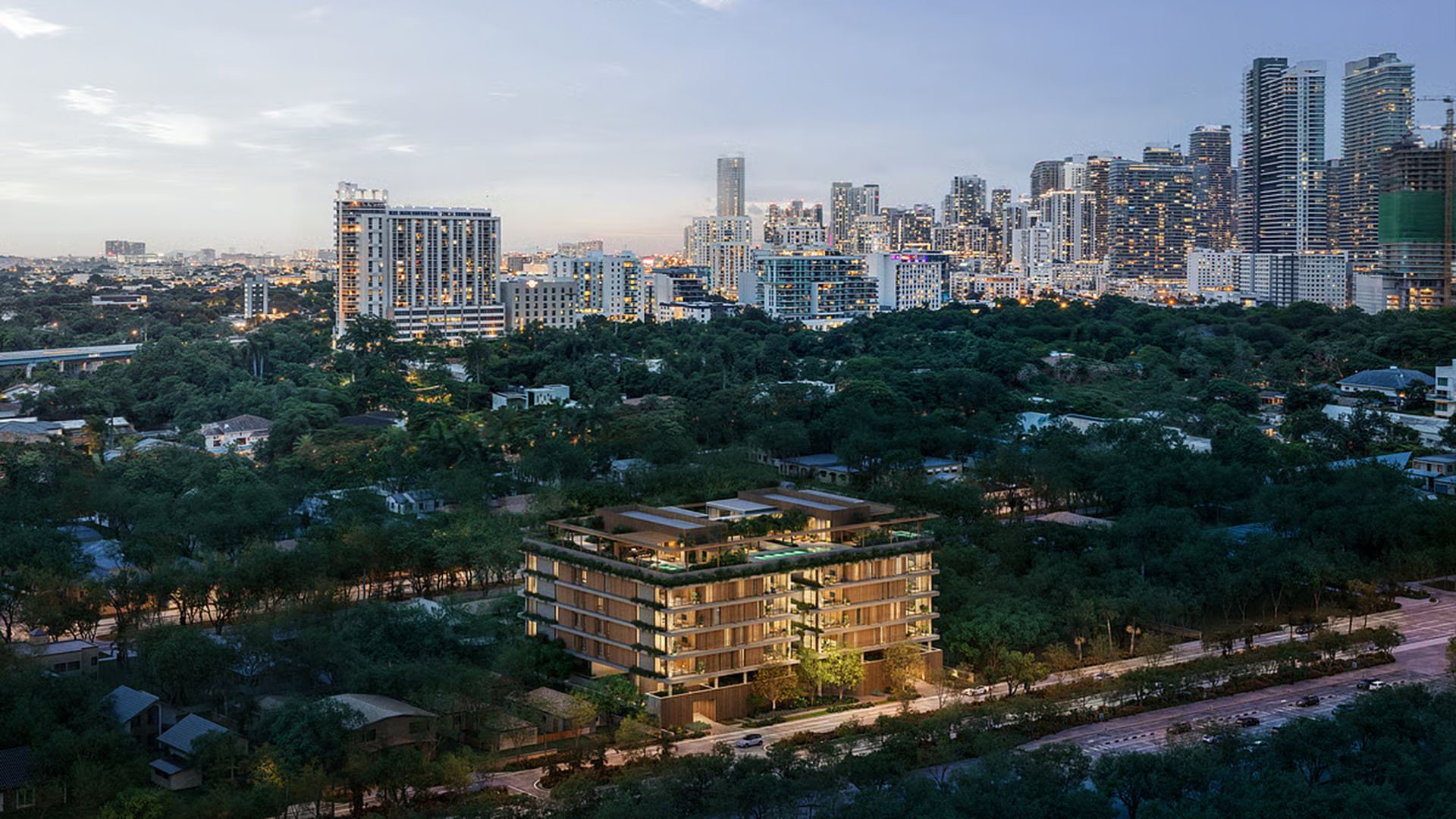
Colette is an 82-residence condominium at 1200 Brickell Bay Drive, conceived as a residential-only address with a notably intimate scale. Developed by Kolter Group and designed by Herzog & de Meuron, it presents itself as a building for owners who value calm, discretion, and a more edited community. Its positioning places it firmly outside the hotel-residential model.
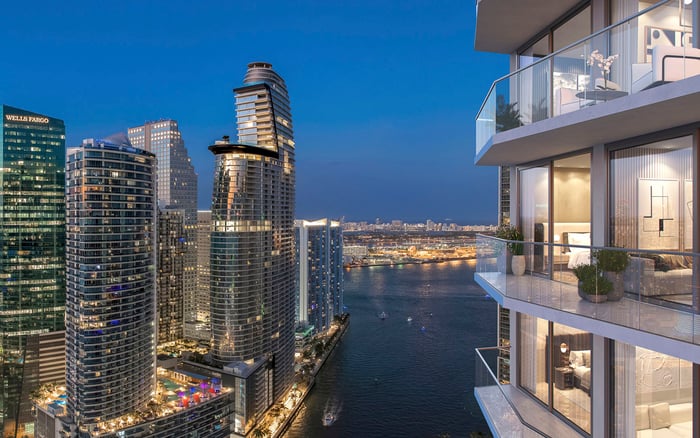
Viceroy Brickell, by contrast, is a much larger proposition with about 218 residences at 801 Brickell Avenue near Brickell City Centre and the urban core. It operates under a hospitality-linked brand, with a broader unit mix that includes studios and one-, two-, and three-bedroom residences. Its appeal is inseparable from service culture, brand recognition, and a more animated daily atmosphere.
For MILLION Luxury readers, the comparison is not really about which property is more luxurious in the abstract. Both compete in elevated territory. The more useful question is what kind of luxury you want to wake up inside: boutique seclusion or hotel-driven energy.
The most immediate difference is unit count. Colette’s 82 residences give it roughly 38% of Viceroy’s scale. That matters because scale is not simply a development metric. It shapes elevator traffic, the character of shared spaces, the likelihood of recognizing neighbors, and the degree to which a building feels like home rather than a destination.
At Colette, the smaller footprint supports a more private cadence. In this segment of the Brickell market, boutique buildings often attract buyers who value the emotional quality of arrival: fewer residents, less transient activity, and a more composed atmosphere. The architecture reinforces that posture, placing design credibility and residential identity at the center.
Viceroy embraces a different logic. Larger scale allows for a broader buyer base, more varied layouts, and an operating model tied to hospitality. For some owners, that is not a compromise. It is the point. A building with branded energy can feel more connected to the tempo of modern Brickell, especially for buyers who want a residence that lives more like an urban resort.
That distinction also helps position other Brickell options. Buyers drawn to a more residential expression may also look at 2200 Brickell or Una Residences Brickell, while those who prefer a service-forward environment often widen the search to addresses such as Cipriani Residences Brickell.
If there is one point that separates these two projects most clearly, it is the operating model. Colette is framed around stable ownership and a non-hotel, residential-only posture. Viceroy is framed around flexibility, including short-term rental or hotel-program participation.
That difference affects more than leasing options. It influences who buys, how often units may turn over, and what owners can expect from the social texture of the building. At Colette, the value proposition is tied to continuity. Residents are more likely to be there because they want the address itself, not because they want optional hospitality monetization.
At Viceroy, flexibility broadens the buyer profile. Some purchasers may prioritize personal use; others may be more interested in a branded asset with potential income-oriented utility. In a market as internationally legible as Brickell, that can be attractive. It also naturally creates a more fluid environment.
For primary residents or those seeking a polished second home that feels consistently residential, Colette’s approach is likely the cleaner fit. For buyers who want a branded residence with optionality, Viceroy is easier to justify.
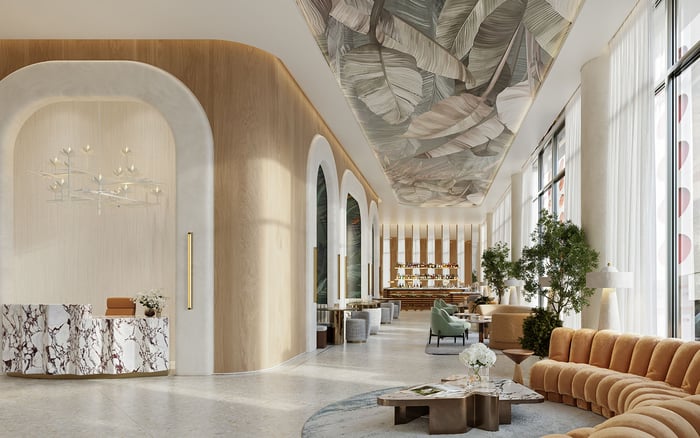
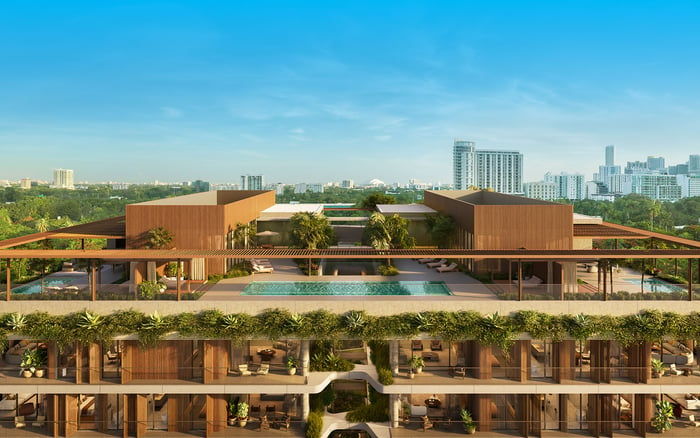
Colette’s amenity program is curated for owners rather than hotel throughput. The offering includes a rooftop pool, spa, fitness components, wine-focused spaces, and social areas intended to serve a resident community. The emphasis is not on spectacle alone, but on the way amenities support a contained daily life.
That owner-first curation is a subtle but important signal. In boutique luxury, the amenity experience often matters most when it feels available, quiet, and proportionate to the resident base. A rooftop pool in an 82-residence building reads differently than a similar feature in a larger branded property.
Viceroy’s amenity mix is broader in a hospitality sense, with pools, fitness facilities, spa-style wellness components, and food-and-beverage programming. Concierge support and branded service expectations are central to its positioning. The experience is designed to feel active, polished, and professionally serviced.
Neither model is inherently superior. They simply answer different questions. Colette asks whether luxury can feel more personal when it excludes hotel mechanics. Viceroy asks whether daily life improves when service infrastructure is built into the building’s DNA.
Both properties occupy prime Brickell addresses, but they connect to the neighborhood differently. Viceroy is more integrated with the active retail, dining, and movement patterns of central Brickell. Buyers who want immediate urban immersion may see that as a major advantage. Step outside, and the district’s social and commercial intensity becomes part of the experience.
Colette feels more internally focused. That does not make it disconnected from Brickell; it makes it more selective in how it engages the neighborhood. For many luxury buyers, especially those coming from larger estate-style living or quieter waterfront enclaves, that distinction matters. The building can serve as a retreat from the district rather than an extension of its busiest circuitry.
This is also why some buyers cross-shop outside Brickell when refining their preferences. Someone who loves Colette’s calmer residential framing might eventually compare it with highly curated non-hotel addresses elsewhere, while a buyer attracted to Viceroy’s branded urbanity may also be intrigued by assertively service-driven towers such as The Residences at 1428 Brickell.
Pricing places Colette generally around $800K to $3M+ depending on residence size and view, while Viceroy has been described in a roughly $500K to $2M+ range. These figures should be read directionally, but they still reveal the market logic behind each project.
Colette’s higher-end range aligns with its smaller scale, design pedigree, and privacy-driven positioning. It is likely to resonate with buyers who care less about hospitality branding and more about architecture, intimacy, and owner culture. Colette has also been described as delivered and in occupancy as of 2025, which adds relevance for buyers who prefer a completed residential environment rather than a purely forward-looking proposition.
Viceroy’s range reflects its broader unit mix and larger-format strategy. Studios widen the entry point, while the hospitality framework opens the door to a more varied ownership profile. Delivery in late 2023 also means the project has entered the real-world phase where branding, services, and actual use patterns begin to matter more than marketing language.
Choose Colette if your idea of luxury centers on privacy, architectural authorship, and a quieter residential atmosphere. It is the stronger fit for buyers who want Brickell access without fully absorbing Brickell’s hotel-adjacent tempo.
Choose Viceroy if you want a building that feels socially alive, service-rich, and more flexible in use. It better suits buyers who value brand affiliation, hotel-style operations, and the possibility of short-term rental participation.
In practical terms, Colette is for the buyer who wants a residence first. Viceroy is for the buyer who wants a residence that can also participate in a hospitality ecosystem.
For South Florida’s upper-tier buyer, this comparison is a reminder that the most meaningful luxury distinctions are often operational rather than cosmetic. Finish levels and wellness spaces matter, but the deeper question is how the building lives over time.
Colette Residences Brickell brings design-forward intimacy to Brickell, with a scale that should appeal to owners seeking discretion. Viceroy Brickell brings urban momentum, a branded framework, and flexibility that can make sense for internationally minded buyers or those who want optionality built into the asset.
Both belong in the Brickell conversation. The right choice depends on whether you are buying sanctuary or energy.
Is Colette Residences Brickell a boutique building? Yes. Colette has 82 residences, giving it a significantly more intimate scale than many neighboring luxury towers in Brickell.
How large is Viceroy Brickell compared with Colette? Viceroy has about 218 residences, making it much larger than Colette and more aligned with a high-service, hospitality-linked format.
Which building is more private? Colette is better suited to buyers who prioritize privacy, lower density, and a more curated residential atmosphere.
Which project is more hotel-oriented? Viceroy is the hospitality-linked option, with branded services and an operating model tied more closely to hotel-style living.
Does Colette allow the same rental flexibility as Viceroy? No. Colette is positioned as a residential-only building, while Viceroy is associated with short-term rental or hotel-program flexibility.
What amenities define Colette? Colette includes a rooftop pool, spa, fitness offerings, wine-focused spaces, and resident-oriented social areas.
What amenities define Viceroy Brickell? Viceroy offers pools, fitness facilities, spa-style wellness components, food-and-beverage programming, and concierge-style services.
Where are these projects located within Brickell? Colette is at 1200 Brickell Bay Drive, while Viceroy is at 801 Brickell Avenue near Brickell City Centre and the urban core.
What are the general pricing ranges? Pricing places Colette around $800K to $3M+ and Viceroy around $500K to $2M+, depending on unit and view.
Who should choose Colette over Viceroy? Buyers seeking stable ownership culture, architectural distinction, and a quieter lifestyle are generally better aligned with Colette.
For a confidential assessment and a building-by-building shortlist, connect with MILLION Luxury.
If branded residences are on your mind — as a home or as an allocation — we would be glad to share what we are seeing, privately.
Begin a quiet conversation