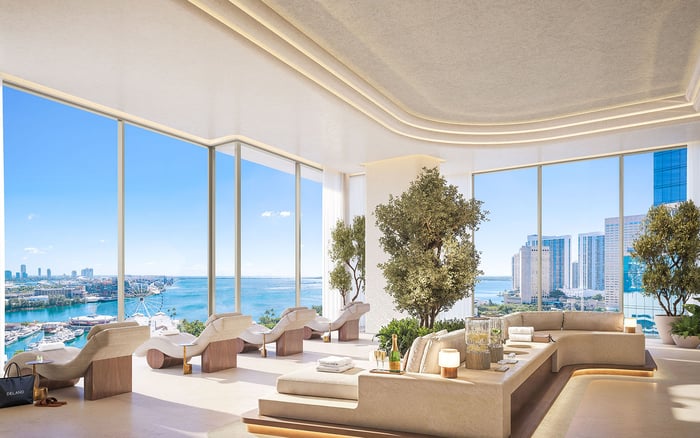
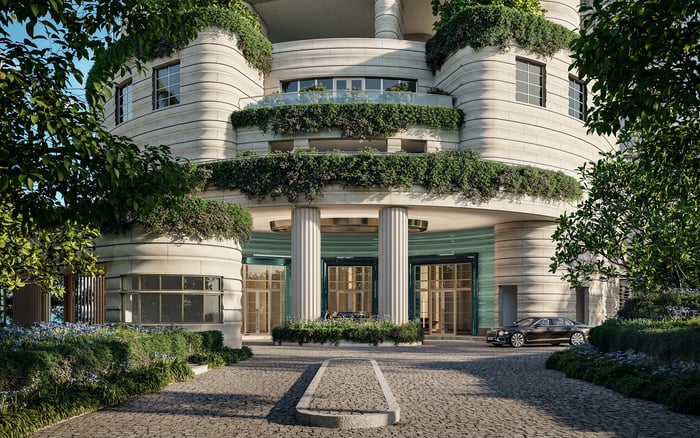
Colette Residences Brickell reframes luxury around lower density, design discipline, curated amenities, and a more personal sense of arrival in the city’s financial core.
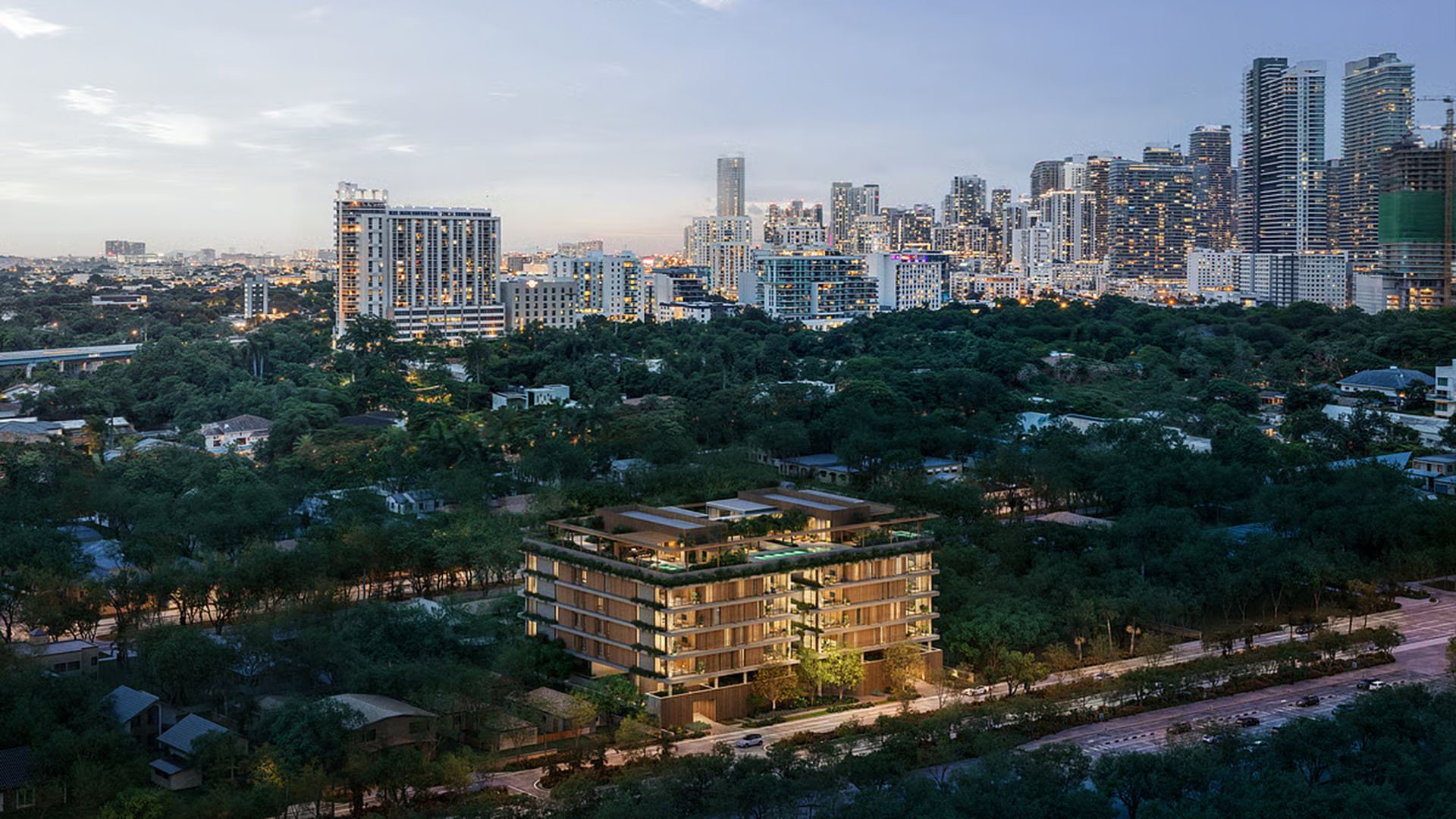
Brickell has become South Florida’s vertical capital of ambition, a district where finance, dining, retail, hospitality, and skyline architecture converge within a few walkable blocks. For many buyers, that intensity is precisely the appeal. Yet within the same market, a more selective audience is asking for something quieter: fewer neighbors, less shared-space congestion, and a residential experience that feels considered rather than crowded.
That is the positioning behind Colette Residences Brickell, a 47-story luxury residential tower associated with Kolter Group and designed by Arquitectonica. With approximately 151 residences, the project is scaled differently from the larger condominium towers that often define the district. The essential distinction is not the absence of amenities. It is the decision to frame luxury around boutique intimacy, design pedigree, and daily ease.
For owners who already have access to private clubs, wellness memberships, yacht clubs, second homes, and global hotels, the biggest possible amenity stack is not always the most persuasive argument. In Brickell, privacy itself can become the premium.
The most important number at Colette is not only its height. It is the residence count. Approximately 151 homes across a 47-story tower implies an average of roughly three residences per floor, a meaningful contrast to buildings with several hundred units and busier elevator banks, lobbies, amenity decks, and valet flows.
Lower density does not guarantee silence or perfect service, but it changes the ownership equation. Fewer residences can support a more legible sense of community, a calmer arrival sequence, and a more personal rhythm if staffing is scaled appropriately. For executives, entrepreneurs, international owners, and buyers who spend only part of the year in Miami, that difference can matter more than another game room or another oversized resort feature.
In a market where many luxury buyers compare Brickell options such as 2200 Brickell, Baccarat Residences Brickell, and Cipriani Residences Brickell, Colette’s argument is deliberately focused. It speaks to owners who want the city, but not the constant feeling of living inside a large public venue.
The disclosed residence mix ranges from about 600-square-foot studios to three-bedroom penthouses exceeding 2,000 square feet. That breadth matters because it allows Colette to serve multiple forms of luxury ownership: a compact pied-à-terre for an international buyer, a refined city base for an executive, or a larger penthouse residence for an owner who wants privacy without leaving Brickell.
Design language is described as minimalist and sophisticated rather than resort-themed. Open floor plans and floor-to-ceiling glass align with the contemporary Brickell profile, where light, views, and efficient spatial planning carry much of the luxury value. High-floor buyers will likely focus on outlook, exposure, and the emotional difference between looking into the district and looking beyond it.
The appeal is not decorative excess. It is a clean residential canvas in a neighborhood that already supplies the energy. In that sense, the home can feel like a controlled retreat from Brickell rather than an extension of its pace.
Colette’s amenity program is best understood as curated rather than limited. The offering includes expected luxury essentials such as a fitness center, spa, co-working lounge, and residents’ lounge, along with a rooftop infinity-edge pool and lounge area. These are the amenities many owners use consistently, especially when the building is a primary or frequent-use city residence.
The distinction is philosophical. Some buyers are drawn to towers where the amenity program feels like a private resort with extensive layers of entertainment, hospitality, and activity. Others prefer amenities that support daily life without creating the sensation of a hotel lobby at peak season. Colette is built for the latter buyer.
That does not make the experience austere. A rooftop pool, wellness spaces, work areas, and residents’ lounges still create a complete luxury platform. The difference is that the building’s premium positioning is tied to scarcity, design, and lower density rather than the largest possible shared footprint.
White-glove service is often promised in luxury real estate, but the feel of that service can vary dramatically depending on building scale. In a smaller residence count, staff may have a better opportunity to recognize ownership patterns, anticipate preferences, and create a more personal environment, assuming operations are appropriately matched to the building.
This is where Colette’s boutique positioning becomes practical. The value is not merely that there are fewer residences on paper. The value is the possibility of a building culture where arrival, assistance, lounge use, wellness appointments, and daily circulation feel less anonymous.
For the buyer who values discretion, that matters. Privacy in Brickell is rarely about isolation. It is about entering and exiting the city with less friction, hosting with confidence, and enjoying the advantages of the district without feeling absorbed by its scale.
Brickell’s core appeal remains intact: proximity to the financial district, restaurants, retail, and the waterfront energy that defines central Miami living. Colette does not ask buyers to choose a quiet suburb in order to obtain a more intimate residential setting. It offers a lower-unit-count alternative inside the district itself.
That is why it belongs in the same conversation as other high-profile Brickell addresses while maintaining a different temperament. A buyer evaluating The Residences at 1428 Brickell may be thinking about architecture, views, and long-term prestige. A buyer drawn to Colette may be weighing those same issues, but with a sharper preference for privacy, fewer shared users, and a less maximal amenity culture.
For new-construction and pre-construction shoppers, the key is to decide whether lifestyle volume or lifestyle precision matters more. Brickell can deliver both, but rarely in the same way.
Colette is likely most compelling for owners who treat Miami as a high-functioning urban base rather than a resort fantasy. That includes executives who want a short path to the financial core, entrepreneurs who need flexible work settings, international buyers who value a lock-and-leave format, and downsizers who want service without the social density of a much larger tower.
It is also a logical fit for buyers who are sensitive to the soft costs of scale: waiting, crowding, noise, and the subtle erosion of privacy that can come from a building with too many users chasing the same peak-hour amenities. The more a buyer values discretion, the more Colette’s approximately 151-residence framework becomes a central part of the story.
What is Colette Residences Brickell? Colette Residences is a planned 47-story luxury residential tower in Brickell with an intimate, curated ownership profile.
How many residences are expected at Colette? The tower is expected to include approximately 151 residences, giving it a boutique scale for the district.
Who is associated with the project design and development? The project is associated with Kolter Group as developer and Arquitectonica as architect.
What makes Colette feel lower density? The building is described as averaging roughly three residences per floor, which may create a more private daily rhythm.
What residence sizes are available? Publicly discussed sizes range from about 600-square-foot studios to three-bedroom penthouses exceeding 2,000 square feet.
What amenities are planned? The program includes curated essentials such as fitness, spa, co-working, residents’ lounge, and a rooftop infinity-edge pool.
Is Colette positioned as a resort-style tower? No. Its positioning is more minimalist and sophisticated, with emphasis on essentials rather than a maximalist resort stack.
Who is the likely buyer for Colette? It suits executives, entrepreneurs, international owners, and buyers who value privacy over broad amenity volume.
Why does Brickell remain important for this buyer? Brickell offers proximity to the financial core, restaurants, retail, and central Miami’s high-energy urban lifestyle.
What is the main ownership argument for Colette? Its appeal rests on scarcity, design pedigree, lower density, and a more personal interpretation of luxury living.
If you'd like a private walkthrough and a curated shortlist, connect with MILLION.
If branded residences are on your mind — as a home or as an allocation — we would be glad to share what we are seeing, privately.
Begin a quiet conversation