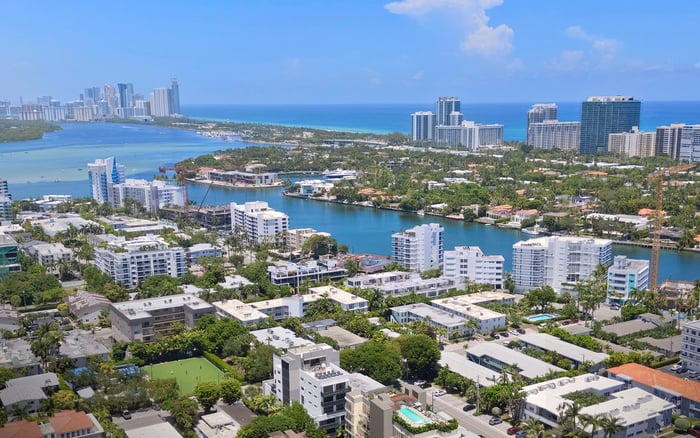
For family buyers weighing Coconut Grove against Bay Harbor Islands, the real choice is not simply price or prestige. It is lifestyle architecture: a leafy, walkable urban neighborhood versus a quieter island municipality shaped by waterfront residential living.
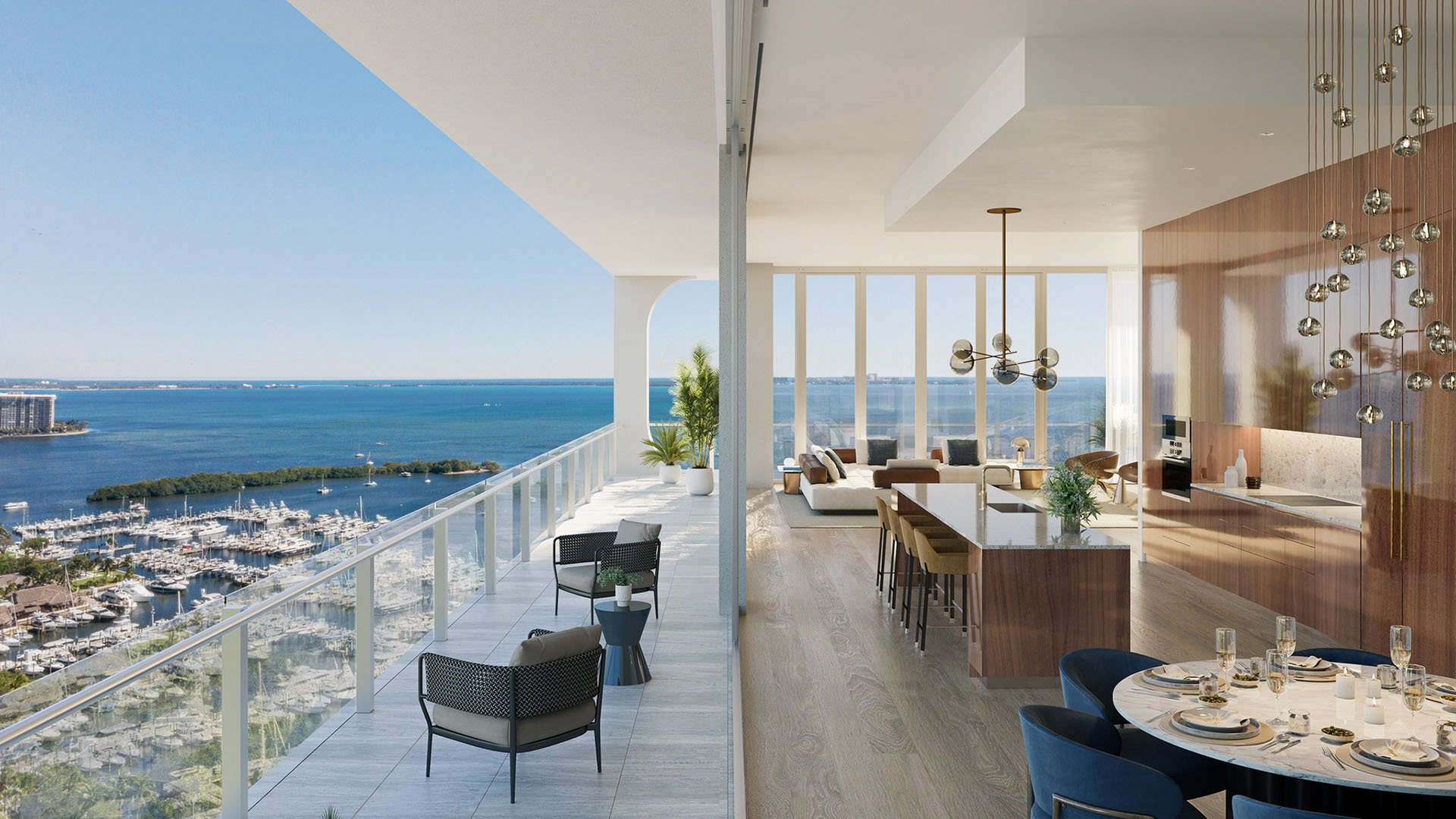
For families buying at the upper end of the South Florida market, the decision between Coconut Grove and Bay Harbor Islands is less about which address is better and more about which cadence feels right. Both are expensive, established, and highly desirable, yet each delivers luxury in a distinctly different way.
Coconut Grove is one of Miami’s oldest neighborhoods, with lush residential streets, a village-style core, and a bayfront character that feels layered rather than manufactured. Bay Harbor Islands, by contrast, is an incorporated village spread across two islands in Biscayne Bay, with a more insular, primarily residential atmosphere. One offers the texture of a larger urban neighborhood, with daily conveniences woven into the streetscape. The other offers the controlled calm of island living, where residential privacy is often the principal luxury.
For buyers comparing the two, the choice usually comes down to four questions: How much walkability do you want built into family life? What type of home do you actually want to maintain? How important is a distinct village government structure? And how comfortable are you with the realities of bayfront and island resilience?
Coconut Grove remains one of Miami’s most complete family-oriented enclaves because everyday life can unfold without feeling overly programmed. Shops, dining, and leisure uses cluster around the village area, giving families an unusual degree of built-in walkability for a luxury neighborhood. That matters for households who want weekends to feel spontaneous rather than scheduled.
CocoWalk, Peacock Park, Dinner Key, marinas, and waterfront green space all contribute to a lifestyle in which children’s activities, casual dining, and outdoor time are naturally close at hand. The Grove also has a visual softness that many families respond to immediately: mature trees, shaded streets, and residential pockets that feel settled.
That same character helps explain why projects such as Arbor Coconut Grove, The Well Coconut Grove, and Opus Coconut Grove resonate with buyers seeking a polished expression of the neighborhood’s leafy identity rather than a purely vertical urban proposition.
Another practical advantage is range. Coconut Grove tends to offer a broader housing mix, from condos and townhomes to larger single-family homes. For families still deciding whether they want lock-and-leave convenience, a transitional townhouse, or a long-term detached home, that variety creates meaningful flexibility.
Bay Harbor Islands appeals to a different buyer instinct. It is a small incorporated village with its own local government, and that distinction matters more than it may first appear. Families who value a smaller-scale municipal identity often find comfort in the sense of order, local stewardship, and residential focus that the village structure conveys.
The atmosphere is quieter than Coconut Grove’s mixed-use center. There is less of the casual village bustle and more of a retreat-like feeling shaped by water, bridges, and a contained footprint. Broader dining and shopping options often come from nearby coastal districts rather than from a large internal retail core, but for many buyers that is not a drawback. It is the point.
Housing here is also more specific. Bay Harbor Islands is heavily defined by condos and waterfront residential properties, making it especially appealing to families who prioritize convenience, security, and a polished lock-and-leave setup over the upkeep of a larger house and lot. That is the context in which Onda Bay Harbor, The Well Bay Harbor Islands, and La Maré Bay Harbor Islands feel especially aligned with family buyers seeking elevated island living with a more discreet rhythm.
Bay Harbor Islands also maintains its own police department, a detail that can further reinforce its appeal for buyers who prefer a clearly defined village-style municipal framework.
If your family wants to step outside and immediately access a neighborhood experience, Coconut Grove is the stronger fit. Its village center, public green spaces, and bayfront amenities create a daily pattern that encourages movement on foot and a deeper sense of immersion in the neighborhood itself.
If, however, your priority is a quieter home base that feels buffered from the city, Bay Harbor Islands is often the more compelling answer. It is not trying to be a dense, all-in-one district. It functions instead as a residential island setting with easy proximity to surrounding coastal destinations.
This distinction sounds subtle, but in practice it is profound. In Coconut Grove, family life can feel outward-facing and socially fluid. In Bay Harbor Islands, it can feel more contained, curated, and intentionally calm.
For many affluent families, the housing question is decisive. Coconut Grove generally offers more pathways across different life stages. A family may begin in a luxury condominium, move into a townhouse, and eventually transition to a larger single-family home while remaining within the same broader neighborhood identity.
Bay Harbor Islands is more specialized. Its inventory often skews toward waterfront condos and residences that support a lower-maintenance lifestyle. For households with demanding travel schedules, seasonal movement, or a preference for simplified ownership, that can be highly attractive.
Both markets sit in rarefied pricing territory, though Bay Harbor Islands often tilts more heavily toward premium waterfront inventory. In either case, discerning buyers are better served by comparing current pricing trends, inventory conditions, and market pace at the submarket level rather than assuming the two locations move in lockstep.
School selection in both places requires nuance. In Coconut Grove, families are choosing within a larger Miami neighborhood context, and fit can vary by exact address and zoning. In Bay Harbor Islands, school consideration often extends beyond the village itself into nearby areas, which can widen the search but also complicate it.
The most sophisticated buyers do not ask only, “Which area has better schools?” They ask: Which address best supports our preferred school options, our after-school routing, and our desired weekday rhythm?
Governance also deserves more attention than it usually gets. Coconut Grove is part of the City of Miami, which means buyers are choosing a storied neighborhood within a larger urban framework. Bay Harbor Islands offers the opposite proposition: a smaller, standalone village municipality with a more self-contained civic identity. Neither is inherently superior, but each produces a very different ownership experience.
In coastal South Florida, resilience is no longer a technical afterthought. It is part of the luxury conversation. Both Coconut Grove and Bay Harbor Islands face countywide flooding and storm considerations tied to bayfront living. That said, Bay Harbor Islands’ low-lying island geography can make resilience questions feel even more immediate for some families.
This does not diminish the appeal of either market. It simply means serious buyers should evaluate elevation context, building systems, site planning, insurance implications, and long-term storm readiness with the same rigor they bring to design and finishes.
Choose Coconut Grove if your family values walkability, greenery, a fuller neighborhood lifestyle, and a more varied housing mix. It is particularly well suited to buyers who want daily life to feel textured, social, and connected to parks, marinas, and an active village core.
Choose Bay Harbor Islands if your family values quiet residential island living, waterfront orientation, lock-and-leave ease, and the feel of a small municipality with its own civic structure. It is particularly well suited to buyers who prefer calm over bustle and privacy over neighborhood theater.
Neither choice is about compromise. These are simply two distinct interpretations of luxury family life in Miami: one leafy and urban, the other insular and maritime.
Is Coconut Grove better for walkability? Yes. Coconut Grove generally offers more built-in walkable access to shops, dining, parks, and leisure uses.
Is Bay Harbor Islands its own municipality? Yes. Bay Harbor Islands is an incorporated village with its own local government.
Which area feels quieter for families? Bay Harbor Islands usually feels quieter and more insular because it is primarily residential and island-based.
Does Coconut Grove offer more housing variety? Yes. Buyers will generally find a broader mix of condos, townhomes, and single-family homes in the Grove.
Is Bay Harbor Islands better for lock-and-leave living? Often, yes. Its housing stock is more heavily defined by condos and waterfront residences that can simplify ownership.
Are both neighborhoods expensive? Yes. Both are premium Miami-area markets, with Bay Harbor Islands often skewing toward pricier waterfront inventory.
What matters most for school planning? Exact address, zoning, and the family’s preferred school geography matter more than broad neighborhood assumptions.
Does Bay Harbor Islands have its own police department? Yes. That can appeal to buyers who value a distinct village governance structure.
Should flooding and storm risk be part of the decision? Absolutely. Both locations require resilience due diligence, and island geography may heighten that focus in Bay Harbor Islands.
Which area is the better fit overall for families? Coconut Grove suits families wanting a richer neighborhood lifestyle, while Bay Harbor Islands suits those prioritizing island calm and residential ease.
When you're ready to tour or underwrite the options, connect with MILLION.
If branded residences are on your mind — as a home or as an allocation — we would be glad to share what we are seeing, privately.
Begin a quiet conversation