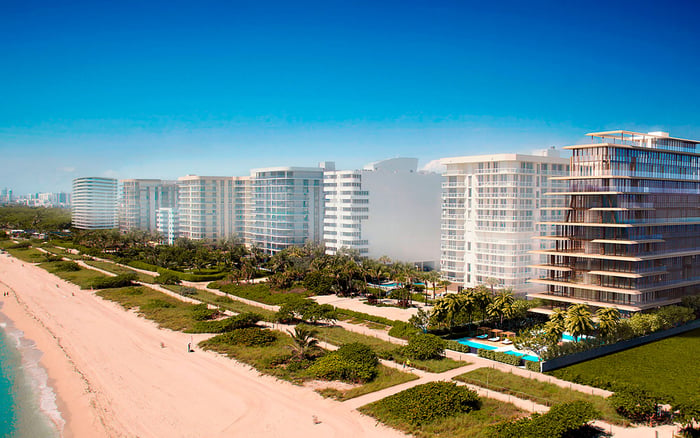
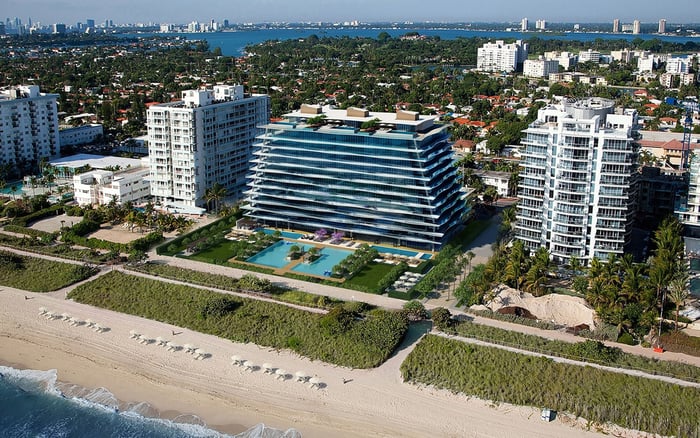
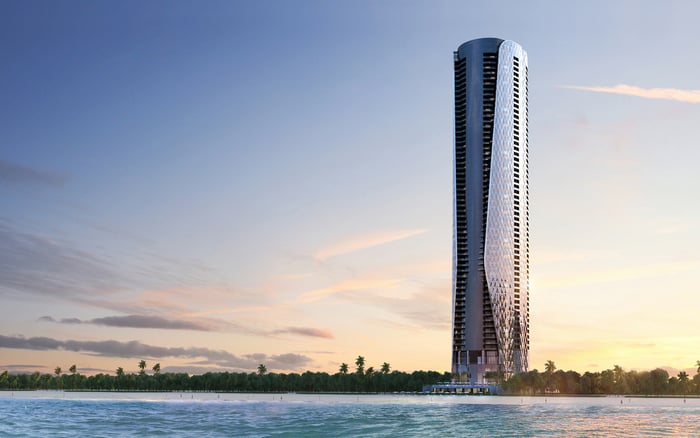
A buyer-focused comparison of Arte Surfside and Grove at Grand Bay, examining how two ultra-luxury South Florida condominiums frame privacy, design, neighborhood identity, and cultural preservation.
In South Florida luxury real estate, community impact is often reduced to price, prestige, and the arrival of a new architectural object. That view is too narrow. The more durable question is whether a building strengthens or weakens the cultural logic of its setting.
Arte Surfside and Grove at Grand Bay offer sharply different answers. Arte Surfside is positioned around privacy, exclusivity, and coastal retreat. Grove at Grand Bay, by contrast, is often discussed through the lens of Coconut Grove context, design presence, landscape, and neighborhood identity.
For buyers, the distinction is not abstract. It touches livability, reputation, resale confidence, and the emotional reason people choose one neighborhood over another. Where identity is part of the asset, cultural preservation becomes a form of value protection.
Arte Surfside represents a private, retreat-oriented luxury model. Its appeal is closely tied to discretion, controlled arrival, and a feeling of separation from the everyday rhythm of the street.
The community impact question begins when this model becomes an expectation setter. A retreat-like condominium can elevate the perceived ceiling of a local market while narrowing the interface between residents and neighborhood life. The building may be admired, desired, and financially influential, but its contribution to public texture is intentionally limited.
In Surfside, that limited interface matters because the town’s appeal depends on a delicate balance between coastal privilege and residential calm. Luxury can deepen the market’s cachet, but it can also prompt residents to ask whether exclusivity is becoming the dominant identity of the place.
Grove at Grand Bay operates from a different premise. It is still a luxury condominium, and its architecture is unmistakably contemporary, yet its impact is tied to how it engages Coconut Grove’s historically layered character. Its visibility brings design ambition and a clear visual signature to a neighborhood where village-scale intimacy remains central to the buyer psyche.
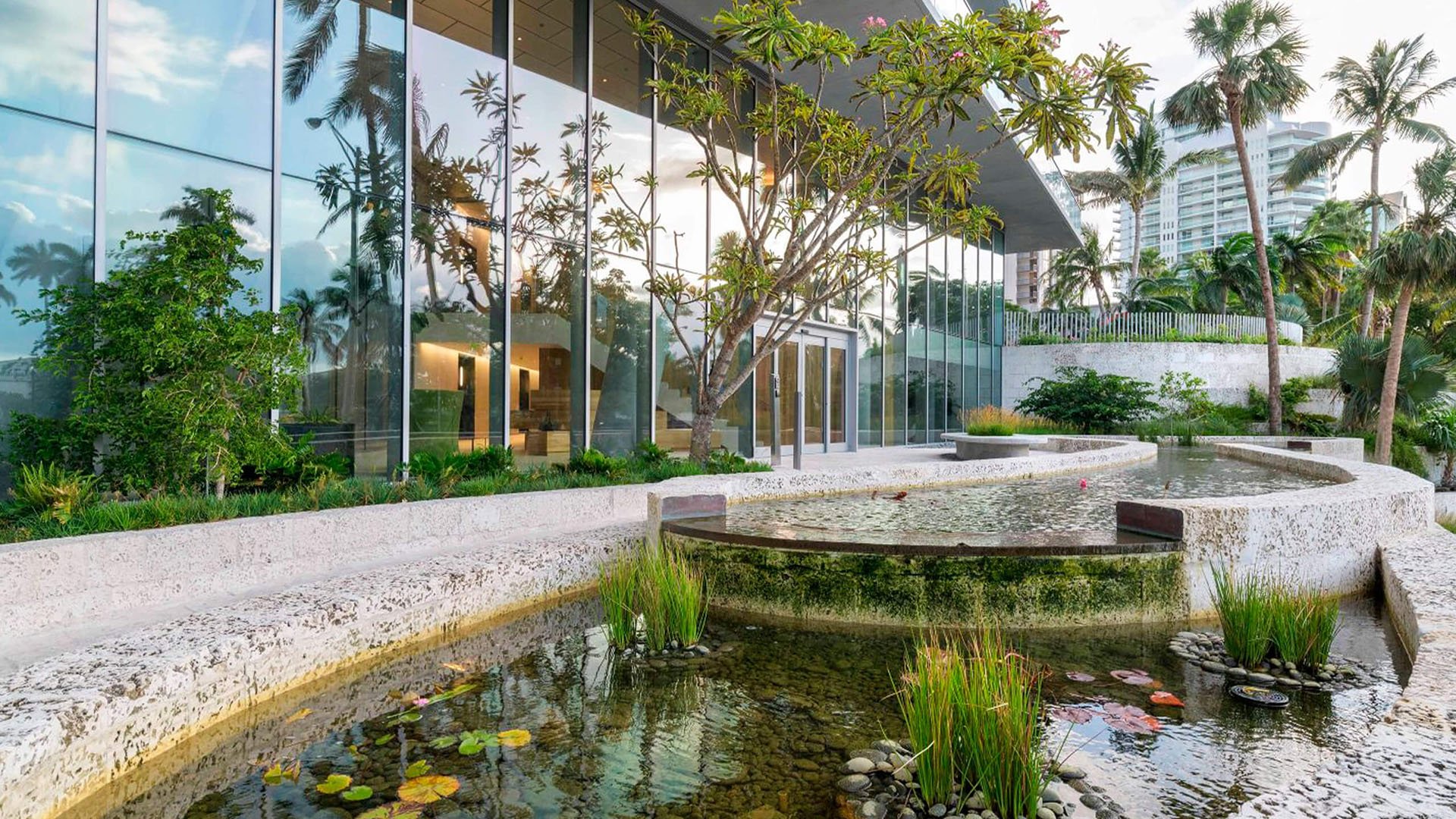
What distinguishes the project in this comparison is its context-facing posture. Landscape, permeability, and architectural language form part of its relationship with Coconut Grove rather than appearing as afterthoughts. That does not erase debate over scale, but it gives the building a framework for belonging.
For Coconut Grove, cultural preservation is not about freezing the neighborhood in time. It is about allowing new work to recognize the canopy, the walkability, the layered residential texture, and the informal sophistication that make the Grove feel distinct from more vertical parts of Miami. Grove at Grand Bay is best understood as a test case in whether luxury can be expressive without becoming indifferent.
The most sophisticated buyers increasingly understand that a luxury residence is attached to a neighborhood narrative. Amenities, finishes, and views are only part of the equation. A property’s long-term desirability also depends on whether the surrounding community remains legible, livable, and culturally coherent.
This is where Arte Surfside and Grove at Grand Bay become useful comparables. Arte Surfside prioritizes privacy, which can be deeply valuable for residents but less generous to neighborhood permeability. Grove at Grand Bay accepts a more visible role in Coconut Grove’s urban fabric, creating a richer dialogue with place while attracting scrutiny over scale and fit.
Neither model is universally superior. The right answer depends on what a buyer values. A privacy-first buyer may see Arte Surfside as the cleaner proposition: coastal calm, discretion, and a deliberate retreat from the public realm. A Grove buyer may prefer the complexity of a building that participates more directly in neighborhood life, even if that participation brings greater civic attention.
In ultra-premium markets, reputation is an asset class. A building perceived as tone-deaf to its setting can carry reputational risk even when the residences themselves are exceptional. Conversely, a project that demonstrates a credible relationship to local character can benefit from a deeper form of prestige.
That is especially true in Coconut Grove, where the market is inseparable from the neighborhood’s distinctive identity. Buyers are not simply purchasing access to Miami. They are purchasing a specific atmosphere: village informality, mature greenery, proximity to Biscayne Bay, and a cultural memory that feels unlike the more polished corridors of newer development.
In buyer shorthand, terms such as boutique, oceanfront, and exclusive only matter when supported by an authentic setting. Arte Surfside makes the case for exclusivity as a primary luxury language. Grove at Grand Bay makes the case that architectural prominence can still seek a conversation with its surroundings.
Coconut Grove places unusual pressure on new luxury development because its appeal rests on restraint. The neighborhood’s historically bohemian, low-rise character creates a powerful expectation of intimacy. Even ambitious architecture must answer a basic question: does it amplify the Grove, or does it merely occupy it?
Grove at Grand Bay is significant because it sits directly inside that tension. Its design presence is unmistakable, yet the project is also framed by landscape and a more permeable relationship to place. For many buyers, that is the crucial distinction between a building that imposes and a building that negotiates.
The Coconut Grove buyer is often sensitive to nuance. Scale can be accepted when the ground-level experience feels considered. Design ambition can be welcomed when it respects the neighborhood’s canopy, village rhythm, and cultural distinctiveness. The standard is not nostalgia. The standard is continuity.
Surfside asks a different question. Here, the coastal setting naturally supports privacy, and Arte Surfside leans into that premise. Its retreat-like positioning gives residents a sense of remove that aligns with a certain definition of coastal luxury.
The tradeoff is that retreat-oriented buildings can have a more limited civic presence. They may shift prestige while offering fewer cues to the broader public realm. In a market where exclusivity is part of the brand, that may be acceptable to many residents. Still, the community impact conversation remains relevant because identity is shaped not only by what is built, but by how much it connects.
For South Florida’s luxury audience, the next phase of value will be measured in more than private square footage, finish quality, or architectural drama. The strongest addresses will be those that maintain a clear relationship to place.
Arte Surfside and Grove at Grand Bay show two ways forward. One privileges sanctuary. The other tests contextual engagement. Both invite serious debate about scale, heritage, preservation, and neighborhood identity.
For buyers, the lesson is direct: study not only the residence, but the social contract implied by the building. A great luxury property should protect privacy, but it should also understand the community that gives it meaning.
Why compare Arte Surfside with Grove at Grand Bay? They represent two different luxury models: Arte Surfside emphasizes retreat and privacy, while Grove at Grand Bay engages more visibly with neighborhood context.
Is Arte Surfside considered a community-facing project? Its positioning is more private and retreat-oriented, with limited neighborhood interface compared with more context-facing urban luxury models.
What makes Grove at Grand Bay important to Coconut Grove? It is a prominent luxury condominium whose scale, landscape, and architectural language interact with a historically distinctive neighborhood.
Does cultural preservation mean opposing new development? No. In luxury real estate, preservation often means ensuring new architecture respects the character, rhythm, and identity of its setting.
Why does neighborhood identity matter to buyers? Identity supports long-term desirability because buyers are purchasing not just a residence, but a recognizable lifestyle and sense of place.
Is privacy always better for luxury value? Privacy is highly valuable, but its impact depends on context. In some neighborhoods, connection and permeability can be equally important.
How should buyers evaluate community impact? They should consider scale, street presence, landscape, neighborhood fit, and whether the building strengthens or weakens local character.
Why is Coconut Grove especially sensitive to scale? Coconut Grove’s appeal is tied to a village-like, historically bohemian atmosphere, so large architecture is judged by how carefully it fits.
Can a high-design condominium still support preservation? Yes, if its design, landscape, and ground-level experience acknowledge the cultural and physical character of the neighborhood.
What is the best way to shortlist comparable options for touring? Start with location fit, delivery status, and daily lifestyle priorities, then compare stacks and elevations to validate views and privacy.
To compare the best-fit options with clarity, connect with MILLION.
If branded residences are on your mind — as a home or as an allocation — we would be glad to share what we are seeing, privately.
Begin a quiet conversation