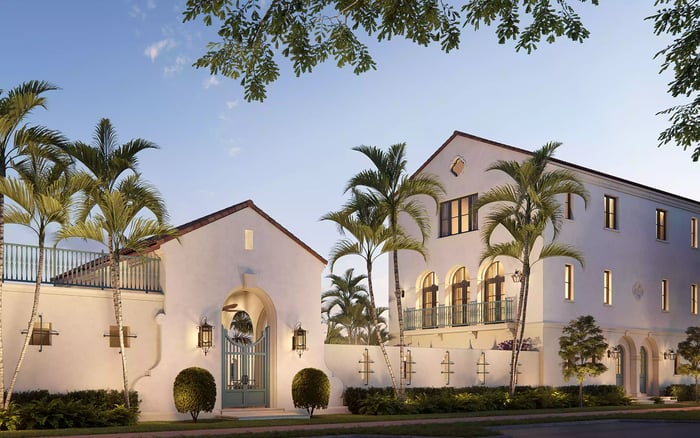
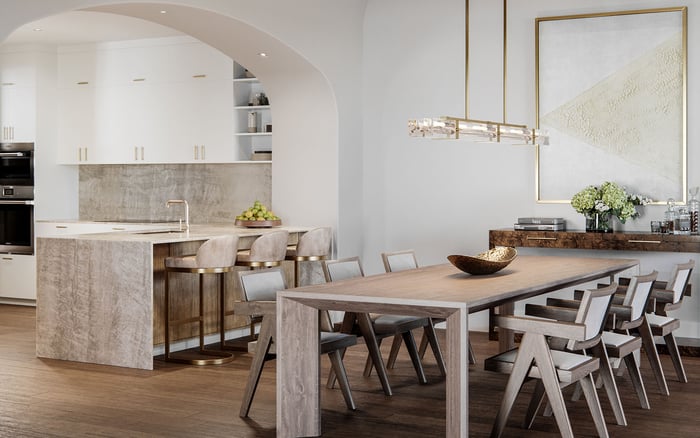
A buyer-focused look at how Coconut Grove and Coral Gables differ in walkability, daily rhythm, privacy expectations, service culture, and residential decision-making.
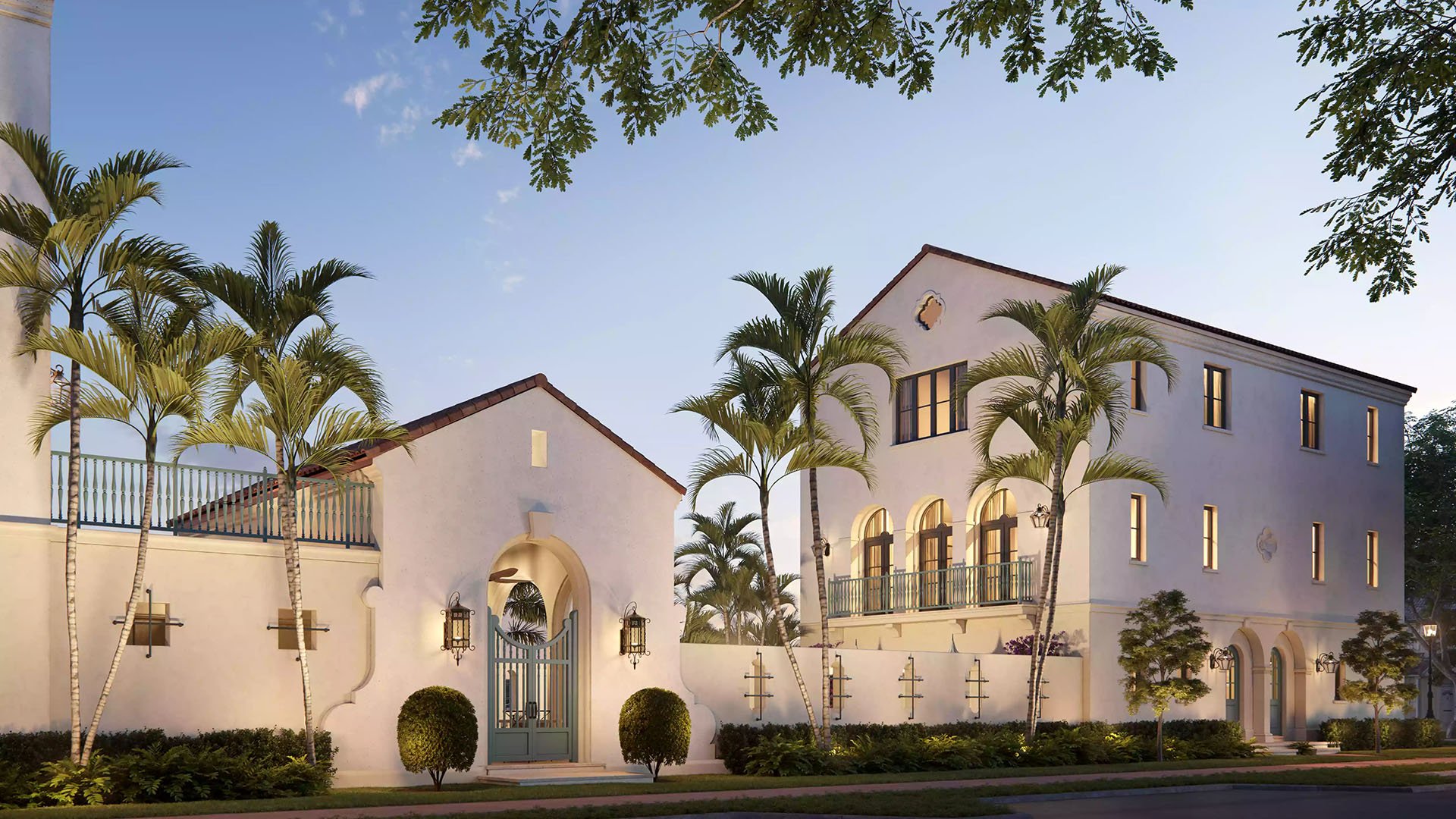
Coconut Grove and Coral Gables both attract buyers who want a more residential expression of Miami living, but they satisfy that desire in different ways. One leans into ease, shade, informal movement, and local familiarity. The other is more composed, more ceremonial, and often more exacting in how public space meets private life.
For ultra-premium buyers, the distinction is not simply whether restaurants, cafés, schools, parks, or errands are nearby. It is how the walk feels, who controls the threshold, how arrivals are managed, and whether the surrounding environment supports the household’s definition of discretion. At this level, walkability is not a score. It is a lifestyle system.
Coconut Grove tends to appeal to buyers who prefer a neighborhood experience that feels layered rather than linear. A walk may feel less like a planned promenade and more like a daily ritual, shaped by residential streets, garden walls, casual stops, and a slower pace. The luxury is in not needing to announce the outing.
That distinction matters for residents who value spontaneity. A morning coffee, a school run, a fitness appointment, or a relaxed dinner can feel integrated into the rhythm of the day. The Grove buyer often wants a neighborhood that can absorb informality without sacrificing status. At its best, walkability here feels personal, almost private, even when it is public.
Service expectations follow that mood. Buyers may still want attentive reception, valet, package coordination, wellness amenities, and polished maintenance, but they often prefer those services to recede into the background. The tone is less theatrical and more residential. Staff presence should be efficient without making the property feel like a hotel lobby.
For those searching by market language, Coconut Grove often sits beside priorities such as boutique scale, new construction, private-school access, and single-family home alternatives. The common thread is not density for its own sake. It is the desire for a complete life within a soft-edged, human-scaled environment.
Coral Gables offers a different proposition. Its appeal often rests on composition: streets that feel intentional, approaches that feel formal, and a civic atmosphere that rewards polish. Buyers drawn to Coral Gables may want walkability, but they also want it framed by permanence and controlled presentation.
Here, walking is often about confidence and predictability. The buyer may be less interested in improvisation and more focused on a refined pattern: a recognizable route, a gracious arrival, a reliable dining district, a professional meeting, or an evening that begins and ends with a clear sense of place. Walkability becomes part of personal presentation.
That expectation can raise the bar for service. In Coral Gables, the luxury buyer often notices the details of protocol: how the door is opened, how the car is received, how guests are greeted, how deliveries are managed, and whether the building’s staff understands the resident’s preferred level of formality. Warmth matters, but so does discipline.
Coral Gables buyers may be comparing residences not only by floor plan or finish package, but also by whether the surrounding environment supports a more established household identity. For some, that means proximity to dining and culture. For others, it means a composed setting that feels appropriate for family, business, and entertaining.
The most meaningful divide between Coconut Grove and Coral Gables is not convenience. It is the emotional contract between resident and neighborhood.
Coconut Grove’s walkability rewards the buyer who likes permeability. You move easily between home, street, and social life. The neighborhood can feel intimate, textured, and slightly unbuttoned in the best possible way. Privacy is achieved through landscaping, architecture, and a culture of discretion rather than through formality alone.
Coral Gables tends to reward the buyer who values sequence. The transition from street to lobby, from lobby to residence, and from residence to dinner can feel more deliberate. Privacy is often tied to boundaries, order, and carefully managed encounters. The neighborhood’s strength is not that it disappears, but that it performs with restraint.
Neither model is superior. The right answer depends on temperament. A buyer who loves the Grove may find the Gables too composed. A buyer who loves the Gables may find the Grove too informal. Both can be deeply luxurious, but they offer different forms of control.
In both markets, service expectations begin before a buyer enters the unit. The exterior approach, porte cochere experience, valet rhythm, lobby scale, elevator privacy, and staff discretion all shape the first impression. The difference is how those features should feel.
In Coconut Grove, many buyers respond to service that feels intuitive and low-friction. They want problems solved before they become visible, but they do not necessarily want ceremony around every movement. The highest compliment may be that the building functions beautifully without calling attention to itself.
In Coral Gables, buyers may expect a more formal service posture. The residence should feel composed when guests arrive. Staff should understand hierarchy, timing, and the difference between friendliness and familiarity. For households that entertain, host business contacts, or maintain multigenerational routines, that precision can be decisive.
This is where the comparison becomes highly personal. A buyer should ask whether the property’s service culture matches the household’s rhythm. Is the building comfortable with frequent guests? Does the lobby feel serene at peak hours? Are amenities managed quietly or socially? Does staff communication feel polished without becoming intrusive?
A luxury showing rarely reveals the whole answer. The most useful evaluation happens across different times of day. A buyer should walk the neighborhood in the morning, late afternoon, and evening. The goal is not to count steps, but to understand atmosphere.
In Coconut Grove, pay attention to whether the relaxed rhythm remains appealing when daily obligations are layered in. Does the walk feel charming when you are in a hurry? Does the privacy feel sufficient when the neighborhood is active? Does the building provide enough service structure to balance the area’s informality?
In Coral Gables, assess whether the polish feels comforting or constraining. Does the formal rhythm suit your family’s lifestyle? Are the most important destinations pleasant on foot, or does the experience remain car-dependent in practice? Does the property’s service standard match the neighborhood’s more composed tone?
The best decision often comes from imagining an ordinary Tuesday, not a perfect weekend. Where do keys go? Who receives guests? How does a child, a parent, a housekeeper, a driver, or a visiting friend experience the residence? Luxury lives in those details.
Choose Coconut Grove if you want walkability to feel organic, social when desired, and quietly private when needed. It suits buyers who value texture, greenery, ease, and a less scripted daily experience. The service ideal is capable, discreet, and unforced.
Choose Coral Gables if you want walkability to feel composed, elegant, and supported by a stronger sense of order. It suits buyers who value presentation, continuity, and a more formal relationship between residence and neighborhood. The service ideal is polished, consistent, and precise.
For many South Florida buyers, the right choice is not about budget. It is about choreography. Coconut Grove allows life to unfold with relaxed sophistication. Coral Gables frames life with poise. Both can be exceptional, but each asks the resident to define what service, privacy, and convenience should feel like at home.
Is Coconut Grove more walkable than Coral Gables? It depends on the buyer’s routine. Coconut Grove often feels more casual and village-like, while Coral Gables can feel more structured and formal.
Is Coral Gables better for buyers who want polished service? Coral Gables may appeal to buyers who prefer more ceremonial arrivals and predictable service cues. The fit depends on the specific building and household expectations.
Which neighborhood feels more private? Coconut Grove often creates privacy through texture and residential softness. Coral Gables often creates privacy through order, boundaries, and composed transitions.
Should families compare the two neighborhoods differently? Yes. Families should test school routines, guest access, parking habits, and daily errands rather than relying only on a map.
Do luxury condo services feel different in each area? They can. Grove buyers may prefer quieter, less visible service, while Gables buyers may expect a more formal and consistent service posture.
Is Coconut Grove better for a relaxed lifestyle? It often suits buyers who want ease, greenery, and spontaneous neighborhood movement. The experience feels less scripted than a more formal urban setting.
Is Coral Gables better for entertaining? It can be compelling for buyers who value composed arrivals and polished guest experiences. The best fit depends on the residence and service culture.
How should buyers evaluate walkability? Walk the area at several times of day and imagine ordinary routines. The feeling of the walk matters as much as the distance.
Are single-family homes part of the comparison? Yes. Many buyers compare condominium convenience with single-family home privacy when weighing these neighborhoods.
What is the most important decision factor? Decide whether you prefer casual access or controlled arrival. That choice usually clarifies the right neighborhood faster than amenities alone.
For a discreet conversation and a curated building-by-building shortlist, connect with MILLION.
If branded residences are on your mind — as a home or as an allocation — we would be glad to share what we are seeing, privately.
Begin a quiet conversation