A discreet closing depends on more than a sealed envelope. For Key Biscayne buyers and sellers, readiness means confirming shipment-specific coverage, documenting each handoff, and coordinating physical deliveries with the closing agent’s requirements.

In a high-value Key Biscayne transaction, the closing package deserves the same attention as the agreement it completes. A sealed envelope, an available driver, and a delivery notification are not interchangeable assurances. The standard should be specific: establish what must travel, who may handle it, what protection applies, and who will confirm that the correct documents have arrived.
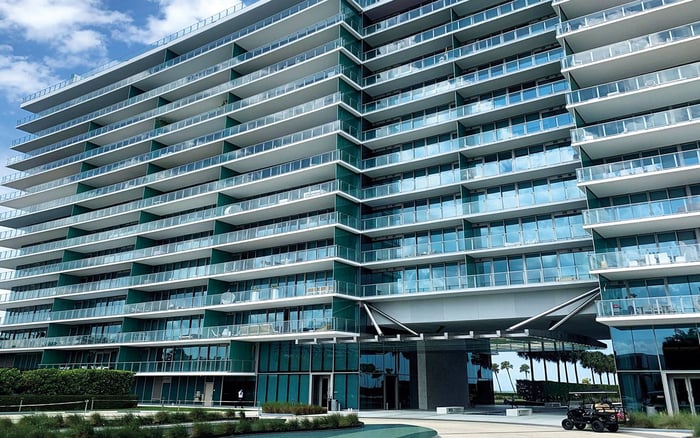
For a buyer considering Oceana Key Biscayne, this is a matter of transaction planning, not an assumption about the residence’s services. Ask the closing agent to define the physical-document requirements before arranging transportation. Plan any delivery of valuable personal contents separately: document handling and contents coverage require different questions.
The objective is not elaborate logistics. It is a clear record of responsibility from release to receipt.
Customs-bonded status concerns authorization to transport goods under bond. It does not establish full-value insurance for residential closing documents or luxury contents. Likewise, a description such as “licensed and bonded” does not identify a particular shipment’s insurance limit.
Advertised customs-bonded service to Key Biscayne includes sealed movement of customs-controlled cargo from the port gate to the island recipient, supported by chain-of-custody logs. That describes a specific cargo service, not confirmation that an ordinary closing envelope receives identical handling or protection.
Before booking, request written confirmation of the applicable bond or credential and the actual coverage for the proposed shipment. Ask about limits, exclusions, claims procedures, and whether the contents are accepted under those terms. For documents, ask specifically how loss or damage is valued. Do not assume that the property’s purchase price has any bearing on coverage.
Some advertised services apply a standard carrier-liability limit and offer higher declared value on request. A declared value should prompt a coverage discussion, not end it. Obtain the applicable terms before releasing the package.
A seller’s package may include the deed, closing statement, seller’s affidavit, non-foreign-status certification, and title-related affidavits. Depending on the transaction, it may also contain payoff authorization, association documents, tax forms, wire instructions, or approved limited power-of-attorney documents. The exact set varies.
Have the closing agent identify the required documents, signing instructions, and return destination. Ask which items require originals and which can be delivered electronically. A package is ready for transport when its requirements are understood, not merely when its pages have been assembled.
For someone comparing Key Biscayne with Coconut Grove, including Park Grove Coconut Grove, the same discipline can guide either transaction. The relevant questions concern the specific closing, lender, and documents. Assumptions about a residential address should not supply the answers.
As a practical control, agree on a package identifier and an inventory suitable for the closing team. Keep sensitive document details within the approved communication channel rather than exposing them unnecessarily on exterior labels.
Advertised courier services covering Key Biscayne include bonded drivers, insured deliveries, and sealed transport of closing documents. Other advertised Miami services describe single-driver transport, tamper-evident handling, and no intermediate stops for high-value items and secure documents. These descriptions do not constitute independently verified guarantees for a particular booking.
Translate each relevant promise into a written instruction. Confirm whether one assigned driver will retain possession throughout the trip, whether any transfer or intermediate stop is permitted, and what happens if that driver becomes unavailable. Ask how the package will be sealed and how damage or evidence of opening will be documented.
Recipient identity verification and electronic signature capture are also advertised features. Confirm that they apply to the booked service, and name the person authorized to accept delivery. Do not assume that a signature from any available person satisfies the closing team’s instructions.
These are recommended verification steps, not universal legal requirements. Their purpose is to define the selected service clearly enough to evaluate it before dispatch.
A useful chain-of-custody record should connect the package to each person responsible for it. Request a timestamped pickup acknowledgment, the assigned driver’s identity, any transfer record, and final delivery confirmation. The record should also note package condition and any departure from the agreed route or handling instructions.
Define the receiving point precisely. If delivery is directed to a residence, ask whether release to a front desk is authorized or the named recipient must accept it personally. If a representative receives the package, decide how the subsequent handoff will be acknowledged. Confirm these instructions with the actual participants rather than inferring them from building amenities.
Apply the same approach to a Brickell purchase at Una Residences Brickell: establish the authorized recipient and receiving location without assuming any particular property policy.
Finally, distinguish delivery from document review. Ask the closing agent to acknowledge receipt and confirm whether the returned package is complete. A courier’s arrival notification alone does not establish completeness.
Florida remote-closing options include remote online notarization and mail-away signing. The appropriate method depends on the transaction documents and lender acceptance. In a mail-away closing, documents are sent by overnight courier, signed before a local notary, and returned to the title company or closing agent by overnight delivery.
Map both delivery legs before the package leaves. Confirm the signing appointment, return instructions, required arrival deadline, and person responsible for monitoring progress. An advertised pickup window of approximately 60 minutes for certain Key Biscayne items is not a guaranteed completion time for the entire closing sequence.
Remote online notarization has its own safeguards. Florida law requires online notaries to take reasonable steps to ensure integrity, security, and authenticity, maintain a backup electronic journal, and protect the journal and related records against unauthorized access or use.
Digital closing services may offer document exchange, status visibility, and secure portals. Those capabilities do not establish that every original-document delivery requirement disappears. Confirm any remaining physical requirements with the closing agent.
Before releasing the package, consolidate the essential instructions: contents, coverage confirmation, pickup window, authorized recipient, custody records, and return requirements. Name the contact who can resolve a missed delivery or an unavailable recipient.
Ask in advance whether an unsuccessful delivery will be held, returned, or rescheduled, and who may authorize that decision. If a seal appears compromised or a document is missing, notify the closing agent and seek instructions rather than improvising. Readiness means having an agreed response when the planned handoff cannot occur.
For a considered perspective on Key Biscayne and South Florida residential opportunities, explore MILLION.
If branded residences are on your mind — as a home or as an allocation — we would be glad to share what we are seeing, privately.
Begin a quiet conversationNo. Customs bonding concerns authorization to transport goods under bond, not full-value insurance for closing documents or luxury contents.
Request written confirmation of shipment-specific limits, exclusions, accepted contents, and claims procedures. Ask whether a higher declared value changes the applicable protection.
Possible contents include the deed, closing statement, seller’s affidavit, non-foreign-status certification, and title-related affidavits. The closing agent should confirm the exact set for the transaction.
As a recommended practice, request timestamped pickup and delivery acknowledgments, handler identities, transfer records, and package-condition notes.
Some services advertise single-driver transport, but that is not a universal guarantee. Confirm the handling arrangement and any permitted transfers for the specific booking.
Confirm whether the closing team authorizes front-desk receipt or requires a named recipient. Do not assume that any available signature meets the delivery instructions.
No. Ask the closing agent to acknowledge receipt and separately confirm whether the returned documents are complete.
Documents are sent by overnight courier, signed before a local notary, and returned to the title company or closing agent by overnight delivery. Confirm the deadlines and instructions before dispatch.
Not necessarily. The signing method depends on the documents and lender acceptance, so the closing agent should identify any remaining original-document requirements.
Agree before dispatch on whether the package will be held, returned, or rescheduled. Name the contact authorized to resolve the missed delivery.