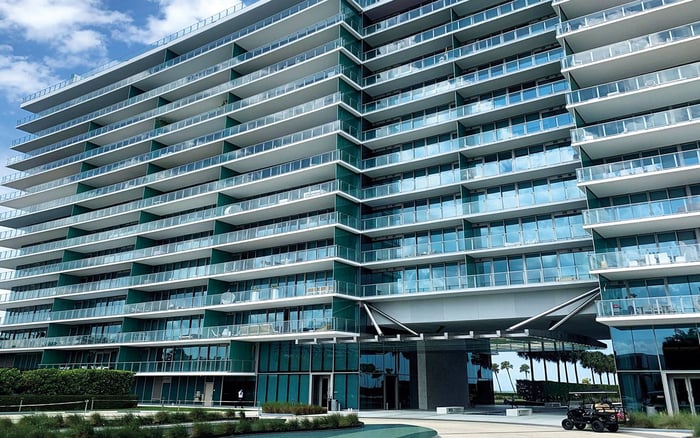
For a wine collector buying in Key Biscayne, the ownership file should connect three essentials: documented backup power, written delivery procedures, and a credible climate history. Here is how to separate an attractive amenity from a verified operating arrangement.

A beautifully appointed wine room can be persuasive during a showing. For a collector buying a condominium in Key Biscayne, the more consequential questions concern what happens when electricity fails, a shipment arrives early, or a temperature alert reaches an unattended phone. The ownership file should explain how the collection will be protected when the owner is elsewhere.
Organize that file around three connected subjects: power continuity, delivery custody, and climate history. Each should identify the equipment or space involved, the responsible party, and the evidence supporting the arrangement. A building generator does not establish that private wine-storage equipment receives backup power.
For a residence under consideration at Oceana Key Biscayne, apply this review to the actual unit and any proposed storage arrangement. Do not infer backup coverage, receiving services, or monitoring capabilities from the address. Each requires building-specific and unit-specific confirmation.
Miami-Dade requires condominium, cooperative, and homeowners’ associations to register annually, including those in incorporated municipalities such as Key Biscayne. The county association registry provides a centralized starting point for locating documents, with searches by property address, folio, association name, and registration status.
Begin by matching the residence to the correct association. Request the current governing documents, relevant operating rules, and written clarification of responsibility for any wine-storage space. Distinguish an appliance inside the residence from a separately controlled room or shared facility. Establish who owns, services, insures, and authorizes changes to the equipment; do not assume those responsibilities rest with the same party.
Use Key Biscayne’s municipal building-permit portal to investigate documented generator installations, electrical alterations, HVAC changes, and wine-cellar construction. Searches can use the site address, parcel number, contractor license information, record information, and contact information. Match records to the equipment currently installed, and ask a qualified professional to reconcile discrepancies. A permit trail and a current operational assessment answer different questions.
Permanently installed generators require permits and plan review, potentially involving building, electrical, and fuel-system requirements. Those requirements establish a regulatory framework-not the loads served by a particular condominium’s generator.
Ask management and the seller for documentation showing whether the specific wine-storage circuit is connected to backup power. Have a qualified electrical professional review the circuit identification, transfer arrangement, and available supporting drawings. Obtain written clarification of any circumstances in which the load may be disconnected or excluded.
The practical review should also request:
Equipment identification and available service records for the storage system.
Documented backup coverage for cooling equipment, controls, and monitoring devices.
Available generator test records and the assumptions behind any runtime estimate.
Procedures for restart, fault notification, and access when the owner is absent.
Treat these as diligence requests, not presumed association obligations. Where documentation is unavailable, record the unresolved point explicitly. A verbal assurance is not confirmation.
For buyers also considering Brickell, the same circuit-level inquiry belongs in a review of Una Residences Brickell. This is a verification principle, not a statement about that project’s equipment or backup coverage.
A portable generator should not become an unexamined fallback in a condominium purchase. Before relying on one, confirm with Key Biscayne the current local provision prohibiting temporary or portable generators on multifamily, condominium, and townhome properties.
The county’s limited building-permit exemption for portable generators supplying directly connected appliances and lights does not override municipal restrictions. Connecting a portable generator to building wiring requires an electrical permit and an approved transfer arrangement. Operating generators must also be outdoors and away from openings to prevent exhaust from entering a building.
The conclusion for the ownership file is straightforward: verify the permitted backup arrangement that actually serves the storage equipment. Do not base collection protection on an improvised alternative that may be prohibited or unsafe.
Wine delivery deserves a protocol more specific than ordinary package acceptance. Request the association’s current written rules and confirm permitted days, receiving hours, advance notice, service-elevator reservations, and access requirements. Delivery schedules are building-specific, not a uniform Key Biscayne entitlement.
Next, establish the handoff. Ask whether staff may accept wine shipments, whether the owner must authorize acceptance, and where cases wait before entering the residence or designated storage space. Do not assume a staffed lobby provides refrigerated receiving or that acceptance includes a condition inspection.
The written arrangement should specify who contacts the owner, who can move the shipment, and what happens if delivery falls outside the approved window. Ask how damaged packaging, delayed collection, and an absent owner are handled. These are proposed operating questions, not claims about services any association provides.
If the search extends to Coconut Grove and Park Grove Coconut Grove, carry the same delivery checklist into that separate review. Compare written procedures rather than letting expectations formed at one property stand in for another’s rules.
A display reading during a showing is not a climate history. Request available temperature and humidity records from the seller, manager, or equipment operator, together with alarm histories, service entries, and explanations for interruptions. A buyer might request 12-24 months where available, but that is a diligence preference-not a legal requirement or established condominium standard.
Establish what each record captures: sensor location, recording frequency, time settings, and the relationship between the sensor and the actual storage area. Look for unexplained gaps, and ask whether alerts prompted a documented response. A log becomes more informative when read alongside maintenance and outage records.
County environmental public records may include inspections, permits, enforcement actions, contamination information, and environmental monitoring. They are not a substitute for private wine-cellar climate logs.
Include the surrounding building in the assessment. Salt-air corrosion, wind-driven rain, humidity, and tropical weather can affect HVAC equipment, windows, finishes, and structural components. Applicable coastal properties may face a 25-year recertification trigger followed by 10-year intervals. Confirm applicability for the particular building rather than assuming a universal schedule.
Before closing, classify each issue as documented, awaiting confirmation, or requiring specialist review. Keep written operating rules alongside equipment records, permit information, and management correspondence. Ask the appropriate professionals to address unresolved electrical, mechanical, and transaction questions before relying on the proposed storage arrangement.
The objective is not a thicker folder. It is a clear account of what powers the wine storage, who receives the collection, and who responds when conditions change. That clarity makes a carefully chosen residence easier to enjoy from the first delivery onward.
For a considered approach to South Florida condominium ownership, explore MILLION.
If branded residences are on your mind — as a home or as an allocation — we would be glad to share what we are seeing, privately.
Begin a quiet conversationNo. Confirm that the specific wine-storage circuit is connected to backup power and have a qualified professional review the supporting documentation.
The county association registry is a centralized starting point. Searches can use the property address, folio, association name, and registration status.
Yes. Miami-Dade’s annual association-registration requirement includes associations in incorporated municipalities such as Key Biscayne.
Use Key Biscayne’s municipal building-permit portal to investigate documented generator, electrical, HVAC, and wine-cellar work.
County guidance requires permits and plan review for permanently installed generators, potentially covering building, electrical, and fuel-system requirements.
No. Confirm the current Key Biscayne restriction on temporary or portable generators at multifamily, condominium, and townhome properties before relying on that option.
Request written confirmation of receiving hours, staff acceptance authority, holding arrangements, owner notification, and responsibility for moving the shipment into storage.
That period is a suggested buyer diligence request, not a legal requirement or established condominium standard. Request available records and investigate unexplained gaps.
No. Environmental public records may address permits, inspections, enforcement, and environmental monitoring, but do not necessarily contain private wine-cellar climate histories.
Applicability must be checked for the particular building. The identified schedule for applicable coastal properties begins at 25 years, followed by 10-year intervals.