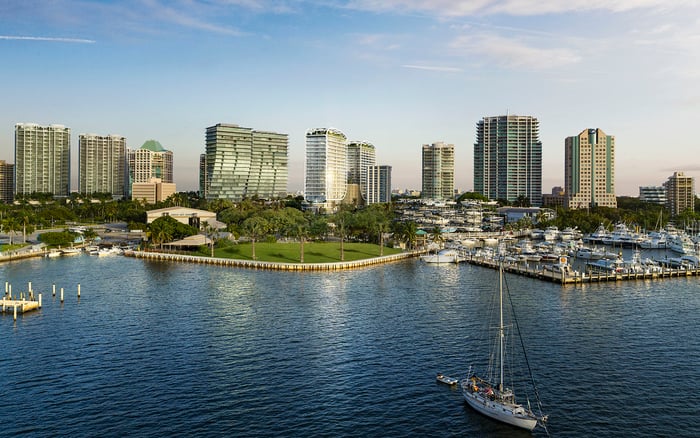
For a multigenerational move from London, Key Biscayne should be evaluated through two distinct lenses: the convenience of village life and the logistics of mainland access. Residence-level walking tests, realistic school runs and carefully planned private-aviation transfers reveal whether an island address fits the entire household.
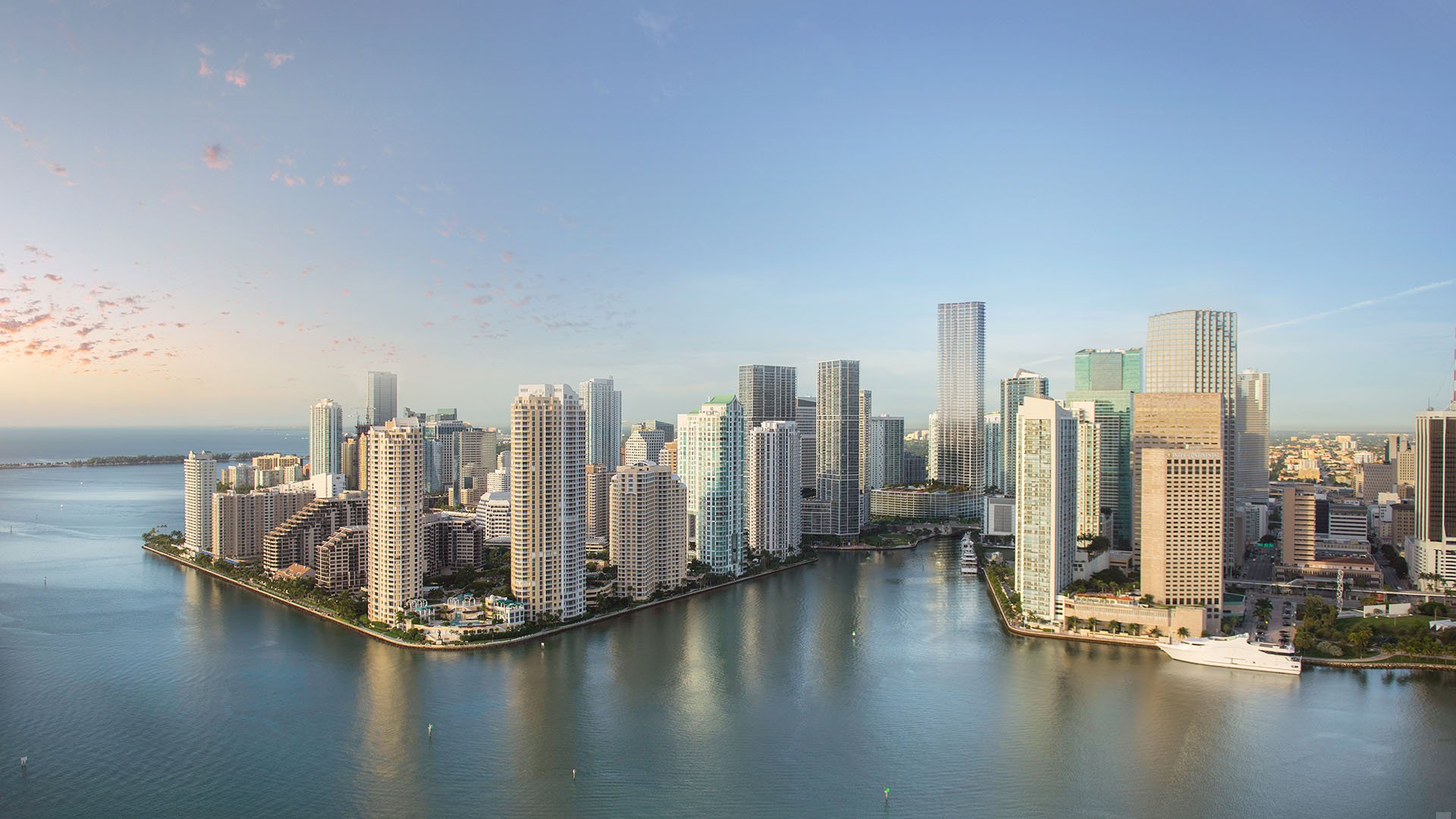
For a multigenerational family moving from London to Key Biscayne, the decisive luxury is not simply a beautiful residence. It is a day that works for children, working adults and older relatives alike. The right address should support independence without turning every school departure, appointment or flight into a household-wide scheduling exercise.
The essential distinction is between local convenience and regional access. Key Biscayne’s daily amenities cluster around Crandon Boulevard and Village Green, making proximity to the village center meaningful. Yet a comfortable walk to an errand does not establish an easy journey to a mainland school, medical appointment or private aircraft. Treat these as separate purchasing questions; an attractive neighborhood does not necessarily answer both.
For a London household, the comparison should remain personal: which routines are worth preserving, which can change, and who needs to travel independently? There is no basis for promising a universal reduction in car use. A successful relocation starts with the family’s actual calendar.
An island-wide impression is too broad for a multigenerational purchase. Start at the precise residential entrance and walk the routes each family member would use. Test village-center errands at an older relative’s pace, not just the buyer’s. Account for crossings, pauses and the return journey with shopping in hand.
When evaluating Oceana Key Biscayne, the useful question is not whether Key Biscayne can be described as walkable. It is whether that particular residence supports the household’s preferred routines. Walk the route before assigning value to an appealing map distance.
Separate optional walks from essential ones. A pleasant outing can remain discretionary; an errand that supports an older relative’s independence needs to be consistently practical. Ask each generation to identify destinations they would genuinely use, then distinguish those comfortably reachable on foot from those requiring transport. This makes walkability a household benefit rather than a marketing adjective.
Key Biscayne has no rail connection, but a county bus links the village with Brickell Station. Mainland access is therefore not exclusively a private-car proposition. Whether that service meets a family member’s needs requires a separate assessment of the journey and current operating arrangements.
For road travel, however, the Rickenbacker Causeway is the island’s only mainland connection. School runs, medical trips and airport transfers share that access constraint. It is also a multimodal corridor with substantial cycling and running activity, not merely a residential approach road.
The practical question is how often the household needs simultaneous transport. If one adult leaves for an airport while a child needs pickup and an older relative has an appointment, a single driver may not fit the schedule. Build a weekly transport calendar before deciding on staffing or vehicles. Include backup arrangements rather than treating driver availability as unlimited.
For households also considering Brickell, 2200 Brickell provides a mainland address for comparison. Test the same destinations from each candidate residence; do not assume that a different neighborhood automatically resolves every journey.
An on-island school avoids a mainland causeway commute. Road travel to a mainland school necessarily uses the causeway in both directions. That distinction belongs early in the property search, alongside educational fit-not after a residence has been selected.
Peak school-hour traffic was identified as a transportation concern in 2023, with expanded school shuttles recommended as a response. An on-island school should therefore not be equated with a frictionless drop-off. Local school traffic still warrants a real-world test.
For each shortlisted school, conduct weekday trial journeys at actual drop-off and pickup times, including the adult’s return leg. Add after-school activities to the exercise. A route that works for the morning bell may require a different arrangement when siblings finish at different times.
If Coconut Grove schools are under consideration, a mainland residential comparison such as Park Grove Coconut Grove can help frame the decision. Compare actual school journeys from both addresses without presuming that the mainland option is faster or more convenient for every family member.
Information on transportation providers serving off-island schools includes Coconut Grove destinations, but the available details include 2023-24 school-year information. They do not establish current routes, availability or fees.
Confirm arrangements directly before relying on a shuttle in the household budget or timetable. Ask about eligibility, pickup location, departure windows, return service and arrangements for activities beyond the normal school day. Transportation coordination is intended to support families and reduce drop-off and pickup traffic, but each service must still fit the child’s schedule.
The annual Rickenbacker Causeway School Plan is listed at $120 per vehicle, with unlimited toll-plaza passage for qualifying people attending school on Key Biscayne or Virginia Key. It is not a general entitlement for island residents whose children attend mainland schools. Check eligibility independently of the residence purchase and school acceptance.
Private aviation does not remove the ground journey. Miami International Airport offers general-aviation facilities, customs capability and accommodation for aircraft up to ultra-long-range jets. Miami-Opa Locka Executive Airport is another option to evaluate. Airport selection should follow the flight’s specific requirements and handling needs, not simply a familiar airport name.
Indicative transfer times between airports and central Miami or Brickell are not Key Biscayne residence-to-FBO estimates. Any road transfer from the island to a mainland fixed-base operator includes the causeway, regardless of the airport selected.
Ask the flight team and ground-transport provider to plan the complete sequence: departure from the residence, arrival at the selected FBO, handling or boarding procedures and any customs requirements. Assess the return journey too, especially when it overlaps with school pickup. No reliable Key Biscayne-to-FBO journey time is established here, so do not turn a general airport estimate into a standing household assumption.
The strongest shortlist allows each generation to retain an appropriate measure of independence. Alongside an island residence, Four Seasons Residences Coconut Grove can serve as another mainland comparison when school and appointment locations make that exercise relevant. Apply the same tests to every candidate rather than awarding convenience by neighborhood reputation.
A well-chosen Key Biscayne home can align village routines with a carefully organized mainland schedule. The purchase decision should rest on tested walks, confirmed school transport and realistic aviation arrangements, with enough flexibility for overlapping demands.
For a discreet residential search shaped around your family’s daily life, explore MILLION.
If branded residences are on your mind — as a home or as an allocation — we would be glad to share what we are seeing, privately.
Begin a quiet conversationDaily-life amenities cluster around Crandon Boulevard and Village Green, but practical walkability depends on the residence and each family member’s mobility. Test essential routes from the actual entrance before committing.
Key Biscayne has no rail connection. A county bus links the village with Brickell Station, so mainland access is not limited to private cars.
The Rickenbacker Causeway is the island’s only road connection to the mainland. Mainland school journeys, medical trips and airport transfers share that access constraint.
That depends on school locations, older relatives’ mobility needs and overlapping journeys. Map a typical week and identify simultaneous transport demands before deciding on driver coverage.
It avoids a mainland causeway commute but does not eliminate local school traffic. Peak school-hour traffic was identified as a concern in the village’s 2023 planning priorities.
Historical village information includes off-island providers and 2023–24 school-year details, not confirmation of current service. Verify routes, eligibility, pickup windows, fees and availability directly.
The listed $120-per-vehicle plan provides unlimited toll-plaza passage for qualifying people attending school on Key Biscayne or Virginia Key. Island residency alone does not establish eligibility for children attending mainland schools.
Miami International Airport and Miami-Opa Locka Executive Airport are options to evaluate. The flight team should confirm suitability for the aircraft, handling arrangements and any customs requirements.
No. Central-Miami or Brickell estimates are not Key Biscayne residence-to-FBO times, and any mainland road transfer from the island includes the causeway.
Test essential walks, school journeys at actual drop-off and pickup times, and the complete residence-to-aircraft sequence. Include return trips and backup transport for overlapping household demands.