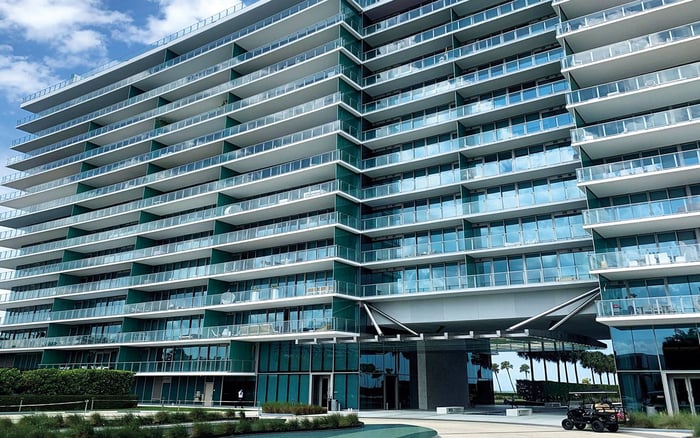
A discreet relocation from Dubai to Key Biscayne requires more than transferring a trusted team. Florida licensing, building-specific permissions, household access, privacy safeguards, and hurricane planning should be coordinated before arrival.

For a household leaving Dubai for Key Biscayne, the most consequential luxury may be continuity: familiar people, predictable arrivals, and a residence that functions quietly around the family. That continuity requires more than moving an established protection team to a new address. Florida security licensing, condominium permissions, household routines, and personal-data handling each need separate attention.
Treat the purchase and the operating plan as parallel decisions. A residence may satisfy every architectural preference yet require changes to how drivers, housekeepers, protection personnel, and guests arrive. Before committing, ask management to explain the procedures that would govern your household, preferably in writing.
When considering Oceana Key Biscayne, frame those questions around the intended daily routine, not assumptions about the address. Establish what management permits, what requires advance approval, and who can authorize exceptions. A property's positioning does not establish its visitor, elevator, weapons, or staff-access policies.
A Dubai-issued security credential does not establish Florida licensure. Private security in Florida is regulated under Chapter 493, and the relevant authorization depends on the business and the work performed. Continuity of personnel should follow a licensing review, not substitute for one.
A private-security business generally needs a Class B agency license. That license covers one location; each branch office requires a Class BB license. Individual credentials also matter. Security officers generally need a Class D license, which requires at least 40 hours of approved professional training. Check each proposed officer's credentials through the state's license search rather than relying solely on an agency's presentation.
Armed work adds a separate layer, generally requiring a Class G statewide firearms license alongside the applicable security license. Class G holders face firearm and ammunition restrictions and may carry only the firearm type and caliber for which they qualified.
For nonuniformed bodyguard or executive-protection duties, licensed officers aged 21 or older with a Class G license may carry an authorized firearm concealed under the applicable conditions. Have qualified Florida counsel review the intended arrangement before deployment, particularly where international personnel and armed duties intersect.
The useful question is not simply whether a building has security, but how the household's team will work with building personnel without creating conflicting instructions.
As a practical recommendation, designate one household liaison and request a corresponding management contact. Agree on the routine arrival process, how to escalate a denied entry, and how to respond to an incident. These are proposed coordination measures, not universal condominium requirements.
Ask specifically about visitor registration, identification checks, elevator permissions, deliveries, service entrances, weapons policies, and any process for requesting camera footage. Establish who can approve access and whether approval changes outside normal management hours. Do not assume that a privately retained officer gains access to building systems or common areas simply by working for an owner.
For buyers comparing Key Biscayne with Coconut Grove, Park Grove Coconut Grove belongs in the same operational review. Evaluate each candidate residence against the same household scenarios rather than assuming rules transfer between properties.
Design household access around responsibilities, not status. A chef preparing for an arrival, a housekeeper working while the family is abroad, and a driver collecting luggage may need different permissions. The goal is dependable service without unnecessarily broad access.
Consider an individual access roster showing each person's role, approved areas, expected schedule, and household contact. Where the building's system permits, request individual, time-limited credentials rather than shared family credentials. These recommended controls remain subject to the property's procedures and capabilities.
Discuss substitute staff and temporary vendors before the first busy arrival. Who approves a replacement housekeeper? Can a delivery be accepted without admitting the courier upstairs? What happens when a phone or credential is lost? Written answers are more useful than informal expectations.
As a household practice, reconcile permissions whenever employment or assignments change, and coordinate prompt credential withdrawal with management. Confidentiality agreements may also be worth discussing with counsel, but they should complement-not replace-carefully limited access.
Security and privacy are related, but collecting more information does not automatically improve either. Before supplying identity documents, household schedules, or biometric identifiers, ask what the particular access process requires.
Florida's statutory definition of biometric data includes fingerprints, voiceprints, retinal or iris measurements, and other identifying biological characteristics. That definition alone does not establish that every household or building system carries identical legal obligations. Have counsel assess the actual system and parties involved.
For a practical privacy review, ask who holds the information, who can view it, how long it is retained, and how access is removed when a person leaves. Distinguish the household's own records from building records and those held by any outside service provider. Ask whether a non-biometric credential is available rather than assuming one exists.
A parallel search in Brickell, including Una Residences Brickell, should use the same questions. Privacy expectations belong in the property comparison, not in a hurried conversation after occupancy.
A sophisticated protection arrangement should not distract from ordinary residential safeguards. Keep doors and windows locked even while occupants are home, and address the security of windows and sliding doors. Peepholes and auxiliary locks are sensible considerations, subject to applicable building approvals and installation constraints. Do not admit unknown visitors merely because they appear expected.
For homes where exterior lighting is within the owner's control, consider motion-activated or photoelectric lighting positioned out of reach to reduce the risk of disabling it. In a condominium, first establish responsibility for the relevant area and the approval process for any alterations.
Prepare a concise contact sheet for the family and staff. Confirm the appropriate local non-emergency number before circulating it, and distinguish it clearly from 911 for emergencies. Keep instructions simple enough for temporary staff to use.
For Key Biscayne residents, a mandatory evacuation order requires evacuation. A protection plan should support that obligation, not create an expectation that additional personnel make remaining appropriate.
Arrange an inland destination before a storm, ideally with friends or relatives in a non-evacuation area or at an appropriate inland hotel. Treat hurricane evacuation centers as a last resort. Storm surge is the primary reason for pre-hurricane evacuations in Miami-Dade; affected zones depend on projected surge and storm track, not hurricane category alone.
Organize identification, important documents, and valuables for departure to the prearranged mainland destination. As a household planning measure, assign responsibility for transportation, staff communications, and securing the residence. The strongest relocation plan preserves discretion while making responsibilities unmistakable.
For a considered South Florida property search that places household operations alongside design and location, explore MILLION.
If branded residences are on your mind — as a home or as an allocation — we would be glad to share what we are seeing, privately.
Begin a quiet conversationNo. A Dubai-issued credential does not establish Florida licensure; the proposed business and individual duties require a Florida licensing review.
A private-security business generally needs a Class B agency license. It covers one location, while each branch office requires a Class BB license.
Security officers generally need a Class D license, requiring at least 40 hours of approved professional training. Verify each person's credentials individually.
Armed security generally requires a Class G statewide firearms license alongside the applicable security license. Firearm and ammunition restrictions also apply.
Licensed security officers aged 21 or older with a Class G license may carry an authorized firearm concealed while performing nonuniformed bodyguard or executive-protection duties under applicable conditions.
Ask about visitor registration, staff identification, elevator permissions, deliveries, weapons policies, and incident escalation. Confirm the specific property's procedures rather than assuming uniform rules.
Individual, appropriately limited credentials are a recommended alternative where the building permits them. They are a proposed household control, not a universal condominium requirement.
The definition includes fingerprints, voiceprints, retinal or iris measurements, and other identifying biological characteristics. It does not by itself establish identical obligations for every system.
Yes. Residents must evacuate when a mandatory evacuation order is issued, and should arrange an inland destination beforehand.
No. Storm surge is Miami-Dade's primary reason for pre-hurricane evacuations, with affected zones determined by projected surge and storm track rather than category alone.