A buyer-focused comparison of Cipriani Residences Brickell and Auberge Beach Residences & Spa Fort Lauderdale through the lens of privacy expectations, access-control diligence, security operations, and guest-screening protocols.
For ultra-prime buyers, privacy is not merely a preference. It is a system: architecture, staff protocols, elevator rules, arrival choreography, service routing, and guest discipline. That system reads very differently at Cipriani Residences Brickell than at Auberge Beach Residences & Spa Fort Lauderdale.
Cipriani Residences Brickell should be underwritten as the Miami urban branded-tower option. Its privacy questions begin with density, street-level exposure, lobby management, valet movement, and whether residents can move between garage, elevator, residence, and amenity spaces without unnecessary visibility. In a vertical city environment, discretion depends on controlled arrivals and properly segregated circulation.
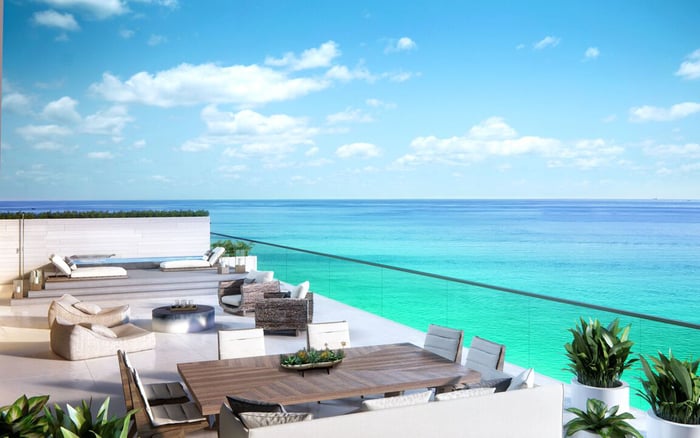
Auberge Beach Residences & Spa Fort Lauderdale should be underwritten as the oceanfront, resort-style alternative. Its privacy questions begin not with the street grid, but with the beachfront operating model: beach access, pool and spa interfaces, amenity crowding, terrace sightlines, perimeter control, and the degree to which resident life is insulated from hospitality energy.
The core contrast is clear. Cipriani presents urban branded-tower exposure. Auberge presents oceanfront resort-style operating complexity. Buyer shorthand-Brickell, Fort Lauderdale, oceanfront, and beach access-should not be treated as lifestyle labels here. They are underwriting variables.
At Cipriani Residences Brickell, the first privacy question is arrival. A buyer should examine how vehicles reach valet or garage areas, how guests are received, where private staff enter, how deliveries are handled, and whether the lobby experience shields residents from unnecessary front-of-house interaction.
In a dense Brickell context, visual privacy matters as much as formal access control. Street-level exposure, traffic patterns, lobby sightlines, and drop-off choreography can shape the lived experience of a residence. For a public figure, family office principal, or buyer with protective staff, the difference between a gracious arrival and a truly discreet one may be material.
The most important diligence is not whether the building is described as private. It is whether resident, guest, vendor, delivery, and private-staff movement can be separated in practice. Underwriters should review condominium documents, rules and regulations, building plans, access-control specifications, staffing budgets, and any disclosed procedures governing visitor pre-authorization.
Elevator access protocols deserve particular attention. Buyers should ask how residential elevator banks are controlled, how amenity levels are accessed, whether garage-to-residence routing is direct, how packages are transferred, and how private staff are credentialed. The aim is not simply convenience. It is to determine whether the building can preserve resident-only zones inside a high-visibility urban setting.
At Auberge Beach Residences & Spa Fort Lauderdale, the underwriting lens moves to the oceanfront edge. Privacy diligence should focus on beach-facing access points, pool decks, spa entries, amenity thresholds, terrace sightlines, service corridors, garage controls, and the way residents, guests, service providers, amenity users, and hospitality staff move through overlapping zones.
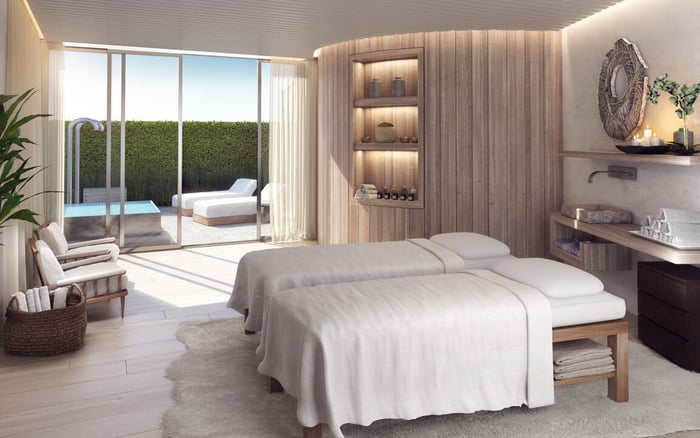
The beachfront setting creates a different kind of exposure. A residence may feel expansive and serene, but the operating environment must still protect resident privacy from resort-style circulation. Pool, spa, and beach interfaces are central because they are precisely where luxury service and privacy expectations can collide.
For Auberge, buyers can push beyond presentation materials where appropriate. They can request actual operating procedures, staffing patterns, resident rules, access logs where available, vendor protocols, guest-registration procedures, insurance or loss-history materials, and incident-history requests. For a serious buyer, this is where the asset can be evaluated as it functions, rather than as it is described.
The key risk is not urban density. It is whether resident privacy can be preserved within an amenity-rich beachfront environment. In that setting, guest screening must account for overlapping users and multiple points of access. Perimeter control, beach entry discipline, spa access, garage and elevator protocols, and back-of-house routing become central to the underwriting file.
Security technology should never be accepted as a generic promise. Across both properties, buyers should ask what access-control systems are specified, what spaces they govern, how credentials are issued, how visitors are pre-authorized, how vendors are screened, and how exceptions are handled.
At Cipriani Residences Brickell, technology diligence should map the full path from arrival to residence. That includes garage controls, elevator permissions, lobby checkpoints, amenity-entry controls, package handling, and delivery routing. The buyer should understand whether technology supports separation between residents and non-resident traffic, or whether discretion depends mainly on staff improvisation.
At Auberge Beach Residences & Spa Fort Lauderdale, technology diligence should map perimeter and amenity control. Beach-facing access points, pool and spa entries, garage access, elevator permissions, and back-of-house corridors should be reviewed as a connected system. In a resort-style setting, technology must support staff discipline across multiple access points, not simply control a single front door.
The most sophisticated underwriting sequence moves from legal documents to architectural plans to operating procedures. Legal documents show rights and restrictions. Plans show circulation. Procedures reveal how the asset is intended to function day to day. Staffing budgets and schedules then indicate whether the stated level of control is realistically supportable.
Guest screening is often where luxury buildings reveal their true culture. The issue is not whether a building welcomes guests. It is whether the process distinguishes between resident guests, brokers, vendors, private staff, delivery providers, amenity users, and hospitality personnel with sufficient precision.
For Cipriani, guest screening should test the ability to pre-authorize visitors, route them without exposing residential areas, and manage deliveries without pulling service traffic into the resident experience. A high-net-worth seasonal owner may care most about ease of access for known guests. A public figure may require stricter pre-clearance, elevator control, and staff coordination.
For Auberge, guest screening is more operationally complex because a beachfront hospitality environment can involve multiple categories of movement at once. Resident guests, service providers, spa users, amenity traffic, and staff may pass through nearby zones. Underwriting should therefore focus on how the property distinguishes these categories in real time.
A family office buyer should ask for a walk-through at the hour when the property is most active. A quiet showing can reveal finishes, but a busy one reveals systems. Watch how staff intercept arrivals, how guests are confirmed, how amenity thresholds are managed, and whether service personnel move through discreet routes.
Cipriani Residences Brickell may suit buyers who prioritize a Miami urban address, branded-residence service, and a controlled vertical environment, provided the building documents and operational details support a high privacy threshold. The key question is whether dense Brickell exposure can be mitigated by controlled arrivals, discreet service routes, and secure resident-only zones.
Auberge Beach Residences & Spa Fort Lauderdale may suit buyers who prioritize oceanfront living, resort amenities, and a relaxed coastal environment, provided the operating model preserves residential discretion. The key question is whether the beachfront amenity experience can remain elegant without becoming porous.
The right answer depends on buyer profile. A seasonal owner may value simplicity and trusted staff coordination. A full-time resident may focus on daily circulation and package handling. A family with children may emphasize visitor controls and amenity boundaries. A public figure may require the highest level of arrival privacy and staff protocol.
Neither asset should be reduced to a generic privacy claim. Each requires a different underwriting checklist, and each should be tested through documents, plans, procedures, staffing, and observed operations before a buyer accepts the security story.
What is the central privacy difference between Cipriani and Auberge? Cipriani is an urban branded-tower privacy question, while Auberge is an oceanfront resort-style operations question.
Why does Brickell change the underwriting analysis? Brickell adds street-level exposure, arrival visibility, valet movement, lobby control, and dense urban circulation to the privacy review.
Why does beach access matter at Auberge? Beach access creates additional perimeter and amenity interfaces that must be controlled without compromising the resort-style experience.
What should buyers request for Cipriani diligence? Buyers should review condominium documents, building plans, access-control specifications, staffing budgets, and visitor procedures.
What should buyers request for Auberge diligence? Buyers should request operating procedures, staffing patterns, resident rules, vendor protocols, access logs where available, and incident-history materials.
Is security technology enough by itself? No. Technology matters only if it is supported by clear procedures, trained staffing, enforceable rules, and disciplined daily operations.
How should guest screening be evaluated? Buyers should test how the property distinguishes residents, guests, vendors, delivery providers, private staff, and amenity users.
Which property is more private? That depends on the buyer’s risk profile and how each property’s documents, plans, and procedures perform under real operating conditions.
What should a public figure prioritize? A public figure should prioritize discreet arrivals, elevator control, service routing, guest pre-authorization, and resident-only zones.
Can a seasonal owner use a lighter checklist? A seasonal owner may prioritize ease and trusted access, but should still verify guest, vendor, package, and amenity controls.
For a confidential assessment and a building-by-building shortlist, connect with MILLION.
If branded residences are on your mind — as a home or as an allocation — we would be glad to share what we are seeing, privately.
Begin a quiet conversation