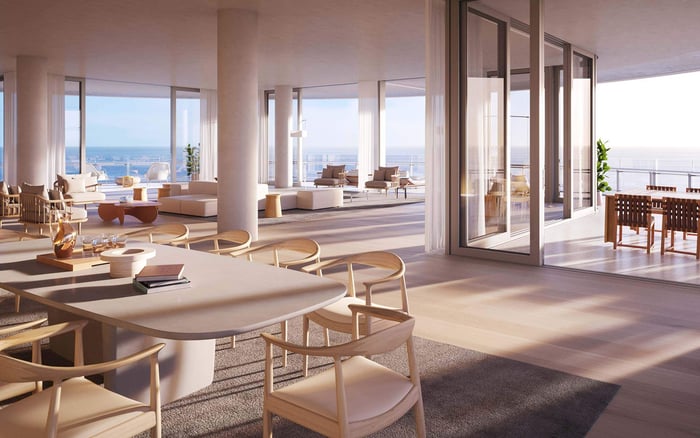
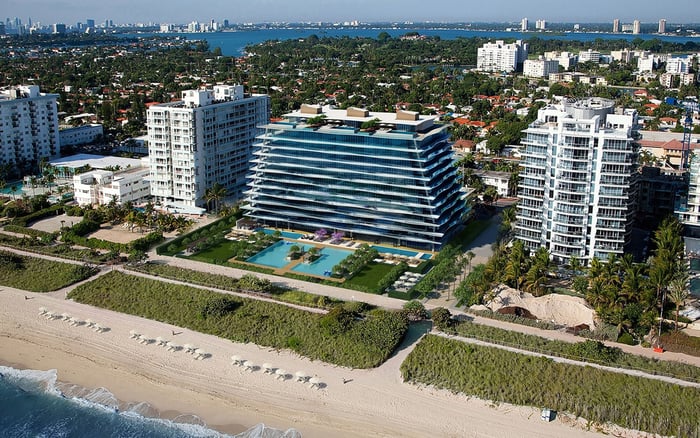
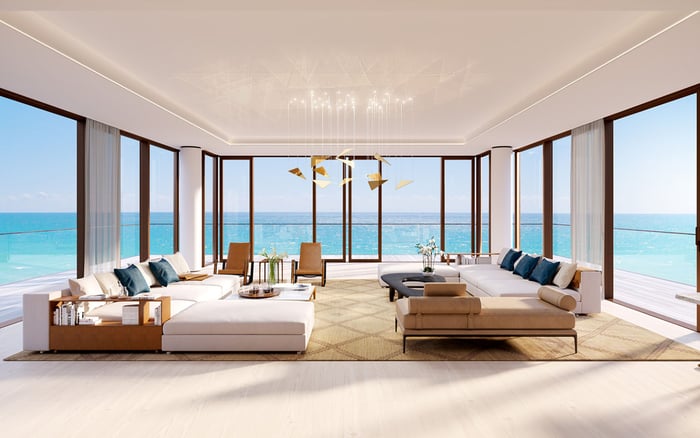
For buyers weighing Miami Beach against Surfside, the useful distinction is not simply lively versus quiet. It is the difference between a social dining room, an exclusive-use venue, and a genuinely private hosting arrangement, particularly when planning around event weeks.
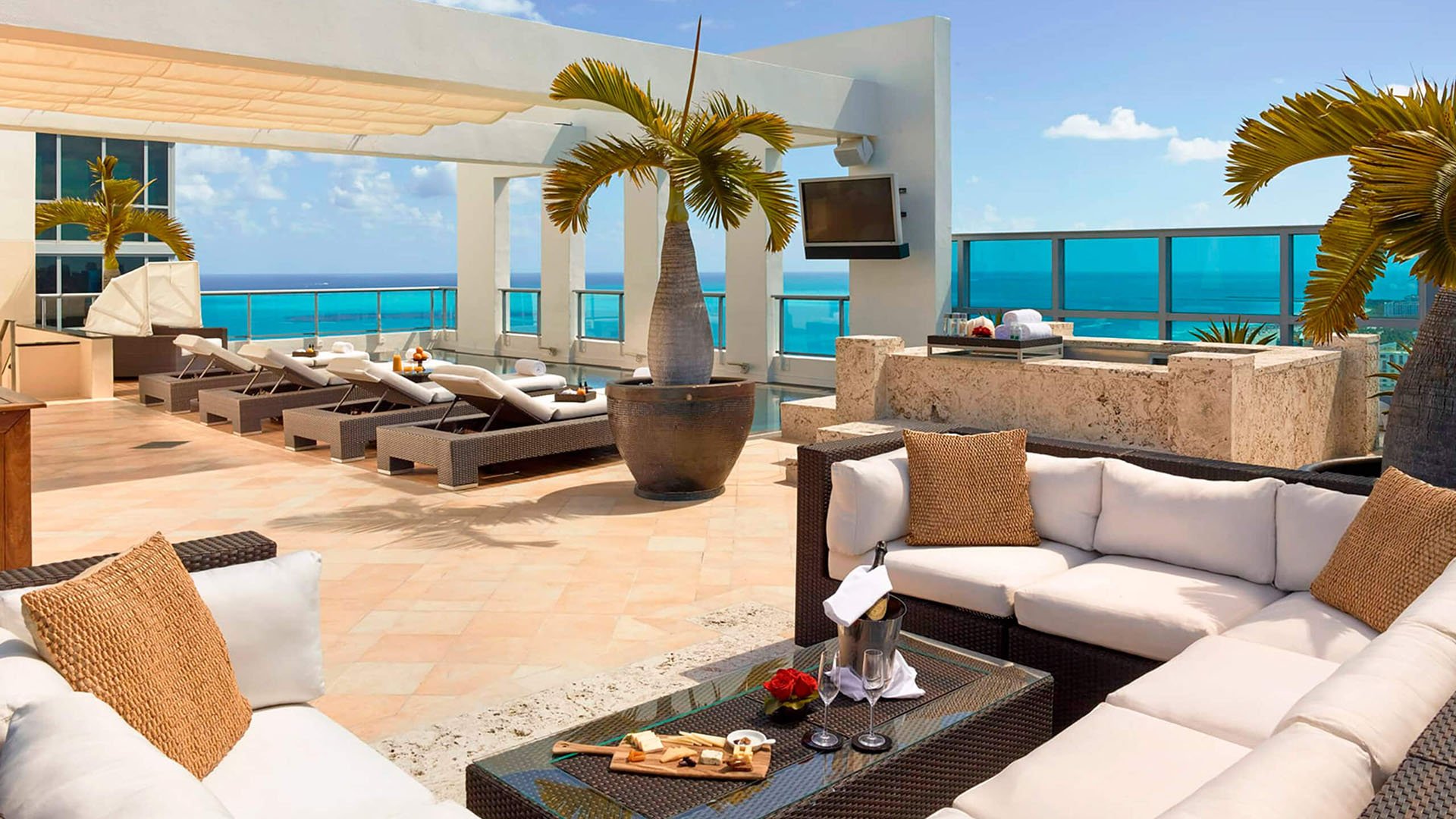
Choosing between Miami Beach and Surfside becomes more precise when the focus shifts from neighborhood reputation to the evening itself. Will guests gather in a restaurant before continuing elsewhere, attend a rooftop celebration, or sit down to a dinner served entirely within a suite? Each hosting model calls for different residential priorities.
South Beach has an established entertainment identity, with clubs and late-night venues alongside its beachfront appeal. Surfside offers a different example at The Surf Club, where hotel hospitality, residences, and social dining coexist. Neither description, however, establishes how private a particular home or arrival will feel.
For a buyer, the useful distinction is not simply lively versus quiet. It is how much of an occasion should remain shared, how much should be exclusive to invited guests, and which arrangements make that separation possible.
South Beach’s nightlife landscape includes Ocean Drive, Collins Avenue, and Washington Avenue. That context matters when hosting means dinner followed by another venue rather than a single, self-contained occasion. It does not describe every residential setting across Miami Beach.
Smith & Wollensky offers private dining and events at its Miami Beach location, 1 Washington Avenue at South Pointe Park. For buyers considering Apogee South Beach, the practical exercise is to map the full guest experience between the prospective residence and the chosen restaurant. A restaurant event and a reception at home place different demands on arrivals, departures, and coordination.
Esmé Miami Beach offers another hosting format. Its rooftop comprises four areas: Pool, Lounge, Bar & Dining, and an overflow Deck. The setting accommodates intimate brunches, celebrations, and full private buyouts. Casa Matanza Courtyard offers an alternative for private dinners and cocktail receptions.
These examples give buyers concrete formats to compare-not grounds to assume that Miami Beach has more private dining options than Surfside. Ask whether the occasion requires a reserved table, an exclusive room, or control of an entire venue. Those distinctions matter more than the word private in an event description.
At The Surf Club Four Seasons Surfside, the hotel and residential components share a broader setting. Yet The Surf Club is also a social destination for cocktails, brunch, and business breakfasts. Its appeal should not be confused with an exclusively residential environment.
Dining options include The Surf Club Restaurant by Thomas Keller. Lido provides an all-day, more casual alternative. Both are relevant to an owner who enjoys hosting through hospitality venues, but a restaurant reservation is not a private dining arrangement.
The explicitly private option is Four Seasons’ in-suite dining experience, which transforms a guest room or suite into a private dining room. It offers a three- or four-course menu with wine pairings selected by the hotel’s sommelier, for occasions including romantic dinners, birthdays, and other private celebrations.
The distinction is clear: the meal takes place within the guest accommodation rather than a shared restaurant. That does not establish automatic access for residential owners, service in a privately owned residence, or availability on a particular date. Buyers should confirm eligibility and location before treating the experience as part of their ownership lifestyle.
Privacy has several dimensions: who occupies the dining space, whether guests pass through shared areas, and how service, deliveries, and departures are handled. An exclusive meal can address the first without resolving the others.
A rooftop buyout and an in-suite dinner therefore require separate evaluations. The buyout concerns exclusive use of a venue, subject to its agreed scope. The in-suite experience places dining within accommodation. Neither format alone guarantees discreet arrivals or separation from everyone outside the invited party.
For a residential comparison involving Setai Residences Miami Beach, keep the apartment decision and the event contract distinct. Establish what happens within the home, what takes place at an outside venue, and which services require separate arrangements. A project name is no substitute for a confirmed hosting plan.
The most useful questions are concrete: which spaces are exclusive, which remain shared, who coordinates service, and what happens when the evening ends?
Art Basel and other event weeks make privacy a relevant purchase consideration, but they do not justify a blanket verdict that Surfside is more discreet or Miami Beach is less manageable. There is no sound basis here for assigning either municipality a quantified advantage in traffic, noise, crowding, or arrival privacy.
Instead, evaluate the intended date and the actual property. Ask building management how visitors are admitted, where drivers may wait, whether outside caterers are permitted, and how deliveries are scheduled. Ask the venue which areas are reserved, whether other functions will run simultaneously, and what exclusivity means in the agreement.
Buyers assessing Arte Surfside should ask the same questions rather than assume that a Surfside address settles them. If event-week use is central to the purchase, request the applicable building rules and, when feasible, inspect the arrival sequence during a comparable period.
Keep dining privacy separate from residential privacy throughout. A secluded meal does not establish a secluded lobby, and a venue buyout does not establish an unobstructed journey home.
Build the comparison around three occasions you genuinely expect to host: a restaurant dinner followed by an outing, a celebration requiring exclusive space, and a small dinner kept within accommodation or the home. For each, identify the required setting, the service provider, and the points where guests encounter shared spaces.
Then test each prospective residence against that brief. Review the floor plan for the way you entertain, request rules governing gatherings and outside staff, and distinguish confirmed services from those still requiring approval. Obtain current venue proposals rather than assuming prices, capacities, minimum spends, or buyout terms.
Miami Beach’s South Beach examples are worth investigating when entertaining extends across restaurants and nightlife. Surfside’s Surf Club example is relevant when the appeal lies in combining social dining with a separately arranged in-suite occasion. These are starting points for a decision, not neighborhood-wide guarantees.
The stronger purchase is the home whose verified rules, access arrangements, and hosting options suit your preferred evening, including the moment the last guest leaves.
For a residence search shaped around your entertaining priorities, explore MILLION.
If branded residences are on your mind — as a home or as an allocation — we would be glad to share what we are seeing, privately.
Begin a quiet conversationThe choice depends on your hosting format. South Beach offers nightlife and restaurant-event examples, while The Surf Club in Surfside combines social dining with a separately arranged in-suite experience.
No. South Beach’s entertainment identity should not be treated as a description of every residential setting across Miami Beach.
Smith & Wollensky offers private dining and events at 1 Washington Avenue at South Pointe Park. Confirm the specific space and terms for your occasion.
Esmé’s rooftop includes Pool, Lounge, Bar & Dining, and an overflow Deck, with formats including full private buyouts. Casa Matanza Courtyard accommodates private dinners and cocktail receptions.
No. It combines hotel and residential components and also serves as a social destination for cocktails, brunch, and business breakfasts.
The offering includes The Surf Club Restaurant by Thomas Keller and Lido, an all-day, more casual dining option. Shared restaurant dining should be distinguished from an explicitly private experience.
The experience transforms a guest room or suite into a private dining room with a three- or four-course menu and sommelier-selected wine pairings. It is offered for occasions including romantic dinners and birthdays.
Automatic residential eligibility is not established. Confirm who may book, where the meal can be served, and availability before incorporating it into an ownership plan.
No neighborhood-wide privacy guarantee is justified. Evaluate the specific building, venue, arrival arrangements, and intended date.
Request building rules for visitors, gatherings, caterers, and deliveries, alongside venue terms defining exclusive use. Confirm current capacities, prices, minimum spends, and service eligibility directly.