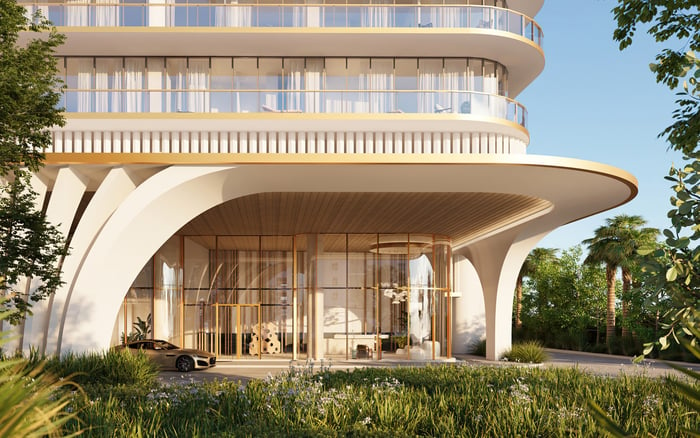
A buyer-focused guide to evaluating whole-home Wi-Fi readiness at Casa Bella by B&B Italia Downtown Miami, with emphasis on coverage, wiring, access-point planning, privacy, and the balance between design purity and functional luxury.
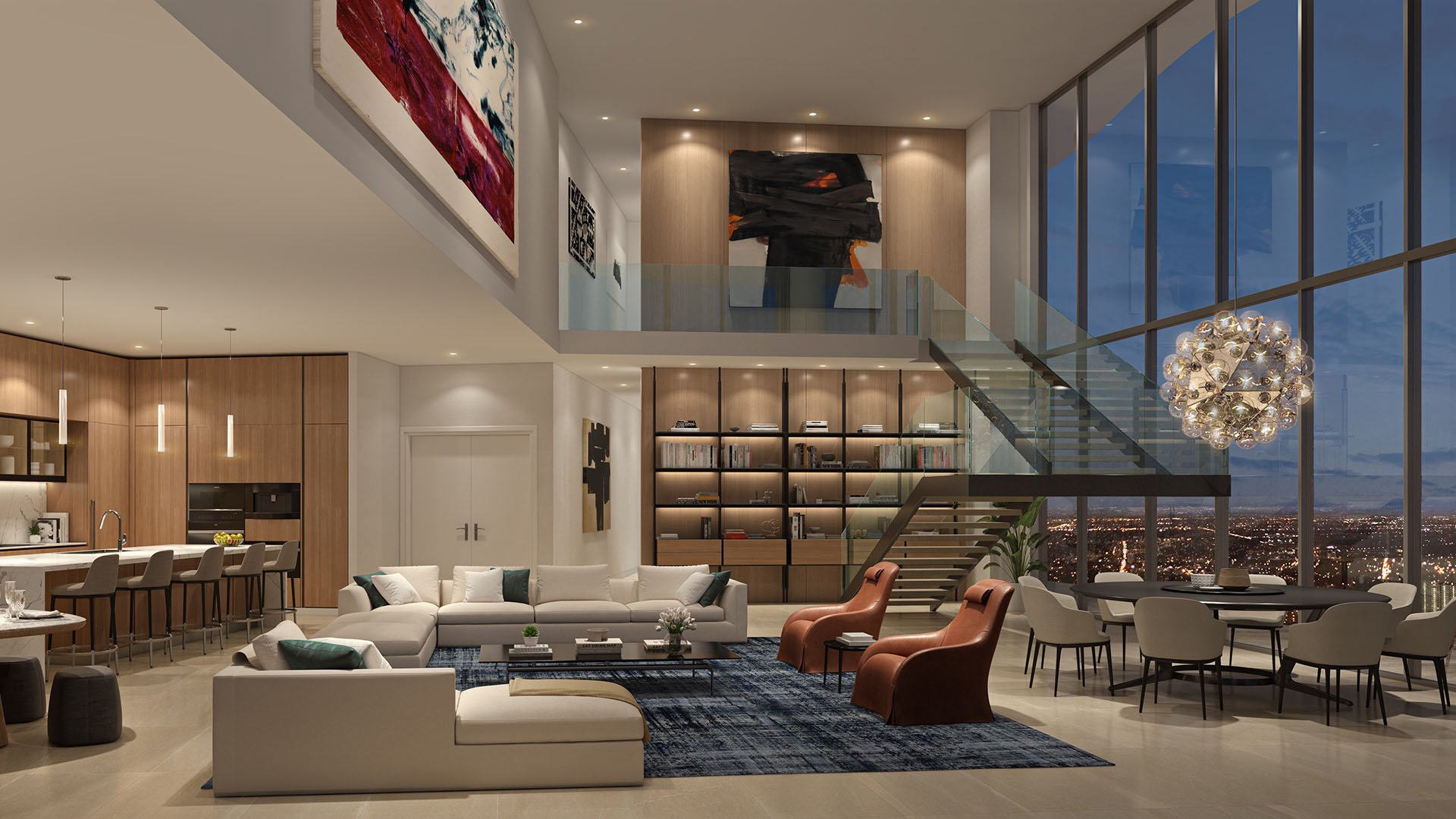
At Casa Bella by B&B Italia Downtown Miami, the conversation naturally begins with design. The B&B Italia association places interiors, materials, proportion, and visual calm at the center of the residence narrative. Yet for a 2026 buyer, even the most refined room can feel incomplete if connectivity falters during a board call, a telehealth session, a film stream, or a smart-home command.
That is the new buyer test: not whether the building sounds modern, but whether the individual residence can support daily digital life without visible clutter. Whole-home Wi-Fi planning is now part of functional luxury. It belongs beside lighting, acoustics, millwork, terrace usability, and closet systems because it shapes how the home actually performs.
Advertised internet speed is only the opening question. In a high-rise Downtown setting, real-world Wi-Fi depends on coverage, construction conditions, neighboring networks, device density, and access-point placement. A single router hidden in a cabinet may not be sufficient for bedrooms, media zones, workspaces, service areas, and outdoor seating.
Casa Bella by B&B Italia Downtown Miami is best viewed as a case study in discretion. A design-forward residence should not require blinking boxes on consoles or exposed cables in carefully composed rooms. The goal is a professionally planned network that disappears visually while remaining strong enough for many devices at once, from laptops and phones to streaming screens, voice controls, shades, thermostats, cameras, and audio systems.
For buyers comparing Downtown addresses such as Waldorf Astoria Residences Downtown Miami and Aston Martin Residences Downtown Miami, the same principle applies. The skyline view may carry the emotion, but the network deserves the discipline of an infrastructure decision.
In new-construction due diligence, the strongest questions are practical and specific. Ask whether fiber service is available to the building or residence, what internet service provider options may be available, and whether the unit includes low-voltage wiring that supports future network upgrades. If the answer is not yet final, treat it as an item for written clarification rather than verbal reassurance.
Ask where the network closet or structured media panel is located. A closet placed far from primary living zones can affect router and access-point strategy. Ask whether ceiling or wall access points can be installed cleanly, whether conduit exists for future pulls, and what customization is possible before and after closing. In some luxury condominiums, post-closing modifications can be constrained by building rules, concrete conditions, design standards, or access limitations.
A buyer should also ask how the residence will handle simultaneous use. A realistic household may include video calls in two rooms, streaming in the living area, smart-home automation, guest devices, security systems, and cloud backup activity at the same time. The question is not simply, “Is there Wi-Fi?” The better question is, “Can the residence be mapped and commissioned as a whole-home network?”
During a walkthrough, imagine the daily rhythm of the home. Stand where calls will be taken, where guests will gather, where children or staff may use devices, and where owners will stream, read, or work. Bedrooms, dens, living areas, kitchen zones, and terrace seating all deserve attention. In a Downtown tower, competing networks from neighboring residences can influence performance, so coverage should be validated in the actual unit whenever possible.
Look for practical infrastructure: accessible low-voltage panels, logical cable pathways, power near network equipment, and potential access-point locations that do not interrupt the architecture. In a residence with design expectations, hardware placement should be coordinated with lighting, ceiling details, art walls, and cabinetry rather than added after the interiors are complete.
This same inspection mindset is useful beyond Downtown and Brickell, including residences such as The Residences at 1428 Brickell and Cipriani Residences Brickell. The more polished the home, the earlier network planning should occur.
For many high-net-worth owners, Wi-Fi is also a privacy issue. A residence that supports finance, legal work, telepresence, private health conversations, or smart-home automation should be evaluated for network separation, secure passwords, guest access, device updates, and professional configuration.
The refined approach is not to chase every emerging label or assume that a building-managed solution will satisfy every household. Buyers should avoid relying on unverified claims about specific providers, managed networks, or next-generation wireless infrastructure unless those details are documented. A 2026-ready residence should be planned for reliability, upgradeability, security, and aesthetic discipline.
The best network is almost invisible. Calls do not drop when moving from bedroom to living room. Music remains stable. Smart-home systems respond without delay. Guests can connect without compromising private devices. Hardware is concealed or intentionally placed. The interiors remain serene.
That is the real luxury test at Casa Bella: connectivity that respects design while supporting the full rhythm of modern ownership. In South Florida’s most considered residences, technology should not compete with architecture. It should quietly make the architecture easier to live in.
Why should Casa Bella buyers evaluate Wi-Fi before closing? Because coverage, wiring, access-point placement, and customization options are easier to address before interiors are complete.
Is advertised internet speed enough to judge a luxury condo network? No. Speed matters, but in-unit coverage, reliability, device load, and interference are equally important.
Can one router cover an entire large residence? Sometimes, but buyers should not assume it. Bedrooms, workspaces, living areas, and outdoor zones should be tested individually.
Why does Downtown density matter for Wi-Fi? High-rise environments can contain many nearby networks, which may affect real-world wireless performance inside a residence.
What should buyers ask about low-voltage wiring? Ask where wiring runs, whether conduit is available, and how future access points or upgrades can be supported.
Should networking hardware be visible in a design-led residence? Not necessarily. A well-planned system can conceal equipment while maintaining strong performance throughout the home.
How does a terrace affect Wi-Fi planning? Outdoor seating areas may need separate coverage review, especially if they are used for calls, music, or streaming.
What cybersecurity questions belong in due diligence? Ask about guest networks, device separation, password practices, remote access, and professional configuration options.
Should buyers rely on claims about Wi-Fi 7 or building-managed networks? Only if those claims are documented. Treat any unsupported technology detail as a question for written confirmation.
What is the best way to shortlist comparable options for touring? Start with location fit, delivery status, and daily lifestyle priorities, then compare stacks and elevations to validate views and privacy.
For a discreet conversation and a curated building-by-building shortlist, connect with MILLION.
If branded residences are on your mind — as a home or as an allocation — we would be glad to share what we are seeing, privately.
Begin a quiet conversation