A precise buyer’s guide to securing dependable sunset views on Biscayne Bay, with a focus on orientation, legal limits, zoning risk, shoreline context, and the practical due diligence that matters before purchasing a luxury waterfront condo.
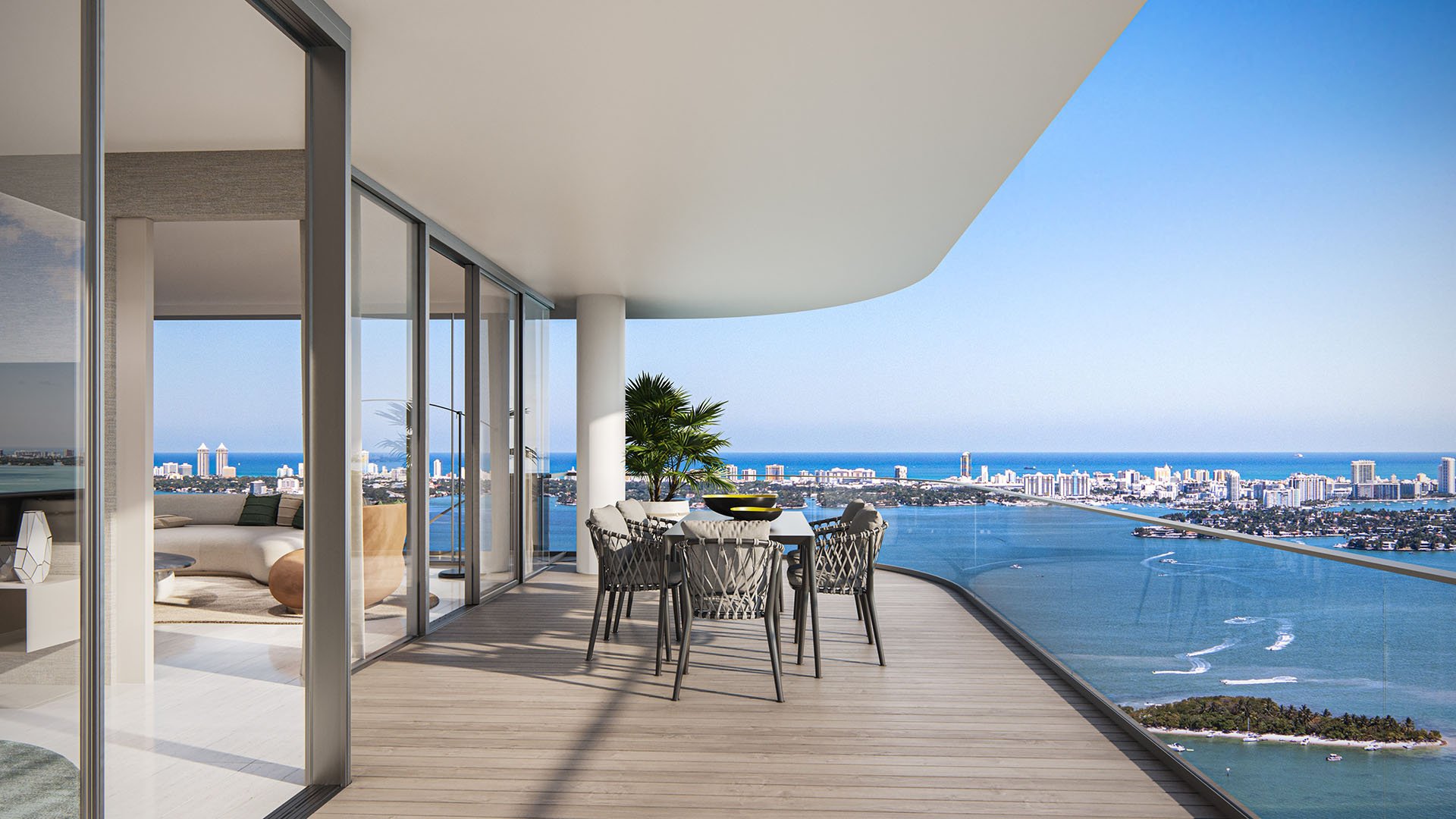
A waterfront condo can carry a beautiful address without delivering the evening drama many buyers imagine. On Biscayne Bay, that distinction matters. Because the bay generally runs north to south, the most dependable sunset residences are typically those with west or southwest exposures, not simply any home near the water. Many bay-adjacent and island properties face east, southeast, or at an angle that captures water while missing the strongest direct evening light.
For a South Florida buyer, the phrase view corridor should be treated as a due-diligence concept rather than a legal promise. It means understanding what sits in the line of sight today, what could rise tomorrow, and whether the unit’s orientation truly satisfies the sunset brief. The most sophisticated purchase decisions are rarely made from listing photography. They are grounded in compass direction, shoreline geometry, planning rules, and the practical reality of what the eye will actually see at 6:30 p.m.
The first item on any sunset checklist is the unit’s exact compass orientation. Seasonal sunset positions over Biscayne Bay move roughly from west to west-northwest, so homes oriented due west to west-southwest generally offer the strongest and most consistent evening light. That sounds obvious, but sales language often blurs the distinction.
Bay view can mean a partial slice of water, an oblique angle past another tower, or a distant glimpse from a side terrace. Bayfront more often signals direct waterfront placement, which usually gives a buyer a better chance at unobstructed western light. Even then, proximity alone is not enough. A bayfront residence with a poor angle can underperform a slightly less direct position with a cleaner westward opening.
In the Brickell corridor, buyers studying residences such as Una Residences Brickell, Baccarat Residences Brickell, or St. Regis® Residences Brickell should focus less on promotional renderings and more on the exact line from the living room and terrace to the western horizon over the bay.
For many buyers, mainland waterfront positions are the clearest starting point. Brickell stands out because its bayfront corridor can produce southwest-facing residences with regular sunset exposure across open water. That combination of urban skyline, broad bay plane, and evening light is one of the market’s most compelling formulas.
Edgewater also deserves close attention. Its mainland inventory can provide direct westward sunset viewing across Biscayne Bay, which is harder to secure in many island and ocean-oriented locations. Buyers considering Aria Reserve Miami, EDITION Edgewater, or Villa Miami should evaluate not only the current openness of the bay but also the redevelopment pipeline nearby.
Coconut Grove is different. It remains one of Miami’s most refined residential settings, but many waterfront orientations there are less favorable for direct sunsets because some residences face southeast or are partially screened by shoreline curvature and dense vegetation. In projects such as Park Grove Coconut Grove or Vita at Grove Isle, the outlook may be serene and highly desirable without being the market’s purest sunset proposition.
Miami Beach and other barrier-island addresses can also be magnificent, but buyers seeking sunset reliability should be especially exacting. Many units there are optimized for sunrise, ocean frontage, or angled bay exposures rather than direct west-facing evening light.
Planning rules matter, but they should never be mistaken for a private guarantee. Municipal regulations on height, massing, and setbacks influence how future buildings may occupy a waterfront parcel, which can help preserve a sense of openness in some corridors. On both the Miami Beach and City of Miami sides of the bay, these development standards shape sightlines.
Still, a buyer should assume that zoning governs the form of future construction, not the permanence of a personal sunset view. Existing taller buildings may already interfere with the horizon, and older or grandfathered structures can create compromises even where current rules are more restrained. A corridor that feels generous today may narrow as nearby sites redevelop within the allowed envelope.
That is why sunset-view underwriting should include a parcel-by-parcel review of adjacent and nearby sites, not just a reading of the tower immediately next door.
One of the costliest misconceptions in waterfront buying is the belief that a premium view is inherently protected. In Florida, a private residential owner does not automatically receive a protected view easement merely by purchasing a unit with an open western outlook. Unless a recorded easement or comparable property right exists, that view can change.
Title insurance typically does not solve this problem. If another building later rises in the view path, the loss of sunset drama is generally not the type of risk a buyer should expect title coverage to absorb. In practical terms, this means protection is front-loaded: survey work, orientation confirmation, zoning analysis, permit review, and an experienced reading of the corridor.
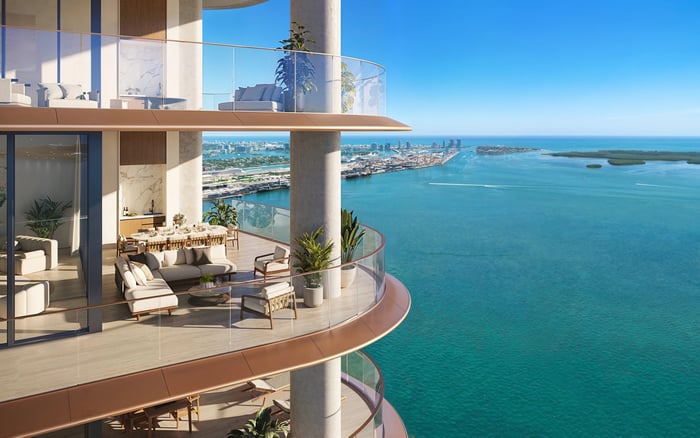
Even a perfectly oriented unit can disappoint if the shoreline context is wrong. Broad open-water outlooks usually deliver better reflected light and a longer visual runway to the horizon. By contrast, mangrove edges, irregular shorelines, heavy marina infrastructure, and dense neighboring towers can soften or interrupt the effect.
Tree canopy is another overlooked variable, particularly in older Coconut Grove enclaves and established waterfront neighborhoods where mature landscaping is part of the charm. Lower floors may feel intimate and green while losing meaningful water visibility at sunset. That is not a flaw in the property. It is simply a reminder that water adjacency differs from an open sunset experience.
Flood-zone design can also subtly affect the way a residence lives. Elevated construction and flood-resistant planning may alter first-floor layouts, amenity placement, and the immediate visual connection from lobby or garden level to the bay.
First, verify the unit’s exact orientation with GIS, survey material, or a precise site plan. Do not rely on photographs alone.
Second, visit the property close to sunset. A mathematically correct western exposure may still feel underwhelming if neighboring buildings clip the horizon or if the unit’s primary living spaces face at an awkward angle.
Third, inspect the wider development context. Mainland bayfront areas, especially Brickell and Edgewater, can evolve quickly. Pending redevelopment and permit activity may materially change future sightlines.
Fourth, read the condominium documents for balcony and exterior restrictions. HOA rules often limit enclosures, shades, and other modifications that buyers assume they can add later to improve outdoor comfort.
Fifth, consider seasonality. South Florida’s wet season and humid atmosphere can mute evening color, while winter and early spring more often produce cleaner, higher-contrast sunsets. The right residence should still satisfy on an ordinary evening, not just on the market’s most photogenic nights.
For the Biscayne Bay sunset buyer, the hierarchy is simple. Orientation comes first. Corridor resilience comes second. Everything else, including brand, finishes, and amenity depth, is secondary if the objective is consistent nightly performance.
That does not mean the search must be narrow. It means the search must be precise. In Brickell and Edgewater, westward and southwest-facing inventory often offers the most compelling combination of open water, direct evening light, and buyer demand. In Miami Beach or Coconut Grove settings, the purchase may still be excellent, but the sunset thesis should be tested with greater skepticism.
A premium sunset is not just a romantic attribute. In this market, it is a specific physical condition with legal and planning limitations. Buyers who understand that distinction tend to choose better and regret less.
What is the best exposure for sunset views on Biscayne Bay? West to southwest exposures are usually the most reliable, with due west to west-southwest often delivering the strongest direct evening light.
Is bayfront always better than bay view? Usually, yes. Bayfront more often means direct waterfront placement, while bay view can include partial or angled water visibility.
Does zoning guarantee my sunset view will stay open? No. Zoning influences height, massing, and setbacks, but it does not guarantee a private owner a permanent protected view.
Do condo owners automatically have a legal right to their view? No. A protected view generally requires a recorded easement or similar property right.
Why are Brickell and Edgewater often favored for sunsets? Both offer mainland bayfront locations where westward or southwest-facing units can look across Biscayne Bay toward evening light.
Is Coconut Grove a strong sunset market? It can be beautiful, but many waterfront orientations there are less ideal for direct sunsets, and some views are screened by vegetation or shoreline geometry.
Can lower floors still deliver a strong sunset experience? Sometimes, but mature trees, marina elements, and neighboring buildings can materially reduce water and horizon visibility on lower levels.
Should I tour the unit at sunset before buying? Absolutely. In-person viewing is one of the best ways to test haze, light quality, and whether nearby structures interrupt the horizon.
Will title insurance protect me if a new building blocks the view? Generally not. Buyers should rely on surveys, zoning review, and permit research instead.
Can I modify the balcony to improve sunset comfort? Not necessarily. Many condo and HOA rules limit balcony enclosures, shades, and exterior changes.
If you'd like a private walkthrough and a curated shortlist, connect with MILLION Luxury.
If branded residences are on your mind — as a home or as an allocation — we would be glad to share what we are seeing, privately.
Begin a quiet conversation