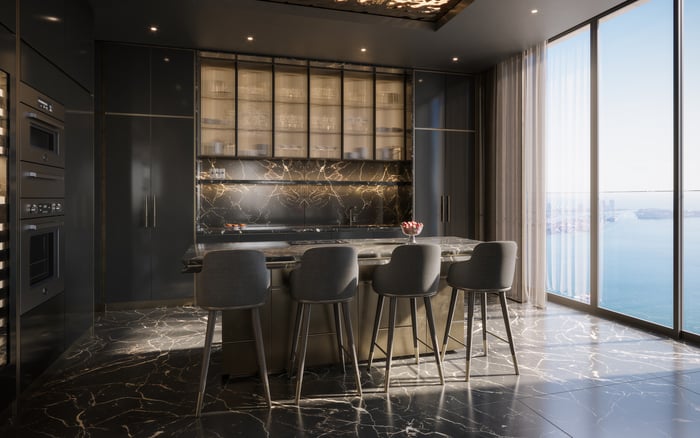
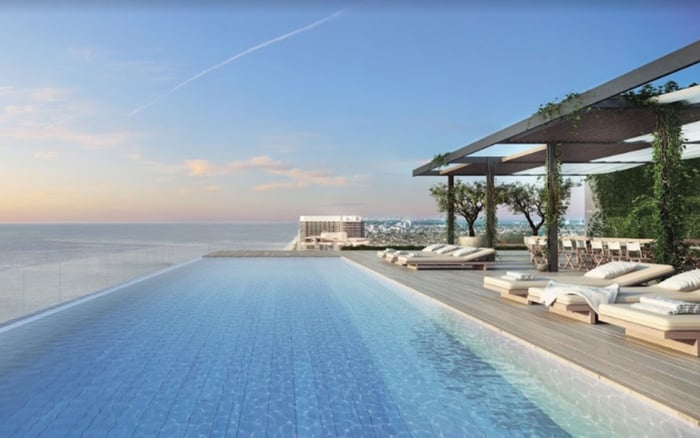
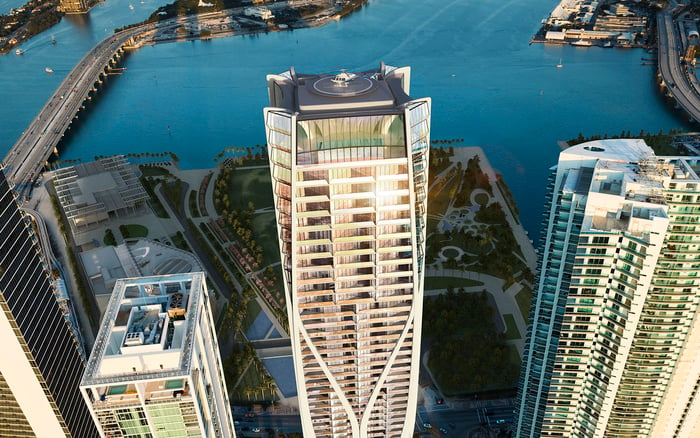
Brickell offers an active urban base with bay-and-skyline appeal, while Bal Harbour favors a quieter coastal rhythm. The right choice depends on daily routines, residence-level privacy, and the precise waterfront experience a buyer wants.
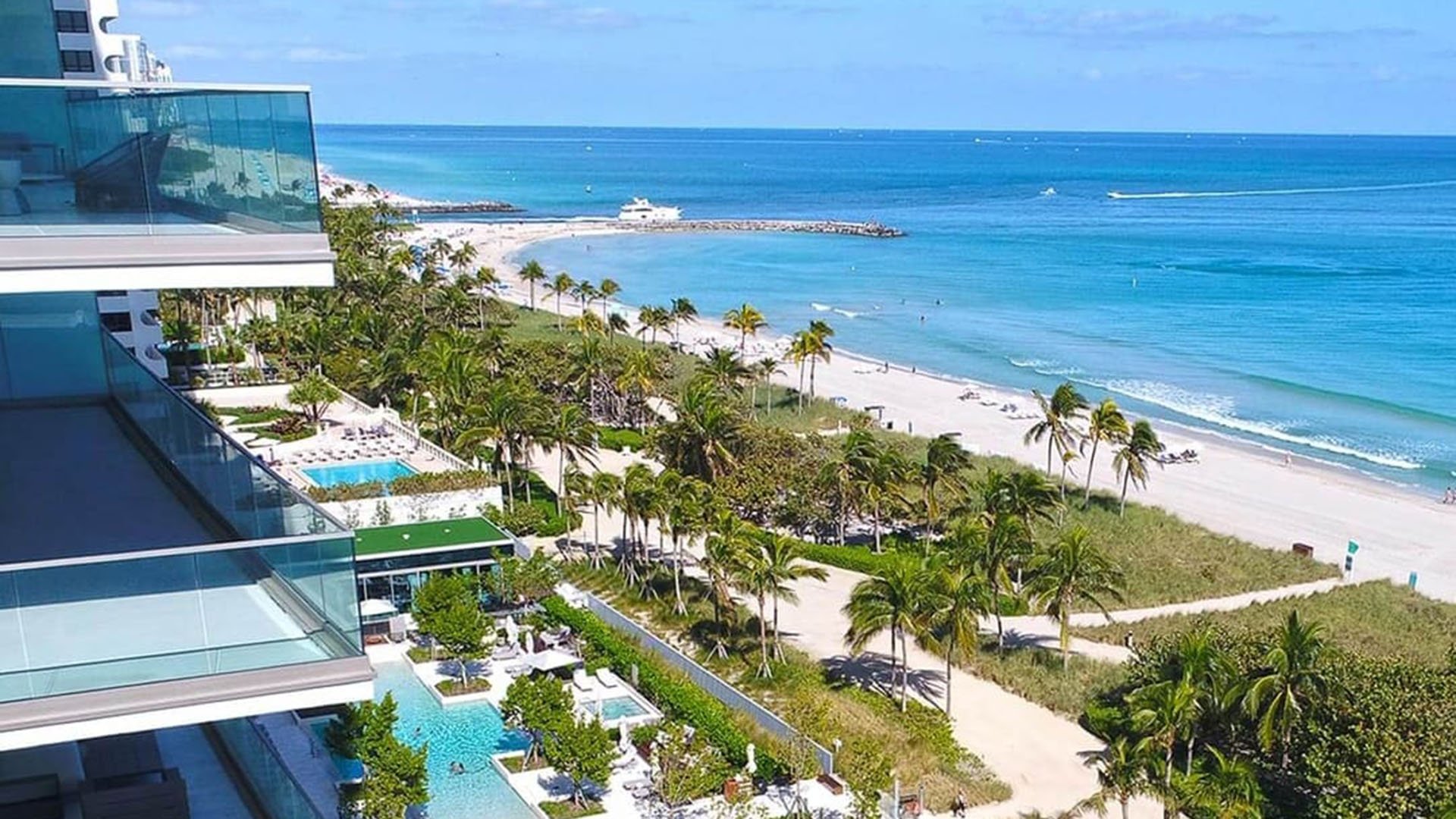
The choice between Brickell and Bal Harbour begins with a deceptively simple question: what should happen when you leave home? In Brickell, the appeal is participation. Offices, restaurants, hotels, residential towers, and retail create an urban setting where activity is part of the proposition. In Bal Harbour, the attraction is a quieter coastal rhythm, with the ocean more central to the residential experience.
Neither setting defines luxury more convincingly than the other. They organize it differently. One places a premium on access to the city; the other invites buyers to prioritize coastal surroundings and distance from the city's intensity. Privacy, however, is not guaranteed by either address. It must be assessed at the building and residence level.
For an owner choosing a principal residence or a second home, the strongest decision starts with an ordinary week rather than an exceptional weekend. Work patterns, preferred evenings, and the desired relationship with the water should shape the shortlist before finishes or branding do.
Brickell is particularly practical for professionals whose working lives center on its business district or Downtown Miami. Its concentration of employment and residences makes proximity a meaningful consideration, though any commute still deserves a real-world test.
Brickell City Centre is a retail and dining anchor for buyers who value walkable urban amenities. The question is not simply whether restaurants and shops are nearby, but whether the routes from a particular building suit an owner's daily routine. Walk the intended route, assess the arrival experience, and return at the hours you expect to use it.
Buyers considering Cipriani Residences Brickell should apply that same neighborhood test alongside their residence-level review. A desirable project name cannot substitute for understanding the surrounding blocks, the approach home, or the balance between convenience and activity.
Lifestyle fit is the deciding factor. For someone who wants dining, business, and residential life within the same urban district, Brickell has a clear rationale. For someone seeking distance from that concentration, its defining advantage may be less compelling.
Bal Harbour offers a different starting point: a compact coastal setting. When assembling a shortlist, buyers should assess how many residences genuinely match their priorities rather than assuming that every luxury property is a comparable alternative.
For buyers considering Oceana Bal Harbour, the project name is a starting point, not a conclusion about service, privacy, or value. Meaningful comparisons require a closer review of the residence and how the property operates.
A buyer also considering Rivage Bal Harbour should keep the same priorities in view: the desired coastal experience, the arrival sequence, and the relationship between private rooms and shared spaces. Neighborhood character is a useful filter, not a substitute for property-specific diligence.
Bal Harbour's quieter reputation is best understood as a lifestyle tendency. It does not establish that every balcony is secluded, every amenity is lightly used, or every residence offers the same degree of separation from visitors and neighbors.
Waterfront is not a single category. Brickell's appeal is generally oriented toward the bay and skyline, while Bal Harbour's coastal identity is tied more closely to the ocean. A buyer drawn to city lights and a layered urban outlook is making a different choice from one who wants the ocean to define the setting.
Neither neighborhood label establishes the view from a particular residence or confirms direct beach access. Evaluate the actual orientation, the rooms receiving the outlook, and the relationship between interior living areas and outdoor space. A compelling view from one room does not necessarily describe the entire home.
When reviewing St. Regis® Residences Brickell, for example, keep the bay-and-city preference separate from assumptions about any individual residence. The same discipline applies in Bal Harbour: confirm what the selected property offers rather than importing expectations from the neighborhood.
Privacy is a sequence of conditions, not a neighborhood credential. Begin with arrival: how do residents, guests, deliveries, and service providers move through the property? Then examine elevator access, visitor procedures, and the transition from shared circulation to the residence itself.
Inside, consider orientation and potential sightlines from neighboring buildings or shared areas. Outside, assess how terraces and amenities relate to surrounding activity. A residence can feel removed from the city yet still require compromises in particular rooms or outdoor spaces.
Visit at different times before drawing conclusions. Ask precise questions about access procedures and shared amenities rather than relying on broad promises of discretion. Bal Harbour's quieter coastal positioning and Brickell's urban energy provide context, but neither answers these operational questions for an individual home.
Treating Brickell or Bal Harbour as a single luxury price tier can obscure the differences that matter to a particular purchase. A neighborhood-wide median is not a valuation of the residence on your shortlist.
Building age, views, services, branding, and location should all be considered when assessing pricing. An older resale is not automatically a useful comparable for a new branded tower. In either neighborhood, start with genuinely comparable residences before interpreting the wider market.
Sales volume also needs context. Greater market activity does not guarantee faster resale for an individual property, just as a limited selection of comparable homes does not guarantee appreciation.
Choose Brickell when urban participation, proximity to work, and bay-and-skyline positioning support your daily life. Favor Bal Harbour when a quieter coastal setting and ocean-oriented living better reflect the experience you want at home.
Then test that choice at the residence level. Revisit the approach, verify the outlook, examine privacy procedures, and compare pricing within the correct segment. The better purchase is not the neighborhood with the stronger general reputation, but the home whose specific qualities align with how you intend to live.
Explore residences aligned with your preferred balance of energy, privacy, and waterfront positioning with MILLION.
If branded residences are on your mind — as a home or as an allocation — we would be glad to share what we are seeing, privately.
Begin a quiet conversationBrickell is the more urban, activity-oriented choice, with a concentration of offices, residential towers, restaurants, hotels, and retail.
Bal Harbour generally suits buyers prioritizing a quieter coastal setting. That character does not guarantee privacy or quiet within every residence.
No. Brickell's bay-and-skyline orientation describes a neighborhood appeal, not the outlook from every residence.
No. Buyers should confirm beach access and the actual view for the specific property under consideration.
Review orientation, elevator access, visitor procedures, shared amenities, and surrounding activity. Follow the entire route from arrival to the residence.
Its location is particularly practical for people working in the Brickell business district or Downtown Miami. The specific journey should still be tested.
No. Compare residences with similar building age, views, services, branding, and location before interpreting broader market figures.
Not automatically. Building age, views, services, branding, and location should be considered before treating residences as comparable.
No. Market activity does not establish the future selling time of an individual condominium.
No. A limited selection does not establish the value or future appreciation of a particular property.