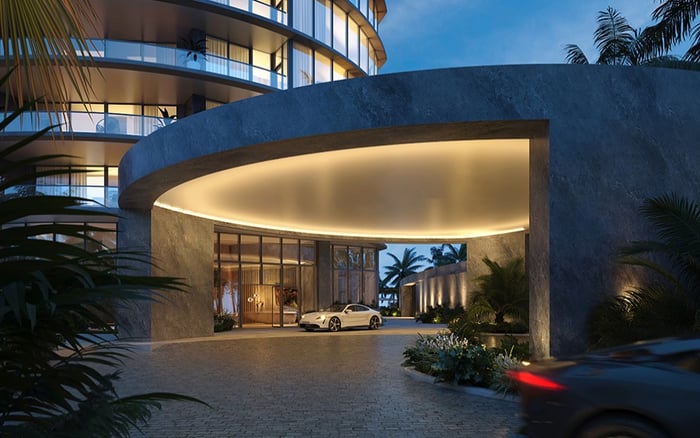
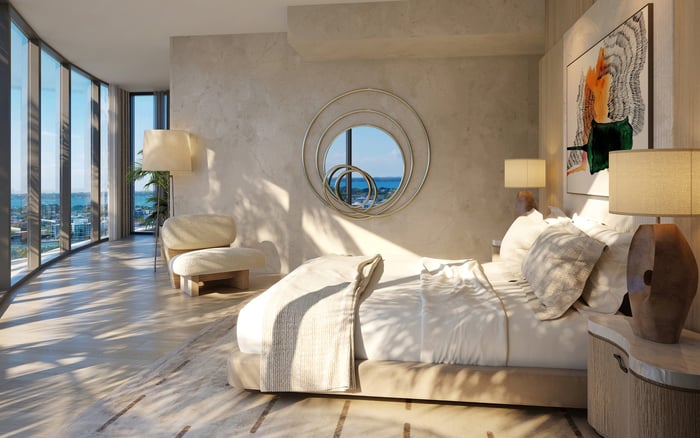
Brickell offers an urban concentration of dining, transit, and residential services; Bal Harbour favors a quieter coastal rhythm. Choosing well means separating neighborhood character from building-level privacy, and scarcity from demonstrated resale liquidity.
Choosing between Brickell and Bal Harbour is less a contest of prestige than a decision about daily life. Brickell places the residence within a concentrated financial district of towers, offices, restaurants, and shops. Bal Harbour offers a quieter coastal setting organized around oceanfront living, beach access, and luxury retail.
Both can satisfy an exacting buyer, but they serve different priorities. One emphasizes urban proximity; the other, coastal retreat. Neither neighborhood label establishes how private a particular building feels or how readily a particular residence will resell.
The essential distinction is between lifestyle fit and resale evidence. Choose the setting for the life you intend to lead, then assess the building and its comparable sales separately.
Brickell's vertical character provides the backdrop for a residential experience closely connected to commercial activity. Bal Harbour's coastal residential character offers a quieter alternative to that urban intensity. Quietness, however, is not a measure of density. It does not establish that Bal Harbour is uniformly low-rise or that every residence offers fewer neighbors.
For a buyer considering 2200 Brickell, the right questions concern the ownership experience: how many residences share a corridor, how arrivals are managed, and how common areas function during busy periods. Apply the same questions in Bal Harbour.
If low-density living means discretion, define it through observable details. Review floor plans, elevator arrangements, visitor procedures, and the relationship between residences and shared facilities. A neighborhood's atmosphere is a starting point, not a substitute for that examination.
Brickell's amenities extend beyond the lobby. Its walkable concentration of dining and shopping combines with access to Metromover and Metrorail. For buyers who value stepping into an active district, the neighborhood itself becomes part of the residence's practical appeal.
Individual buildings may offer concierge service, spas, rooftop pools, and wellness facilities. Those features vary by property. When evaluating Cipriani Residences Brickell, distinguish the services documented for that project from the broader expectations associated with luxury towers. Confirm what is included, what carries additional charges, and how access is managed.
Bal Harbour offers a different arrangement: Bal Harbour Shops, the beach, and resort-style residential facilities shape its luxury appeal. For a shortlist that includes Oceana Bal Harbour, focus on the specific residence's relationship to the amenities you would actually use.
The choice is not simply more amenities versus fewer. It is whether convenience means an active urban district outside the door or a coastal routine centered on beach, shopping, and residential service.
Broad medians can mislead an ultra-premium buyer. A neighborhood-wide condominium median should not be treated as a benchmark for a particular luxury tower, branded preconstruction residence, or oceanfront property.
Before comparing figures, confirm that they cover the same periods and comparable property groups. Without that alignment, a higher headline median does not establish a premium for an otherwise similar residence.
Build the comparison around similar residence sizes, waterfront positions, condition, service levels, and transaction periods. Keep preconstruction pricing separate from completed resale evidence. The relevant question is what a comparable residence costs, not which neighborhood posts the larger headline median.
Scarcity alone does not establish a faster sale or guarantee appreciation. For a buyer weighing Rivage Bal Harbour, evaluate the coastal setting and personal appeal independently of any assumption about future resale speed.
When reviewing months of supply, distinguish a segment-level inventory measure from a prediction about an individual residence. It is not a promise that a particular property will sell within that period.
For Brickell, examine potential future alternatives alongside existing listings. Treat any development forecast separately from completed stock, without assuming that every projected residence will arrive on schedule or compete directly with your purchase.
Both constrained choice and potential competition deserve scrutiny. Neither characteristic, by itself, establishes liquidity.
Liquidity is the ability to find a buyer within an acceptable period and at an acceptable price. Available listings show supply. They do not establish demand, completed transaction volume, or the discount required to close.
There is no defensible basis here for declaring Brickell the faster exit or Bal Harbour the safer resale. A useful comparison requires matched closed-sale counts, days on market, and sale-to-list ratios for comparable residences over the same period.
Before committing, request a building-level comparison that separates active listings from closed transactions. Examine competing residences in the same size and price band. Ask whether apparently comparable sales differ materially in condition, exposure, or terms. Where close matches are few, resist treating a single transaction as a reliable market pattern.
Keep the intended holding period central. If flexibility is essential, prioritize demonstrated transaction evidence over a general narrative about urban demand or oceanfront rarity. If the purchase is primarily for long-term enjoyment, acknowledge that preference without presenting it as an investment guarantee.
Brickell is the stronger lifestyle fit when walkable dining, shopping, transit, and an urban setting are central to the brief. Bal Harbour is the more natural fit when a quieter coastal environment, beach access, and luxury retail define the desired routine.
Visit shortlisted buildings at different times, inspect the routes you would actually use, and review service arrangements alongside ownership costs. Then conduct the resale comparison as a separate exercise. The residence should satisfy both the way you want to live and the evidence you require before committing capital.
For a discreet comparison of residences aligned with your lifestyle and ownership priorities, explore MILLION.
If branded residences are on your mind — as a home or as an allocation — we would be glad to share what we are seeing, privately.
Begin a quiet conversationBrickell offers a concentrated urban setting with dining, shopping, and transit access. Bal Harbour favors a quieter coastal routine centered on the beach, luxury retail, and residential amenities.
A quieter coastal character does not establish a uniform density advantage. Assess privacy through the individual building's layout and shared facilities.
Brickell has access to both Metromover and Metrorail, alongside a walkable concentration of dining and shopping.
Its amenities include Bal Harbour Shops, beach access, and resort-style facilities within residential buildings. Specific services and access arrangements vary by property.
A faster exit is not established here. A sound comparison requires matched closed-sale counts, days on market, and sale-to-list ratios at the relevant price point.
No; scarcity alone does not establish guaranteed appreciation or faster resale. Evaluate the residence's lifestyle appeal separately from its potential exit.
Only when the periods and property groups are comparable. For a purchase decision, prioritize similar residences within aligned transaction periods.
Treat development forecasts separately from completed inventory. Do not assume every projected residence will arrive on schedule or compete directly with the property you are considering.
No; months of supply is a segment-level inventory measure, not a forecast of how long an individual residence will take to sell.
Review residences per corridor, elevator arrangements, visitor procedures, and the use of shared facilities. Visits at different times can help test whether the building suits the desired routine.