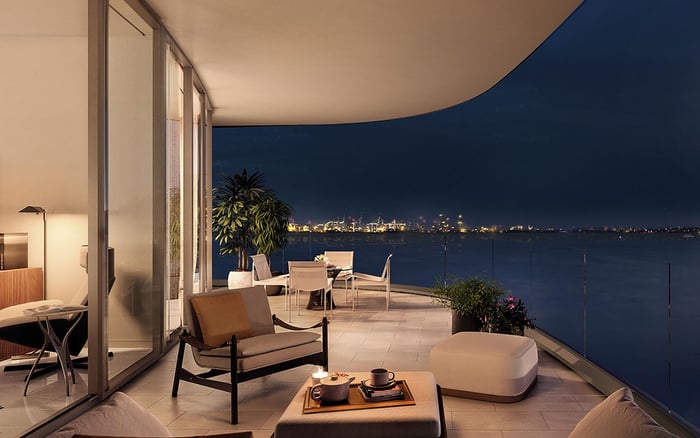
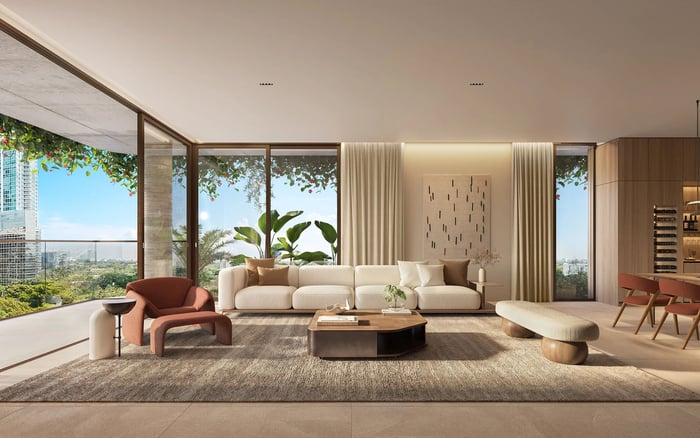
A buyer-focused look at how Brickell and Miami Beach residences solve privacy, entertaining, and daily comfort differently, with emphasis on floor-plan discipline over spectacle.
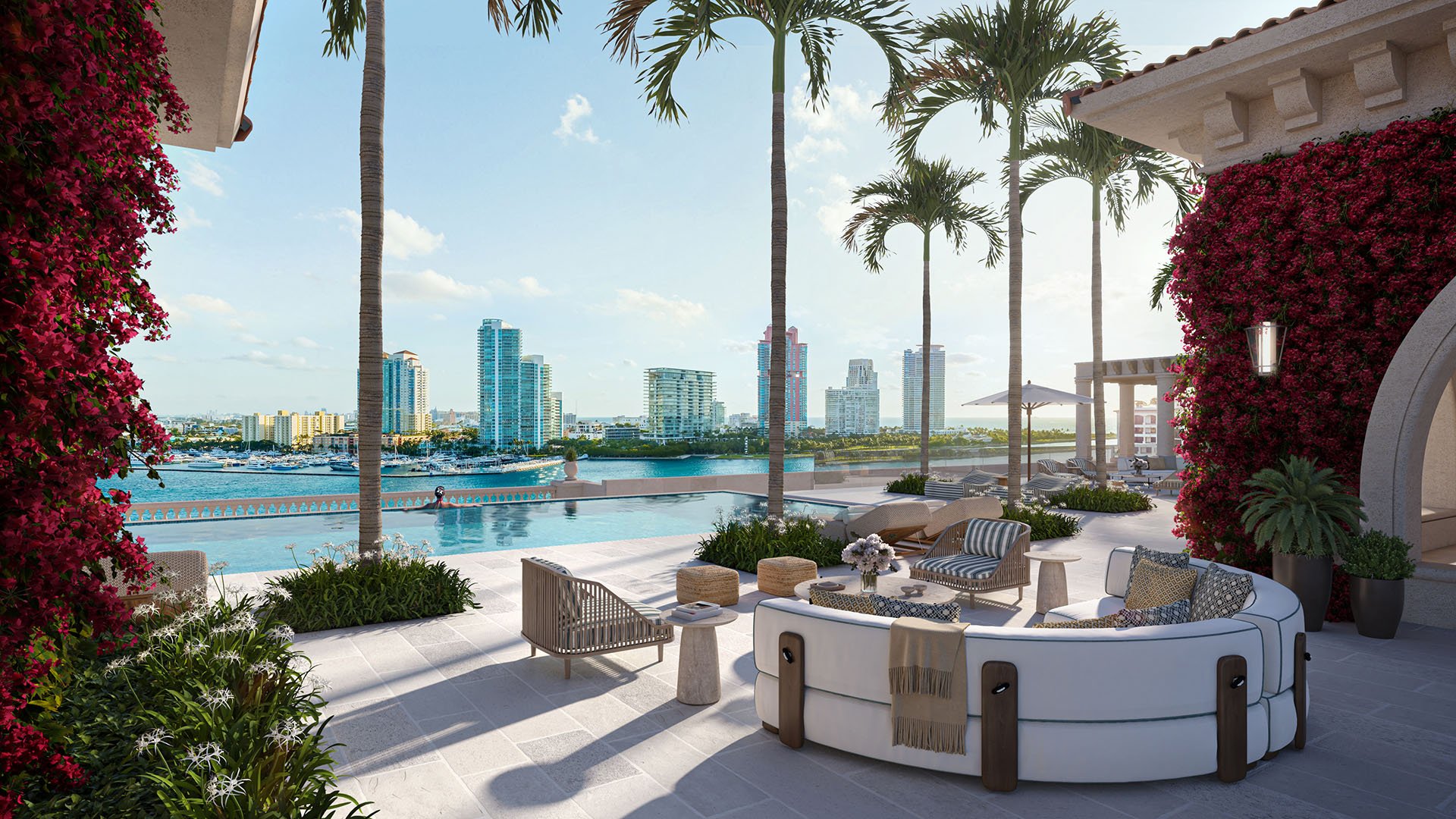
The most refined South Florida purchase is rarely defined by the most dramatic room. It is defined by the room one does not immediately see: the primary suite, and by the way the home protects it from guests, staff, children, late arrivals, early departures, deliveries, and the casual interruptions of entertaining. In both Brickell and Miami Beach, buyers are increasingly evaluating privacy as a living system, not a decorative feature.
That system begins at the entry. Does the residence reveal the bedrooms too quickly? Can a guest move from the foyer to the powder room, living room, dining area, balcony, or terrace without crossing the private wing? Is the primary suite buffered by a gallery, vestibule, study, closet corridor, or change in elevation? These details may feel subtle during a showing, but they shape every day of ownership.
For a penthouse buyer, the question becomes even more exacting. Larger spaces can create grandeur, but they can also lengthen awkward paths if the plan is not carefully resolved. A magnificent view is not a substitute for discretion. The best residences make privacy feel effortless, never defensive.
Brickell asks the buyer to think vertically. The neighborhood’s luxury appeal is tied to convenience, energy, and proximity to dining, offices, waterfront promenades, and a dense urban rhythm. Within that context, the strongest residences separate arrival, social space, and private rooms with discipline. A home can feel expansive without allowing every visitor to understand its entire plan within seconds of entering.
Guest circulation is especially important here because Brickell residences often serve multiple roles. The same home may function as a weekday base, a formal entertaining setting, an investment, a pied-a-terre, or a long-term family residence. A strong plan allows a dinner guest to experience the entertaining rooms beautifully while leaving the owner’s private routine undisturbed.
Look closely at elevator arrival, foyer depth, powder-room placement, and the route to the kitchen. If the service path overlaps too heavily with the primary suite, daily comfort erodes. If guests must cross near bedroom doors to reach a view-facing lounge, the floor plan is asking private space to perform public work. In Brickell, the best answer is often a residence that makes movement feel intuitive: arrive, pause, enter the social room, experience the view, and never intrude on the owner’s retreat.
Miami Beach offers a different proposition. The appeal is often more atmospheric: ocean air, leisure, beach access, wellness rituals, long lunches, and evenings that move easily from indoor rooms to outdoor living. The spatial challenge is that resort-style living can blur the line between relaxed hospitality and overexposure.
A Miami Beach buyer should ask how the residence manages the transition from public pleasure to private recovery. If the pool deck, beach path, guest suite, family room, and terrace all pull circulation toward the same corridor, the home may feel busy even when it is beautiful. The better plan gives guests a graceful experience while allowing the primary suite to remain calm, buffered, and meaningfully separate.
This is particularly important for owners who entertain frequently. A pool, summer kitchen, media room, or guest bedroom can enrich the property, but only if each has a clear relationship to the social core. In a beach residence, the primary suite should not become a shortcut between wet areas, outdoor rooms, and common spaces. Privacy in Miami Beach is not about isolation; it is about preserving the owner’s ability to withdraw without feeling removed from the pleasure of the home.
A well-planned primary suite is not simply large. It is sequenced. Ideally, the approach should create a psychological shift from social space to private space. A door directly off a living room may look harmless on paper, but it can feel abrupt in daily use. A short gallery, private vestibule, library threshold, or closet passage can change the entire character of the suite.
Inside, the bathroom and dressing areas matter as much as the sleeping room. Dual routines should be possible without choreography. Closets should not force one person through the bedroom while another is sleeping. The bath should support privacy within privacy, especially for couples who keep different schedules. These are not indulgences. They are the quiet architecture of long-term comfort.
Light and sound should be evaluated together. A dramatic exposure may be ideal in the living room but too intense for the bedroom. Conversely, a serene bedroom with poor morning function can frustrate owners over time. The most successful residences balance view, acoustics, blackout potential, mechanical quiet, and the practical location of laundry, linen storage, and secondary access.
Guest circulation is where many expensive homes reveal their weaknesses. A residence may photograph beautifully yet require guests to pass bedroom doors, service zones, or family storage on the way to the main event. The fix is not always more square footage. Often, it is stronger hierarchy.
The foyer should orient without exposing. The powder room should be discoverable without being on display. The kitchen should support both hosting and daily family use. If staff, caterers, or deliveries are part of the household rhythm, the plan should offer a service logic that keeps the home composed during activity.
In new-construction residences, buyers sometimes focus on finishes because they are immediately legible. Marble, millwork, appliances, and lighting are important, but they cannot compensate for a plan that confuses public and private movement. A residence with fewer theatrical gestures and better circulation will often live more luxuriously over a decade than one built around a single spectacular reveal.
Brickell may suit the buyer who values urban precision: efficient arrival, controlled access, strong building services, and a residence that can shift between private retreat and polished entertaining. It rewards those who want the city close at hand while maintaining a controlled interior world.
Miami Beach may suit the buyer who prioritizes atmosphere, wellness, outdoor living, and a softer daily cadence. It rewards those who understand that ease must still be designed. The most comfortable beach homes do not simply open everything to the view. They choreograph openness, shade, guest movement, and retreat.
The choice is not between better and worse. It is between two kinds of luxury. Brickell often frames privacy as urban control. Miami Beach often frames privacy as selective retreat within a resort environment. In either case, the buyer should resist being seduced by a single photograph. Walk the plan as if living there on a quiet morning, a catered evening, a rainy afternoon, and a week with guests in residence.
The right purchase around primary-suite privacy, guest circulation, and long-term comfort is less about neighborhood mythology than about discipline. South Florida buyers often start with water, skyline, sand, or brand. The more enduring decision begins with the path from the entry to the living room, from the guest room to the powder room, from the terrace to the kitchen, and from the world back into the primary suite.
A residence that protects these movements will age gracefully. It will host without strain, rest without compromise, and adapt as ownership patterns change. In the ultra-premium market, that is the difference between a beautiful address and a home that continues to feel intelligent years after closing.
Is primary-suite privacy more important in Brickell or Miami Beach? It matters in both. Brickell emphasizes controlled urban circulation, while Miami Beach requires careful separation between resort-style amenities and private retreat.
What is the first floor-plan detail buyers should study? Start with the entry sequence. A good plan welcomes guests without immediately exposing bedroom corridors or private family areas.
Can a large residence still have poor privacy? Yes. Size can amplify circulation problems if public rooms, guest paths, and private suites are not clearly organized.
Why does guest circulation affect long-term comfort? Guests shape how a home feels during dinners, weekends, and extended stays. Clear circulation keeps hospitality from intruding on daily privacy.
Is a split-bedroom plan always better? Not automatically. The quality of separation, sound control, bathroom placement, and access routes matter more than the label.
How should buyers evaluate outdoor living? Study whether outdoor areas connect naturally to social rooms without turning the primary suite into a passageway.
Does a better view justify a weaker floor plan? Rarely for long-term ownership. A view creates impact, but circulation and privacy determine how comfortably the residence lives.
What should couples study inside the primary suite? Look at closet access, bath layout, sound separation, and whether different schedules can coexist without friction.
Are service paths important in luxury condos? Very. Deliveries, housekeeping, catering, and maintenance should be accommodated without disrupting private rooms.
How should a buyer compare Brickell and Miami Beach? Compare the daily sequence, not just the setting. The better choice is the one whose plan supports how you actually live.
For a tailored shortlist and next-step guidance, connect with MILLION.
If branded residences are on your mind — as a home or as an allocation — we would be glad to share what we are seeing, privately.
Begin a quiet conversation