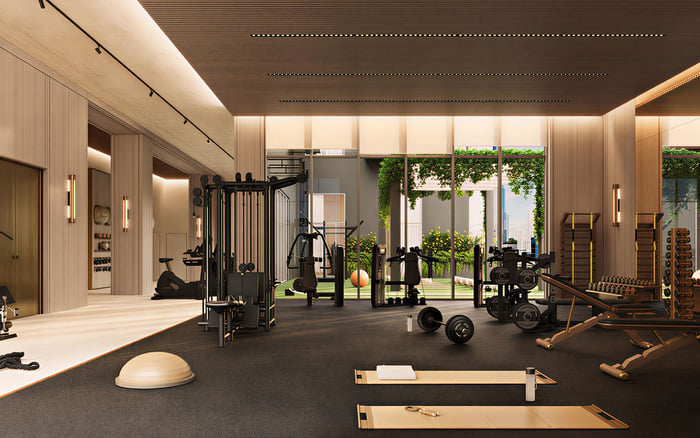
A practical, high-discretion walkthrough framework for buyers evaluating The Cove Residences Edgewater, with attention to performance, privacy, livability, and long-term ownership beyond surface design.
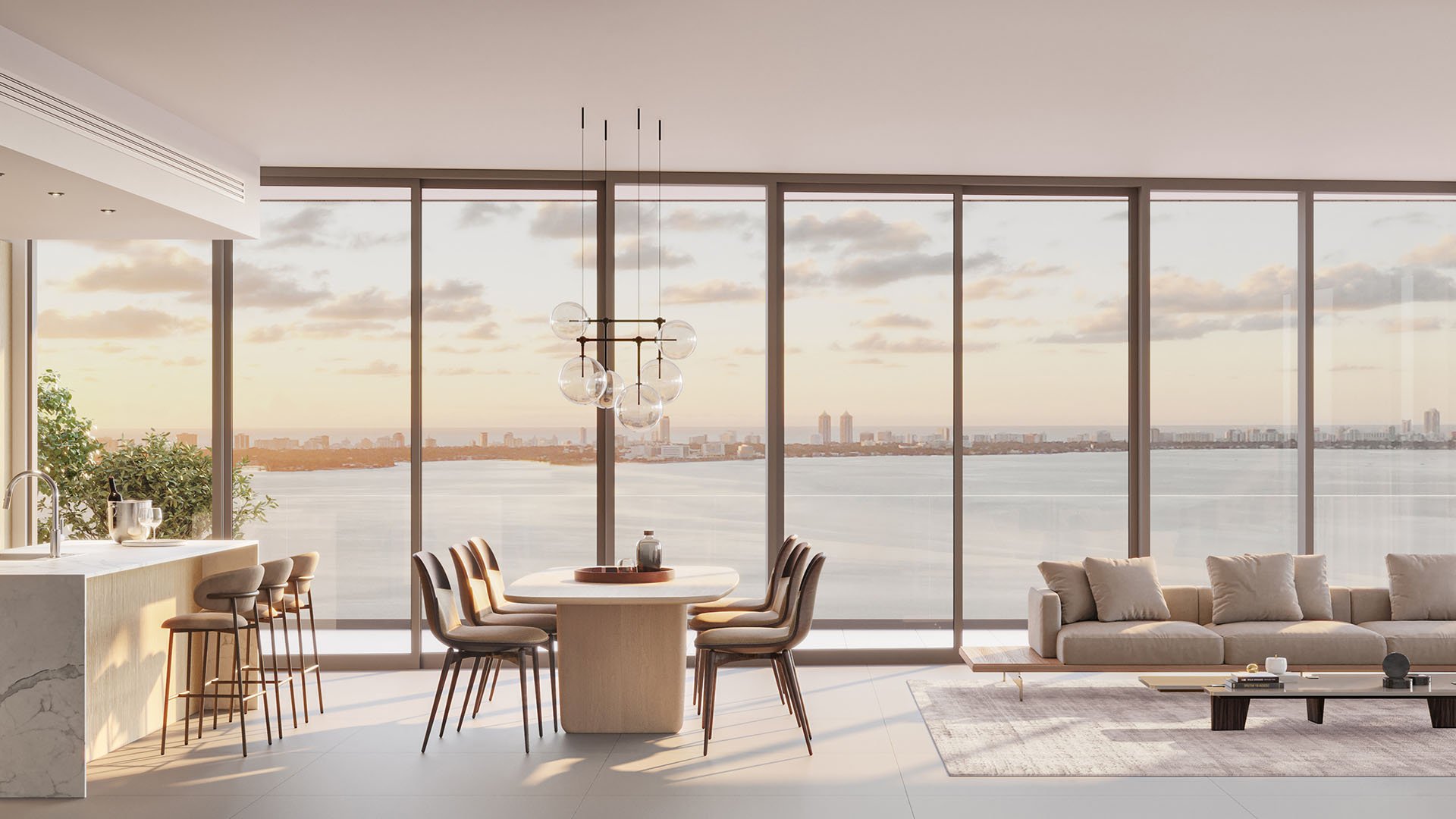
A polished residence can persuade in the first five minutes. Stone feels cool under hand, fixtures photograph well, and a view can compress judgment into emotion. At The Cove Residences Edgewater, the smarter walkthrough strategy is to slow the room down. The objective is not to decide whether the finishes are attractive. It is to understand how the home will perform when it is lived in, serviced, entertained in, closed up for travel, and eventually resold.
This is where discerning buyers separate presentation from performance. The relevant questions are quiet but consequential: Does the floor plan protect privacy? Does the balcony feel usable at the hours you will actually be home? Are mechanical sounds, elevator proximity, package flow, and service circulation aligned with the lifestyle implied by the price? For buyers comparing Cove Miami with the broader Edgewater field, this level of inspection is where value becomes visible.
The walkthrough begins with the arrival sequence. Watch the building as if you already live there. How intuitive is the drop-off? Does the lobby absorb visitors gracefully, or does it create a moment of friction? Are staff sightlines discreet? Does the path from car to elevator feel private, or overly public? Luxury is often measured by finishes, but daily ease is measured by transitions.
In Edgewater, buyers often compare multiple buildings within a narrow window, including Aria Reserve Miami and EDITION Edgewater. That makes the non-glamorous details more important, not less. Arrival, elevator timing, guest management, loading access, storage procedures, and parking choreography can shape the ownership experience as much as the residence itself.
Ask how deliveries, move-ins, contractors, valet activity, pets, and guests are handled. You are not looking for perfection. You are looking for systems that match the way you intend to live.
Once inside, resist the instinct to stand at the glass first. Walk the plan from the perspective of an owner, a guest, a housekeeper, and a future buyer. The best layouts reveal a hierarchy: public rooms open easily, bedrooms retreat, service areas remain functional, and storage does not feel like an afterthought.
Test the entry. Is there a place to set keys, art, flowers, bags, or evening wraps without interrupting the living room? Move from kitchen to dining to terrace and imagine a dinner with staff or caterers present. Are appliances and prep zones positioned for use, or mainly for presentation? Open every closet. Study not only volume, but shape. Deep, awkward spaces can be less useful than shallower, better-organized ones.
Then examine the bedroom wing. Privacy should be felt before it is explained. If a primary suite opens directly to the main entertaining area, consider whether that suits your household. If secondary bedrooms are intended for children, guests, or staff, verify that circulation works without compromise.
Views are an amenity, but light is a condition. Visit at the time of day that matters most to your use. Morning coffee, late-afternoon work, sunset entertaining, and evening privacy each reveal a different residence. Notice glare on screens, heat near glass, shadow patterns, and whether window treatments will be decorative or essential.
Acoustics deserve equal attention. Stand silently in each room. Listen for elevator movement, corridor noise, mechanical hum, traffic, wind, or sounds from adjacent spaces. Run water, activate ventilation, and close interior doors. A serene residence is not merely quiet when empty. It remains composed when systems are operating and the building is alive.
Waterfront expectations can also complicate judgment. If waterfront exposure is central to your decision, evaluate not only the view itself, but the comfort of living with that exposure: brightness, reflections, wind, privacy, and furniture placement. A spectacular outlook should enhance the room, not dominate every practical choice.
A balcony should be treated as an outdoor room, not a marketing image. Step outside and close the door behind you. Is conversation comfortable? Is the depth usable for the furniture you would actually buy? Can you dine, read, or work there without feeling exposed? Where will planters, lighting, side tables, and outdoor storage go?
Look down, across, and back into the unit. Some terraces feel private from inside but exposed from neighboring lines. Others deliver impressive views while limiting furniture flexibility. Check thresholds, drainage, rail heights, hose access if applicable, lighting, and door operation. In South Florida, exterior living is part of the value proposition, but only if the space supports real use.
For buyers also considering Villa Miami, terrace livability may become a defining comparison point. The question is not which outdoor space photographs better. It is which one you will use more often, with less effort.
New construction can create a false sense of security. Fresh surfaces are not a substitute for verification. During a walkthrough, identify HVAC locations, access panels, return vents, thermostat placement, water shutoffs, electrical panels, data locations, washer and dryer venting, and any areas where maintenance will require furniture to move.
A luxury residence should be serviceable without drama. If a mechanical closet is difficult to reach, if the laundry area lacks working space, or if smart-home controls are fragmented, daily ownership may feel less refined than the visual package suggests. Ask how warranties, punch-list items, and post-closing service requests are handled, but focus on the physical evidence in front of you.
Also check where technology wants to live. Router placement, charging zones, media walls, shade controls, and lighting scenes can influence how seamlessly the residence supports contemporary life. These details rarely appear in glamorous photographs, but they shape the first year of ownership.
The Cove Residences Edgewater should not be evaluated in isolation. Edgewater buyers are often choosing among lifestyle, architecture, views, service model, floor plan, and long-term liquidity. A disciplined comparison may include projects outside the immediate neighborhood as a control, such as The Residences at 1428 Brickell, not because Brickell is interchangeable with Edgewater, but because contrast clarifies priorities.
Create a private scorecard after each visit. Rank arrival, privacy, acoustic comfort, terrace usability, storage, kitchen function, bedroom separation, service logistics, amenity relevance, and emotional pull. Do not let the strongest view erase weaker fundamentals. The best purchase is rarely the one that performs in a single photograph. It is the one that performs repeatedly, across ordinary days and exceptional evenings.
A successful luxury walkthrough is calm, thorough, and slightly skeptical. It honors the architecture while testing the ownership reality. Bring a tape measure, a phone charger, a list of furniture dimensions, and the patience to open cabinets, stand in silence, and walk the route from parking to pantry. The more beautiful the residence, the more important it becomes to inspect what beauty can conceal.
At The Cove Residences Edgewater, the goal is not to diminish the seduction of finishes, fixtures, and views. It is to place them in the correct order. First comes livability. Then comes serviceability. Then comes privacy, comfort, and long-term relevance. Only after those pass should aesthetics have the final word.
What should I inspect first during a walkthrough at The Cove Residences Edgewater? Start with arrival, elevator flow, entry sequence, and privacy before focusing on finishes or views.
Why look beyond fixtures and finishes? Finishes influence first impressions, but layout, acoustics, storage, and service access shape daily ownership.
How should I evaluate a balcony? Test depth, privacy, wind comfort, furniture placement, drainage, lighting, and door operation.
Should I visit at more than one time of day? Yes. Light, glare, noise, privacy, and terrace comfort can change meaningfully across the day.
What mechanical details matter most? Review HVAC access, water shutoffs, electrical panels, data locations, ventilation, and maintenance clearances.
How can I compare Edgewater residences fairly? Use the same scorecard for each property, with categories for arrival, privacy, sound, layout, and service flow.
Are views enough to justify a purchase decision? Views matter, but they should not outweigh weak storage, poor acoustics, awkward circulation, or limited usability.
What should buyers ask about building operations? Ask how guests, deliveries, contractors, pets, move-ins, valet activity, and service requests are handled.
Is new construction still worth inspecting carefully? Yes. New construction can still require review of punch-list items, system access, and practical functionality.
What is the best mindset for a luxury walkthrough? Be appreciative but analytical, treating the visit as a lifestyle simulation rather than a design preview.
If you'd like a private walkthrough and a curated shortlist, connect with MILLION.
If branded residences are on your mind — as a home or as an allocation — we would be glad to share what we are seeing, privately.
Begin a quiet conversation