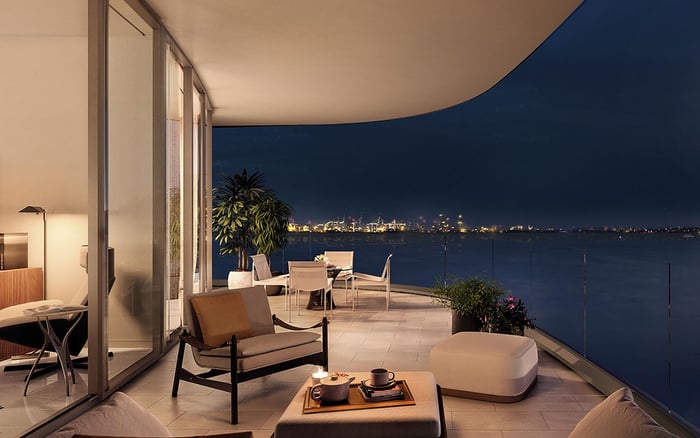
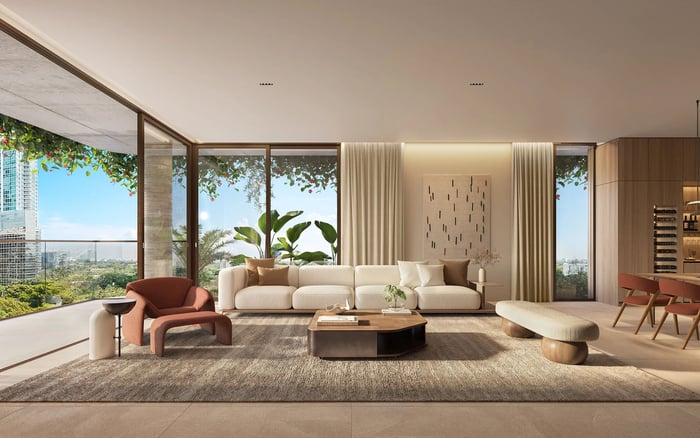
A discreet look at why better energy monitoring belongs in the conversation for South Florida penthouse buyers, from comfort and privacy to stewardship and long-term ownership.

Quiet luxury in a South Florida penthouse is often framed through materials: stone, millwork, bronze detailing, gallery walls, and furniture that feels effortless because every proportion has been considered. Yet the most sophisticated residences increasingly distinguish themselves through what is not immediately visible. Better energy monitoring belongs in that category.
This is not about austerity. It is about control, discretion, and confidence. A penthouse owner may not want to study mechanical behavior every morning, but the residence should be intelligent enough to reveal patterns when something feels off, when staff needs clarity, or when a second residence is being managed from afar. In that sense, energy monitoring becomes a form of stewardship rather than a gadget.
At the highest level, service is anticipatory. The same principle applies to a residence. A well-conceived monitoring layer can help an owner, property manager, or household team understand how major systems behave over time. Instead of reducing comfort to a vague impression, the home begins to offer a clearer picture of usage, demand, and the relationship between spaces.
For a buyer comparing a Brickell aerie with a quieter waterfront residence, the conversation should extend beyond views and finishes. It should include how the home communicates. Is the interface legible? Can the owner distinguish between everyday use and an unusual condition? Are alerts meaningful, or are they merely noise? Quiet luxury prefers the former: fewer notifications, better information, and no theatrical dashboard competing with the architecture.
In a conventional showing, the eye goes to the balcony, the terrace, the primary suite, the kitchen, and the view line. For a serious buyer, the next layer is operational. Ask where energy data is displayed, who can access it, and how it is separated from entertainment, security, and building-level systems. The answer should feel calm and organized.
A refined monitoring setup does not need to announce itself. Ideally, it supports decisions without becoming a visual burden. It may help the owner understand the effect of lighting scenes, appliance use, pool equipment, charging needs, and comfort settings. The point is not to micromanage the residence. The point is to have enough visibility to identify waste, inefficiency, or service issues before they become part of daily life.
Energy information can be surprisingly intimate. It may suggest when rooms are occupied, when a residence is empty, or how routines shift during entertaining. For that reason, monitoring should be designed with privacy as carefully as cabinetry or lighting. A buyer should know who holds administrative access, how household staff permissions are set, and whether the system can be simplified for guests.
This is especially relevant for owners who use a South Florida home as a seasonal base or an investment residence. The most elegant solution is rarely the most complex one. It is a hierarchy: owner visibility, manager functionality, staff clarity, and guest simplicity. Each role should see only what it needs.
The best technology in a luxury residence is edited. It coordinates with lighting, shading, climate, security, and audiovisual systems, but it does not force the owner to live inside a control room. Monitoring should be available through a clean interface, with summaries that translate data into useful judgment.
For example, an owner should be able to tell whether a residence is behaving normally before arrival, whether a service visit changed a setting, or whether an unusual pattern deserves attention. These are not dramatic moments. They are the quiet mechanics of living well. When the experience is thoughtfully commissioned, the home feels more composed.
Energy monitoring should be part of due diligence, not an afterthought. Buyers can ask whether the current system is native to the residence, added later, or dependent on subscriptions. They can ask if historical data remains with the unit, whether it can be transferred cleanly, and how the system is serviced after ownership changes.
It is also worth asking how the residence handles scenes for entertaining, arrival, departure, and overnight settings. A pool, terrace lighting, gallery illumination, kitchen equipment, and private elevator arrival sequence may all influence the way the home consumes energy. The point is not to turn every pleasure into a metric. It is to make the residence easier to manage at the level expected by its design.
The most persuasive case for energy monitoring is not savings alone. It is composure. A penthouse that understands itself is easier to own, easier to delegate, and easier to preserve. The owner does not need constant data, but the residence should be able to provide it when it matters.
That is why better monitoring belongs alongside the better-known markers of ultra-premium living. It supports the art, the finishes, the comfort, the staff, the entertaining calendar, and the periods when the home is unoccupied. Done well, it is not another feature. It is the invisible discipline behind a beautifully effortless life.
Why does energy monitoring matter in a South Florida penthouse? It gives owners clearer visibility into how a complex residence operates, especially when multiple systems are running behind the scenes.
Is this mainly about reducing utility costs? Cost awareness can be useful, but the stronger luxury argument is comfort, control, service coordination, and long-term stewardship.
Should buyers ask about energy monitoring during a showing? Yes. It is reasonable to ask how the residence tracks usage, who can access the information, and how alerts are handled.
Can energy monitoring be discreet? It should be. In a refined home, the interface should feel quiet, legible, and integrated rather than visually intrusive.
Does monitoring replace a smart-home system? Not necessarily. It may complement lighting, climate, security, shading, and audiovisual controls by adding clearer operational insight.
Who should have access to the dashboard? Access should be role-based, with owners, managers, staff, and guests seeing only the level of information they need.
Is historical data useful when buying? It can be helpful if available, because it may show how the residence has behaved across normal patterns of use.
What is a red flag in an energy-monitoring setup? Confusing alerts, unclear ownership of accounts, excessive permissions, or a system no one can explain should invite further review.
Can monitoring support art and finish preservation? It can support broader stewardship by helping the owner understand environmental and operational patterns that affect the home.
What is the ideal experience for the owner? The ideal experience is calm visibility: the home provides useful information when needed and disappears when it is not.
For a tailored shortlist and next-step guidance, connect with MILLION.
If branded residences are on your mind — as a home or as an allocation — we would be glad to share what we are seeing, privately.
Begin a quiet conversation