A buyer-focused look at the tradeoff between globally recognizable residential service and quieter boutique privacy when selecting a trophy pied-à-terre in South Florida.
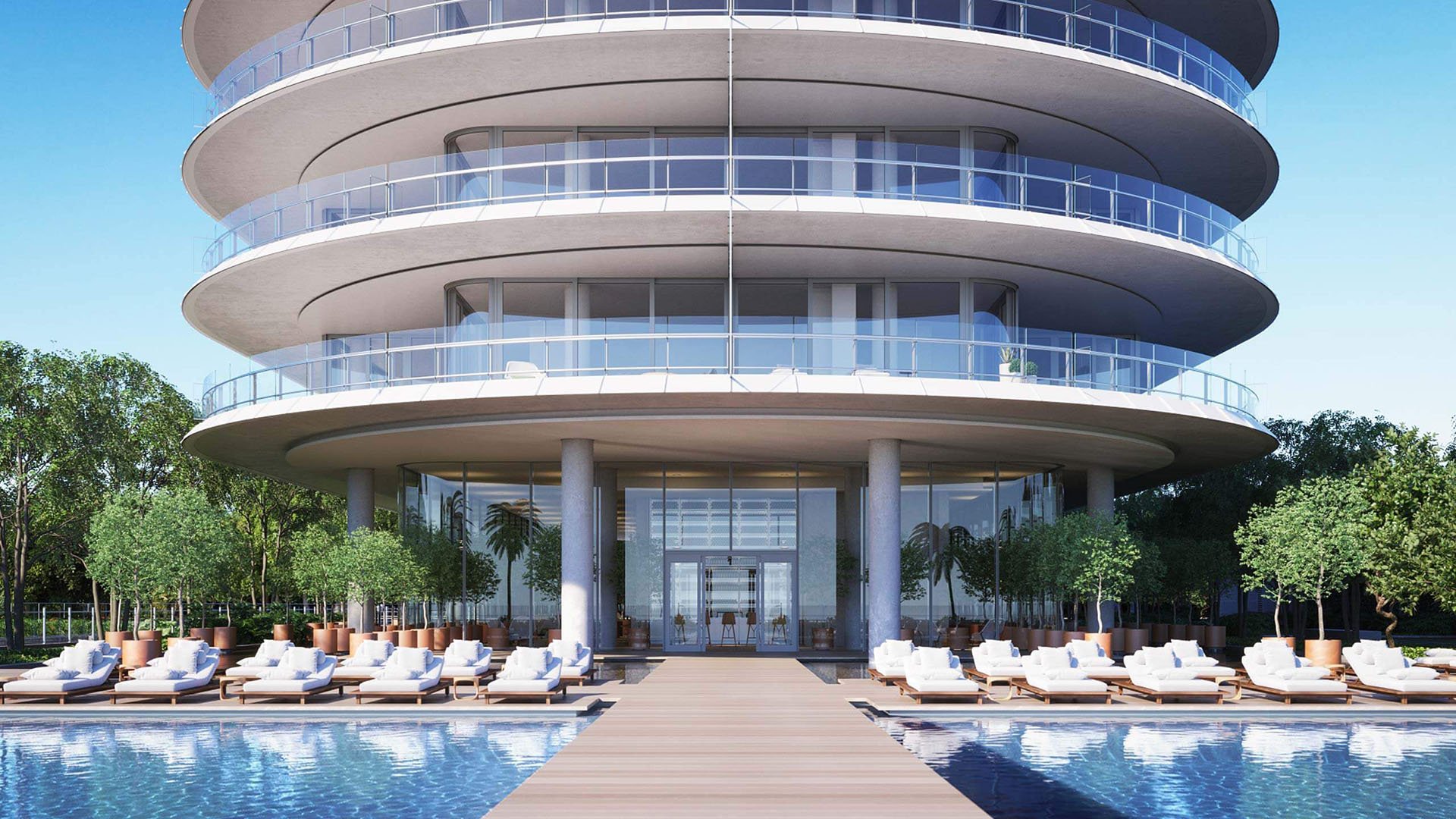
A trophy pied-à-terre in South Florida is rarely purchased for shelter alone. It is a private base, a social instrument, a weekend reset, a place to arrive without friction and leave without worry. For the buyer who already owns significant property elsewhere, the question is more nuanced than view, finish, or floor height. It is whether the residence should feel like an extension of a grand hotel, with a recognizable service language, or like a quieter private address that protects anonymity.
Branded service and boutique discretion both appeal to sophisticated buyers, but they solve different problems. A branded residence can make arrival feel choreographed. A boutique building can make ownership feel less visible. Neither is inherently superior. The more relevant test is how the home will be used, who will use it, and how much of the owner’s identity should be legible at the front door.
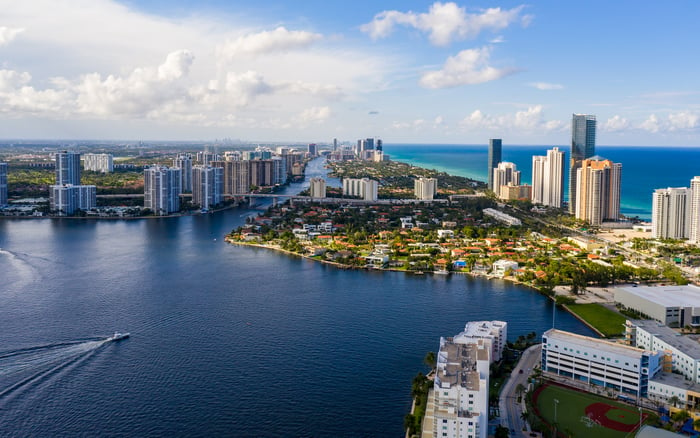
In a market as layered as South Florida, the answer can shift by neighborhood. Brickell speaks to the owner who wants immediate urban access and a polished vertical lifestyle. Surfside offers a softer coastal cadence, where privacy and understatement become part of the luxury. The ideal choice usually sits at the intersection of service, access, privacy, and long-term desirability.
Branded residences are compelling because they reduce ambiguity. For an owner arriving from New York, London, São Paulo, Mexico City, or Palm Beach, a known hospitality language can be reassuring. The value is not simply a name on the porte cochère. It is the expectation that the building will understand arrivals, guests, staff coordination, housekeeping requests, dining preferences, valet rhythm, and the small details that make a second home feel operational from the first hour.
In Brickell, that convenience carries particular force. A buyer considering 888 Brickell by Dolce & Gabbana is weighing not only a residence, but also a highly legible design identity in a district built around business, dining, mobility, and social visibility. The same is true for buyers drawn to Cipriani Residences Brickell, where the attraction is naturally tied to a residential experience associated with a cultivated hospitality sensibility.
For certain pied-à-terre owners, that legibility is the point. They want guests to understand the address instantly. They want a residence that feels easy to explain, easy to enjoy, and easy to hand over to family members who may not know the city well. Branded service can also support owners who visit unpredictably. If the home is used in bursts, the building’s operational culture becomes central to the ownership experience.
Boutique discretion appeals to a different instinct. These buyers may already live with staff, memberships, clubs, and constant access. In South Florida, they may want the opposite: a controlled, quieter environment where the address does not perform too loudly. Boutique luxury is not necessarily smaller in ambition. It is often more selective in tone.
This matters for collectors, principals, family-office clients, and public-facing owners who prefer not to turn every arrival into a social moment. A boutique building can feel more residential, more familiar, and more protective of daily rhythm. The owner may value a calm lobby over a theatrical one. They may prefer fewer casual encounters, a more subdued guest flow, and a sense that the building serves residents without becoming part of the owner’s public identity.
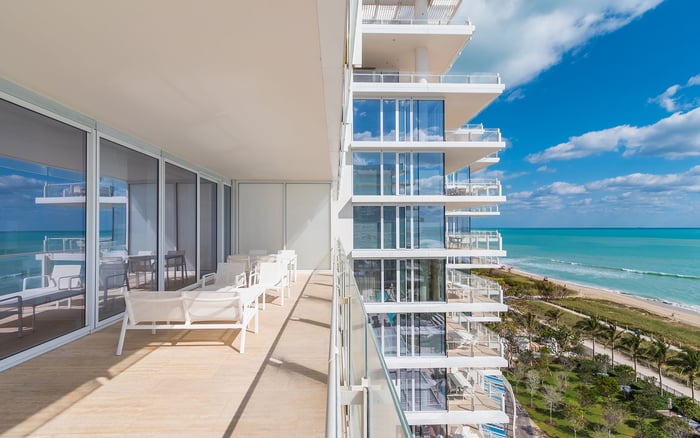
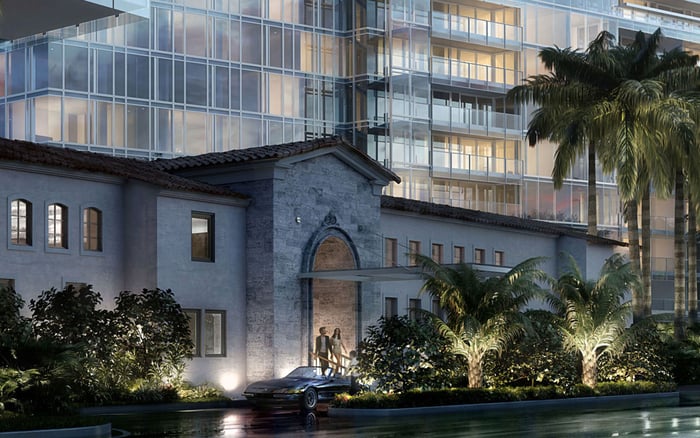
In coastal settings, discretion can be amplified by geography. The Perigon Miami Beach offers a useful example of how buyers often think about Miami Beach: not merely as a place for visibility, but as a place where the right residence can balance architectural presence with a more private relationship to sand, sky, and routine. Farther north, The Surf Club Four Seasons Surfside shows why Surfside remains such a powerful reference point for buyers who want heritage, beach proximity, and a quieter social posture.
For the trophy pied-à-terre buyer, service is not decoration. It is risk management. The more intermittent the use, the more important the building’s ability to absorb complexity. A residence that sits empty for periods must still feel alive when the owner returns. Deliveries need to be received. Cars need to be ready. Guests need to be welcomed properly. The owner’s preferences should not have to be reintroduced on every visit.
This is where branded residences can justify their appeal. The buyer is not only purchasing walls and views. They are buying confidence that the experience will remain consistent even when their own attention is elsewhere. For families with multiple residences, that consistency can become a luxury in itself.
Yet the service premium should be examined carefully. Some buyers want comprehensive attention; others want invisible support. An over-programmed building may feel impressive at first and intrusive later. A buyer should ask whether the service culture matches the way they actually live. The best service is not the most visible service. It is the service that removes friction without making the owner feel observed.
Discretion can also support long-term desirability. Trophy buyers often think in terms of scarcity, not only square footage. A private address, a controlled arrival, a restrained amenity environment, and a resident profile that values quiet can all make a pied-à-terre feel more enduring. In some cases, a less obvious building may age more gracefully than a more theatrical one.
That does not mean boutique always wins. A globally recognizable brand can broaden the buyer pool when it is time to sell, particularly among purchasers who want a familiar standard. But privacy has its own audience. There are buyers who will pay for the confidence that their home does not announce too much.
The strongest assets tend to combine both qualities. They offer enough service to make ownership effortless, but enough restraint to keep daily life calm. This is the center of the market for many serious pied-à-terre buyers: not maximum branding, not total anonymity, but a refined balance between recognition and retreat.
The right question is not, “Is branded better than boutique?” The sharper question is, “What will disappoint me after the first season?” If the answer is inconsistent service, choose the building with the stronger hospitality culture. If the answer is too much exposure, choose the building with greater discretion. If the answer is traffic between work, dining, and airport access, Brickell may carry more weight. If the answer is peace, coastal atmosphere, and a more private weekend rhythm, Surfside or Miami Beach may be more persuasive.
Buyers should also separate the romance of a sales presentation from the cadence of actual ownership. Walk the arrival sequence. Consider how guests will enter. Imagine returning late, leaving early, hosting family, storing personal items, and closing the residence for weeks. A trophy pied-à-terre should not require a performance from its owner. It should support the owner’s life with precision.
Ultimately, branded service matters most when ease, recognition, and operational polish are priorities. Boutique discretion matters most when privacy, restraint, and a low-profile ownership experience are the higher luxuries. In South Florida, the best answer is deeply personal, and the most successful purchase is the one that feels inevitable after the first season of use.
Is a branded residence better for a pied-à-terre buyer? It can be, especially if the buyer values consistent service, recognizable standards, and a seamless arrival experience.
When is a boutique building the stronger choice? Boutique can be stronger when privacy, quieter common areas, and a more residential atmosphere matter more than brand recognition.
Does Brickell suit pied-à-terre ownership? Brickell can suit buyers who want urban convenience, dining access, business proximity, and a polished vertical lifestyle.
Why do some buyers prefer Surfside? Surfside appeals to buyers who want a coastal setting with a more discreet, residential rhythm.
Should service be visible or invisible? The best service depends on temperament; some owners want high-touch attention, while others prefer support that stays in the background.
Does brand recognition help resale? It can broaden appeal for buyers who value familiar service standards, but discretion and scarcity can also be powerful resale attributes.
What should buyers test during a visit? They should study the arrival sequence, lobby atmosphere, guest flow, privacy, staff interaction, and how the building feels at different hours.
Is oceanfront living always better for a pied-à-terre? Oceanfront living can be compelling, but the better choice depends on access, privacy, maintenance expectations, and lifestyle rhythm.
Can a second home feel effortless without a hotel brand? Yes. A well-managed private building can provide ease and discretion without relying on a visible hospitality identity.
What is the most important deciding factor? The owner’s use pattern matters most: frequent entertaining, solo retreats, family visits, and work trips each point to different priorities.
If you'd like a private walkthrough and a curated shortlist, connect with MILLION.
If branded residences are on your mind — as a home or as an allocation — we would be glad to share what we are seeing, privately.
Begin a quiet conversation