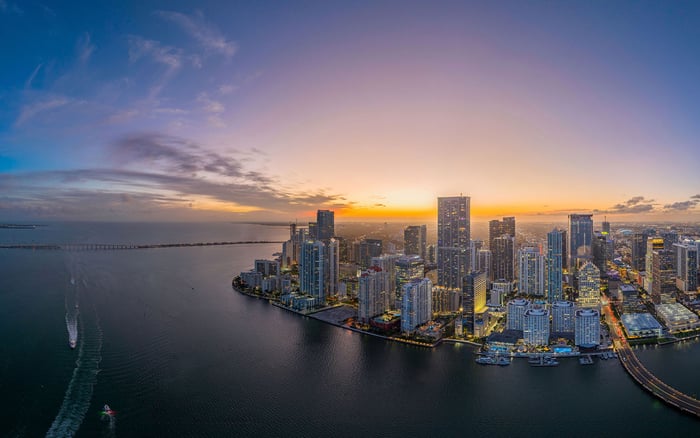
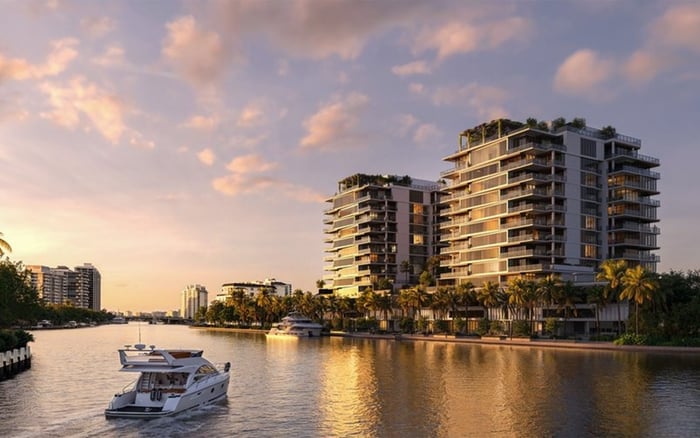
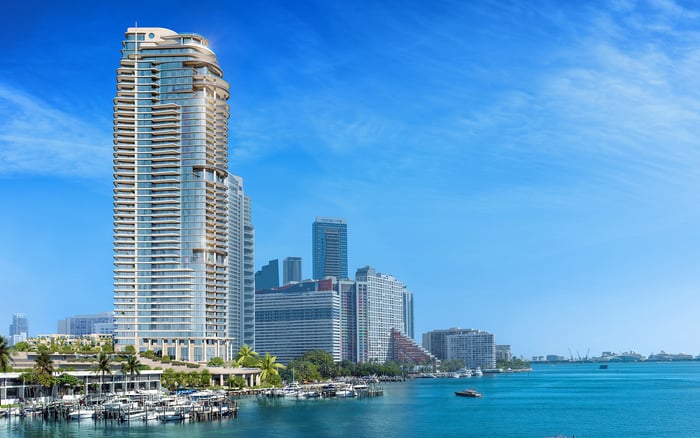
In South Florida, branded residences can justify notable premiums, but only when the brand is matched by a durable service platform, strong sponsorship, and resale-friendly ownership terms.
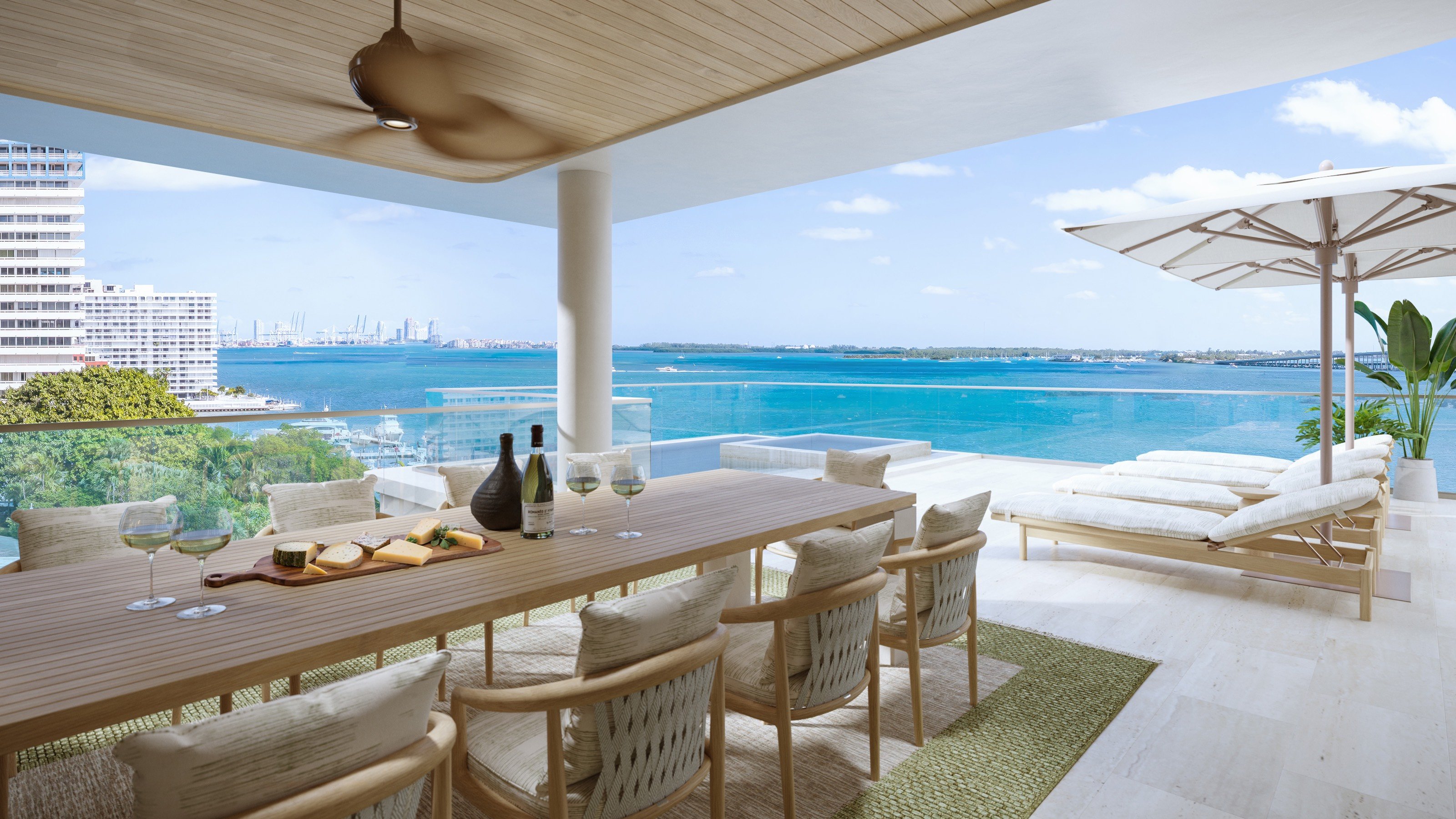
Branded residences hold a powerful place in the South Florida imagination. For a certain buyer, a recognized flag signals consistency, discretion, service standards, and a level of global familiarity that feels especially relevant in an international market. That appeal has translated into meaningful pricing power. In many cases, branded luxury residences command a premium of roughly 15 to 25 percent over comparable non-branded properties.
Yet the logo itself is rarely the true asset. The more important question is whether the brand is backed by an operating model that enhances daily life and reinforces value over time. In Miami-Dade and Broward, where branded inventory has expanded dramatically, buyers are drawing that distinction with greater precision. The market still rewards a strong name, but it rewards substance more.
For MILLION Luxury clients, the practical takeaway is simple: a brand can support pricing, but only a well-executed product supports lasting value.
The strongest branded premiums usually come from hospitality-backed residences, not branding for branding’s sake. Concierge support, housekeeping, room service, spa access, staffed amenities, and a management culture built around consistency create a more defensible reason to pay more at acquisition and a clearer narrative at resale.
That is why hotel operators tend to command stronger, more durable premiums than projects that borrow prestige from fashion, automotive, or design names alone. A famous label can generate immediate attention and help launch pricing, particularly when the building itself is highly distinctive. Over a longer holding period, however, the market tends to ask harder questions. Is the service real? Is it daily? Is it professionally managed? Does the ownership experience feel meaningfully different from that of a conventional luxury condominium?
When the answer is yes, premiums are easier to justify. South Florida examples make the point clearly. Buyers evaluating The Surf Club Four Seasons Surfside or The Ritz-Carlton Residences® Miami Beach are not simply buying a name. They are buying into an operating culture many global purchasers already understand and trust.
A branded premium is most likely to persist when five conditions are in place.
First, the brand must have genuine international recognition. South Florida draws a deep pool of global buyers, many of whom are more comfortable paying up for a name they already know from travel and previous ownership.
Second, the service platform must be meaningful and ongoing. Full-service hospitality remains the most reliable driver of premium durability. A polished lobby and branded finishes are not enough.
Third, the sponsor matters. Even a respected brand may not generate the same market response if the developer lacks a strong reputation for execution. Buyers at the top of the market are underwriting the entire package, not just the flag.
Fourth, the product has to be distinct beyond the branding. Porsche Design Tower in Sunny Isles Beach demonstrated that a marquee name can support pricing above $1,000 per square foot when paired with a highly differentiated physical concept. Branding amplified the story, but the building’s uniqueness helped complete it.
Fifth, the residence should align with how affluent buyers want to use it. Turnkey, furnished, or rental-ready branded homes can preserve premiums more effectively because they match the expectations that often accompany hospitality-linked ownership. In markets with heavy second-home demand, convenience is not a minor benefit. It is part of the asset.
This helps explain why buyers continue to watch projects such as St. Regis® Residences Brickell and The Residences at Mandarin Oriental, Miami with such interest. In both cases, the proposition extends well beyond aesthetics.
The weaker version of branding is easier to spot once the initial launch momentum fades. Designer or architect branding without a meaningful hotel-service platform often sees resale premiums soften more quickly. The name may still impress, but if the day-to-day ownership experience feels largely equivalent to another well-finished luxury condominium, the spread versus non-branded comparables becomes harder to defend.
Costs also matter more than many buyers expect. Hotel-grade service layers can materially increase annual ownership expenses, and limited upfront clarity around service charges, amenity fees, and operating costs can complicate underwriting. For an end user, those costs may be acceptable in exchange for convenience and cachet. For an investor focused on net yield, they can erode the economics quickly.
Restrictions can further narrow the resale audience. Complex HOA rules, use limitations, financing constraints, and brand-specific operating requirements may reduce flexibility. That can weaken liquidity in the secondary market, particularly during softer cycles when buyers have more options.
This is where decorative branding can disappoint. A project such as 888 Brickell by Dolce & Gabbana may command enormous attention because fashion-led branding is visually potent and culturally resonant. But long-term premium retention in any design-forward concept will ultimately depend on execution, service depth, and the lived ownership experience rather than branding theater alone.
The region remains one of the country’s most important branded-residence clusters. Miami-Dade and Broward offer a wide spectrum, from classic hospitality-backed residences to designer-led statements and automotive-branded towers. That breadth is part of South Florida’s appeal, but it also creates comparison pressure.
As inventory grows, newer projects face a more competitive environment than developers enjoyed in the mid-2010s. The market is less willing to award extraordinary premiums simply for attaching a recognizable name to a tower. Buyers can now compare brands, fee structures, amenity depth, service standards, sponsor quality, rental flexibility, and neighborhood positioning with far greater precision.
That is especially relevant in places like Brickell, Miami Beach, Sunny Isles, and Fort Lauderdale, where branded offerings are no longer rare. A buyer weighing branded options against exceptional non-branded product may decide the premium is justified only if the service model is truly transformative. In Fort Lauderdale, for example, Four Seasons Hotel & Private Residences Fort Lauderdale benefits from the kind of hospitality credibility that tends to carry farther than a purely stylistic association.
One of the clearest divides in this niche is between lifestyle buyers and yield-driven buyers. End users are generally more willing to pay a branded premium because they consume the value directly. They use the concierge, appreciate the ease of arrival, favor the predictability of service, and may place emotional value on the name itself.
Investors tend to be more skeptical. Premium nightly-rate marketing can look attractive, but realized income is variable and rarely guaranteed. Higher operating costs can reduce net returns even when headline rents or sale prices appear strong. During market corrections, branded premiums also tend to compress, which can limit the downside protection some buyers assume the brand provides.
For that reason, branded residences should usually be evaluated first as lifestyle assets and only second as income vehicles. That does not make them poor investments. It simply means the underwriting must be more nuanced.
The right question is not whether branding matters. It clearly does. The right question is what, exactly, the premium is buying.
Buyers should test whether the services are embedded, optional, or largely symbolic. They should examine annual costs carefully, understand rental and use restrictions, and compare the branded residence with top-tier non-branded competition nearby. They should also consider whether the brand has enduring global recognition or merely launch-period excitement.
In today’s South Florida market, the logo holds value when it stands for operating excellence, trusted sponsorship, and a product that feels difficult to replicate. It does not hold value when it is asked to compensate for ordinary planning, limited service, unclear economics, or restrictive ownership terms.
Do branded residences really sell for more than non-branded luxury condos? Often yes, with premiums commonly falling in the 15 to 25 percent range, though the spread varies by market, service level, and brand strength.
What type of brand tends to hold value best? Established hotel operators generally show stronger and more durable premiums than design-only or fashion-led labels.
Is the brand name itself the main reason for the premium? Usually no. The more durable value driver is the hospitality operating model behind the name.
Why do some branded projects lose their edge on resale? Premiums often fade when the project offers limited ongoing service or when the branded identity is mostly aesthetic.
Are branded residences better for end users or investors? They are often more compelling for end users, who directly enjoy the service layer and lifestyle benefits.
Can higher fees offset the benefit of a branded premium? Yes. Elevated service charges and operating costs can reduce the financial advantage, especially for investors.
Do branded residences perform the same way in every market cycle? No. During corrections, their pricing edge can compress versus comparable non-branded luxury inventory.
Does a famous developer matter as much as the brand? It matters greatly. Buyers at this level typically assign value to execution quality as well as the brand itself.
Are rental-ready branded units more resilient? They can be, particularly when turnkey use aligns with the hospitality expectations attached to the property.
What is the smartest way to judge a branded premium in South Florida? Compare service depth, total ownership cost, restrictions, and resale flexibility against the best nearby alternatives.
If you'd like a private walkthrough and a curated shortlist, connect with MILLION Luxury.
If branded residences are on your mind — as a home or as an allocation — we would be glad to share what we are seeing, privately.
Begin a quiet conversation