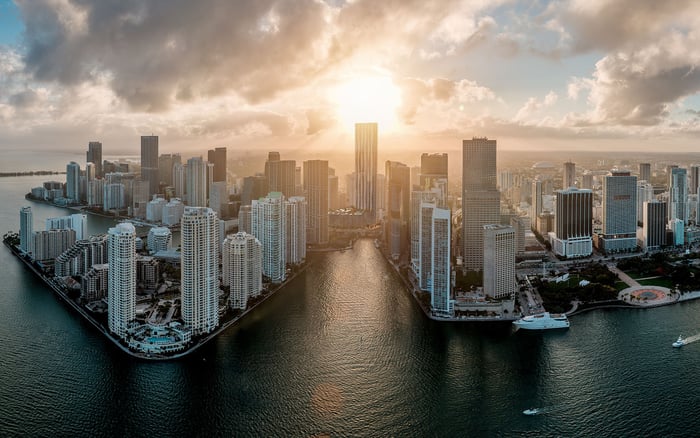
For Biscayne Bay buyers, waterfront prestige is only the beginning. The real test is operational: whether a property can launch, accommodate, and route your vessel with minimal friction. From lift permitting and protected shoreline habitat to no-wake corridors, bridge constraints, and Government Cut traffic, this is the practical checklist that separates a beautiful bayfront address from a truly usable boating residence.
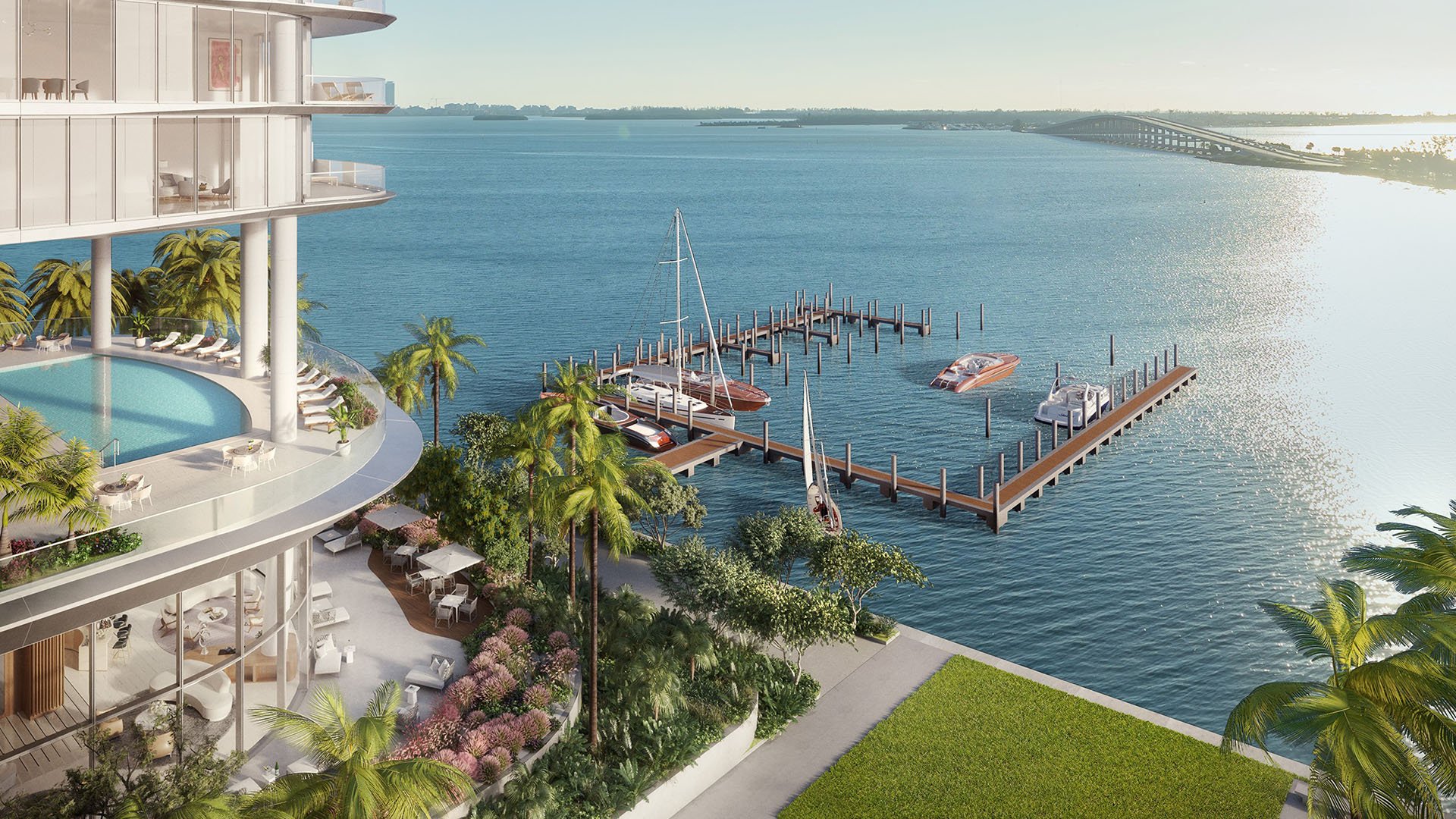
In South Florida, buyers often use “waterfront” and “boater-friendly” as though they were interchangeable. On Biscayne Bay, they are not. A residence may offer a dramatic shoreline, a private dock, or postcard sunsets and still prove operationally compromised once the owner begins using the boat.
The essential questions are practical. Can the vessel be lifted or berthed legally? Is there sufficient depth outside the marked channel at low tide? Will the route to open water pass through no-wake corridors, protected habitat, bridge pinch points, or active commercial traffic? The most compelling acquisition is the one that supports the owner’s actual boating pattern, not the one that merely photographs well.
That distinction matters whether a buyer is comparing a true waterfront home with a marina-centered lifestyle at Oceana Key Biscayne, seeking a bay-oriented address near the urban core at Una Residences Brickell, or considering a calmer village setting such as Park Grove Coconut Grove.
The first screen is the parcel itself. In Miami-Dade, boat lifts and related waterfront improvements are not casual add-ons. They are subject to environmental permitting, and review becomes more sensitive where shoreline resources are present. If a lot includes mangroves or other protected coastal features, lift placement can face tighter siting limits and additional scrutiny.
For buyers, that means the right due diligence begins at the waterline. Review the site survey. Examine prior permits for docks, lifts, seawalls, or shoreline alterations. Confirm whether any work was approved, denied, modified, or never completed. If the lot is environmentally sensitive, permit timing may be longer and the final design more constrained than expected.
This is also where many assumptions about “improving” access begin to break down. New dredging for deeper residential access is heavily regulated, particularly where wetlands or surface waters are implicated. In practical terms, a shallow approach channel is not a simple cosmetic issue to solve later. For a buyer with a deeper-draft yacht, existing conditions often matter more than renovation ambition.
Much of Biscayne Bay outside marked channels is shallow. That single fact drives more buying errors than almost any finish or floor plan decision. A property may appear fully navigable on a sunny afternoon, then prove far more limiting on a low-tide departure.
Serious buyers should verify actual depth at the dock, along the approach, and on the intended route out, ideally with low-tide conditions in mind. The question is not whether someone says a vessel “fits.” The question is whether the owner can depart consistently without grass-flat contact, prop damage, or anxiety.
Protected seagrass beds raise the stakes further. Shallow grass flats are not merely inconvenient; they are environmentally sensitive and should be avoided. This makes bottom conditions both a navigational issue and a compliance issue. On Biscayne Bay, a beautiful lot with thin water can become an expensive lesson in restricted use.
For buyers who want proximity to the bay without depending on a private seawall setup, this is why marina access and managed waterfront service can sometimes outperform raw frontage. That tradeoff is part of the appeal for some purchasers evaluating Villa Miami or The Residences at Mandarin Oriental, Miami, where the conversation centers on access strategy as much as address.
Biscayne Bay ownership is often imagined as spontaneous: step aboard, clear the dock, and accelerate into open water. In reality, posted idle-speed and no-wake zones can define the rhythm of daily use. Residential canals, shoreline approaches, sensitive wildlife areas, and signed corridors may require slow operation well before the day’s cruise truly begins.
This matters because time on the water begins before planing speed. If an owner expects quick runs for breakfast in Coconut Grove, an afternoon crossing, or a fast Atlantic exit, the local speed-regulated segments near the property should be understood in advance. A ten-minute fantasy can become a much longer, slower procession.
Personal watercraft users should be equally careful. Jet Skis do not bypass local speed-zone rules, and operating restrictions can affect where and how they are used. Buyers who envision a mixed fleet of tender, cruiser, and personal watercraft should test the practical route from dock to free-running water, not just the main yacht’s dimensions.
Manatee protection adds another everyday layer. In signed areas, slow-speed operation is part of ordinary compliance for Biscayne Bay owners. The seasoned buyer understands this not as a burden, but as part of the etiquette and stewardship that accompany elite waterfront ownership.
Bridge clearance is one of the least glamorous line items in a transaction and one of the most decisive. For sailboats, tower-equipped sportfish, and yachts with meaningful air draft, a single fixed bridge or a drawbridge with changing operating conditions can determine whether a property is usable at all.
This is especially relevant for routes touching the Miami River or upstream urban waterways, where bridge constraints must be considered before closing, not after delivery. Ongoing bridge projects can also affect temporary access patterns, closure windows, and final operating assumptions. Buyers should map every bridge on the intended route from slip to destination and compare each one with the vessel’s true height profile.
The point is simple: if the boat cannot clear the route, the residence is not genuinely boat-capable for that owner, regardless of how compelling the dock looks in the marketing package.
For owners who expect regular Atlantic runs, Government Cut deserves special attention. It is a working commercial channel, not a decorative gateway. Recreational vessels share the broader operating environment with port activity, and route planning becomes more important for larger, slower, or less maneuverable boats.
This does not diminish the appeal of Biscayne Bay. It simply reframes it. Access to blue water is a meaningful advantage, but the route requires awareness, timing, and a degree of operational discipline. Buyers should also stay alert to advisories affecting South Florida waterways, since bridge work, channel controls, and security measures can alter access conditions.
For some buyers, that reality strengthens the appeal of urban bayfront living with professionally managed service ecosystems nearby, especially in neighborhoods tied to Brickell, Coconut Grove, and Key Biscayne. For others, it reinforces the value of simpler cruising patterns focused on the bay itself.
Another common misconception is that Biscayne Bay offers unlimited casual overnight freedom. In practice, popular destinations within the broader bay environment include managed areas where overnighting and mooring are controlled rather than entirely open-ended.
That nuance matters for buyers who picture a seamless circuit of home dock, sandbar, and spontaneous overnight escape. The bay remains extraordinary, but some of its most desirable boating destinations operate within structured rules. Sophisticated ownership means understanding where the day yacht can drift, where the tender can land, and where overnight expectations must be calibrated.
The most elegant boating acquisition is built on verification. Before committing to a Biscayne Bay property, buyers should review five essentials: a current site survey, permit history for all shoreline improvements, depth verification at low tide, a habitat check for mangroves and seagrass sensitivity, and a vessel-height review against every bridge on the intended route.
Those five items reveal whether the residence supports the owner’s boating life in practice. They also protect against the most expensive category of luxury mistake: buying a waterfront trophy that does not function on the water.
Do boat lifts on Biscayne Bay require permits? Yes. In Miami-Dade, lifts and related shoreline improvements are subject to environmental permitting and review.
Can a buyer simply dredge for more depth later? Not casually. New dredging is heavily regulated, so existing depth should be treated as a core buying criterion.
Why is low-tide depth so important? Because much of the bay outside marked channels is shallow, and usable access can change materially with tide conditions.
Are seagrass areas just a navigation inconvenience? No. They are protected habitat, so avoiding damage is both a boating and compliance issue.
Do no-wake zones really affect luxury waterfront living? Absolutely. They can shape daily departure times and the overall convenience of using the boat from home.
Do Jet Skis follow the same speed-zone rules? Yes. Personal watercraft must comply with posted speed zones and other operating restrictions.
How important is bridge clearance during due diligence? Critical. One low bridge or a changed drawbridge condition can make a property unusable for a specific vessel.
Is Atlantic access through Government Cut straightforward? It is navigable, but buyers should plan around active commercial traffic and changing operating conditions.
Can owners anchor anywhere overnight in the bay? Not everywhere. Some popular boating destinations are managed, with controlled mooring or overnighting rules.
What belongs on a buyer’s boating checklist before closing? A site survey, permit-history review, low-tide depth check, shoreline habitat review, and bridge-clearance analysis.
For a tailored shortlist and next-step guidance, connect with MILLION Luxury.
If branded residences are on your mind — as a home or as an allocation — we would be glad to share what we are seeing, privately.
Begin a quiet conversation