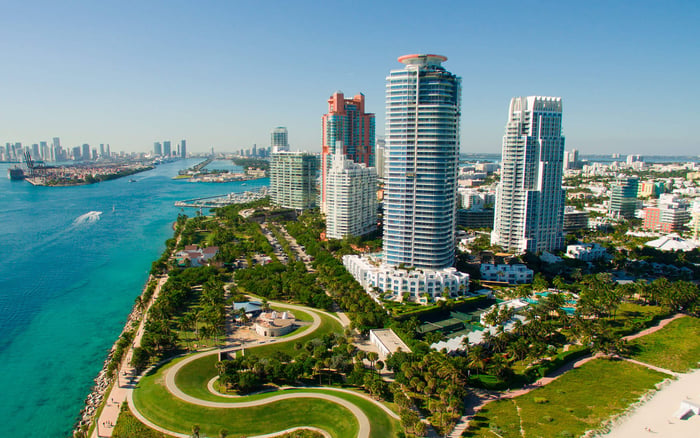
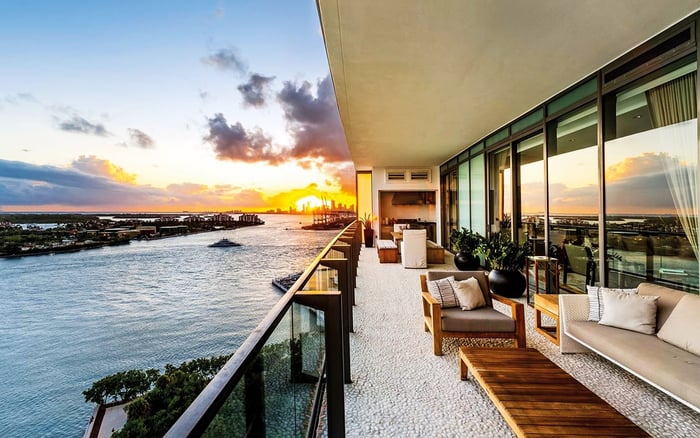
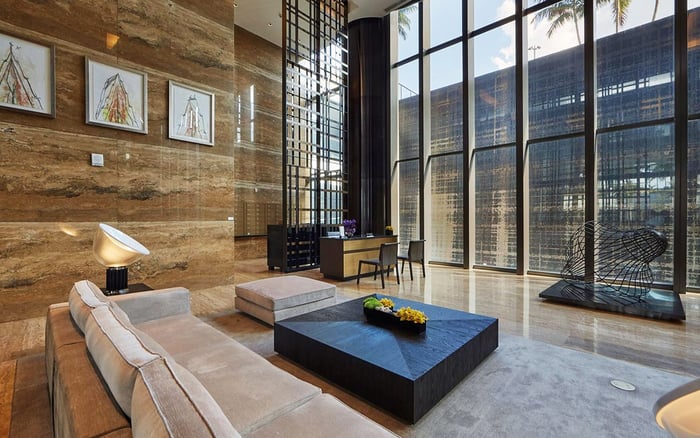
A discreet buyer’s framework for evaluating Apogee South Beach’s advertised security features, verifying camera coverage with management, and clarifying how footage and incident records are preserved.
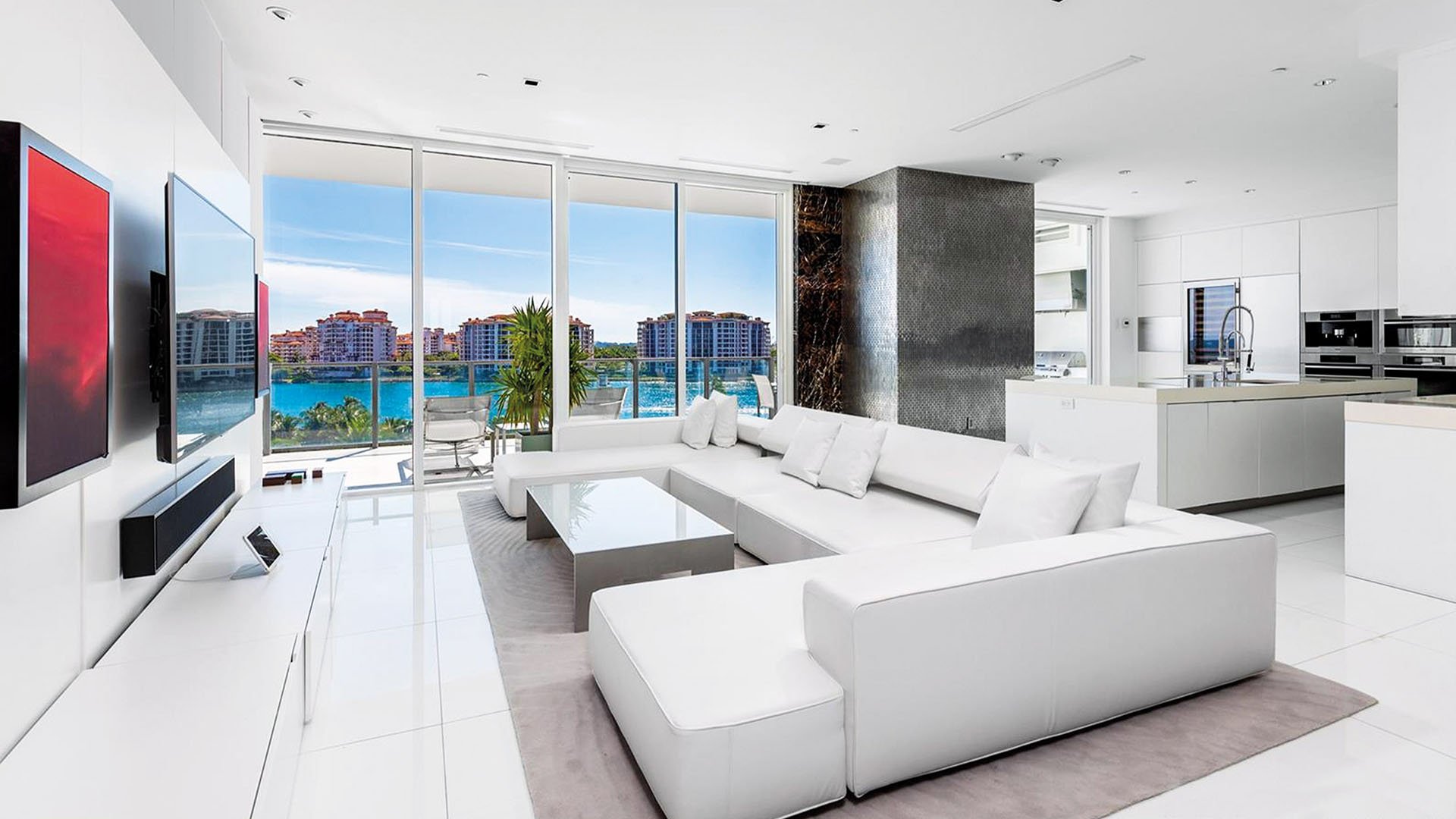
At Apogee South Beach, at 800 S Pointe Drive, Miami Beach, FL 33139, a buyer’s review should extend beyond the residence itself. Privacy, arrival routines and incident handling deserve the same disciplined attention as the floor plan. The objective is not to demand visibility into every private space, but to understand how access, observation and documentation work together.
Advertised features include 24-hour security, a secured entrance, concierge service, valet, controlled access and a security guard. These descriptions identify the services offered-not the number of cameras, their fields of view or their current operating condition.
No building-specific camera count, coverage map, confirmed blind spot, footage-retention period or incident-log retention schedule is established here. These are matters for confidential review with management, not assumptions to carry into a purchase.
Begin by distinguishing three functions: controlling entry, observing activity and preserving evidence. A secured door may regulate passage without establishing that a usable image is recorded. A concierge’s presence does not, by itself, establish continuous camera monitoring.
Advertised card or code access leaves important questions open. Ask management how resident, guest, vendor and staff permissions differ, how credentials are withdrawn and whether entry events are logged. Request an explanation of visitor authorization and after-hours escalation without seeking sensitive codes or operational vulnerabilities.
Keyless fingerprint door entry is also advertised. Verify the equipment currently installed in the particular residence, its working condition and the procedure for transferring control at closing. An advertised AMX interactive smart panel provides access to security, valet, spa and other building services. That description does not assure residents access to surveillance footage.
For a buyer also considering Continuum on South Beach, apply these distinctions to each property independently. Shared terminology is not evidence of equivalent systems or procedures.
Ask for a confidential walkthrough or written coverage summary addressing vehicle and pedestrian entrances, the lobby, elevator approaches, garage routes, amenity transitions and residential corridors. Management may reasonably prefer a controlled explanation to distributing detailed camera locations. The goal is to understand the protection afforded to ordinary daily movements, not to acquire an unrestricted surveillance blueprint.
For each relevant zone, ask whether activity is monitored live, recorded or both. Clarify whether recording is continuous or event-triggered, and whether lighting, glare or obstructions affect useful identification. Ask how faults are detected and addressed; a visible camera should not be assumed to be functioning.
Treat “blind spot” as a question, not a finding. Ask management whether any relevant transitions fall outside intended coverage and how staffing or access controls address them. There is no established basis here for identifying an actual blind spot at Apogee. Keep the evaluation private, and avoid capturing or circulating images of residents.
The advertised private, air-conditioned two-car garage for each owner deserves particular attention: it is both an amenity and part of the arrival sequence. Descriptions of secured garages or parking do not establish recording within a private enclosure or along every route connecting parking to the residence.
Ask management to explain the handoffs between vehicle admission, valet custody, garage access and elevator entry. Clarify which steps generate records and who handles an access discrepancy or a reported vehicle-damage concern. Focus on accountability rather than requesting patrol routes or precise staffing positions.
An advertised secure elevator likewise leaves floor restrictions, credential technology and elevator-camera coverage unresolved. Ask what a resident credential permits and how guests or service personnel reach an authorized destination. Security patrol is also advertised, but that description does not establish its frequency or operating scope.
Footage retention and incident-record retention are separate questions. A recording may follow one storage policy, while an incident entry, access event or associated correspondence follows another. Ask for the applicable schedule for each category rather than accepting a single general answer about how long “security records” remain available.
For video, request the actual retention period by camera or zone where differences exist. Clarify whether routine overwrite is automatic, who can preserve a relevant segment and what information an owner must provide to initiate that process. Ask how management acknowledges a preservation request and identifies the person responsible for following through.
For incident records, ask what triggers an entry, how events are classified and whether supporting footage or access data is associated with it. Clarify storage location, authorized access and whether access or export activity is documented. These are requests for policy confirmation, not descriptions of Apogee’s established practices.
A useful written response should distinguish ordinary retention from incident-specific preservation. It should also explain how to request relevant material, including privacy review and any applicable restrictions. Do not assume that ownership provides unrestricted access to recordings involving other residents.
Advertised amenities include a spa, fitness center, outdoor party pavilion and bayfront infinity-edge lap pool. Include their approaches and transitions in the management discussion, while distinguishing between supervising access and recording private activity.
Ask whether audio is recorded and what rules govern owner-installed cameras, including devices facing shared corridors. Neither policy is established here. Clarify whether a resident’s device requires approval and how concerns about neighboring residents’ privacy are resolved.
For someone weighing Five Park Miami Beach alongside Apogee, compare the clarity of each property’s answers rather than assuming a ranking of surveillance capability. A discreet residential experience calls for defined boundaries as well as dependable procedures.
Before completing diligence, organize management’s responses into three categories: confirmed current practices, unresolved questions and items requiring residence-specific verification. Have the appropriate adviser review access and disclosure questions; do not treat requested documents as automatically available to a prospective buyer.
Municipal crime statistics provide citywide context, not Apogee’s internal incident history. They cannot establish that the building has had no incidents or demonstrate the performance of its security arrangements. Request whatever appropriately redacted building-level information management can lawfully share, and understand its scope before drawing conclusions.
The strongest purchase decision rests on more than reassuring vocabulary. It requires a clear account of how entry is controlled, relevant activity is documented, records are preserved and resident privacy is respected.
For a considered approach to South Florida luxury ownership, explore MILLION.
If branded residences are on your mind — as a home or as an allocation — we would be glad to share what we are seeing, privately.
Begin a quiet conversationApogee South Beach is located at 800 S Pointe Drive, Miami Beach, FL 33139.
Yes, property marketing advertises 24-hour security and a secured entrance. These descriptions do not establish specific camera coverage or current operating condition.
No building-specific camera count or coverage map is established here. Request a confidential coverage explanation from management.
No confirmed blind spot is established here. Buyers should ask management about intended coverage and any transitions addressed through other controls.
The advertised AMX panel provides access to security, valet, spa and other building services. That description does not establish access to surveillance footage.
Yes. Although keyless fingerprint door entry is advertised, buyers should verify the target residence’s installed equipment, working condition and control-transfer procedure.
No. The advertised secure-elevator feature does not establish floor permissions, credential technology or elevator-camera coverage.
A building-specific retention period is not established here. Ask management for the actual schedule by camera or zone and the incident-preservation procedure.
Yes. Request separate policies for footage, incident entries and access records, including who may preserve or release relevant material.
No. Municipal statistics provide broader context and cannot establish the building’s internal incident history or the effectiveness of its security systems.