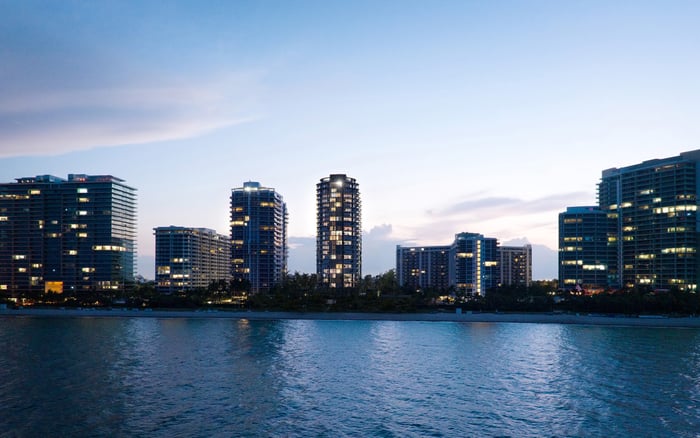
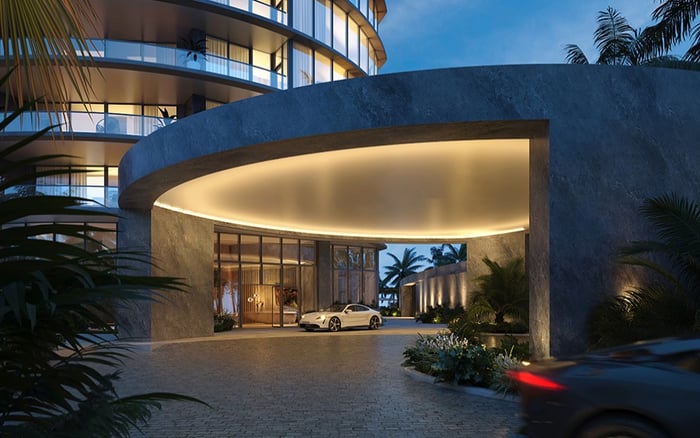
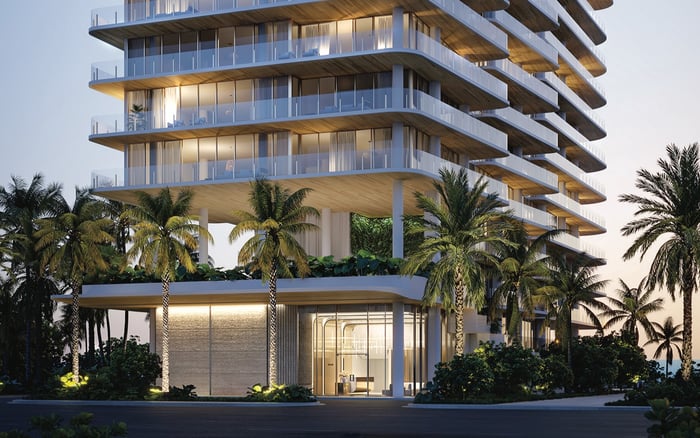
Rivage Bal Harbour anchors a family-office parking review alongside Ocean House Surfside and The Delmore Surfside. Five diligence priorities frame the comparison, but a verified five-project ranking is not established.
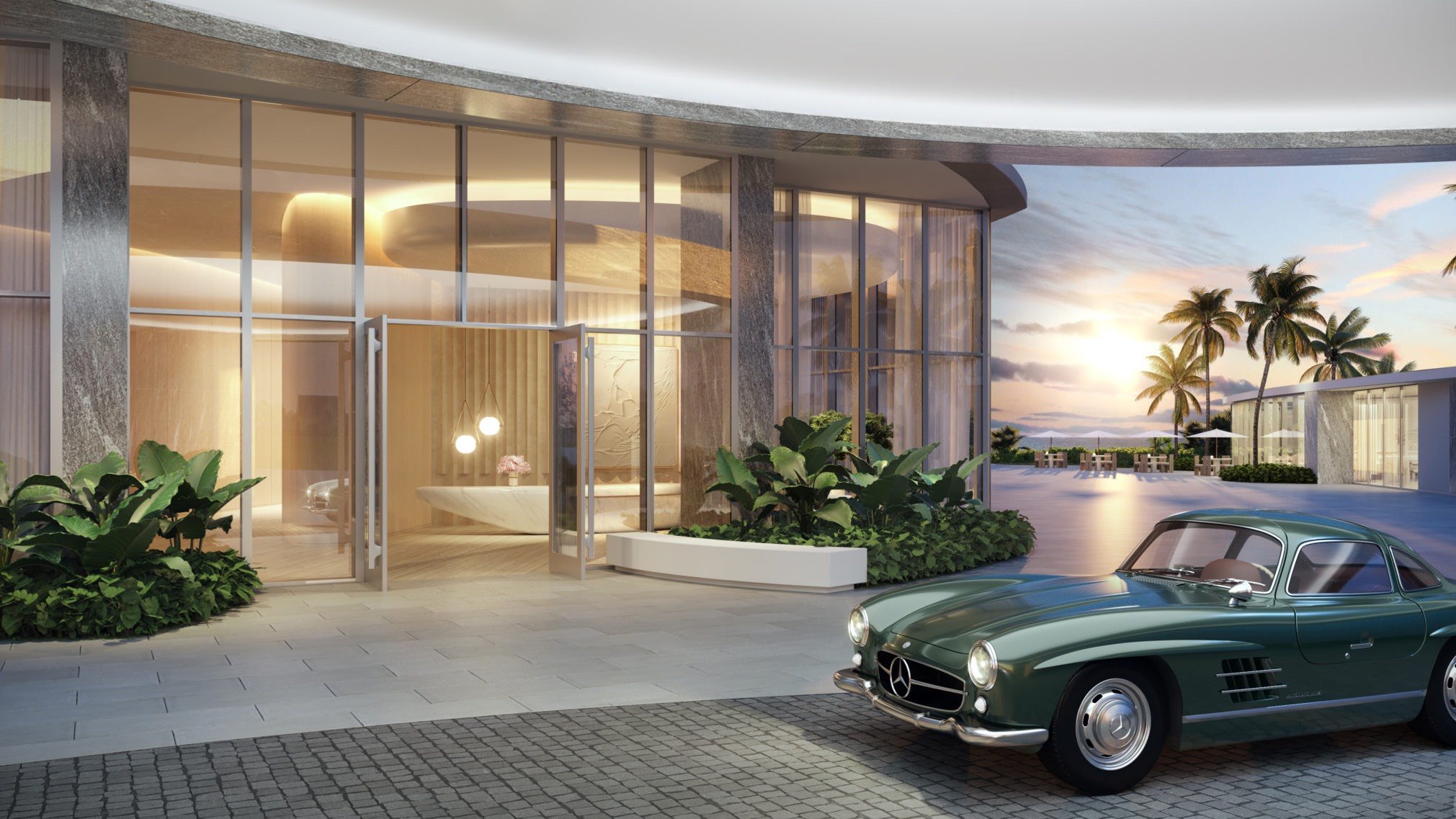
For a family office evaluating Bal Harbour and Surfside, parking warrants the same precision as residence selection. A beautiful arrival court is not a parking entitlement, and attentive valet service cannot replace a defined allocation. The essential questions concern control: which vehicles may remain on site, who can access them, which services are compulsory, and how visitors are accommodated.
These distinctions matter when principals, relatives, household staff, and guests arrive independently. An acquisition brief should define those patterns before comparing buildings. Separate everyday resident vehicles from occasional visitors, and distinguish overnight parking from a brief drop-off. This translates an attractive amenity into a requirement that counsel and the acquisition team can test.
Rivage Bal Harbour provides a concrete starting point. Residence-specific parking rights, mandatory valet costs, and dedicated guest capacity require confirmation before an acquisition recommendation. The discussion covers three project candidates and five diligence priorities; it does not establish five verified active choices or a comparative parking ranking.
Rivage Bal Harbour
Rivage is a 56-residence, 25-story oceanfront condominium in Bal Harbour, identified as under construction. Related Group and Two Roads Development are its developers, and Skidmore, Owings & Merrill is its architect. These details identify a candidate for family-office review-not proof of superior parking arrangements. Current construction status should be reconfirmed.
The decision should turn on the declaration, parking-space schedule, approved garage plans, and operating rules. Do not assume a private garage, a particular space allocation, or a fixed valet obligation. Reconfirm the completion date rather than treating it as a settled planning assumption. Approval on parking grounds should remain contingent on documentation.
Ask counsel to distinguish deeded parking, assigned parking, private-garage rights, and valet access. These terms are not interchangeable. The relevant documents should explain what accompanies the residence, what can change, and whether transfer or use restrictions apply.
For each proposed purchase, request a written schedule identifying the spaces and their relationship to the residence. Compare it with the garage plans and transaction documents. Confirm whether the household can access vehicles directly or whether retrieval requires an operator. If additional parking is discussed, establish its contractual basis rather than relying on a sales conversation.
Neighborhood character cannot establish an individual residence's rights. For a family office, the standard is straightforward: every parking assumption in the acquisition brief should have a corresponding document or written clarification.
Valet can be a welcome layer of service. The financial question is whether its obligations are defined well enough to support an ownership budget. Request the applicable charges, the services they cover, and the circumstances in which additional fees may apply. Confirm whether participation is mandatory and whether obligations differ for residents, household staff, or visitors.
Separate service availability from service requirements. Ask about operating hours, after-hours access, retrieval procedures, and key handling. Have counsel review liability provisions and restrictions on who may collect a vehicle. These are questions to resolve, not features to infer from a building's positioning.
When considering Ocean House Surfside, request the same written terms before drawing conclusions about valet convenience or cost. A project name alone establishes neither construction timing nor the parking arrangement available with a particular residence.
A welcoming entrance and an accommodating service team do not establish dedicated guest-vehicle capacity. Request the guest-space inventory and the rules governing access, reservations, validation, overnight stays, and competing demand. The question is not simply whether visitors can arrive, but whether their vehicles can remain under the conditions the household requires.
Use a realistic visit scenario: principals in residence, relatives staying overnight, and invited guests arriving separately. Request a written explanation of how that scenario would be handled, including applicable charges or restrictions. This exercise calls for the buyer's actual needs, not invented occupancy assumptions.
Keep nearby retail parking outside the residence calculation. Nearby convenience is distinct from an enforceable residential entitlement and should not count toward a condominium's resident allocation or dedicated guest inventory.
Assess a parking allocation against the household's vehicles, rather than simply counting spaces. Request the applicable oversized-vehicle restrictions and confirm that the garage plans support the intended use. Where dimensions or access conditions matter, seek a project-specific written answer instead of assuming compatibility from marketing imagery.
EV rights warrant separate attention. Ask whether charging is permitted, how access is allocated, and which installation or operating approvals would be required. An available space is not evidence of a charging entitlement. Also establish whether staff-driven vehicles are subject to different access or registration rules.
For a residence under consideration at The Delmore Surfside, the same vehicle-by-vehicle exercise can guide questions submitted to the project team. It is a diligence framework, not a claim that a particular garage configuration, charging provision, or service policy is available there.
For an active project, review parking alongside construction and delivery planning. Ask which plans govern the proposed allocation, how changes would be communicated, and when final operating rules will be available. The purchase decision should distinguish documented commitments from details that remain subject to confirmation.
Rivage's stated construction status makes timing relevant, but a delivery year should not be assumed here. Reconfirm current status and completion expectations before coordinating a household move or making dependent arrangements. Apply the same discipline to the start of valet operations and the availability of resident and guest access.
The most useful comparison is a residence-level schedule with separate fields for parking rights, mandatory valet costs, guest capacity, vehicle restrictions, and delivery commitments. Flag unresolved terms for follow-up rather than substituting neighborhood expectations. An elegant arrival experience can complement ownership, but it cannot resolve an ambiguous entitlement.
For family offices, the strongest choice is the residence whose documented arrangements fit the household without relying on discretionary exceptions. A complete five-project selection requires additional verified candidates and comparable parking documentation; the project references here do not establish that ranking.
Explore residential opportunities with MILLION and make documented parking requirements part of your acquisition brief.
If branded residences are on your mind — as a home or as an allocation — we would be glad to share what we are seeing, privately.
Begin a quiet conversationRivage Bal Harbour is located at 10245 Collins Avenue in Bal Harbour.
Rivage is a 56-residence oceanfront condominium in a 25-story tower.
Related Group and Two Roads Development are its developers. Skidmore, Owings & Merrill is its architect.
Rivage is identified as under construction. Current construction status should be reconfirmed before making acquisition or relocation plans.
No; it discusses three project candidates and five parking diligence priorities. A five-project ranking requires additional verified candidates and comparable documentation.
Residence-specific parking capacity, mandatory valet costs, and dedicated guest inventory require written confirmation before a parking-based recommendation.
Request the declaration, parking-space schedule, approved garage plans, and guest-vehicle rules. Review valet charges, access restrictions, and liability provisions separately.
No; deeded spaces, assigned parking, private garages, and valet access require separate confirmation of the rights associated with the residence.
Nearby retail parking should not be counted as a condominium's resident allocation or dedicated guest inventory. Convenience does not establish a residential entitlement.
Confirm guest-space inventory, overnight rules, validation, and applicable charges. Establish EV rights separately rather than assuming a parking space includes charging access.