A waterfront address can suggest effortless boating, but it does not establish a residence-level right to dock a vessel. This buyer-focused guide distinguishes marina access from slip ownership, explains transferability structures, and frames bridge clearance as a route-specific technical inquiry at Maison D’Or and Shorecrest.
For yacht owners considering West Palm Beach, a waterfront residence is only the beginning of the boating analysis. Intracoastal Waterway views, direct water access, and even a private dock remain distinct from the legal right to keep a particular vessel in a particular slip. That distinction is central when comparing Maison D'Or South Flagler with Shorecrest Flagler Drive West Palm Beach.
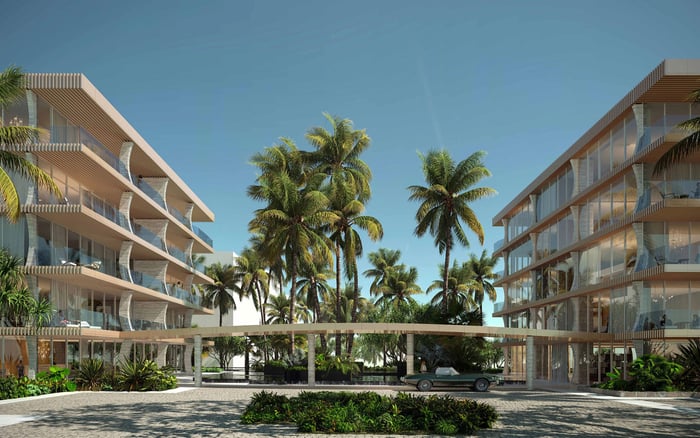
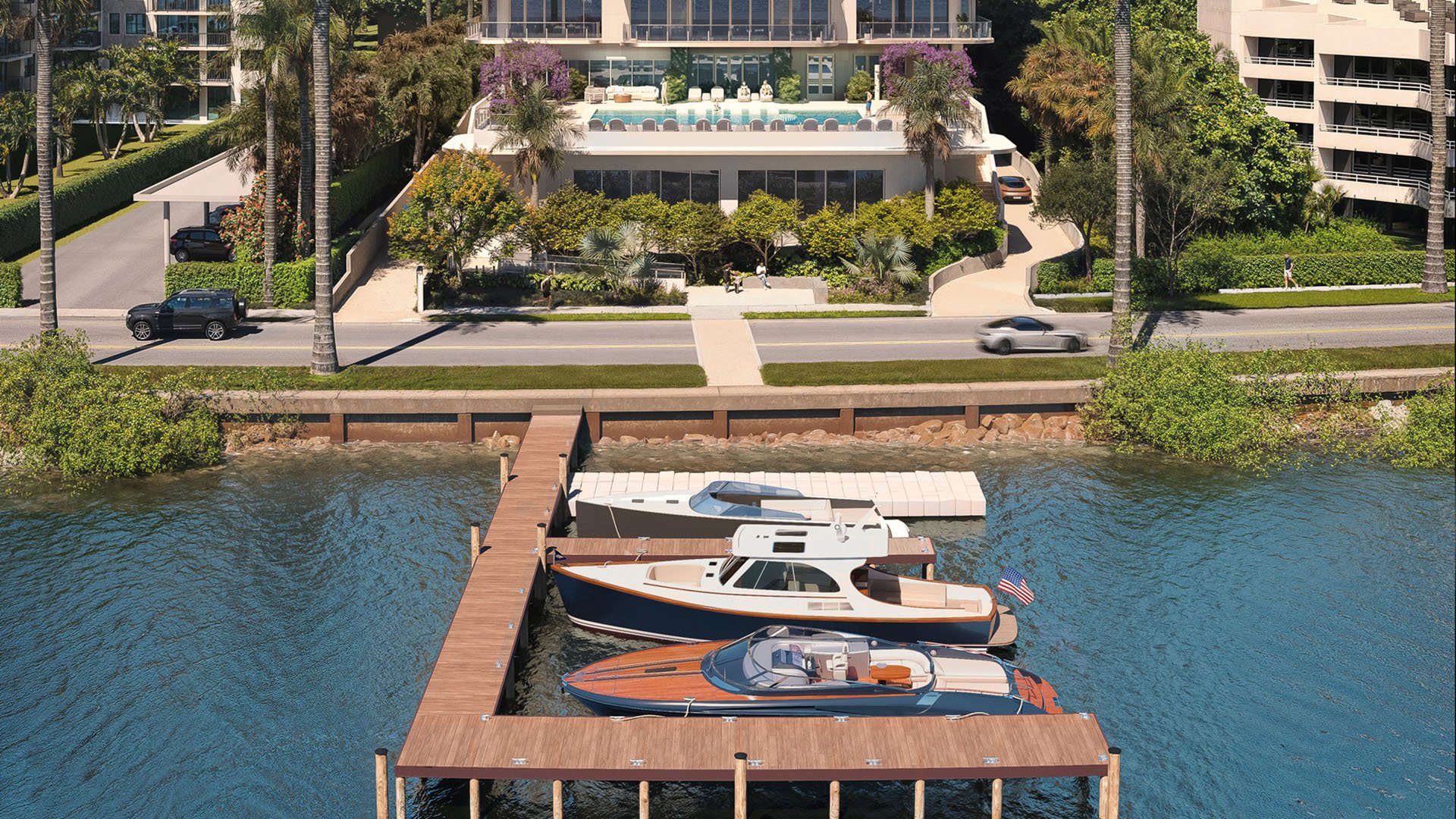
Maison D’Or is planned for 3705 South Flagler Drive, on a 1.4-acre waterfront site along the Intracoastal, across from Palm Beach and the Mar-a-Lago Club. The development expressly includes direct water access through a newly constructed private boat dock and slips. The planned dock is described as accommodating as many as four vessels.
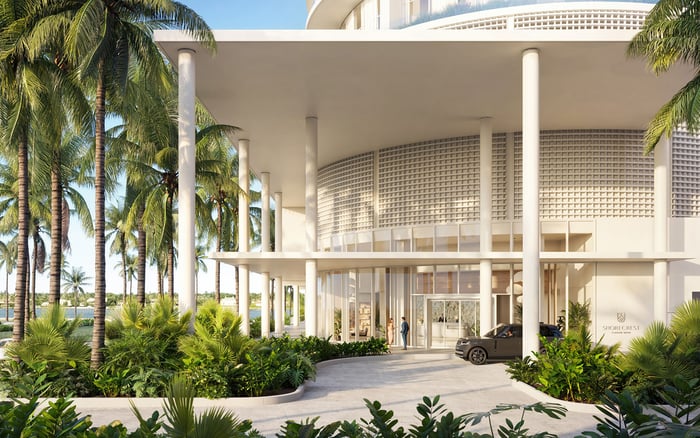
Shorecrest promotes direct Intracoastal access and proximity to Palm Beach Island. It does not, however, state that every residence includes a deeded slip, an assigned slip, or a transferable marina interest. In both cases, the purchase inquiry must move beyond amenity language to the governing documents.
Waterfront access is a lifestyle promise, while a slip is a legal and operational right.
Of the two developments, Maison D’Or presents the more explicit boating amenity. The stated private dock and slips provide a meaningful starting point for buyers seeking immediate Intracoastal access. Yet the language does not establish that any residence receives an exclusive slip, that a slip is deeded, or that its use automatically follows the residence at resale.
The capacity of as many as four vessels also requires context. Vessel count alone does not reveal slip dimensions, beam limits, maximum length, water depth, lift compatibility, utility connections, or how limited dock capacity will be allocated among owners. Nor does it answer whether priority attaches to selected residences, follows an association process, or remains subject to management discretion.
For buyers, the practical question is not simply whether the property has a dock. It is whether the intended residence carries an enforceable, appropriately dimensioned right that accommodates the buyer’s boat and retains value over the anticipated ownership horizon.
Shorecrest’s direct Intracoastal access enhances the appeal of its setting, but access should not be interpreted as proof of private slip ownership. The description does not confirm a deeded, assigned, or transferable slip for each residence. Until the condominium and dock documents establish otherwise, buyers should treat marina entitlement as an open diligence item rather than an included property right.
This distinction is especially important when comparing Shorecrest with other pre-construction choices along the corridor, including Forté on Flagler West Palm Beach and Alba West Palm Beach. The correct comparison is not which presentation features the strongest nautical imagery. It is which residence, if any, includes documented dockage suited to the buyer’s vessel, use pattern, liability expectations, and resale plan.
A deeded slip is generally recorded with the condominium residence or as a separate parcel. It will usually convey upon sale, subject to the controlling documents and any restrictions. Buyers should confirm the legal description, title treatment, taxes if separately assessed, and whether the slip can transfer independently of the residence.
An assigned slip is different. The association may control allocation, and the assignment may be permanent, renewable, revocable, or subject to eligibility rules. Written confirmation should establish whether the assignment is guaranteed to the specific residence, whether the association can substitute another berth, and what occurs upon resale.
Licensed or leased dockage is principally contractual. A lease may run annually or for multiple years and may not transfer with the condominium. A license can be personal, conditional, or terminable under marina rules. Wait-listed access or dockage subject to association discretion offers even less certainty, despite the building’s direct water access.
For either development, the contract file should identify the precise category: deeded, assigned, licensed, leased, wait-listed, or discretionary. The economic terms matter as well. Buyers should examine initiation charges, recurring fees, utilities, insurance obligations, maintenance allocations, special-assessment exposure, guest use, charter restrictions, and remedies if the berth becomes temporarily unavailable.
Before signing, request the declaration, condominium documents, survey or plat, dock permits, marina rules, fee schedules, and any assignment, license, or lease agreement. These materials should identify the number and dimensions of slips, allocation process, vessel limitations, transfer conditions, and party responsible for dock repair and replacement.
A complete review should also test exclusivity. Can another owner use the berth during an absence? May the association relocate the boat? Is subleasing permitted? Does a sale require association approval of the incoming vessel owner? Can the right pass to a purchaser, tenant, trust, or related entity? The answers determine whether dockage functions as real property, a limited common element, or a revocable amenity.
The strongest buyer’s-guide principle is simple: obtain every material marina representation in writing. Renderings and amenity descriptions may frame the lifestyle, but recorded instruments and executed agreements govern ownership, allocation, cost, and transfer.
Neither project specifies a project-specific bridge-clearance figure. That omission cannot be resolved by assuming an Intracoastal berth provides unrestricted passage. Clearance analysis must begin with the intended berth-to-inlet route and the vessel’s actual air draft, including antennas, outriggers, towers, hardtops, and other elevated equipment.
For every fixed or bascule bridge along that route, a marine professional should verify vertical clearance at mean high water, opening schedules, operating restrictions, and tidal effects. Local conditions are bridge-specific, and even nearby berths can interact differently with a particular route.
Depth warrants equal scrutiny. Buyers should confirm controlling depths at the dock and along the route, tidal variation, shoaling exposure, and any approach limitations related to the vessel’s draft. Beam, length overall, turning room, current, and permitted mooring configuration can be just as decisive as vertical clearance.
A thoughtful offer can make satisfactory review of the relevant documents, permits, physical dimensions, and navigational conditions part of the buyer’s diligence. The residence, dockage right, and boating route should be evaluated as one integrated ownership proposition. If any element remains discretionary or technically incompatible, the buyer can price that uncertainty rather than discover it after closing.
For Maison D’Or, the key task is converting a clearly advertised dock amenity into a verified residence-level right. For Shorecrest, the first task is establishing whether a residence-level marina entitlement exists at all. In both cases, transferability and navigability are as important as the water outside the windows.
For discreet advice on South Flagler waterfront opportunities and document-focused acquisition strategy, connect with MILLION.
If branded residences are on your mind — as a home or as an allocation — we would be glad to share what we are seeing, privately.
Begin a quiet conversationThe published dock language does not establish that every residence receives a deeded, exclusive, or automatically transferable slip.
The planned dock is described as accommodating as many as four vessels, subject to confirmation in the project documents.
No. Its public materials promote direct Intracoastal access but do not state that each residence includes a deeded or assigned slip.
A deeded slip is generally recorded with the condominium residence or as a separate parcel and usually conveys when the property is sold.
An assigned slip is allocated under association rules, which may determine whether it is guaranteed, relocatable, or available to a future purchaser.
Not necessarily. A leased slip may be annual or multiyear and may not transfer when the residence is sold.
Request the declaration, survey or plat, condominium documents, dock permits, marina rules, fee schedules, and any slip agreement.
No. Waterfront location and direct water access do not by themselves create a private, exclusive, or transferable slip right.
Test every bridge on the intended berth-to-inlet route against the vessel’s actual air draft, mean-high-water clearance, and applicable opening schedule.
A route can offer sufficient overhead clearance yet remain unsuitable because of controlling depth, tides, shoaling, or approach limitations.