A collector-focused plan for moving fine art from San Francisco to an Edgewater residence, coordinating long-haul transport, building access, climate protection, insurance, and final installation.
Moving an art collection from San Francisco to Edgewater is not simply a matter of choosing a truck and an arrival date. A more dependable approach divides the move into controlled phases: condition review and packing, long-haul transport, secure South Florida staging, scheduled last-mile delivery, and installation within the residence.
Air and road transport can be coordinated to suit timing, scale, and risk. For many residential moves, however, the decisive constraint is not the cross-country leg. It is the narrow delivery window imposed by a high-rise loading dock and freight elevator.
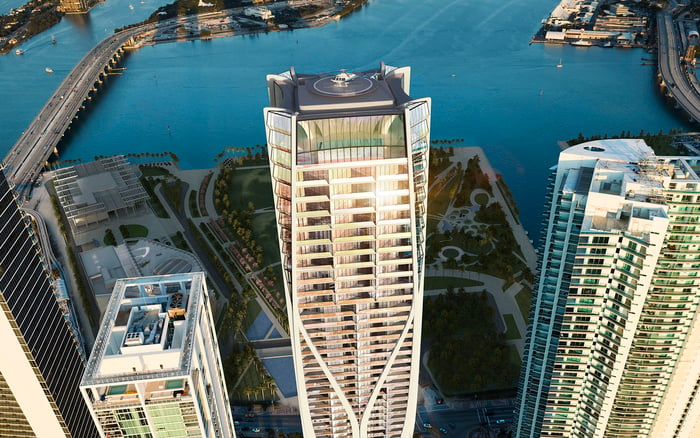
That distinction matters whether the destination is Aria Reserve Miami, EDITION Edgewater, or another tower in the neighborhood. The plan should follow the building's current move packet and written management instructions. A building name alone never establishes its rules.
The last mile should be scheduled around the residence, not left to the long-haul timetable.
A direct, uninterrupted itinerary may appear elegant, yet it can expose the collection to avoidable waiting if the truck reaches Miami outside the building's approved access period. A more resilient chain sends the works to a secure South Florida facility first, then releases them for a separate local delivery aligned with the tower's reservation.
This staging model creates room for schedule changes, corrected access documents, or staggered installation. Before pickup in California, the collector should obtain written confirmation of storage conditions, custody transfers, monitoring, insurance coverage, and contingency arrangements.
The transport brief should identify every work, its packed dimensions, handling orientation, fragility, media, declared values where applicable, and installation sequence. Maintain a single chain-of-custody record across the long-haul carrier, staging facility, local crew, and installer. In a buyer's-guide context, this paperwork may seem operational, but it is central to protecting both the collection and the residence.
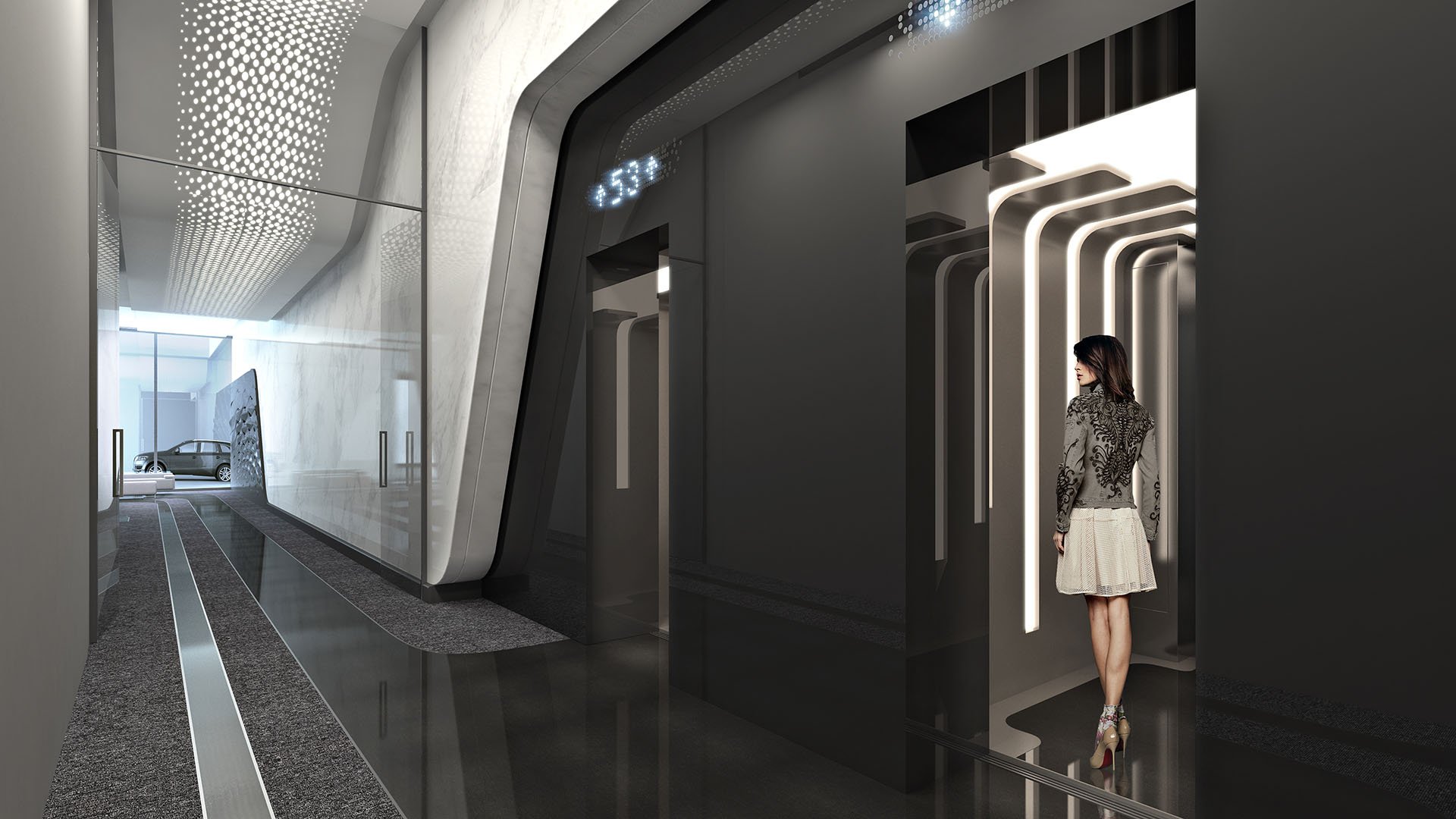
Many Miami high-rises direct oversized deliveries to a reserved freight elevator rather than a passenger elevator. Access periods, time limits, and weekend availability vary by building. As a planning target, obtain the move packet and request both the loading dock and freight elevator roughly three weeks before delivery.
Send the building's sample Certificate of Insurance to the carrier about two weeks before installation. That interval allows time to correct policy limits, required wording, or the names of additional-insured parties. An association may refuse access when a COI does not meet its specifications, even if the vehicle and crew are already scheduled.
Ask management whether one booking covers both dock and elevator, who supplies elevator padding, and whether a deposit, security officer, or dedicated building representative is required. Confirm truck-height restrictions, berth access, parking procedures, crew identification, protective-flooring standards, and rules for removing empty crates.
Residents considering The Cove Residences Edgewater or Villa Miami should request the applicable documents directly rather than carry assumptions from a neighboring property. Freight policies can differ within the same area and change over time.
Before booking transport, compare every packed crate with the freight elevator's door opening and cab dimensions, the loading dock, and the service corridors. For oversized works, the survey should continue from the truck berth through the service entrance, around every turn, across thresholds, through the unit doorway, and to the final wall or plinth.
The crate-not the unframed work-is the relevant object for clearance. Record its width, height, depth, weight, lifting points, and required orientation. A crate that fits inside an elevator cab may still fail at the entrance angle or a corridor turn. The installation team should also determine whether unpacking can occur safely inside the residence without placing vulnerable surfaces near tools or discarded packing materials.
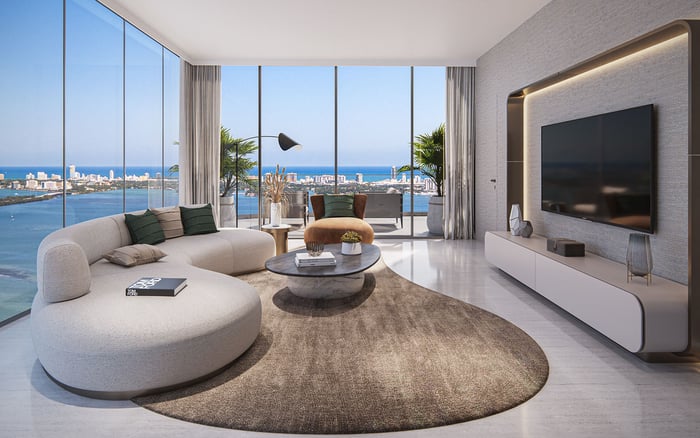
This is where design and architecture become practical logistics. Wall composition, ceiling height, glazing, lighting, circulation, and intended viewing distance may affect the order in which works enter and are installed. Sequence large pieces first when furnishings would later obstruct their route.
Reliable temperature control between 59°F and 77°F is a general planning range for art shipments. Mixed-media collections may call for a narrower target of 65°F to 70°F and 45% to 55% relative humidity. The appropriate specification still depends on each object's materials, condition, and conservation needs.
An air-conditioned vehicle alone is not sufficient. Packaging should buffer works from rapid environmental changes during loading, fuel stops, transfers, dock queues, and elevator delays. Effective crates limit air exchange and may incorporate insulation, desiccants, or hygroscopic materials to moderate shifts in temperature and humidity. Insulating quilts and surrounding non-sensitive cargo can add buffering, provided packing materials do not come into improper contact with vulnerable surfaces.
Miami's outdoor conditions make dock discipline especially important. Keep crates closed during delays, avoid leaving them in an exposed service area, and move them into a preconditioned interior before unpacking. If data loggers are appropriate, establish who supplies them, who reviews the readings, and what event triggers an escalation.
The delivery window should account for more than elevator travel. Allow time for unloading, route protection, condition checks, unpacking, installation, debris removal, and sign-off. The crew should know in advance whether crates will remain in the unit, return to storage, or leave during the same reservation.
At handoff, compare the works with their pre-shipment condition records before installation proceeds. Photograph relevant crate and object conditions, document custody, and note any environmental or scheduling exception. If the residence is not yet stable or trades remain active, secure staging may be preferable to bringing the collection into a changing interior.
A disciplined arrival protects the home's interiors as much as the art. It reduces lobby disruption, avoids improvised handling, and keeps installers focused on placement rather than access problems.
Before the collection leaves San Francisco, confirm the transport mode, pickup inventory, crate specifications, climate parameters, monitoring arrangements, staging facility, insurance responsibilities, and every custody handoff. In Edgewater, secure the move packet, dock and elevator reservations, approved COI, route measurements, security requirements, and written access confirmation.
Finally, circulate one schedule to the collector's representative, carrier, storage facility, building management, local handlers, and installer. Include decision-makers and contingency contacts. The objective is not merely punctual delivery. It is a controlled transition from one interior environment to another, with no uncertainty at the curb.
For discreet guidance on selecting an Edgewater residence suited to a considered collection, consult MILLION.
If branded residences are on your mind — as a home or as an allocation — we would be glad to share what we are seeing, privately.
Begin a quiet conversationUse distinct phases for packing, long-haul transport, secure South Florida staging, last-mile delivery, and installation. This keeps the condo access window separate from the cross-country schedule.
As a planning target, request both roughly three weeks before delivery. The building's current move packet and management instructions should always control.
Many Miami towers direct oversized deliveries away from passenger elevators. Art crates may therefore require a reserved freight elevator and approved service route.
Send it about two weeks before installation so there is time to correct limits, wording, and additional-insured parties.
Yes. Access may be refused if the Certificate of Insurance does not satisfy the building's required limits, language, or named parties.
Verify each packed crate against the truck berth, loading dock, service entrance, elevator door and cab, corridor turns, unit doorway, and installation location.
The article uses 59°F to 77°F as a general planning range. Individual works may need narrower parameters based on their materials and condition.
A mixed-media plan may use 65°F to 70°F and 45% to 55% relative humidity. Object-specific conservation requirements should determine the final targets.
No. Buffered crates that limit air exchange and moderate environmental swings remain important during loading, transfers, dock waits, and unloading.
Crates should remain closed during dock delays and be moved into a preconditioned interior before unpacking to reduce environmental exposure.