At The Lincoln Coconut Grove, security due diligence should follow the entire arrival sequence. Buyers should distinguish advertised services from operating procedures and confirm any private-elevator arrangement for their specific residence.

The most meaningful expression of residential privacy is not a camera or a staffed desk. It is the ability to move from the street to the residence with clear boundaries, discreet assistance, and predictable permissions. For buyers considering The Lincoln Coconut Grove, security deserves the same attention as the floor plan: evaluate the entire arrival sequence, not a collection of amenity labels.
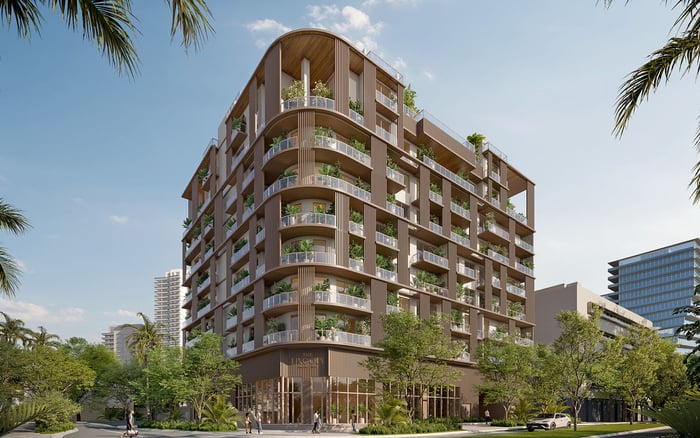
Located at 2650 Lincoln Avenue, Miami, FL 33133, the development comprises 48 residences in a building described as eight stories. That boutique scale provides context, not a security guarantee. Advertised amenities include 24/7 front desk service, night security, valet parking, and monitoring and surveillance systems. Those labels alone do not establish how visitors, vehicles, or elevator users will be authorized.
One distinction is essential from the outset: private-elevator access has not been established. Buyers should not assume that a dedicated elevator or private foyer serves every residence. It is a feature to verify for the intended home, not a promised amenity.
Arrival is where hospitality and access control first meet. With valet service advertised, buyers should request a walkthrough of the proposed vehicle handoff: where residents stop, how attendants recognize authorized users, and how a vehicle is released. These questions concern the planned service; they do not indicate a documented weakness.
Ask how the experience changes when a resident arrives on foot, uses a car service, or welcomes several guests. The objective is to establish who takes responsibility at each transition. A gracious welcome should leave no uncertainty about whether a visitor has permission to proceed beyond the arrival area.
For buyers also considering Arbor Coconut Grove, the same curb-to-door exercise provides a useful comparison framework without assuming equivalent staffing or security features. Compare the answers and supporting documents, not the language of the amenity descriptions.
Parking convenience and garage security are related, but not interchangeable. Residence 406 is described as offering doorman service, secured garage/parking, and security patrol. Those descriptions warrant follow-up about the intended arrangements; they do not establish a complete building-wide operating protocol.
Residence 205 is described as having one parking space, assigned parking, valet, and vehicle-number restrictions. Treat those details as residence-specific, not as evidence of every home's allocation. Before committing, confirm the parking rights attached to the exact unit, including whether assignment and use restrictions appear in the purchase documents.
Then examine the transition from parked vehicle to building interior. Ask how resident credentials are issued, how guest parking is authorized, and whether valet personnel and visitors have different permissions. Clarify how changes to household vehicles are recorded. A useful answer defines the authorization process rather than simply assuring buyers that parking is secured.
Read the advertised combination of 24/7 front desk service and night security precisely. It does not independently confirm round-the-clock staffing for every security function. Ask which role handles visitor screening, which responds to an access concern, and how coverage is maintained during breaks or competing demands.
Use ordinary household scenarios to make the conversation concrete: a dinner guest arrives early, a contractor needs access while the owner is away, or a delivery arrives during a busy check-in period. Request an explanation of resident approval, waiting arrangements, and escalation when authorization cannot be obtained.
Monitoring and surveillance systems are also advertised, but their coverage and access-control procedures have not been established. Buyers can request a high-level explanation of monitoring responsibility, recording retention, and privacy protections without seeking sensitive technical plans. Cameras and permission controls serve different functions; one should not be mistaken for the other.
The elevator deserves particular attention because its physical configuration and authorization rules are separate questions. First, establish the layout for the selected residence: where does the elevator open, who shares that landing, and what separates the arrival point from the home? Then establish who can authorize travel to that location.
If private-elevator access is represented during the sales conversation, request written, unit-specific confirmation and corresponding plans. Ask whether the description refers to a dedicated cab, a controlled destination, or a foyer arrangement. These terms are not interchangeable, and none is confirmed here for The Lincoln.
The same discipline applies when considering Four Seasons Residences Coconut Grove: evaluate each property's documented configuration independently rather than transferring an expectation from one address to another.
For The Lincoln, ask how approved guests, household employees, and service personnel would reach the residence-and how temporary permissions would end. Request a resident-facing explanation of emergency access and elevator outages as well. The goal is to understand both everyday privacy and the arrangements that preserve necessary access when normal service changes.
For an owner who travels frequently, authorization must remain manageable from a distance. Ask how management would handle a scheduled maintenance visit, a lost credential, or a change in household staff. Confirm who can approve entry and how the owner receives notice, rather than assuming the front desk will resolve every situation informally.
Private storage and on-site management are advertised amenities. Buyers should confirm how storage is allocated, who may access it, and which management responsibilities extend to owner assistance. Neither amenity establishes a particular custody or access procedure.
Delivery handling belongs in this discussion, too. Ask where items would be received and how collection would be authorized. Do not assume that a dedicated secured parcel room is part of the offering.
Evaluate these arrangements as proposed services and features, not as the performance of an operating condominium. Request current plans, applicable offering and purchase documents, proposed rules, and written clarification of any security-related representation material to the decision. Where an operating policy remains undecided, ask who will establish it and when.
A useful closing review should clarify five matters: parking entitlement, the arrival route, visitor authorization, residence-level access, and responsibility for exceptions. Have appropriate advisers review which commitments are documented and which remain proposals. This is not a demand for an impossible guarantee of safety. It is a way to judge whether specific, understandable arrangements support the intended privacy experience.
For a discreet perspective on your Coconut Grove shortlist, connect with MILLION.
If branded residences are on your mind — as a home or as an allocation — we would be glad to share what we are seeing, privately.
Begin a quiet conversationThe development is located at 2650 Lincoln Avenue, Miami, FL 33133, in Coconut Grove.
The development comprises 48 residences, and the building is described as eight stories. Its boutique scale does not by itself establish security performance.
Private-elevator access is not established here. Buyers should request written confirmation and plans for their specific residence.
Advertised amenities include 24/7 front desk service and night security. Buyers should clarify the responsibilities and staffing arrangements for each function.
No. Monitoring and surveillance systems are advertised, but their coverage and authorization procedures are not established here.
Ask how vehicle handoff, authorized retrieval, and guest arrivals would work. Confirm who is responsible as residents and visitors move from the curb into the building.
That allocation is not established for every residence. Residence 205 is described with one space, assigned parking, valet, and vehicle-number restrictions; confirm the rights attached to the unit being purchased.
Residence 406 is described as offering doorman service, secured garage/parking, and security patrol. Those labels do not establish a complete building-wide operating protocol.
Yes, both are advertised amenities. Buyers should confirm storage allocation, access permissions, and the scope of management responsibilities.
Request current plans, applicable purchase and offering documents, proposed rules, and written clarification of material security representations. Distinguish documented commitments from proposed operating policies.