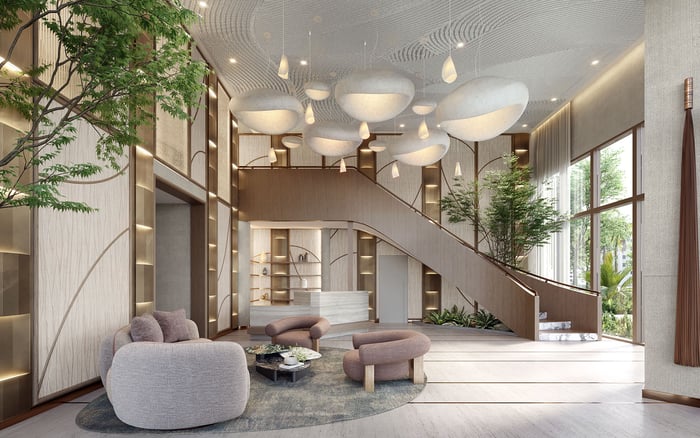
The Lincoln Coconut Grove’s planned wellness center invites a closer look at the practical terms of ownership. Here is what buyers should confirm about access, reservations, gratuities, outside practitioners, and after-hours service before treating the amenity as part of their daily routine.
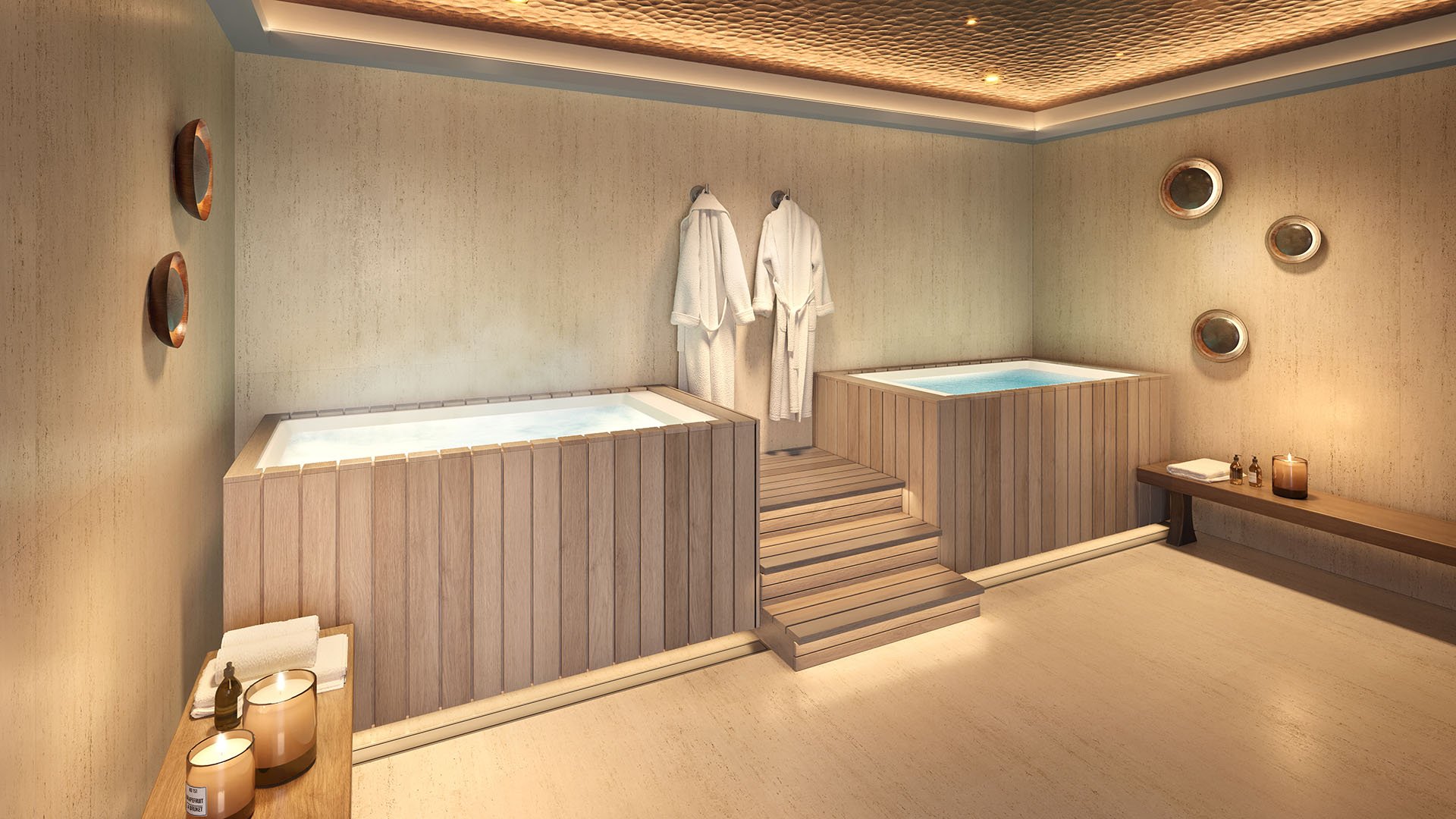
In a luxury residence, wellness has value when it fits the owner’s schedule. A sauna before an early departure, a plunge after dinner, or a treatment arranged around a weekend visit requires more than an amenity description. Each depends on operating rules, staffing, access, and cost.
At The Lincoln Coconut Grove, those distinctions deserve particular attention. The boutique condominium at 2650 Lincoln Avenue in Coconut Grove is under construction, with completion targeted-but not guaranteed-for the third quarter of 2028. Its amenities should be understood as planned, not operationally confirmed.
The central ownership distinction is simple: a spa-inspired residential wellness center is not a confirmed full-service spa. Buyers should evaluate the physical offering separately from expectations of bookable treatments or round-the-clock service.
The planned Zen spa-inspired wellness center includes a sauna, steam room, hot and cold plunge tubs, shower, powder room, and dressing area. At approximately 2,000 square feet, it suggests a setting for a personal wellness routine, but its features do not establish how that routine will be managed.
No treatment menu, massage rooms, spa operator, or treatment providers have been identified. Nor has it been established whether future practitioners would be condominium employees, independent contractors, or concierge-referred professionals.
For an owner, the distinction is practical. Access to a steam room is one service question; arranging a massage is another. The former does not establish the latter. Nor should the word “spa” be read as a promise of hotel-style appointment management, payment processing, or practitioner availability.
Daily operating hours for the sauna, steam room, and plunge tubs have not been publicly disclosed. Neither has a reservation requirement or a first-come, first-served arrangement. No resident spa-booking platform, treatment-booking procedure, cancellation policy, or appointment-duration limit has been disclosed.
A useful written inquiry should distinguish three matters: access to the wellness center, reservations for specific facilities, and appointments with a practitioner, if treatments are ultimately offered. Combining all three under “spa booking” risks an answer that addresses only one.
Ask whether residents will need advance reservations, whether guests may accompany them, and whether capacity limits or session lengths will apply. Request confirmation of how maintenance closures will be communicated and whether access controls will differ between staffed and unstaffed periods. These are questions to clarify, not established project policies.
Buyers also considering The Well Coconut Grove should make the same distinction between physical amenities and operating commitments. A useful comparison rests on written terms for each property, not the assumption that wellness language implies identical services.
No spa gratuity policy has been disclosed for The Lincoln. It has not been established whether tips would be optional, included, or automatically added. Tip-payment methods, owner-account charging, minimum gratuities, administrative fees, and tip pooling also remain unspecified.
Before asking what to tip, establish whether a treatment service will exist and who will provide it. If a practitioner is independently retained, ask who sets the price and receives payment. If management arranges the appointment, ask whether it is simply making an introduction or administering the transaction.
Then request a clear distinction between the treatment price, any service or administrative charge, and any gratuity. A charge labeled “service” should not be assumed to be a tip without written clarification. Likewise, the absence of a disclosed gratuity policy does not establish that tipping is prohibited or unnecessary.
The goal is discretion through certainty: owners should know the complete payment arrangement before an appointment, rather than resolve it at the end of a treatment.
Planned services include a 24/7 front desk, nighttime security, monitoring, and surveillance, along with valet parking and on-site management and maintenance. None establishes 24-hour wellness-center access or an after-hours treatment program.
Overnight, early-morning, weekend, holiday, and same-day treatment availability remain unconfirmed. Buyers should therefore ask separately about facility hours and practitioner hours. Someone may be at the front desk without a treatment provider being available or the wellness center being open.
An owner comparing Four Seasons Residences Coconut Grove should likewise avoid transferring service expectations from one development to another. Each residence requires its own written confirmation of availability, booking lead times, and any off-hours surcharges.
For The Lincoln, request precise answers for the periods that matter to your routine. “Evenings available” would not establish whether a late arrival, holiday visit, or short-notice request could be accommodated.
For an owner who uses the residence intermittently, a compressed visit makes scheduling particularly consequential. Yet after-hours in-residence treatments remain unconfirmed, and access, registration, licensing, and insurance requirements for outside practitioners have not been disclosed.
If bringing a preferred professional is important, request the proposed visitor and vendor rules before treating that arrangement as part of the ownership experience. Ask whether appointments may take place in the residence, whether an outside provider may use the wellness center, and what documentation management would require.
Also clarify who would authorize entry outside normal management hours. Front-desk coverage alone does not answer that question. These inquiries should establish both permission and procedure, without assuming outside treatments will be allowed or prohibited.
The project’s disclaimer allows for plans, features, or amenities to be provided at additional cost. It does not establish specific wellness fees or what would be included in common charges. Buyers should therefore request the financial terms alongside the access rules.
The ownership file should cover operating hours, reservation procedures, treatment operators if any, pricing, cancellation terms, gratuities, guest access, outside-practitioner requirements, and maintenance closures. Verify those details against the condominium declaration, budget, public offering statement, management agreement, amenity rules, and resident handbook when available.
Keep planned features separate from confirmed operating commitments. An undisclosed policy is not proof that a service is unavailable, free, or included. It is a matter to resolve before relying on it.
The Lincoln’s planned wellness facilities offer a clear physical proposition. The remaining ownership questions concern how, when, and at what cost residents will use them. For buyers whose routines depend on early access, predictable appointments, or discreet payment arrangements, those details deserve the same attention as the amenity itself.
For a considered approach to Coconut Grove ownership, explore MILLION.
If branded residences are on your mind — as a home or as an allocation — we would be glad to share what we are seeing, privately.
Begin a quiet conversationThe boutique condominium is planned for 2650 Lincoln Avenue, Miami, Florida 33133, in Coconut Grove.
The building is under construction, so its wellness amenities should be treated as planned rather than operationally confirmed.
Completion is targeted for the third quarter of 2028. That target is not a guaranteed delivery date.
The planned facilities include a sauna, steam room, hot and cold plunge tubs, shower, powder room, and dressing area.
No full-service spa is confirmed. A treatment menu, massage rooms, named operator, and treatment providers have not been identified.
Whether access will require reservations or operate on a first-come, first-served basis remains unconfirmed. A booking platform and cancellation rules are also not publicly disclosed.
No spa gratuity policy has been disclosed. Buyers should confirm whether tips would be optional, included, or automatic and whether service charges are separate.
Planned front-desk coverage does not establish 24-hour wellness access. Daily wellness operating hours have not been publicly disclosed.
After-hours and in-residence treatments remain unconfirmed. Outside-practitioner access, registration, licensing, and insurance requirements are also unspecified.
Specific wellness fees and inclusions are not established. Amenities may carry additional costs, so buyers should request written pricing and budget clarification.