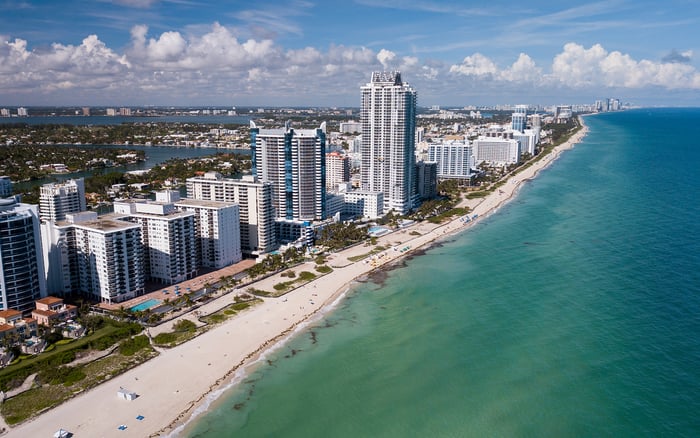
An Edgewater waterfront purchase deserves scrutiny beyond the residence itself. Review shoreline ownership, seawall condition, dredging permissions, association funding and insurance early to understand both the lifestyle and its obligations.
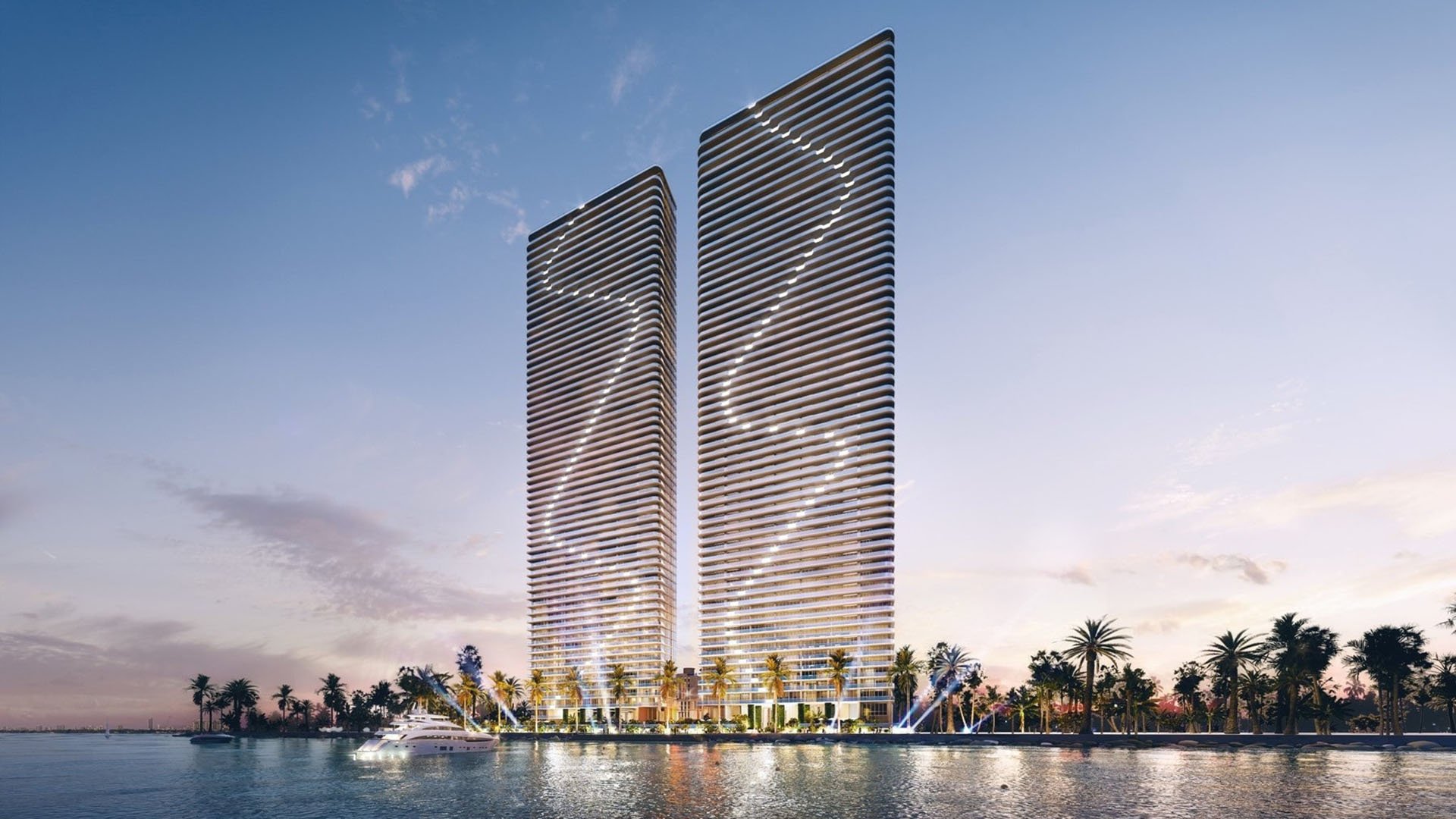
In Edgewater, the appeal of a waterfront residence is immediate: the horizon, the light, the relationship between home and bay. Protecting that purchase requires a less visible review. The shoreline has an ownership structure, a maintenance history and a regulatory framework that warrant as much attention as the floor plan.
The central question is not simply whether a seawall looks sound. It is who owns it, who must maintain it, what work is permitted and how that work would be funded. Insurance adds another layer: a property policy is not a complete answer to waterfront exposure.
For a buyer considering Aria Reserve Miami, these questions belong in the initial document review. They provide a framework for evaluating a purchase, not a statement about that project's condition, obligations or coverage. The same distinction applies to every residence discussed here.
In the City of Miami, owners must maintain privately owned waterfront improvements, including portions extending onto publicly owned land. If an improvement is not kept in a state of repair acceptable to the city's public works department, the city may perform the maintenance and assess the cost to its owner.
For a condominium buyer, ownership documents are therefore essential. Do not assume the visible waterfront edge belongs entirely to the association, or that responsibility ends at an apparent property boundary. Request the documents establishing ownership, maintenance responsibility and any shared-cost arrangements.
Ask counsel to trace those responsibilities through the condominium documents and relevant agreements. The objective is a clear account of which entity arranges the work, which pays and how any association expense could reach the unit owner. A view alone answers none of those questions.
A polished waterfront setting is no substitute for an engineering assessment. Request available seawall evaluations, repair histories, permits and plans for proposed work. Ask an appropriately qualified engineer to distinguish routine maintenance from more substantial intervention and explain any unresolved recommendations.
Regional standards should not be applied casually. In neighboring Miami Beach, indicators of disrepair include upland erosion, material passing through shoreline barriers and tidal water reaching adjacent property or public rights-of-way. These offer useful regional context, but Miami Beach's ordinance does not govern Edgewater.
Likewise, an elevation figure in an older presentation should not be treated as today's parcel-specific requirement. Have the professional team confirm the applicable requirements, elevation datum and permitting path for the site.
When reviewing EDITION Edgewater, apply the same discipline: assess shoreline documentation independently of the residence's presentation, without presuming a particular seawall condition or planned project.
Dredging deserves its own review whenever a purchase depends on water access. Within Florida's Biscayne Bay Aquatic Preserve, further dredging or filling of submerged lands is generally prohibited, subject to specified exceptions.
Limited exceptions include public navigation projects, public necessity and certain public-interest improvements, including work to address hazardous or stagnant conditions. They do not establish an unrestricted right to deepen a private yacht berth. An attractive waterfront setting is not evidence that future dredging will be available.
Permission and responsibility are separate questions. These restrictions do not create a universal duty to dredge. Any obligation to maintain depth, arrange work or share costs must be established through property-specific documents.
Where relevant, request existing dredging authorizations, maintenance agreements and cost-sharing provisions. Have counsel and the appropriate marine professional confirm what is authorized, what remains subject to approval and whether the documented arrangements support the buyer's intended use.
Shoreline planning involves more than selecting a replacement design. Within the preserve, seawall construction, replacement or relocation requires approval from the state's board of trustees, with riprap construction specified by statute. Approval of new bulkhead lines is also restricted to the mean high-water line, and existing bulkhead lines may not be moved seaward.
The buyer's team should first establish whether and how those provisions apply to the property. Then ask whether proposed shoreline work has a defined scope, an identified approval path and a funding plan. An aspiration to improve the water's edge is not equivalent to authorized work.
For anyone evaluating Villa Miami, or another Edgewater residence, the principle is straightforward: verify any shoreline or boating assumption that materially influences the purchase decision. Do not infer rights or obligations from a project's name or imagery.
A Structural Integrity Reserve Study, or SIRS, evaluates major building components and the funding needed for future repairs. It is an important part of waterfront-condominium financial review, but not a substitute for a specific examination of shoreline assets.
Do not assume every association-owned seawall automatically falls within mandatory SIRS components. Ask where shoreline maintenance and replacement appear in the association's financial planning: another reserve study, a separate capital plan or another documented arrangement.
Structural reserve requirements do not eliminate special assessments. Review reserve studies, current budgets, assessment records and available decisions concerning major work together. The central question is whether identified work has a credible funding plan, not merely whether an association maintains reserves.
If a shoreline project is under discussion but its scope or cost remains unresolved, clarify that uncertainty before purchase rather than guessing at an amount.
Flood insurance is distinct from standard property and windstorm coverage. Buyers should examine the association's master property and liability policy, its flood policy and the unit owner's coverage for contents and interior improvements as separate parts of the review.
Request declarations and ask an insurance professional to explain limits, deductibles, exclusions and how the policies interact. Do not assume a master policy establishes flood protection or confirms that a particular waterfront improvement is insured.
AE and VE flood zones are important considerations for lender flood-coverage requirements, but a building's designation and lender requirements need property-specific confirmation. A cash purchase does not remove flood exposure. The insurance discussion should address the asset and the owner's intended protection, not just the financing conditions.
Begin this work while contractual review opportunities remain available. Assemble shoreline ownership agreements, engineering assessments, permits, dredging authorizations where relevant, reserve studies, assessment records and insurance declarations. These are practical diligence requests, not a claim that every document is universally required by law.
The strongest purchase decision connects condition, permission, responsibility, funding and coverage. When those elements align, the buyer can evaluate the waterfront lifestyle with a clearer understanding of the obligations behind it.
For a considered approach to your Edgewater waterfront search, connect with MILLION.
If branded residences are on your mind — as a home or as an allocation — we would be glad to share what we are seeing, privately.
Begin a quiet conversationCity of Miami provisions place maintenance responsibility on owners, including for portions of private improvements extending onto publicly owned land. Buyers should verify the responsible entity through property-specific documents.
If an improvement is not kept in repair acceptable to the city's public works department, the city may perform maintenance and assess the cost to its owner.
No. Miami Beach's ordinance offers regional context, but Edgewater buyers must confirm applicable City of Miami and other relevant requirements.
Request available engineering assessments, repair histories, permits, proposed work plans and ownership or maintenance agreements. These are practical diligence recommendations rather than universal document requirements.
No. The Biscayne Bay Aquatic Preserve statute generally prohibits further dredging or filling within the preserve, subject to specified exceptions that do not establish unrestricted private berth-deepening rights.
No universal dredging duty follows from the restrictions discussed here. Any maintenance obligation or cost-sharing arrangement needs property-specific documentation.
The preserve statute prohibits relocating existing bulkhead lines seaward. It also restricts approval of new bulkhead lines to the mean high-water line.
Buyers should not assume every association-owned seawall is a mandatory SIRS component. Ask how shoreline work is addressed in the association's reserve studies and financial planning.
No. Major association projects can still result in special assessments, so buyers should review funding plans and assessment records alongside reserve studies.
No. Flood insurance is distinct from standard property and windstorm coverage, and buyers should review association flood coverage separately from master property and unit-owner policies.