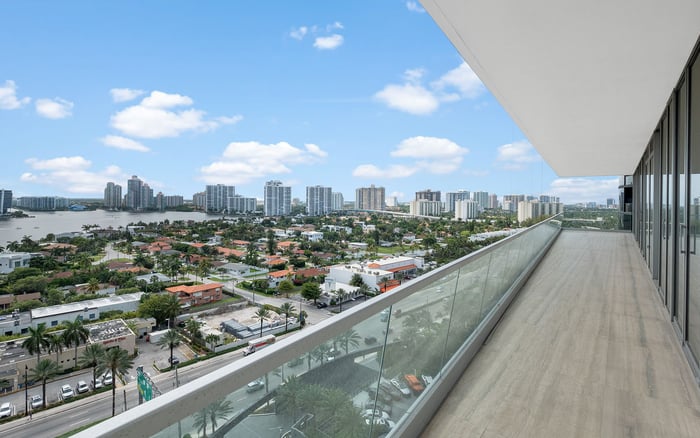
A luxury condominium purchase involves more than reviewing the residence itself. At The Estates at Acqualina, buyers should align the survey, title commitment, declaration, condominium plat, easement exhibits, access provisions, and current operating rules before closing.

At 17885-17901 Collins Avenue, The Estates at Acqualina occupies an oceanfront setting in Sunny Isles Beach. Yet even in a highly amenitized condominium, the legal character of ownership extends well beyond the interior dimensions of a residence. A buyer acquires a unit together with rights and obligations defined by the declaration, condominium plat, common elements, recorded easements, rules, and title policy.
That distinction matters for The Estates at Acqualina Sunny Isles, where listings may advertise deeded beach access. The phrase is meaningful, but it should prompt precise questions: What is the recorded legal basis for access? Who may use it? Which route applies? Can rules govern guests, contractors, service providers, hours, or operations?
For sophisticated purchasers, this is not paperwork at the perimeter of the deal. It is the architecture of ownership.
A Florida property survey can identify easements, encroachments, overlaps, boundary disputes, improvements, and conditions that may not appear in floor plans or sales presentations. In a condominium transaction, however, counsel should determine the appropriate scope. Depending on the property and deal, that may involve a unit survey, boundary survey, condominium plat review, or a combination of these.
The survey should not be read in isolation. It should be compared with the unit’s legal description, condominium plat, declaration, easement exhibits, and title commitment. A line or notation gains meaning only when the underlying document defines the affected land, permitted use, responsible parties, and duration.
This is particularly relevant to oceanfront ownership, where the practical experience of moving among the arrival court, residence, amenities, and shoreline may depend on several layers of private property rights.
An easement allows a non-owner to use part of another property for a defined purpose. Common examples include ingress, egress, utilities, drainage, and access. Within a luxury condominium, easements may also influence shared driveways, service corridors, utility areas, maintenance routes, and other common-property arrangements.
The central question is not simply whether an easement exists. Buyers should understand what it permits, where it applies, who benefits, who bears maintenance obligations, and whether it creates exceptions to the proposed title coverage.
Beach access deserves the same disciplined review. Physical proximity to the sand, an attractive pedestrian route, and an advertised access benefit do not independently establish the precise insured legal right. Recorded provisions and current operating rules should be reconciled before a buyer treats convenience as a protected entitlement.
A visible route does not necessarily establish an insured legal right of access. Conversely, a legally sufficient route may not be the one an owner considers most convenient. Florida law distinguishes access as a property right from access as a matter of preference, and the existence of another legal route can affect an easement-by-necessity analysis.
A purchaser should therefore ask title counsel to identify how legal access is established and whether the title commitment contains a related exception. Unless specifically excepted, lack of legal access is generally covered under Florida title policies, but the actual commitment and final policy control the transaction.
The same scrutiny applies when comparing nearby choices such as Jade Signature Sunny Isles Beach or The Ritz-Carlton Residences® Sunny Isles. Architecture and amenities may differ, but access rights should always be verified through the documents governing the particular condominium.
Standard Florida title commitments may exclude survey-related matters and easements or claimed easements that do not appear in public records. Ordering a survey without examining the title exceptions-or reviewing a title search without mapping relevant rights-can therefore leave a buyer with an incomplete picture.
Florida Statute § 627.7842 provides that when a compliant survey certified to the title insurer is completed within 90 days before closing, the policy may except only the survey matters actually shown. A buyer seeking to remove or narrow the standard survey exception should confirm that the survey is current, meets Florida standards, and is properly certified to the insurer.
The statute also addresses standard exceptions concerning parties in possession and unrecorded construction liens, with affidavits affecting their treatment. Counsel should review the commitment early enough to resolve questions, request revisions, and evaluate appropriate endorsements rather than treating title as a closing-day formality.
Whether considering a developer transaction or a resale, buyers should request the current survey, title commitment, recorded declaration, condominium plat, easement exhibits, beach-access provisions, and current rules for owners, guests, contractors, and service providers. Marketing brochures may frame the lifestyle, but they are no substitute for recorded instruments.
Florida condominium or real-estate counsel should then reconcile the documents. The review should confirm the unit description, identify appurtenant rights, map relevant easements, explain access coverage, and flag inconsistencies between physical use and recorded authority.
This discipline is equally valuable when evaluating another new-generation property such as Bentley Residences Sunny Isles. The central investment principle remains consistent: premium presentation should be matched by precise legal due diligence.
The supplied record does not identify a building-specific easement dispute at The Estates at Acqualina. The purpose of further investigation is preventive. At this level of the market, clarity protects enjoyment, insurability, negotiating leverage, and the eventual transfer of the residence.
Why does a condominium buyer need a survey review? It can reveal easements, encroachments, overlaps, improvements, and other conditions not evident in plans or marketing materials.
Is the condominium plat enough by itself? No. It should be read with the declaration, legal description, easement exhibits, survey, and title commitment.
Does advertised deeded beach access settle the issue? No. Buyers should verify the recorded legal scope of the right and the rules governing its operation.
What is an easement? It is a legal right allowing a non-owner to use part of a property for a defined purpose, such as access or utilities.
Can a service route affect an owner’s purchase? Yes. Service, maintenance, utility, and shared-driveway rights may shape how common property functions.
Is physical access the same as legal access? No. A route that physically exists does not necessarily establish an insured legal right to use it.
What should buyers examine in the title commitment? Review survey exceptions, recorded easements, access-related exceptions, and every item affecting the insured estate.
Why does the survey’s timing matter? A compliant survey certified to the insurer within 90 days before closing may limit exceptions to matters actually shown.
Who should determine the correct survey scope? Florida condominium or real-estate counsel should assess whether the deal requires a unit survey, boundary survey, plat review, endorsements, or a combination.
When should access and easement questions be raised? Raise them early enough for counsel and the title insurer to investigate, clarify exceptions, and address discrepancies before closing.
For a discreet conversation and a curated building-by-building shortlist, connect with MILLION.
If branded residences are on your mind — as a home or as an allocation — we would be glad to share what we are seeing, privately.
Begin a quiet conversation