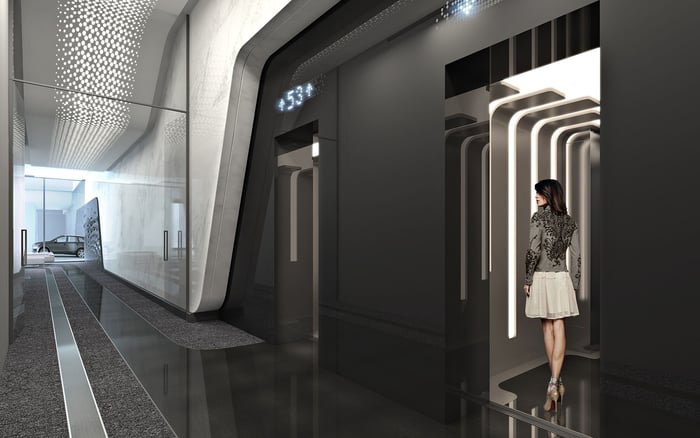
A buyer-focused framework for verifying household-staff access, parking, elevators, visitor handling, deliveries, and daily circulation at Frida Kahlo Wynwood Residences before relying on privacy-related assumptions.

At an urban residence, privacy is not a single feature. It depends on the complete journey from curb or garage to the home, including entry controls, reception procedures, elevator access, transfer corridors, and service routes. A poorly managed junction can place residents, household staff, delivery personnel, and guests in the same queue.
That complete sequence deserves careful review at Frida Kahlo Wynwood Residences. Buyers should verify the current plans and governing documents rather than assume that a presentation, rendering, or verbal description establishes how access will work in practice.
Ask for the latest available plan identifying residential entrances, service access points, parking connections, loading areas, reception points, corridors, and elevator banks. The review should follow each route door by door and note every credential check, staffed desk, shared threshold, and required elevator transfer.
Have the sales team demonstrate several realistic journeys: a resident arriving by car, an owner returning from an assigned parking space, a housekeeper reporting for work, a caterer carrying supplies, and a guest arriving without the resident present. The objective is to identify where those journeys overlap and whether the proposed controls support the buyer's expectations.
Do not rely on a general statement that access is separate. Confirm which entrance and elevator serve the specific residence, whether the route changes outside regular hours, and what happens when a primary elevator or access point is unavailable.
A dedicated staff route should be treated as unverified unless it appears in current plans or binding documents. Even where physical separation is contemplated, operating procedures may determine whether recurring staff members use a resident entrance, report to a desk, wait for approval, or share an elevator bank.
Request written answers addressing pre-clearance, identification, recurring credentials, permitted entry times, parking or drop-off rights, escort requirements, approved entrances, and passenger-versus-service elevator use. Ask whether a resident can authorize regular household personnel without repeating the approval process for every visit.
Exceptions matter as much as the preferred route. Review procedures for early arrivals, holidays, large grocery loads, maintenance visits, elevator interruptions, and staff substitutions. Daily discretion depends on how the building handles ordinary variations, not only ideal conditions.
Parking due diligence should extend beyond the existence of a space. Review assignment procedures, access controls, valet operations if applicable, visitor arrangements, charging provisions if relevant, pedestrian paths, and the connection between parking and the residential elevator serving the selected home.
Trace the route from the expected parking location to the residence. Identify any shared corridors, reception encounters, loading interfaces, or elevator transfers. Ask whether residents arriving by private vehicle and those using a car service follow different paths, and confirm where drivers and passengers may wait.
Curb operations also deserve attention in an active South Florida neighborhood. Buyers should ask how simultaneous resident arrivals, guests, service providers, and deliveries are expected to be managed without compromising controlled access.
Visitor policies can shape privacy as much as architecture. Confirm how guests are announced, where they wait, how temporary credentials work, whether a resident must be present, and which elevators visitors may use. Ask whether different procedures apply after hours or during private events.
Delivery handling should be reviewed by category. Small parcels, groceries, furniture, catering supplies, and maintenance equipment may follow different routes. Obtain written clarification regarding loading access, delivery hours, staging areas, freight-elevator reservations, and the point at which personnel may enter residential corridors.
For each candidate residence, verify the number and type of elevators serving its floor, access-control method, service-elevator availability, and any transfer needed between parking and the residential core. Also ask how moving periods, waste collection, repairs, and scheduled maintenance may affect circulation.
The same route-based review can help buyers evaluate other South Florida residences, including Bentley Residences Sunny Isles, The Residences at 1428 Brickell, Aston Martin Residences Downtown Miami, and The Well Coconut Grove. The purpose is not to assume that these properties share the same design or policies, but to apply a consistent due-diligence standard to entrances, parking, vertical circulation, and service access.
At Frida Kahlo Wynwood Residences, the most useful review will be residence-specific. Buyers should compare current representations with the applicable condominium documents, parking materials, rules, and management procedures before making a commitment. Any access feature important to the purchase decision should be documented rather than inferred.
Is a dedicated household-staff entrance confirmed? Treat it as unverified unless current plans or binding documents establish the entrance and its operating procedures.
What household-staff policies should a buyer request? Request written rules covering credentials, approved hours, parking or drop-off, escorts, permitted entrances, and elevator use.
Why should the route be checked for a specific residence? Elevator access, corridor connections, and the path from parking may vary by location within a property.
What should a parking review cover? Examine space assignment, access controls, visitor arrangements, valet procedures if applicable, pedestrian routes, and elevator connections.
How should buyers evaluate guest access? Confirm announcement, waiting, credentialing, escort, after-hours, and elevator procedures in writing.
What delivery procedures deserve review? Ask how parcels, groceries, furniture, catering supplies, and maintenance equipment enter, wait, and reach residential floors.
Are renderings or verbal descriptions sufficient? No. Material access expectations should be checked against current plans and applicable governing documents.
Why are fallback routes important? Elevator interruptions, maintenance, and after-hours conditions may redirect residents or staff through more public areas.
What elevator details should be verified? Confirm which elevators serve the residence, how access is controlled, whether service elevators are available, and whether transfers are required.
What is the most useful final due-diligence request? Ask for a documented walkthrough of the complete route from curb or parking space to the selected residence under resident, guest, and service conditions.
For a discreet conversation and a curated building-by-building shortlist, connect with MILLION.
If branded residences are on your mind — as a home or as an allocation — we would be glad to share what we are seeing, privately.
Begin a quiet conversation