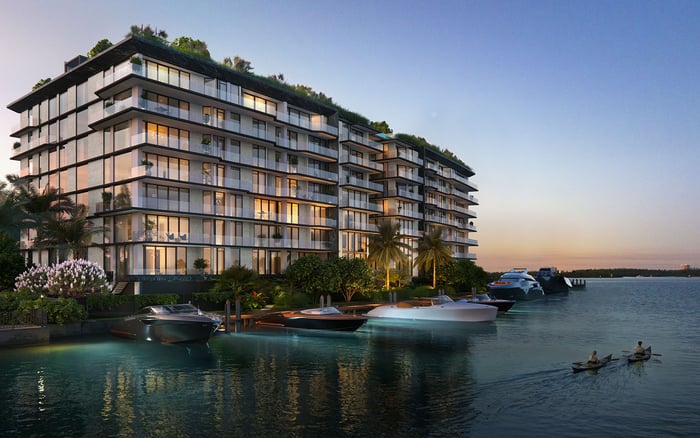
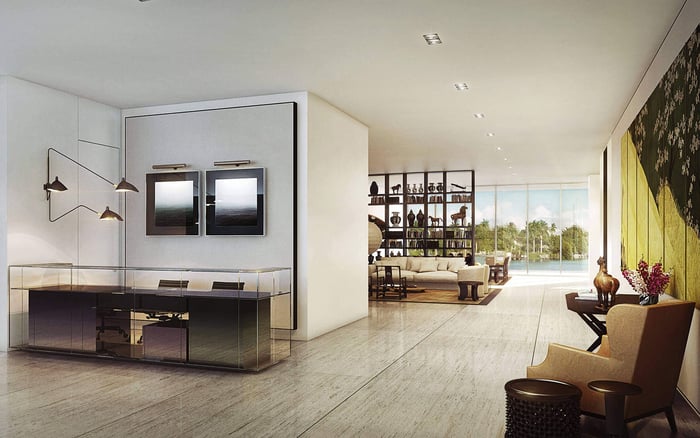
Bay Harbor Towers presents an unusually layered waterfront amenity program. Buyers should separate physical access from included service, then test dues, reserves, contracts, subsidies, and elective charges before assigning value to dining, spa, marina, and beach-club privileges.
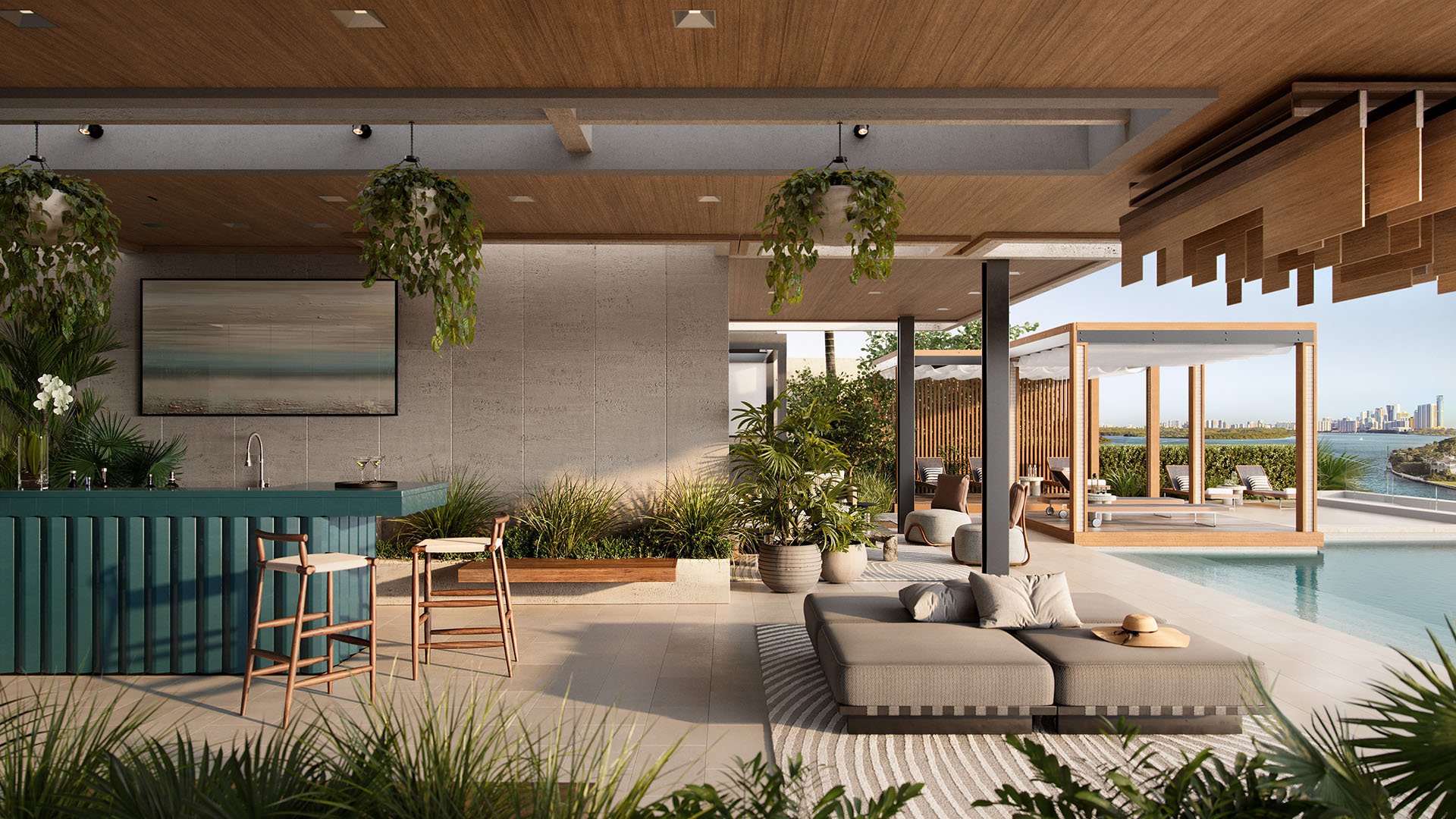
At 10141 East Bay Harbor Drive, Bay Harbor Towers is positioned as a boutique waterfront condominium with more than 10,000 square feet of resort-style amenities. The offering is broad for an intimate residential setting: two pools, a wellness suite, fitness spaces, rooftop entertaining areas, a private marina, concierge, valet, and promoted beach club access.
That breadth is precisely why buyers should look beyond the brochure. An amenity can be physically available without every associated service being included in common charges. A dining terrace does not necessarily provide complimentary meals. A massage room does not establish that treatments are included. Access to a club does not, by itself, define dues, consumption minimums, service charges, or transfer rights.
Luxury amenities create value only when their operating terms are understood.
This distinction belongs at the center of underwriting. The most useful question is not merely, “What can I access?” It is, “Who pays to operate it, under what contract, and what will I pay when I use it?”
The rooftop deck includes a 55-foot infinity-edge pool, jacuzzi, cabanas, daybeds, grills, open-air dining areas, and a summer kitchen. Together, these elements create a compelling setting for resident entertaining. They are shared entertainment infrastructure, however-not evidence of an included restaurant, resident chef, complimentary catering, or food-and-beverage program.
Buyers should establish whether the dining spaces are freely reservable, subject to deposits, or accompanied by cleaning, staffing, security, or damage charges. It is equally important to ask whether private events require approved vendors and whether guest counts or operating hours are restricted. None of those terms can be inferred from the presence of tables, grills, or a kitchen.
The owners’ lounge and news café require the same discipline. “Café” may describe an atmosphere or social space rather than a complimentary hospitality operation. Buyers should confirm whether refreshments are provided, what hours apply, and whether any food or beverage is billed separately.
For comparison shopping within Bay Harbor Islands, projects such as Onda Bay Harbor and La Maré Bay Harbor Islands may appeal to a similar waterfront buyer. The proper comparison is not amenity count alone, but the relationship among service scope, recurring charges, reserves, and likely personal use.
The wellness program includes a steam room, sauna, massage room, hot-and-cold plunge pools, relaxation space, gym, and yoga studio with Paragon-branded equipment. Bay Harbor Towers also includes a 50-foot indoor heated saltwater lap pool in addition to the rooftop pool. Pool and spa towel service is expressly advertised.
Those details reveal two distinct cost categories. The first comprises association-funded operations: water treatment, heating, ventilation, cleaning, inspections, towels, laundry, utilities, staffing, equipment servicing, and eventual replacement. The second comprises potentially elective expenses, including massage treatments, classes, personal training, guest privileges, and special programming. The facilities establish access to the spaces, but not that those optional services are complimentary.
Prospective owners should request the fee schedule and operating rules. Ask whether treatment providers are employees or outside contractors, whether appointments carry automatic service charges, and whether residents may bring their own practitioners. Confirm class pricing, cancellation terms, guest access, and any limits during peak periods.
A wellness-oriented alternative such as The Well Bay Harbor Islands can help frame the lifestyle comparison, but names and amenity descriptions are no substitute for governing documents. Each condominium can allocate operating expenses and optional charges differently.
The service platform extends beyond dining and spa access. A 24/7 front-desk concierge and valet imply continuous labor and vendor management. The private marina has 13 boat slips, while a water-sports launch, hammock garden, and waterfront lounging areas add dock, landscaping, and common-area infrastructure.
Buyers should ask whether slip revenue makes the marina self-supporting or whether all owners subsidize part of its operation. Slip assignment, availability, insurance, utilities, maintenance, and transferability should be documented rather than assumed. The same principle applies to valet service: determine whether parking, guest vehicles, overnight service, and gratuities create additional expenses.
Beach club access deserves separate review. Buyers should determine whether the benefit is deeded, contractual, membership-based, revocable, or transferable upon resale. They should also verify whether annual dues, food-and-beverage purchases, service charges, parking, towels, or guest access are included. Promoted access establishes a relationship, not its complete economics.
Before estimating stabilized ownership costs, request the current or proposed condominium budget, schedule of regular assessments, fee schedule, reserve study, service contracts, and details of any developer subsidy. A subsidy can make early operating costs appear lower than the amount owners may ultimately bear.
Separate expenses into three practical columns. The first contains unavoidable association costs, including staffing, utilities, insurance, cleaning, landscaping, and routine maintenance. The second contains reserve contributions for major components such as pool systems, spa equipment, docks, fitness equipment, furnishings, and rooftop kitchens. The third contains elective spending on treatments, classes, marina slips, private events, cabanas, and club consumption.
This framework also prevents listing calculators from being mistaken for association disclosures. For Unit 604, an estimated monthly payment of $4,856 appeared alongside amenities including a heated pool, spa, sauna, marina, and private dock. That figure should not be treated as verified HOA dues alone. Financing assumptions, taxes, insurance, and association charges must be separated using current documents.
Bay Harbor Towers offers the architecture of a resort-oriented daily life: rooftop swimming and dining, indoor lap swimming, thermal wellness, fitness, boating access, and a staffed arrival. Its turnkey residences and designer interiors reinforce that hotel-style positioning. The value may be substantial for an owner who will use the full program.
The disciplined buyer assigns that value only after understanding the operating model. Confirm what common charges cover, identify optional purchases, examine subsidy exposure, and test future reserve needs. In a boutique building, the quality of service matters, but so does the number of owners sharing each fixed cost. That is the difference between admiring an amenity package and underwriting it.
For discreet guidance on evaluating South Florida luxury residences, connect with MILLION.
If branded residences are on your mind — as a home or as an allocation — we would be glad to share what we are seeing, privately.
Begin a quiet conversationThe rooftop summer kitchen and dining areas establish shared entertaining infrastructure, not complimentary restaurant or catering service.
The advertised massage room confirms a treatment space, but it does not establish that massages or other treatments are included.
The program includes a steam room, sauna, massage room, hot-and-cold plunge pools, relaxation space, gym, yoga studio, and indoor lap pool.
The building advertises a 55-foot rooftop infinity-edge pool and a 50-foot indoor heated saltwater lap pool.
Yes, pool and spa towel service is advertised, although buyers should confirm its hours, scope, and operating cost.
Confirm whether access is deeded, contractual, membership-based, revocable, or transferable, plus any dues and consumption charges.
The private marina has 13 boat slips, so buyers should verify availability, assignment terms, pricing, and transfer rights.
Request the condominium budget, assessment and fee schedules, reserve study, service contracts, and details of any developer subsidy.
A subsidy can reduce early operating charges, potentially obscuring the stabilized amount owners may later need to fund.
No. The displayed $4,856 monthly payment was a listing estimate and should not be treated as verified HOA dues alone.