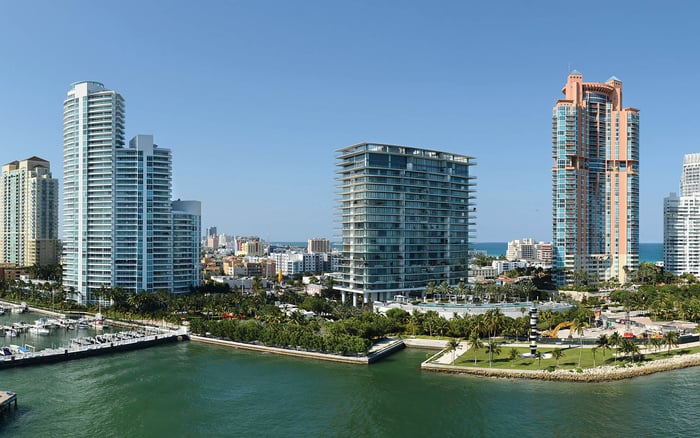
At Apogee South Beach, occupancy approval, closing obligations, mortgage funding, insurance, and possession deserve separate review. Historical contract language offers a useful lesson, but a present-day purchase depends on current municipal records and transaction documents.

A carefully planned purchase at Apogee South Beach should account for more than the residence itself. Less visible but equally consequential are the questions of timing: what authorizes occupancy, what obligates the buyer to close, when financing can fund, and when possession passes. For a buyer coordinating a seasonal arrival or an international relocation, those distinctions deserve attention before moving arrangements become commitments.
An occupancy certificate is not a universal clearance for a transaction. Municipal authorization, contractual obligations, lender requirements, insurance arrangements, and possession each answer a different question. The objective is to align them-not assume that one document settles the others.
Apogee’s historical developer agreement illustrates this distinction. Its provisions can inform the questions a buyer asks today, but should not be mistaken for the terms of a current resale or evidence of the building’s present certificate status.
The historical agreement permitted closing with a temporary, partial, or permanent certificate of occupancy covering the unit. A final, building-wide certificate was not the sole acceptable form of occupancy approval. The certificate served as the governmental authorization required before the unit could be lived in.
Closing could also occur before common elements and other condominium portions were fully completed or had occupancy certificates, provided the required statutory substantial-completion certifications had been recorded. Contractual readiness to close did not necessarily mean that every portion of the condominium was complete.
That is a historical contractual distinction, not a statement that Apogee currently operates under temporary approval or has unfinished common areas. A present-day purchaser should have counsel examine the agreement being signed, including addenda, rather than import original developer language into a different transaction.
The lesson is precise: identify which approval must cover which space, and determine what obligation that approval triggers under the governing contract.
A temporary certificate of occupancy permits use of a building or approved portion before final completion when that space is safe for its intended use, even though noncritical work remains. Whether it triggers a buyer’s closing obligation depends on the purchase agreement and applicable developer addenda, not on the certificate alone.
A unit may therefore be legally conveyable with relevant temporary occupancy approval without satisfying every lender requirement. The ability to complete a title closing and the availability of mortgage funding are separate questions.
For a Miami Beach buyer also considering Continuum on South Beach, the same discipline applies: request the records for each residence rather than treating one property’s contract history as a neighborhood standard.
Documented Apogee purchases occurred in 2008. Those transactions establish purchase history-not the original municipal certificate issuance date, current certificate status, or an inspection deadline. Obtain the municipal records to answer those questions.
The financing question is not simply whether an occupancy certificate exists. It is whether the buyer’s lender accepts the applicable approval and has received the other documents required for the specific loan. Neither a permanent CO nor a TCO, standing alone, guarantees funding.
Send the relevant occupancy documentation to the lender early. Request written confirmation of whether it is acceptable for the proposed transaction, what remains outstanding, and whether any unresolved condition could affect the anticipated funding date. Distinguish preliminary reassurance from confirmation that required conditions have been satisfied.
Counsel should also review how the current contract handles financing deadlines and any proposed change to the closing timetable. An outstanding lender requirement should not be assumed to postpone a contractual obligation automatically.
This is transaction planning, not an assertion that Apogee has a financing restriction. The benefit is clarity before a closing date anchors plans for travel, deliveries, or another property sale.
Occupancy approval is not proof that the intended insurance arrangements are ready. Ask the insurance adviser to review the applicable occupancy documents alongside the proposed closing and possession dates, and obtain written confirmation of requirements and effective dates.
Request the association’s current master-policy information and have the adviser explain its relationship to the coverage proposed for the residence. Ask specifically about applicable deductibles, exclusions, and any conditions connected to the intended use or timing of occupancy. These are review questions, not assumptions about Apogee’s policy terms.
If the timetable changes, have the adviser reconfirm the coverage arrangements against the revised dates. Do not infer a premium, deductible, or coverage transition from a historical developer contract.
The same questions belong in a comparison involving Five Park Miami Beach, but the answers must come from that transaction’s documents. A comparison is useful only when each property receives its own review.
Florida Statutes §718.503 provides condominium purchasers under contract with rights to current documents at the seller’s expense. The governing-document package includes the declaration, association articles, bylaws, and rules. Financial materials include the annual financial statement and annual budget.
Applicable inspection disclosures also include the milestone inspection summary and the association’s most recent structural integrity reserve study, or a statement that no such study has been completed. Have counsel determine which disclosures apply and review them with the relevant advisers.
These materials serve a different purpose from a certificate of occupancy. They help the buyer examine governance, finances, and applicable inspection information-not merely whether occupancy was authorized.
A disciplined sequence is to obtain municipal occupancy records, review the current purchase agreement, collect applicable association disclosures, and secure lender and insurance confirmations. Resolve discrepancies before treating the timetable as settled. The certificate belongs within that review, not in place of it.
Legal permission to occupy and the contractual right to take possession are not interchangeable. Review when the seller must deliver the residence, whether anyone may remain after closing, and whether an alternative possession arrangement has been selected. A closing date alone is no substitute for reading those provisions.
Then ask management to confirm the practical arrangements for the intended move. Coordinate deliveries and access only after the contract, financing, insurance, and possession timetable have been reconciled. If a condition remains unresolved, preserve flexibility rather than making irreversible plans around an expected date.
At this level of the market, a smooth arrival is part of the purchase experience. It rests not on the assumption that every approval means the same thing, but on written confirmation that each requirement has been addressed.
For a considered approach to South Florida residential purchases, explore MILLION.
If branded residences are on your mind — as a home or as an allocation — we would be glad to share what we are seeing, privately.
Begin a quiet conversationNo. It permitted closing with a temporary, partial, or permanent certificate of occupancy covering the unit.
It should not be assumed to govern a present-day resale. Counsel should review the current purchase agreement and its addenda.
It permits occupancy of a building or approved portion when safe for its intended use, even though noncritical work remains before final completion.
No. Whether it triggers a closing obligation depends on the purchase agreement and applicable developer addenda.
No. The lender must accept the applicable approval and confirm that its other requirements for the loan have been met.
Ask for written confirmation of coverage requirements and effective dates aligned with closing and possession. Have an adviser review current master-policy information alongside the proposed residence coverage.
No. Purchase history does not establish the original municipal certificate issuance date, current certificate status, or an inspection deadline.
Review current governing documents, the annual financial statement and budget, and applicable inspection disclosures. These include the milestone inspection summary and the latest structural integrity reserve study, or a statement that none has been completed.
Yes, provided the required statutory substantial-completion certifications were recorded. That historical provision does not establish any present-day unfinished condition.
No. Occupancy approval concerns governmental permission, while possession depends on the transaction’s contractual terms and any alternative arrangements.