A contract-focused due-diligence guide for buyers evaluating Continuum, its three-association structure, management obligations, governance history, and closing records.

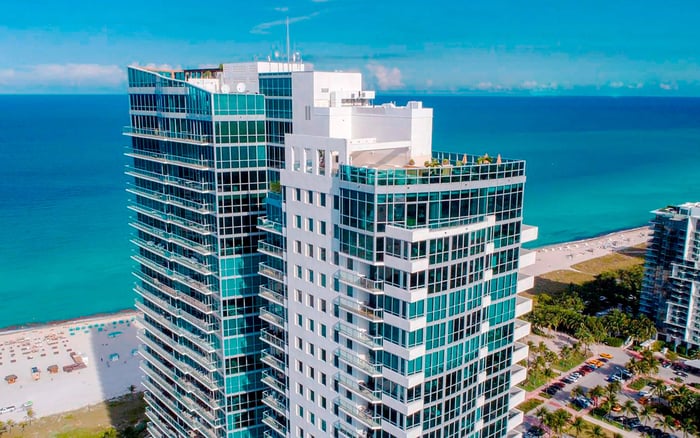
At Continuum on South Beach, the physical proposition is immediately legible: two towers at 50 and 100 South Pointe Drive in Miami Beach’s South of Fifth neighborhood. The property is marketed as a 12-acre, resort-style environment with three tennis courts, two lagoon-style pools, a multilevel gym and spa, and an open-air restaurant. Yet a luxury condominium acquisition is defined by more than views, finishes, and amenities. It also turns on the agreements that govern operations, allocate costs, and limit an association’s flexibility.
This entry in MILLION’s Buyer's Guides is designed for a resale purchaser evaluating SoFi and the broader South of Fifth market. Its central point is precise: related-party status has not been established for Continuum’s current management agreements. Any affiliation should be tested through executed contracts and required disclosures-not inferred from a company name, tenure, or market familiarity.
The contract, not reputation alone, defines the association’s obligations.
The South Tower is described as 42 stories with 318 units, while the North Tower is described as 37 stories with 203 units. Other records give different South Tower residence counts, including 317, 314, and a later reduction to 311. This is not a discrepancy to resolve through marketing summaries. Counsel should reconcile the operative declaration and amendments with title materials, county records, association records, and the unit’s legal description.
The distinction matters because density, voting interests, expense allocation, and the identity of the governing association are document-driven. A buyer comparing nearby options such as Apogee South Beach should apply the same discipline: establish the legal and financial perimeter of the selected residence before treating any headline building statistic as definitive.
Continuum has three active entities: a master association, a North Tower condominium association, and a South Tower condominium association. A serious review therefore requires separate document sets for the master association and the applicable tower association. The buyer should identify which entity signed each management or service agreement, which entity receives the invoice, and which expenses ultimately bind the unit.
Request an organization chart connecting the declaration, shared-facility provisions, budgets, assessments, and contracts. Then trace major services through that structure. A contract signed by the master association may affect both towers, while a tower agreement may apply only to one condominium. The practical question is not simply, “Who manages Continuum?” It is, “Which entity retained which provider, for what work, at what cost, and under what authority?”
Miami-Dade requires community associations to register annually, providing another means of checking names and entity details. The governing documents, however, remain the controlling framework for the unit under consideration.
Florida condominium associations must maintain current management agreements and other contracts imposing obligations on the association or unit owners as official records. Unit owners and authorized representatives have inspection and copying rights, subject to statutory procedures and exceptions. Qualifying associations must also post specified materials digitally, including current executory contracts and conflict-related documents.
Before the inspection period expires, request the complete executed management agreement, every amendment, and any renewal notice. The review should cover:
The exact services and operational obligations assigned to the manager
Base fees, additional charges, reimbursements, and pass-through expenses
Staffing levels, payroll treatment, benefits, supervision, and replacement rights
Contract term, automatic-renewal mechanics, notice deadlines, and termination rights
Exclusivity provisions and the treatment of affiliated or recommended vendors
Insurance, indemnity, default, dispute, and record-retention provisions
Required licenses for the community association manager or management firm
Financial or ownership disclosures required by the agreement and Florida law
To be valid and enforceable, a Florida condominium management contract must identify its services, obligations, costs, term, and other required terms. The review should therefore compare the agreement’s language with actual budget lines and recent invoices. If a charge appears in the budget but not in the contract-or if the contract permits supplemental billing without a clear limit-obtain a written explanation before closing.
Florida’s conflict framework can apply when a director, officer, or qualifying relative contracts with the association or holds an interest in a business seeking association work. Management agreements must also disclose specified financial or ownership interests involving the developer, board members, or management providers.
In June 2024, Marquis Association Management added the South Tower after managing the North Tower since 2007. That history does not, by itself, establish a relationship with the developer or an association insider. The proper evidence is the executed agreement, ownership and financial-interest disclosures, board materials addressing selection or renewal, and records showing how any conflicts were handled.
Ask counsel to compare disclosed ownership, officers, addresses, and signatures across the contracting parties. Minutes should reflect the approval process, the material terms considered, any applicable abstentions, and the basis for the board’s decision. The goal is not to imply impropriety. It is to determine whether incentives are aligned, whether pricing was evaluated, and whether the association can change providers without disproportionate cost or disruption.
Contract diligence should not be isolated from the property’s financial history. An exterior renovation carried an approximately $8 million to $8.5 million budget funded with association money. Litigation involving the South Tower association and the insurer for the developer and contractors concluded in a $9 million settlement. Litigation also occurred between the North Tower association and an insurer.
These historical matters do not establish a current liability. They do justify requesting information on open and recently resolved claims, settlement terms available to owners, insurance correspondence, legal-fee treatment, warranty issues, and any remaining repair obligations. Review board minutes alongside budgets, reserve information, special assessments, and the estoppel certificate so that each obligation can be traced across multiple records.
A 2015 election dispute involving the master association further supports reviewing governance, not merely arithmetic. Examine recent election records, meeting minutes, director disclosures, owner communications, and contract votes. Governance quality influences how quickly an association can respond when insurance, capital work, staffing, or vendor performance demands decisive action.
The checklist should be managed as a sequence. First, secure seller authorization for records access where needed. Second, obtain separate master and tower packages. Third, have condominium counsel review the declaration, amendments, contracts, disclosures, minutes, litigation, insurance, reserves, assessments, and estoppel. Fourth, send focused written questions and preserve sufficient time for answers before contractual deadlines.
For buyers weighing the established South of Fifth lifestyle against newer Miami Beach offerings such as Five Park Miami Beach or The Ritz-Carlton Residences® South Beach, this process creates a more meaningful comparison than amenity counts alone. Management term, exit flexibility, shared-cost architecture, and governance transparency can materially shape the ownership experience.
No provision should be read in isolation. A favorable base fee may sit beside broad reimbursements. A short stated term may include automatic renewal. A termination right may require lengthy notice or substantial payment. The complete agreement, its amendments, and the association’s actual financial records should tell one coherent story.
Continuum offers distinctive scale and a resort framework in one of Miami Beach’s most closely watched enclaves. The corresponding standard of diligence should be equally elevated. Verify the condominium’s legal facts, map obligations to the correct association, test all potential affiliations through disclosures, and connect contract language to budgets, minutes, claims, and the estoppel. This is not suspicion. It is the disciplined stewardship expected in a consequential luxury acquisition.
For discreet guidance on South Florida’s premier residences, connect with MILLION.
If branded residences are on your mind — as a home or as an allocation — we would be glad to share what we are seeing, privately.
Begin a quiet conversationNo. The available facts do not establish a related-party relationship, so buyers should rely on executed agreements and required ownership or financial-interest disclosures.
The buyer should review records for both the master association and the South Tower association, identifying which entity signed each relevant contract.
The review should cover the master association and the North Tower association, together with the expenses each entity allocates to the unit.
Request the executed agreement, amendments, renewal notices, fee schedules, reimbursement terms, staffing obligations, termination provisions, exclusivity clauses, and conflict disclosures.
Published South Tower counts vary, so buyers should confirm the operative number through the declaration, amendments, county records, title materials, and association records.
Florida law provides unit owners and authorized representatives inspection and copying rights for official records, subject to statutory procedures and exceptions.
Compare its services and charges with budgets, invoices, minutes, reserves, assessments, insurance records, and the estoppel certificate.
They determine how easily the association can change providers and may contain notice deadlines, automatic extensions, or costs that affect future flexibility.
No. Historical litigation does not establish a current liability, but it supports reviewing open claims, settlements, insurance matters, legal costs, and repair obligations.
Review board and owner meeting minutes, election records, director disclosures, contract approvals, abstentions where applicable, and recent owner communications.