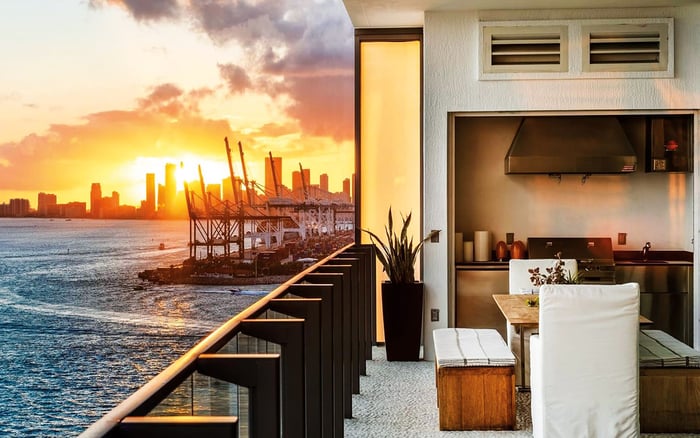
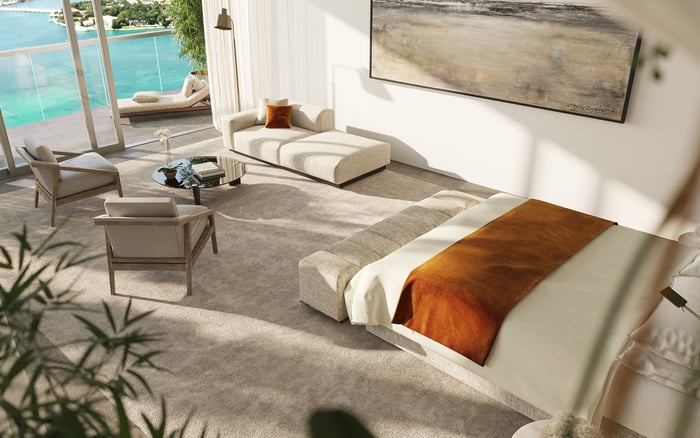
Apogee South Beach’s private arrivals and service circulation merit a closer look for buyers planning long-term ownership. The decisive questions concern the actual residence, caregiver permissions, equipment routes, and continuity when everyday routines change.

For buyers considering Apogee South Beach, long-term suitability deserves the same scrutiny as the residence’s design. At 800 S Pointe Drive in Miami Beach’s South of Fifth neighborhood, the condominium combines a full-service setting, private elevator access, and a low-density layout of four residences per floor. These are meaningful starting points for households anticipating visiting clinicians, recurring caregivers, or changing mobility needs.
Privacy, however, is not accessibility. A discreet arrival does not establish wheelchair clearance, an accessible bathroom, or a workable route for medical equipment. The more useful question is whether the building and the particular residence can accommodate a changing daily routine without sacrificing independence or household privacy.
That assessment should distinguish three things: the physical route, the association’s operating rules, and the assistance a household must arrange independently.
Apogee residences offer private elevator access, and the Residence A floor plan shows an elevator and elevator lobby within the arrival layout. There are two principal floor-plan types. Neither point warrants assuming that every residence has identical circulation or that a particular apartment remains configured as originally drawn.
Begin with the home being purchased. Measure elevator openings, lobby turning space, interior doorways, and the route to the primary bedroom and bathroom. Account for open doors and furniture placement, and assess whether a person using a mobility aid can move comfortably with someone beside them.
Bathrooms warrant especially close attention. Ask a qualified accessibility professional to assess thresholds, shower entry, transfer space, and potential adaptations. If modifications appear necessary, establish their feasibility and approval requirements before making them part of the purchase plan.
For a buyer also evaluating Five Park Miami Beach, the same discipline applies: compare measured routes and documented permissions rather than treating an amenity description as evidence of long-term suitability.
Apogee’s service infrastructure includes a secured service elevator for special deliveries. The main lobby is reserved for residents and guests, while delivery personnel use service circulation. This separation matters to households seeking discretion, but it leaves important operational questions unresolved.
A caregiver, a visiting clinician, and an equipment delivery team may fall into different visitor categories. Ask management which entrance and elevator each would use, how access is authorized, and whether arrival procedures change outside normal delivery hours. Do not assume that a service-elevator policy also governs personal care visits.
For equipment, obtain the elevator’s usable dimensions, door opening, capacity, and booking requirements. Check the entire route, including corners and the final turn into the residence. A generous elevator cabin alone does not establish that an item can reach its intended room.
Request written procedures for delivery scheduling, protective coverings, vendor credentials, and urgent replacements. These are practical matters to resolve, not services to presume.
Apogee offers 24-hour security and concierge services, along with controlled access. For an owner organizing recurring assistance, the central question is how these functions work with the household’s own care arrangements.
Request written policies for recurring aide credentials, guest authorization, elevator programming, overnight caregivers, and substitute personnel. Clarify who may authorize entry if the resident cannot answer, and whether a designated family member or household representative can manage changes remotely.
Then test ordinary scenarios: a delayed evening arrival, a replacement aide at short notice, or overlapping shifts. Ask how each would be handled rather than relying on a general assurance that staff will assist. A predictable process matters as much as a gracious welcome.
Concierge service should remain distinct from clinical care. The amenities do not establish an included physician program, on-site medical office, nurse-call system, or specialized elder-care package. Buyers should arrange necessary care independently and clarify staff responsibilities without assuming medical assistance is included.
Apogee offers private two-car, air-conditioned garages with storage, as well as valet parking. Both belong in the assessment, but neither establishes sufficient space for a particular vehicle, transfer, or mobility device.
Where practical, visit with the vehicle and equipment the household expects to use. Check garage entry height, door clearance, space beside the parked vehicle, and the route to the elevator. Assess whether unloading can occur without obstructing movement and whether assistance can be provided comfortably.
Confirm permitted storage uses before planning to keep mobility equipment or supplies in the garage. Storage space is not blanket authorization for every item or charging arrangement.
Ask separately about valet procedures and the extent of any assistance. Vehicle handling should not be mistaken for trained help with transfers or personal mobility.
Apogee’s amenity offering includes a spa, fitness center, infinity-edge pool, and private beach club. These amenities alone do not establish accessibility specifications, step-free routes, or mobility assistance.
Walk each journey from the residence to the destination. Examine thresholds, door operation, changes in level, seating opportunities, and restroom access. Where relevant, ask specifically about pool entry and the practical route to beach facilities. An appealing destination is only useful if the household can reach and use it comfortably.
If Continuum on South Beach is also on the shortlist, apply the same route-based assessment there. The comparison should turn on the buyer’s actual needs, not an assumption that similarly positioned residences operate alike.
Long-term use also depends on what happens when normal arrangements are interrupted. Request the building’s elevator-outage procedures, clarify whether an alternative route is available to the particular residence, and discuss emergency access with management. Do not assume that a service elevator can serve as a resident backup without confirmation.
Bring together three records before purchase: a measured assessment of the apartment and its access routes, written operating policies, and a household plan for care and transport. Where changes are needed, distinguish what is feasible inside the residence from what requires association approval or depends on common-area operations.
Apogee’s private arrivals, separate service circulation, and full-service amenities provide useful foundations for that inquiry. The purchase decision should rest on how these features work together for the individual household, including the less visible routines that make a home comfortable over time.
For a discreet discussion of long-term ownership priorities in South Florida, connect with MILLION.
If branded residences are on your mind — as a home or as an allocation — we would be glad to share what we are seeing, privately.
Begin a quiet conversationApogee South Beach is at 800 S Pointe Drive, Miami Beach, FL 33139, in the South of Fifth neighborhood.
No. Buyers should verify elevator openings, turning space, thresholds, and interior routes in the specific residence.
The published Residence A floor plan shows an elevator and elevator lobby within the arrival layout. Buyers should confirm the actual apartment’s configuration.
The building’s described features include a secured service elevator for special deliveries. Its dimensions, scheduling rules, and permitted uses require confirmation.
The entrance and elevator procedures for caregivers are not established here. Request written guidance distinguishing caregivers, visiting clinicians, and delivery personnel.
Confirm overnight permissions, credential requirements, elevator authorization, and procedures for replacement aides or overlapping shifts.
The described services do not establish an included physician program, nurse-call system, or specialized elder-care package. Necessary clinical care should be arranged independently.
Check vehicle clearance, transfer space, and the full route to the residence. Confirm permitted storage uses before planning to keep equipment or supplies there.
The amenity descriptions do not establish accessibility specifications or mobility assistance. Buyers should inspect the routes and confirm entry arrangements for their needs.
Request written outage procedures and clarify any alternative access to the specific residence. Do not assume the service elevator is available as a resident backup.