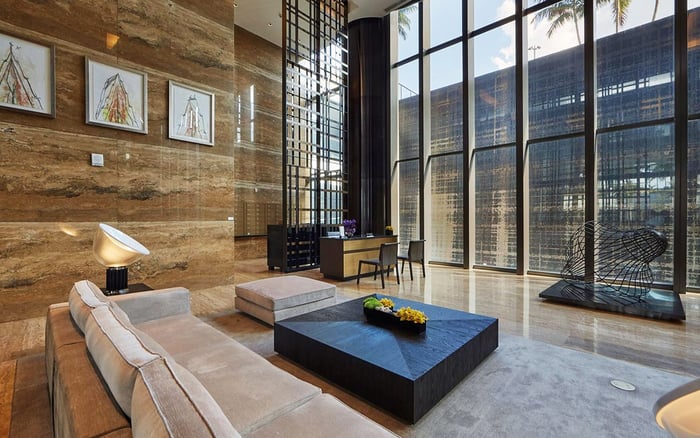
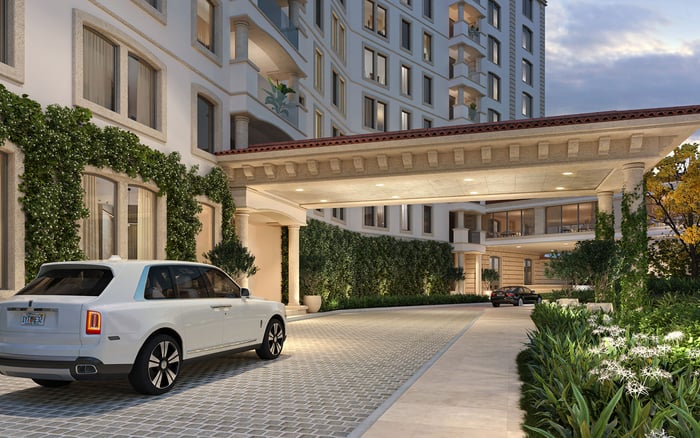
Apogee’s boutique design protects residential discretion, but South Beach event calendars can complicate causeway arrivals, deliveries, valet service, and airport transfers. Buyers should assess the residence and its annual operating rhythm together.
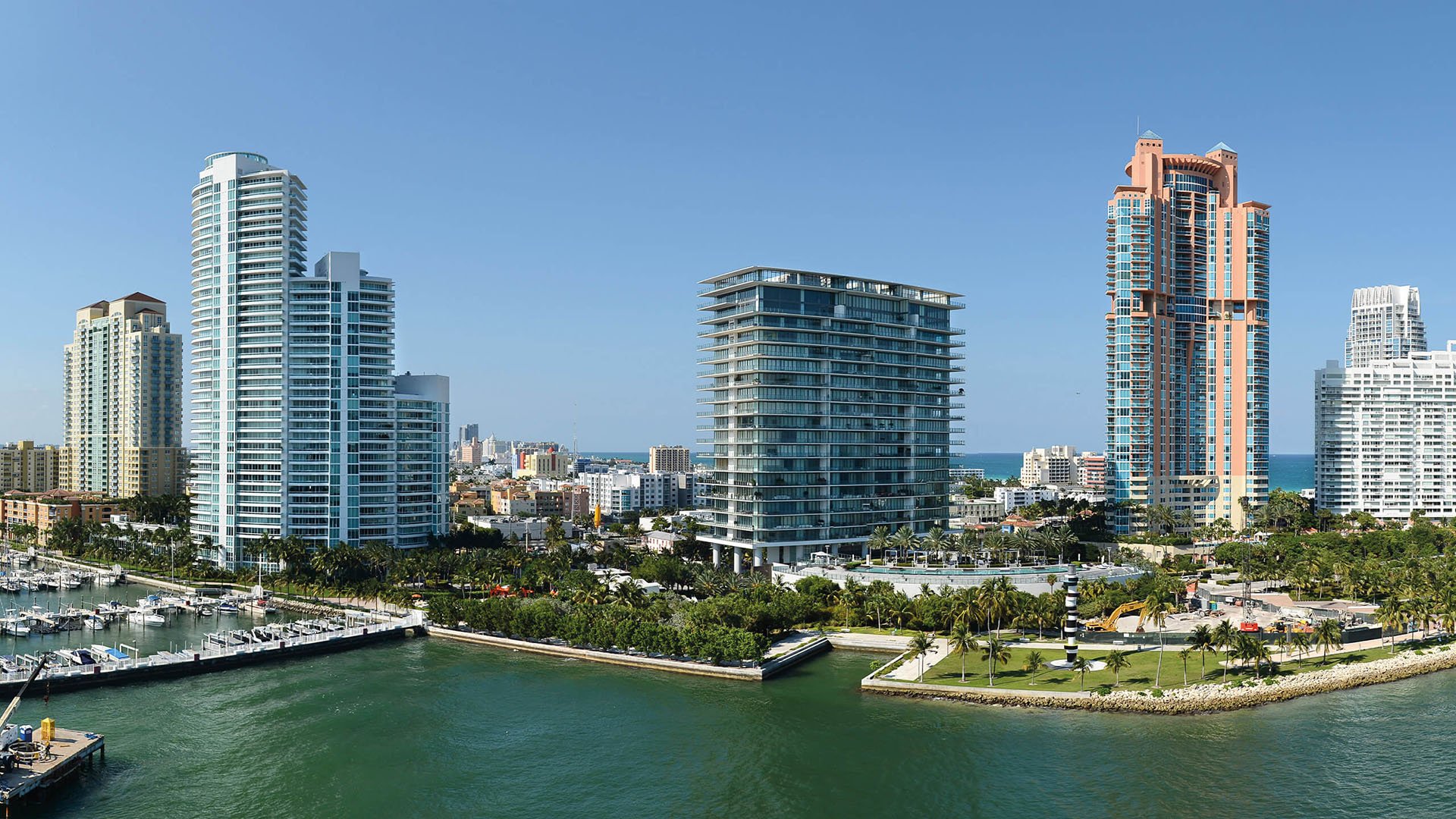
At Apogee South Beach, the most consequential event-week issue is not necessarily what happens beyond the windows. It is how smoothly an owner, guest, driver, delivery team, or airport transfer can reach 800 South Pointe Drive.
The condominium occupies the southern tip of South Beach in Miami Beach, near the effective end of the street grid. That position gives residents immediate access to a refined, walkable neighborhood, but it also makes cross-bay journeys sensitive to causeway congestion and temporary traffic controls. Formula 1, Art Week, and the boat-show calendar should therefore be treated as operational dates, not merely social occasions.
At Apogee, event-week exposure is principally an arrival-planning question.
This distinction matters. Public approaches may become busy while the residence retains a measured sense of separation. Buyers evaluating a second home, primary residence, or seasonal base should consider both conditions at once.
Apogee contains 67 residences across 22 stories, with approximately four homes per floor and private elevator entry. Its relatively small population distinguishes it from larger towers and hotels, where event weeks can generate heavier flows of residents, guests, service personnel, and visitors.
Its location between Portofino Tower and Murano at Portofino places it within an established residential enclave. Nearby Continuum on South Beach offers useful neighborhood context for buyers comparing established condominium living at the southern edge of the island, while Five Park Miami Beach provides a broader Miami Beach comparison closer to the gateway into South of Fifth.
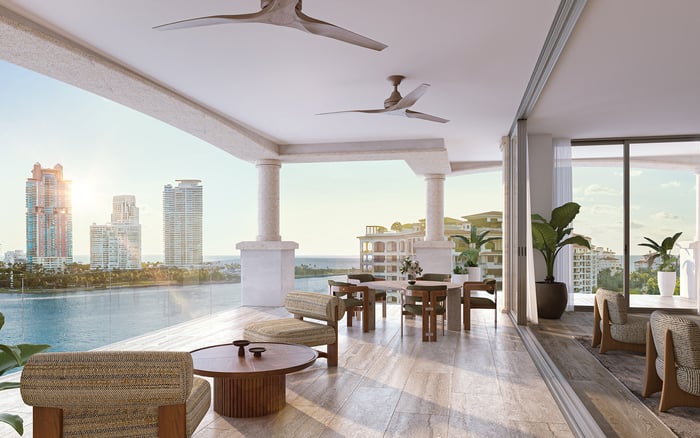
Apogee’s residences look toward Biscayne Bay, Government Cut, Fisher Island, and the Atlantic. The waterfront outlook brings cruise-ship and marine movement into the visual experience, particularly from the terraces. That activity is part of the setting, but it differs from internal building traffic and should be evaluated separately during a viewing.
The event names may be glamorous, but the buyer’s question is practical: which parts of the journey can be documented and managed?
For F1 dates, buyers should not rely on assumed travel times or a standing route. A current event-specific traffic plan and verified trip duration between Apogee and the race venue are not established here. The prudent approach is to treat F1 as a calendar trigger for fresh route checks, driver coordination, and wider scheduling margins shortly before arrival.
Art Week requires the same discipline. February traffic measures associated with boat and art shows should not be treated as Art Basel Miami Beach instructions because the calendars differ. Event plans can change each year, and an old closure map may be more misleading than helpful. Owners should review the current transportation notice for the precise dates of their stay rather than import assumptions from another event.
The boat show presents the clearest documented cross-bay concern. Its venues can span Miami Beach and mainland Miami, producing traffic that is not confined to a single convention district. Both the MacArthur and Julia Tuttle causeways can experience slow-moving traffic. Because the MacArthur connects downtown Miami with South Beach, it is especially relevant to an Apogee arrival from the mainland.
A standing instruction to “take the Venetian” or “always use MacArthur” is too rigid for major event periods. Bridge operations, street restrictions, and favored approaches can change by date and hour.
During the 2026 boat show, temporary operational changes kept the East Venetian Causeway Bridge closed to marine openings during specified afternoon and evening periods to prioritize roadway movement. Announced windows varied by date, running approximately from 3 to 8 p.m. or 3 to 7 p.m. That example is a planning lesson, not a permanent rule: verify the applicable day before selecting a route.
Event plans have also included the closure of Convention Center Drive from 18th Street to Dade Boulevard and restrictions on the eastern portion of 19th Street between Meridian Avenue and Convention Center Drive. These streets are north of Apogee, yet disruptions in the convention-center district can still influence circulation elsewhere on the island.
Owners should create separate timing plans for personal arrivals, guests, airport pickups, household deliveries, private chefs, and scheduled maintenance. Each has a different tolerance for delay. Valet staff and drivers should receive updated arrival windows, while time-sensitive deliveries are best scheduled outside peak periods whenever the current notice supports that choice.
Once in residence, an owner may be able to reduce exposure to traffic. South Pointe Park, Miami Beach Marina, and South of Fifth restaurants are within walking distance, and the property has a walkability rating of 83, classified as Very Walkable.
That does not eliminate the need for a car, but it changes the daily equation. A resident can remain within the neighborhood for dining, recreation, and marina access instead of repeatedly crossing the island’s busiest areas. For a lifestyle built around short stays, the ability to settle in after arrival may be as important as the initial transfer itself.
Prospective owners comparing island options might also consider how a more separated destination changes logistics. The Residences at Six Fisher Island represents a different access model across Government Cut, underscoring why arrival planning must be evaluated property by property rather than generalized across waterfront Miami.
Apogee’s strongest privacy attributes are architectural and operational. A 67-home building naturally limits resident volume, while approximately four residences per floor and private elevator access help separate an owner from general building movement. During major events, that internal structure can preserve discretion even when surrounding roads and public destinations are busier.
The leasing framework also calls for a six-month minimum term with limits on annual leasing. If confirmed in current condominium documents, those provisions can reduce the event-driven turnover associated with short stays. Buyers should review the declaration, rules, leasing amendments, guest procedures, elevator controls, valet policies, and delivery protocols rather than rely on a summary.
Privacy should still be tested in person. A buyer can observe the arrival sequence from vehicle to residence, ask how guests are cleared, understand where service providers wait, and determine whether terrace exposure to marine traffic aligns with personal preferences. Discretion is not a single amenity. It is the cumulative effect of access, staffing, circulation, and governance.
Within practical buyer’s guides, an annual calendar deserves a place beside financial and legal due diligence. Mark likely F1, Art Week, and boat-show stays, then map every appointment that depends on crossing the bay. Ask management how valet queues, deliveries, contractors, and guest access are handled during exceptional traffic periods.
Confirm the latest leasing rules and building procedures directly from current condominium materials. Before every major-event arrival, review same-day bridge and street notices, allow additional time on the MacArthur and Julia Tuttle approaches, and keep the driver’s route flexible. The objective is not to predict every closure months in advance. It is to own with a repeatable protocol that protects time and privacy.
For discreet guidance on evaluating Apogee and comparable South Florida residences, connect with MILLION.
If branded residences are on your mind — as a home or as an allocation — we would be glad to share what we are seeing, privately.
Begin a quiet conversationApogee is at 800 South Pointe Drive in Miami Beach’s South of Fifth neighborhood, near the southern end of South Beach.
The boutique tower has 67 residences across 22 stories, with approximately four homes per floor.
The clearest documented exposure is arrival delay on causeways and nearby traffic controls, rather than a loss of privacy inside the building.
Both the MacArthur and Julia Tuttle causeways can experience slow-moving traffic during the boat show.
Not without checking current notices. Bridge operations and access conditions can vary by date and time.
Treat F1 dates as a prompt to verify current traffic plans, coordinate drivers, and add scheduling buffers rather than assuming a fixed travel time.
No. February advisories should not be treated as Art Basel Miami Beach instructions because the events occur on different calendars.
Residents can walk to South Pointe Park, Miami Beach Marina, and nearby restaurants, reducing the need for some local car trips.
Its limited residence count, approximately four homes per floor, and private elevator entry help separate residents from general building traffic.
Apogee reportedly has a six-month minimum lease term with limits on annual leasing, but buyers should confirm the current condominium documents.