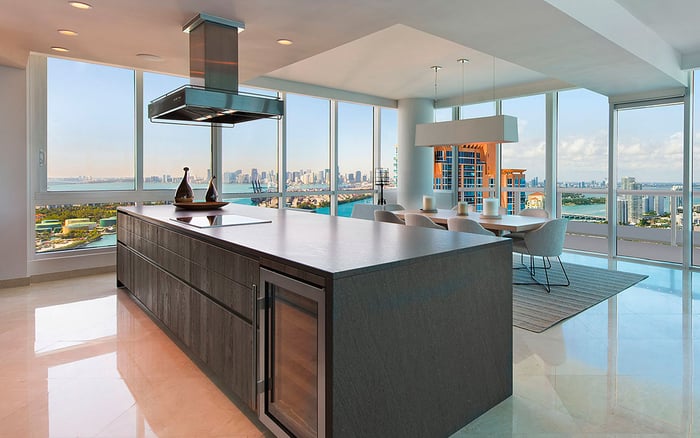
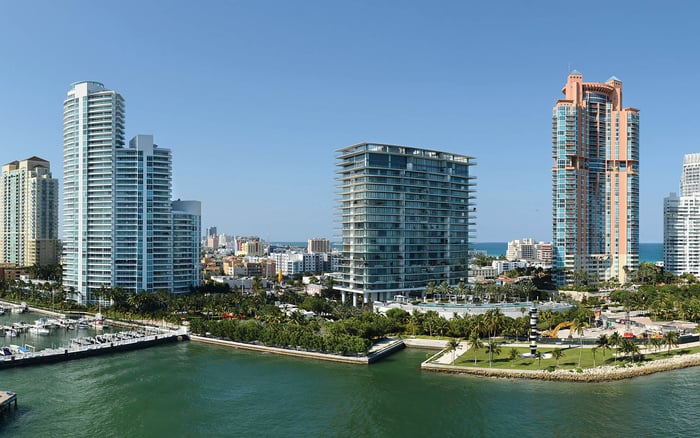
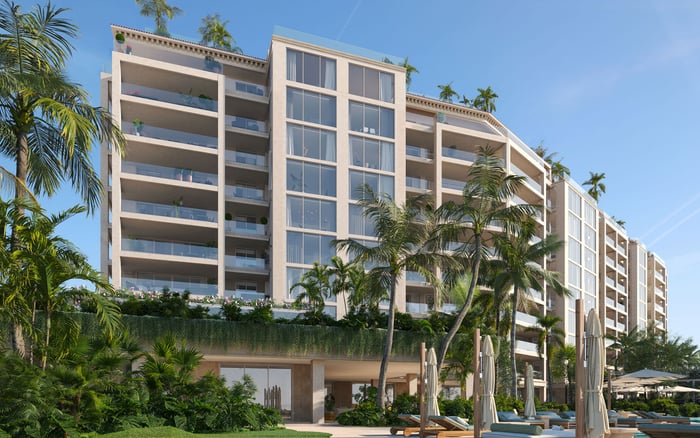
At Apogee South Beach, privacy is residence-specific. Buyers should assess orientation, floor, public-realm visibility, vertical circulation, and amenity routes before deciding whether a particular home delivers the seclusion they expect.
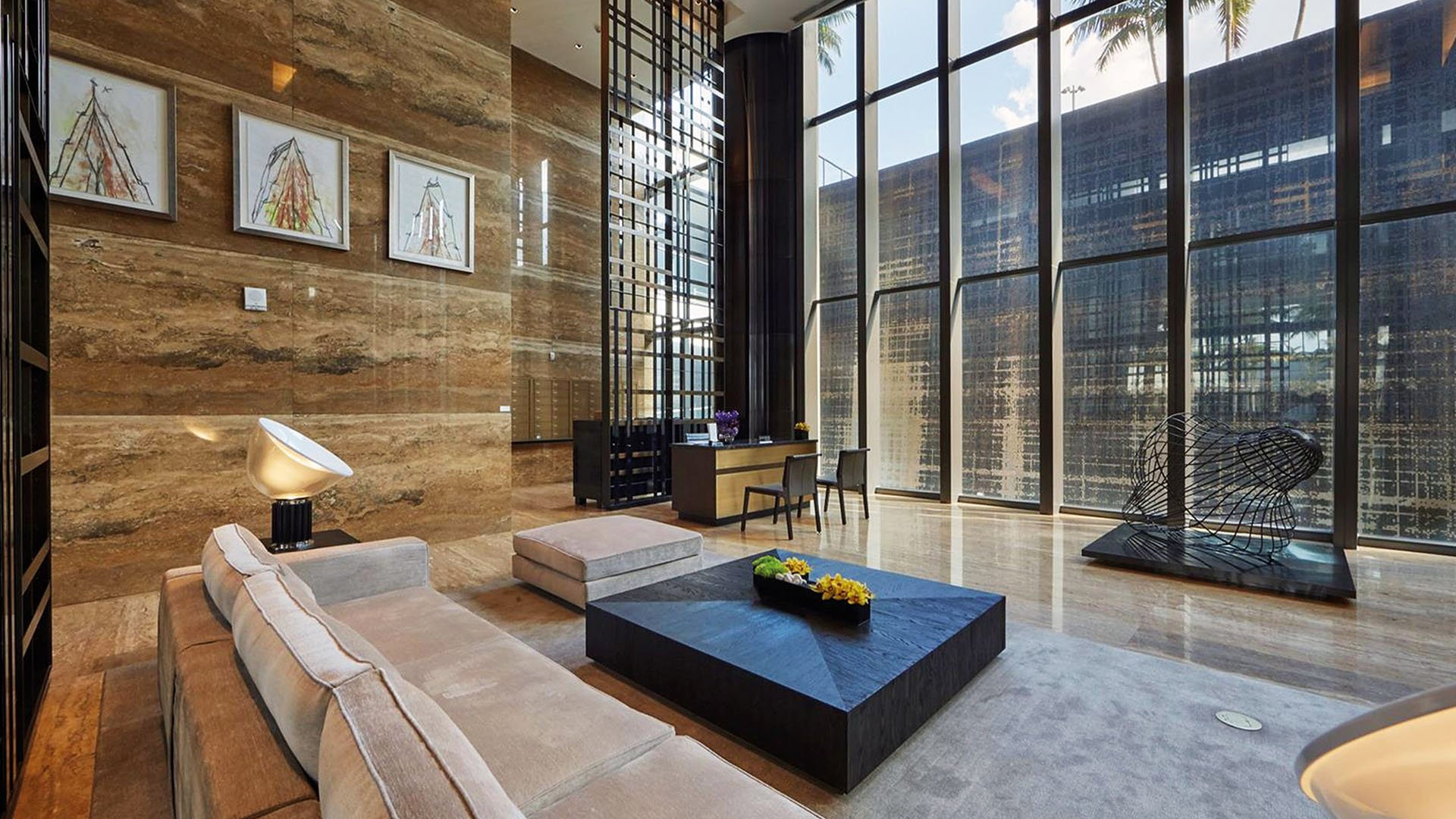
At Apogee South Beach, privacy is best evaluated at the residence level, not as a building-wide promise. The condominium stands at 800 South Pointe Drive in Miami Beach, on a waterfront site near the island’s southern tip. Its principal outlooks encompass Government Cut, Fisher Island, Biscayne Bay, and the Atlantic Ocean.
That geography creates exceptional visual breadth, but panoramic exposure and seclusion are not synonymous. A residence may command an expansive water view while remaining visible from parts of South Pointe Park, the waterfront promenade, or passing vessels. Buyers should therefore study orientation, elevation, neighboring structures, and the position of living spaces and terraces within the floor plate.
The tower’s low-density, estate-residence positioning reinforces its privacy proposition. Its setback from the park edge, elevated primary residential levels, landscaping, and podium also help buffer homes from the surrounding public realm. Even so, the most useful question is not whether Apogee is private in general, but whether a specific home feels private at the times and from the angles that matter to its next owner.
West- and southwest-facing exposures emphasize Fisher Island, Government Cut, and the PortMiami basin. These orientations can frame cruise and cargo vessels as prominent moving elements. For some owners, that maritime theater is integral to the appeal. Others may prefer a horizon with less visual motion, particularly when entertaining or using a terrace.
East- and southeast-facing homes look toward South Pointe Park, the beach, and the Atlantic horizon. The tradeoff is proximity to an active public destination immediately south of the property. Elevation and setback can create meaningful separation, yet buyers should still examine downward views, terrace exposure, evening lighting, and the relationship between interior seating areas and public paths.
Northern exposures face the denser South of Fifth tower corridor rather than the most open park-and-water panorama. Here, exposure to neighboring buildings deserves close attention. A daytime tour should be complemented by an evening visit, when illuminated interiors can alter the sense of visual separation.
Higher floors may offer greater apparent openness, but elevation alone does not settle the privacy question. Stack orientation and floor-plate placement determine whether a home emphasizes water, park activity, or nearby towers. Waterfront buyers should therefore stand in several positions throughout the exact residence rather than rely on photographs taken from a single flattering angle.
Elevator privacy is partly architectural and partly operational. Before purchasing, request the current elevator configuration, access-control procedures, route from arrival to residence, service circulation, guest protocols, and any private-foyer details applicable to the unit. These features should be verified for the specific home rather than inferred from the building’s positioning.
A useful tour follows the complete arrival sequence. Begin where a resident or guest enters, proceed through each access point, wait for the elevator, and continue to the residence door. Note where residents, guests, staff, deliveries, and service personnel may converge. If access can be arranged, repeat the exercise during a busier period.
Privacy also includes predictability. Buyers should ask how guests are announced, where deliveries transfer, which routes service activity follows, and how elevator access changes during maintenance. The objective is not merely a short ride, but a discreet transition from public arrival to private domestic space.
Amenity flow describes how residents move between their homes, shared spaces, building services, and the surrounding neighborhood. At Apogee, the active park, street, and waterfront setting makes this circulation especially relevant. A direct route may feel convenient, while one that crosses busy shared areas may feel less private to an owner who values anonymity.
Walk the paths you expect to use most. Consider the journey from the residence to the amenities, from the building to South Pointe Park, and from arrival back home. Observe whether leisure, guest, and service movements remain separate or intersect. Ask management to explain current access rules and operating procedures, since those details can shape the everyday experience as much as the architecture.
Context is also useful. Buyers comparing South of Fifth options can tour Continuum on South Beach and Five Park Miami Beach to clarify which arrival sequence and relationship with the neighborhood suit them. Those considering a distinct island setting may also examine The Residences at Six Fisher Island. The purpose is not to declare a universal winner, but to define personal privacy preferences.
The most effective inspection combines daylight, dusk, interior, and terrace perspectives. Sit where you would dine, work, and entertain. Look outward, then consider who could look inward. Check reflections after dark, sightlines from adjoining rooms, and the prominence of park users or vessels within the view.
Buyer’s guides often reduce privacy to floor height or exclusivity. A stronger analysis tests four layers: visual separation, arrival sequence, elevator circulation, and amenity movement. Buyers should also distinguish fixed conditions, such as orientation and tower placement, from operational conditions that may evolve.
Generalized marketing imagery cannot reproduce the lived geometry of a particular stack and floor. At Apogee South Beach, the decisive advantage may be a carefully chosen combination of exposure, elevation, and circulation rather than the broadest panorama available.
Where is Apogee South Beach located? It is at 800 South Pointe Drive in Miami Beach’s South of Fifth neighborhood.
Which views define the building’s waterfront setting? Principal corridors include Government Cut, Fisher Island, Biscayne Bay, and the Atlantic Ocean.
Do west-facing residences have open-water views? West and southwest exposures look toward Fisher Island, Government Cut, and the PortMiami basin.
What can appear in Government Cut views? Cruise and cargo vessels can become prominent moving elements in the outlook.
What do east-facing residences overlook? East and southeast exposures take in South Pointe Park, the beach, and the Atlantic horizon.
Are northern exposures equally open? Northern outlooks face the denser South of Fifth tower corridor rather than the broadest park-and-water panorama.
Does a higher floor guarantee privacy? No. Floor, orientation, stack placement, public visibility, and exposure to neighboring buildings should be assessed together.
What should buyers verify about elevators? Confirm access controls, guest procedures, service routes, foyer conditions, and the residence’s complete arrival sequence.
How should amenity flow be evaluated? Walk the routes between the home, shared spaces, services, exits, and public waterfront during realistic periods of use.
Why is an exact-residence visit essential? Openness, vessel traffic, park visibility, and neighboring-tower exposure vary by floor and orientation.
If you'd like a private walkthrough and a curated shortlist, connect with MILLION.
If branded residences are on your mind — as a home or as an allocation — we would be glad to share what we are seeing, privately.
Begin a quiet conversation