A second-home buyer’s guide to the water-system questions at Six Fisher Island, distinguishing published amenities from the engineering, pressure testing, and maintenance documentation needed for an informed purchase.
For a second-home buyer, luxury includes confidence that a residence will function quietly and consistently between visits. At The Residences at Six Fisher Island, the domestic-water system deserves attention alongside the floor plan and outlook. Reliable showers, consistent fixture pressure, and a clear response to equipment failure are practical parts of that ownership experience.
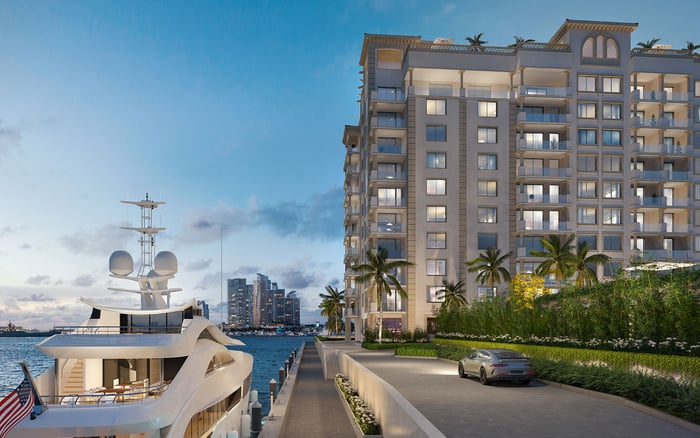
The project is marketed as a new-construction waterfront condominium at 6 Fisher Island Drive, Miami Beach, with ten stories and 50 residences on Fisher Island’s northern shoreline. Its 6.5-acre site includes approximately 650 linear feet of shoreline. Those details establish setting and scale-not the performance of the plumbing behind the walls.
The central distinction is straightforward: the reviewed marketing materials leave important domestic-water questions unanswered. That is a disclosure gap, not evidence of inadequate redundancy, weak upper-floor pressure, or deficient maintenance. A sound purchase review turns those open questions into specific document requests.
Advertised amenities include private pools and outdoor kitchens in select homes, along with two resort-style swimming pools. These are lifestyle features, not confirmation of potable-water storage, backup pumping, or continuity during a supply interruption.
Likewise, Fisher Island’s two deep-water, surge-protected marinas do not establish how the condominium receives or distributes domestic water. Buyers should keep amenity infrastructure and residential water service separate in their diligence.
The reviewed materials do not establish whether the building has a single incoming municipal-water service or redundant incoming services. Nor do they establish the domestic-water riser layout, looped distribution, or physically separated plumbing zones. Request approved plumbing drawings and a written explanation of the service configuration rather than infer resilience from the island setting.
Ask the project team what happens when an individual pump, control component, or incoming service becomes unavailable. The answer should identify the affected equipment, the backup arrangement, and any action required from staff or a technician.
The reviewed materials do not identify booster-pump count, horsepower, rated flow, or rated head. They also do not confirm duty/standby arrangements or automatic transfer of demand after a pump failure. Request pump-room plans, equipment schedules, pump curves, and control sequences so a qualified plumbing engineer can assess the proposed arrangement.
The review should distinguish standby equipment from automatic failover. Ask whether the remaining equipment can serve the intended demand, whether bypass options exist, and which components remain shared. Request written confirmation of emergency power for both pumps and controls, together with any applicable transfer-testing records.
For buyers also considering Palazzo del Sol, apply the same questions as a comparison framework. This is a documentation standard to apply independently, not a claim that neighboring properties have equivalent systems.
An upper-floor residence merits evidence of water pressure under realistic demand, not simply a reassuring description of the equipment. The reviewed marketing does not establish whether pressure depends on gravity tanks, variable-speed booster pumps, pressure-reducing stations, or another arrangement.
It also does not provide design pressure or minimum residual pressure at the highest fixtures during peak demand. Ask for both static readings and residual readings taken while water is flowing, with test conditions clearly recorded. Without those demand conditions, a pressure reading leaves an important performance question unresolved.
The request should cover the highest occupied floor under simultaneous demand and clarify how the selected residence relates to the tested location. Ask the engineer to explain the intended pressure range, the relevant distribution zone, and any controls affecting delivery to that home.
Where emergency power serves the system, request applicable transfer-test results and an explanation of any interruption during changeover. A private-pool specification cannot substitute for that evidence. Nor does the presence of pumping equipment establish performance at the highest fixtures.
The supplied information does not verify completion or an operating association’s maintenance history. Buyers should distinguish documents appropriate before operation from records that can exist only after equipment enters service.
For the pre-operation review, request equipment warranties, proposed preventive-maintenance schedules, service agreements, commissioning documentation as available, and a clear allocation of responsibility for future servicing. Ask who will maintain the equipment and how unresolved commissioning items will be tracked through handover.
Once operating history exists, seek available work orders, preventive-maintenance checklists, alarm histories, component replacements, and water-pressure complaints. Request 24 months when that much history has accumulated, rather than treating a shorter record as evidence of neglect.
The reviewed marketing materials do not include pump-maintenance logs, service contracts, or replacement histories. That does not establish that such records are unavailable elsewhere. The objective is to review documentation appropriate to the project’s actual stage and understand how it will be maintained over time.
An owner who is frequently away should ask not only what can fail, but who responds. Request the emergency contact structure, responsibility for after-hours water-system calls, and the procedure for notifying an absent owner or designated representative.
Island access belongs in that conversation. Ask how service technicians reach the property, which critical spare parts are stocked, and what restoration targets apply. These are questions to resolve with the responsible team, not operating capabilities established by the marketing.
If Palazzo della Luna is also on the shortlist, carry this response-chain checklist into that review independently. A useful comparison separates documented capabilities, planned arrangements, and unresolved items without assuming the properties share maintenance practices.
The most useful deliverable is a compact technical file: approved plumbing risers, pump-room plans, equipment schedules, pump curves, control sequences, commissioning results, and available maintenance records. Pair it with written answers on incoming services, automatic failover, bypass arrangements, storage capacity, and emergency-power connections.
Have the relevant specialists identify which questions are resolved and which require further testing or clarification before the purchase decision. At Six Fisher Island, the defensible conclusion is neither a performance endorsement nor a warning of failure. The published residential presentation does not establish the domestic-water capabilities this buyer wants to verify.
For a discreet perspective on second-home ownership and South Florida residences, connect with MILLION.
If branded residences are on your mind — as a home or as an allocation — we would be glad to share what we are seeing, privately.
Begin a quiet conversationThe project is marketed as a new-construction waterfront condominium at 6 Fisher Island Drive, Miami Beach, FL 33109.
Its published description identifies ten stories and 50 residences on a 6.5-acre site with approximately 650 linear feet of shoreline.
The reviewed marketing materials do not establish whether there is one incoming municipal-water service or redundant incoming services. Request approved drawings and written confirmation.
The reviewed brochure does not confirm duty/standby arrangements or automatic failover. Pump schedules and control sequences should clarify the intended configuration.
No. The reviewed materials do not establish upper-floor pressure performance, which is different from demonstrating a pressure problem.
Request static and residual pressure results at the highest occupied floor under simultaneous demand. Ask how the selected residence relates to the tested location.
No. The two resort-style pools and private pools advertised in select homes are amenities, not evidence of domestic-water backup capability.
The reviewed brochure does not confirm emergency-generator connections for pumps and controls. Request written confirmation and applicable transfer-testing results.
Request available records appropriate to the project’s operating stage, seeking 24 months once that history exists. The supplied information does not verify completion or an operating association’s records.
Ask who handles after-hours calls, how technicians access the island, which spare parts are stocked, and what restoration targets apply.