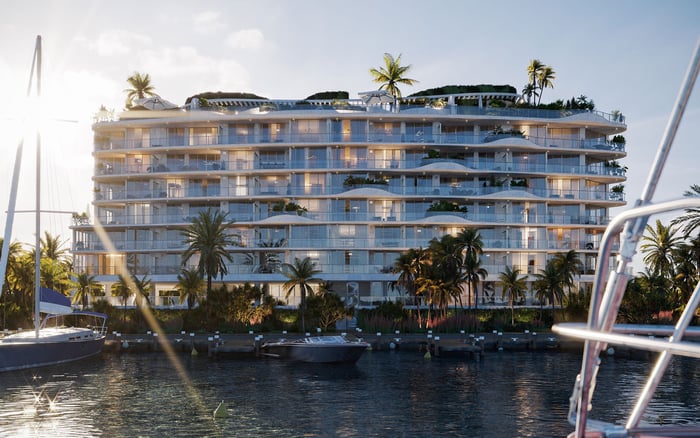
Parking is an everyday luxury that must be defined in writing. At Oceana and Rivage, buyers should separate marketed amenities from residence-specific rights, then verify self-parking, valet procedures, guest access, multi-car capacity, and EV charging before contracting.

In a luxury condominium, parking can seem deceptively straightforward. A building promotes valet service, a garage sits beneath the residences, and the arrival experience feels seamless. Yet the practical and legal questions begin where the marketing language ends: How many vehicles can a residence keep on-site? May an owner self-park? Is valet required for every retrieval? Can a guest park overnight? Does an EV owner have an assigned charger, access to a shared station, or permission to install equipment?
These details matter at both Oceana Bal Harbour and Rivage Bal Harbour. They shape convenience, vehicle security, household staffing, charging routines, and potentially the appeal of a future resale. For buyers accustomed to treating the garage as an extension of the residence, written rights carry more weight than broad amenity descriptions.
In a luxury condominium, the decisive parking amenity is certainty.
Oceana Bal Harbour advertises valet service and two levels of underground parking, along with private storage and a bicycle area. Together, these features describe an extensive service environment, but they do not establish automobile rights for a particular residence.
The available information does not specify the number of spaces allocated to each home. Nor does it settle whether residents may self-park, whether valet is required for every vehicle movement, or how guest parking operates. Valet hours, retrieval procedures, and policies for staging a vehicle overnight are likewise undefined.
For an EV buyer, the same distinction applies. The available details do not disclose the number of chargers, connector types, billing methods, or whether charging facilities are assigned or shared. A buyer should not interpret underground parking or valet service as proof of a dedicated charging arrangement.
Available project details for Rivage Bal Harbour do not establish residence-specific parking allocations, whether valet use is mandatory, or the building's EV charging policy. This does not imply that parking or charging provisions are absent. It means a buyer's exact rights should be traced through the documents governing the purchase and operation of the condominium.
The review should include the applicable offering plan, condominium documents, management rules, and purchase contract. If a sales discussion includes a specific number of spaces, preferred access, charging capability, or a valet protocol, the buyer should ask where that representation appears in writing and whether it runs with the residence.
This is especially important when comparing Rivage with nearby choices such as Onda Bay Harbor. A feature promoted at one property cannot be assumed at another, even when both buildings serve a similar luxury audience.
Valet can provide a refined layer of service, but its value depends on how it intersects with autonomy. Some owners want an attended arrival at all times. Others prefer direct access for early departures, frequent vehicle changes, children's schedules, household employees, or collectible cars that require specific handling.
A buyer should ask whether self-parking is permitted, restricted, or unavailable. If valet is the primary operating model, clarify service hours, the standard retrieval procedure, advance-request options, key custody, access for service personnel, and the treatment of oversized or specialty vehicles. The point is not to judge valet as inherently positive or negative, but to determine whether the operating model complements the household's lifestyle.
Insurance and risk questions should also be directed to qualified advisers and building representatives. Owners of high-value vehicles may want to understand who can operate them, where keys are held, and which procedures apply when a vehicle requires unusual instructions. These are practical considerations, not merely preferences.
An EV-ready household should examine more than the mere presence of a charger. The buyer needs to know its location, whether access is exclusive or shared, the connector and equipment compatibility, and how electricity or session fees are billed. If valet personnel coordinate charging, the procedures for requesting, moving, and unplugging a vehicle should be documented.
Owners should also ask whether personal charging equipment may be installed at an allocated space. The answer may depend on electrical capacity, approvals, physical layout, cost allocation, building rules, and the legal character of the parking area. No installation right should be assumed merely because another residence or nearby condominium advertises a personal charger.
Bal Harbour Shops provides a useful neighborhood illustration, not a residential precedent. Its garage accommodates both self-parking and valet. EV charging stations are located on Level 2, the Green Level, with valet positioned across from them, and the main garage entrance is on 96th Street. This demonstrates that attended parking and EV charging can coexist operationally. It does not create parking or charging rights at Oceana or Rivage.
Households with several vehicles should begin by confirming the permitted vehicle count and the legal status of each space. Ask whether a space is assigned, deeded, licensed, designated as a limited common element, or controlled through building operations. These terms can carry different consequences, so the governing language should be reviewed by the buyer's attorney.
Next, test real-life scenarios. Can two residents retrieve vehicles at the same time? Is temporary accommodation available for an additional car? May guests park overnight? Are there restrictions involving vehicle height, length, weight, lifts, roof accessories, or charging cables? How are household staff, drivers, vendors, and rental cars handled?
For collectors, vehicle rotation is another consideration. A residence that comfortably supports daily transportation may not accommodate seasonal vehicles or a larger collection. Off-site arrangements can be explored if necessary, but they should be treated as separate services rather than substitutes for on-site rights.
A disciplined parking review can be organized around five subjects. First, confirm how many vehicles the residence may keep and the status of every space. Second, define self-parking privileges and any mandatory valet use. Third, document guest access, service hours, retrieval procedures, and overnight rules. Fourth, confirm restrictions affecting vehicle size and specialty vehicles. Fifth, establish the complete EV framework, including equipment, access, billing, valet coordination, and installation permissions.
Every material representation should align across the purchase contract, condominium documents, current management rules, and written responses from authorized parties. Buyers should also ask whether rules may change and which rights attach to the unit rather than being granted as a revocable operational courtesy.
This level of scrutiny belongs naturally within MILLION Buyer's Guides because parking is both functional and experiential. At the upper end of the Bal Harbour market, a graceful arrival is expected. The more consequential luxury, however, is knowing exactly how the garage will serve the residence after closing.
For discreet guidance when comparing parking, EV charging, and valet structures in Bal Harbour, connect with MILLION.
If branded residences are on your mind — as a home or as an allocation — we would be glad to share what we are seeing, privately.
Begin a quiet conversationYes. Oceana advertises two levels of underground parking as well as valet service.
The public amenity information does not establish whether residents may self-park or must use valet for every retrieval.
The publicly available amenity information does not specify residence-level space allocations. Buyers should obtain written confirmation for the particular home.
Public project information does not establish whether valet is mandatory. The applicable condominium and purchase documents should define the operating model.
The public project information does not establish Rivage's EV policy or residence-specific charging rights. Buyers should confirm both access and legal entitlement in writing.
Confirm charger location, exclusivity, connector compatibility, billing, valet coordination, and any right to install personal equipment.
No. Access to commercial chargers can be useful as a backup, but it does not create rights at Oceana or Rivage.
Confirm the permitted vehicle count, each space's legal status, guest access, valet procedures, and vehicle-size restrictions.
A space may be assigned, deeded, licensed, operationally allocated, or treated differently under condominium documents. Buyers should have counsel review the governing language.
Review the applicable offering plan, condominium documents, management rules, and purchase contract before relying on marketing descriptions.