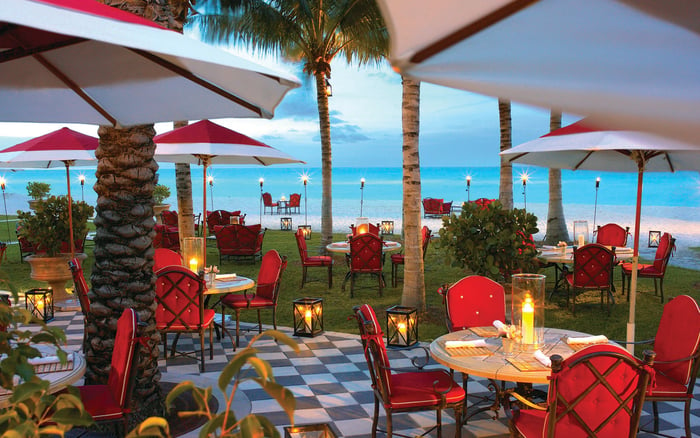
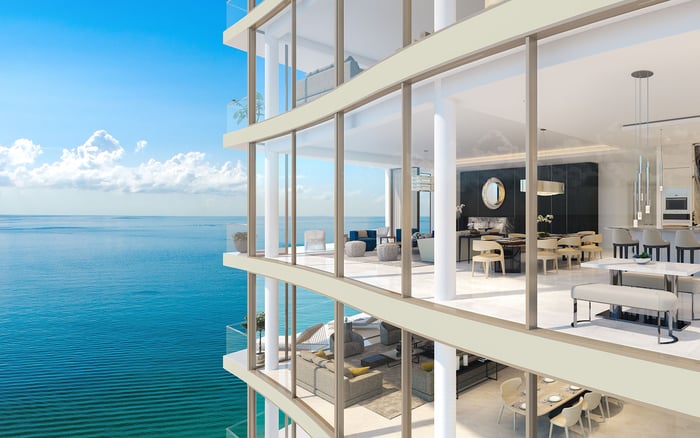
A discreet buyer’s guide to evaluating beach-access protocols, shoreline pathways, and daily oceanfront usability at ultra-prime South Florida residences.

For South Florida’s most selective buyers, the value of an oceanfront residence is measured by more than a view corridor or a line on a floor plan. It is measured in the quiet ease of moving from lobby to sand, in the predictability of guest access, in the discretion of staff, and in the rules that shape how the shoreline is used day after day. Beach-access protocols may not read as glamorous, but they are central to the lived experience of a luxury coastal address.
That is why the comparison suggested by Beach Access Protocols: The Estates at Acqualina and 900 Ocean Surfside Pathways is so relevant. The Estates at Acqualina Sunny Isles evokes a highly serviced oceanfront lifestyle, while 900 Ocean Surfside Pathways points to the more intimate, pathway-oriented question of how residents approach and use the beach. The practical lesson is clear: the beach is both a natural amenity and a governed environment. Ownership comfort depends on understanding both.
A residence may be oceanfront, but that alone does not explain how beach access works. A serious buyer should ask for the rules governing resident entry points, guest movement, chair and umbrella use, pet restrictions, deliveries, children’s equipment, service access, and after-hours conduct. These details can influence the mood of a property as much as the lobby, spa, or pool deck.
The most refined buildings make access feel effortless, but that ease is usually the product of clear protocols. Who may cross which path? Are guests accompanied, registered, or directed by staff? Is there signage? Are beach items stored by the building, carried by residents, or handled by an outside service? What happens during high-demand weekends or seasonal occupancy peaks? For families who plan to use the shoreline daily, these are essential questions.
For resale purchasers, the review is especially important because existing owners and residents have already established a culture of use. The documents may describe the rules, while the building’s daily rhythm reveals how those rules are applied.
A purchaser comparing Sunny Isles with Surfside is not merely choosing between two names on the coast. The decision often reflects a preference for scale, privacy, service intensity, walkability, and neighborhood atmosphere. Beach access should be evaluated within that broader context rather than as a stand-alone amenity.
In Sunny Isles Beach, buyers often focus on resort-style service, vertical privacy, dramatic waterview exposure, and the convenience of an oceanfront residential experience that can feel highly curated. In Surfside, the conversation may become more pathway-sensitive, with buyers asking how a residence connects to the beach, how neighboring properties relate to the sand, and how the route from home to shoreline feels at different times of day.
Neither model is inherently superior. A polished tower environment can deliver seamless service, while a more intimate pathway setting can feel discreet and residential. The right choice depends on how the owner intends to live: sunrise swims, family beach days, quiet evening walks, entertaining guests, or seasonal lock-and-leave use.
The best beach pathways are clear without feeling institutional. They guide residents intuitively, preserve privacy, and reduce friction between owners, guests, staff, and the public realm. A well-conceived route from residence to sand should feel natural, while answering practical questions before they become inconveniences.
Buyers should observe whether the pathway feels direct, shaded, visible, secure, and dignified. They should consider how wet feet, towels, surfboards, strollers, mobility needs, and children’s toys are handled. They should also study the transitions: elevator to lobby, lobby to pool deck, pool deck to path, and path to beach. Each transition affects the real value of beach access.
Privacy is another defining issue. Some owners prefer a route that allows them to move quietly from residence to sand without passing through social areas. Others enjoy a more animated resort sequence, where the walk to the beach passes through gardens, pool terraces, and staffed amenity zones. Both can be luxurious, provided the protocol matches the buyer’s habits.
Before contract deadlines pass, buyers should request the governing documents and current rules relating to beach use. The goal is not to create concern, but to remove ambiguity. A beautiful residence can still disappoint if daily access is inconvenient, crowded, unclear, or inconsistent with the buyer’s expectations.
Important questions include whether beach access is controlled by key, fob, staff, gate, or open pathway. Buyers should ask how guests are handled, whether beach service is included or separately arranged, whether seasonal rules differ, and how maintenance is managed after storms or heavy use. If pets are part of the household, the beach-related rules should be reviewed with particular care.
It is also wise to understand the relationship between private property boundaries, association-controlled areas, and public beach conditions. In high-end coastal ownership, sophistication lies not in assuming exclusivity, but in understanding exactly where private control begins and ends.
Beach access affects more than lifestyle. It can influence marketability, buyer confidence, rental desirability where permitted, and long-term satisfaction. A residence that offers a graceful, predictable beach experience may feel more complete than one with a similar view but less intuitive access.
For ultra-premium buyers, the shoreline is not just scenery. It is part of the daily operating system of the home. A strong protocol protects the calm that luxury buyers are ultimately purchasing: no confusion at the gate, no awkward guest arrival, no uncertainty about service, and no mismatch between marketing language and lived reality.
This is where an experienced advisory lens matters. The polished photographs show the horizon. The diligence reveals the path.
What is a beach-access protocol? It is the set of rules and procedures that govern how residents, guests, staff, and services move between a property and the beach.
Is oceanfront ownership the same as private beach ownership? Not always. Buyers should review property documents and local conditions to understand what is private, shared, controlled, or public.
Why compare The Estates at Acqualina and 900 Ocean Surfside Pathways? The pairing highlights two buyer priorities: highly serviced oceanfront living and the practical experience of moving from residence to sand.
What should families ask about beach access? Families should ask about guest rules, child equipment, stroller movement, storage, restroom access, and how busy beach days are managed.
Do beach pathways affect resale value? They can influence buyer perception because convenience, privacy, and clarity of use are important parts of the coastal living experience.
Are pet rules usually part of beach-access diligence? Yes. Pet policies may differ between the building, common areas, pathways, and beach-related use, so they should be reviewed carefully.
Should buyers visit the pathway before closing? Yes. Walking the route at different times of day can reveal privacy, convenience, sun exposure, traffic, and service patterns.
What documents should be reviewed? Buyers should review association rules, governing documents, access procedures, guest policies, and any beach-service guidelines provided.
Can beach service change over time? Yes. Staffing, vendors, association rules, and resident preferences can evolve, so buyers should understand both current practice and governance.
What is the best way to shortlist comparable options for touring? Start with location fit, delivery status, and daily lifestyle priorities, then compare stacks and elevations to validate views and privacy.
To compare the best-fit options with clarity, connect with MILLION.
If branded residences are on your mind — as a home or as an allocation — we would be glad to share what we are seeing, privately.
Begin a quiet conversation