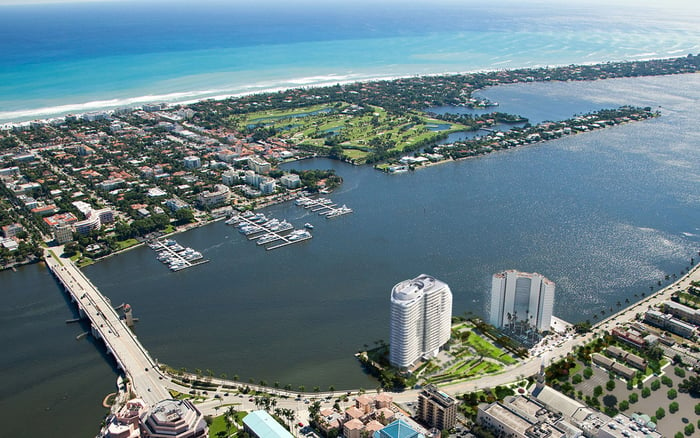
A discreet buyer’s guide to how trust planning may support Fisher Island and Point Italia acquisitions in 2026, with emphasis on privacy, succession, liquidity, and family governance.

For 2026 luxury buyers, Fisher Island is not simply a place to purchase a residence. It is a private ownership environment where family, capital, mobility, and time horizon often intersect. When the acquisition involves Point Italia, the planning conversation can become even more nuanced, as buyers are often looking beyond the closing date toward the next decade of use, stewardship, and transfer.
A trust is not a decorative legal wrapper. Used appropriately, it can be a practical structure for holding a luxury residence, coordinating decision-making, and clarifying who may use, manage, or benefit from the property. The advantages are not universal; they depend on the buyer’s residency, family profile, estate plan, financing approach, and tax counsel. Still, for many ultra-premium purchasers, the appeal is clear: more order, more privacy in family affairs, and a more deliberate framework for what happens next.
The central issue for a 2026 buyer is timing. Trust planning should not be left until a contract is nearly complete. The ownership vehicle can affect due diligence, title instructions, financing review, insurance, family approvals, and post-closing administration. Starting early helps the buyer’s advisory team avoid friction at the precise moment when discretion and certainty matter most.
Point Italia buyers often evaluate value through several lenses at once: personal enjoyment, capital preservation, long-term family utility, and exit flexibility. A trust can support that broader lens by separating the question of who enjoys the residence from the question of how ownership is administered. That distinction can be especially useful when a residence is intended for multigenerational use or when the family’s financial life spans more than one jurisdiction.
The potential financial benefit is not that a trust automatically reduces costs. Rather, it may help a buyer organize responsibilities before they become expensive disputes or delays. A well-considered structure can identify who approves major expenditures, how carrying costs are funded, whether family members have defined access rights, and how a sale or refinancing decision is made. In luxury real estate, ambiguity can become a hidden liability.
This is where discipline matters. For a planning team, the relevant vocabulary is practical: Fisher Island, investment, second-home use, oceanfront ownership, gated-community expectations, and marina access are not merely lifestyle labels. They signal that ownership may involve security, hospitality expectations, insurance considerations, family scheduling, vessel access, and a long-term capital plan. The trust should be designed around those real-world details, not around a generic template.
Privacy is one reason high-net-worth buyers explore trust ownership, but it should be understood carefully. A trust can help keep family governance more private and organized, yet it does not erase legal, tax, or compliance obligations. The stronger advantage is often continuity. If the person who initiated the purchase is unavailable, incapacitated, or no longer the appropriate decision-maker, the trust can name who steps in and under what authority.
That continuity is particularly valuable for a residence intended as a family base. Without planning, a second-home can become a point of confusion, especially when siblings, children, spouses, or advisors have different expectations. With planning, the structure can define the trustee’s role, the beneficiaries’ rights, and the standards for maintaining or selling the residence.
Control is another essential theme. Some buyers want to retain meaningful influence while gradually integrating the next generation. Others prefer independent administration. Some prioritize asset-protection conversations, while others focus on estate settlement or cross-border coordination. The right answer is not a single structure. It is a coordinated design that reflects how the buyer lives, invests, and intends to transfer wealth.
Before signing, buyers should align the trust strategy with the acquisition strategy. The advisory group typically needs to consider who will sign the contract, whether the trust already exists, whether amendments are needed, and whether the trustee has authority to purchase, finance, insure, and maintain the residence. If financing is involved, the lender’s requirements should be addressed before the deal is in motion.
Insurance review is also important. Luxury waterfront ownership can require careful attention to named insureds, liability protection, and responsibility for household staff, guests, or family members. A trust structure may require specific insurance language so that the ownership vehicle and the people using the property are properly aligned.
Buyers should also consider operating costs. A Fisher Island residence is not a static asset. It may involve renovations, assessments, staffing, maintenance, club-related planning, transportation rhythms, and seasonal preparation. A trust can include provisions for funding these needs, which may reduce the chance of future disagreement. For a family office, that clarity can be as valuable as a financial projection.
The most elegant homes can falter when the governance around them is inelegant. A trust can provide rules for access, guest privileges, major improvements, annual budgeting, and dispute resolution. These may sound administrative, but at the ultra-premium level they protect something more personal: the family’s ability to enjoy the property without turning every decision into a negotiation.
For Point Italia buyers, this governance lens can be especially useful if the residence is viewed as a legacy holding. A parent may want children to enjoy the home without forcing them into unmanaged co-ownership. A couple may want to clarify what happens if one spouse dies. A global family may want consistent instructions across advisors. The trust becomes a quiet operating manual.
This is also where buyers should be realistic about lifestyle. If the residence will be used intensively during peak season, the trust may need a practical calendar or usage policy. If it will remain mostly private, the structure may focus more on preservation and maintenance. If a future sale is possible, the trust should define who has authority to evaluate and accept an offer.
A 2026 buyer should approach trust planning as part of acquisition architecture. The residence, the holding vehicle, the estate plan, and the family governance plan should support one another. Waiting until after closing can work in some cases, but it may create unnecessary transfer, administrative, or advisory complications.
The best process is discreet and sequenced. First, clarify the buyer’s intention: personal retreat, family compound, legacy asset, investment-adjacent holding, or flexible second residence. Next, confirm the buyer’s tax residency and estate-planning constraints. Then align the trust, contract, financing, insurance, and closing mechanics. Finally, document how the residence will be operated after acquisition.
For sophisticated buyers, the advantage is not theatrical. It is the quiet efficiency of knowing that ownership has been designed with the same care as the residence itself. In a market where privacy, scarcity, and family continuity matter, that may be the most meaningful financial benefit of all.
Is a trust always the right way to buy on Fisher Island? No. A trust may be useful for some buyers, but the right structure depends on legal, tax, family, and financing considerations.
Can a trust help with privacy? It can support more private family governance, but it does not eliminate legal, tax, compliance, or closing obligations.
Should the trust be created before signing a contract? In many cases, yes. Early planning can help align contract authority, financing, insurance, and title instructions.
Does trust ownership automatically reduce taxes? No. Any tax result depends on the buyer’s circumstances and should be reviewed by qualified tax counsel.
Can a trust help multiple family members use the residence? Yes, if drafted for that purpose. It can set expectations for access, expenses, improvements, and decision-making.
What is the main benefit for a Point Italia buyer? The main benefit may be coordinated control, allowing ownership, use, and succession to be addressed before closing.
Can a trust own a financed property? Sometimes, but lender requirements vary. The financing team should review the trust before contract deadlines become tight.
Does a trust replace an estate plan? No. It should coordinate with the broader estate plan rather than operate as a standalone substitute.
Who should be involved in the planning process? Buyers typically coordinate legal, tax, estate, insurance, financing, and real estate advisors before finalizing structure.
What is the best way to shortlist comparable options for touring? Start with location fit, delivery status, and daily lifestyle priorities, then compare stacks and elevations to validate views and privacy.
When you're ready to tour or underwrite the options, connect with MILLION.
If branded residences are on your mind — as a home or as an allocation — we would be glad to share what we are seeing, privately.
Begin a quiet conversation